
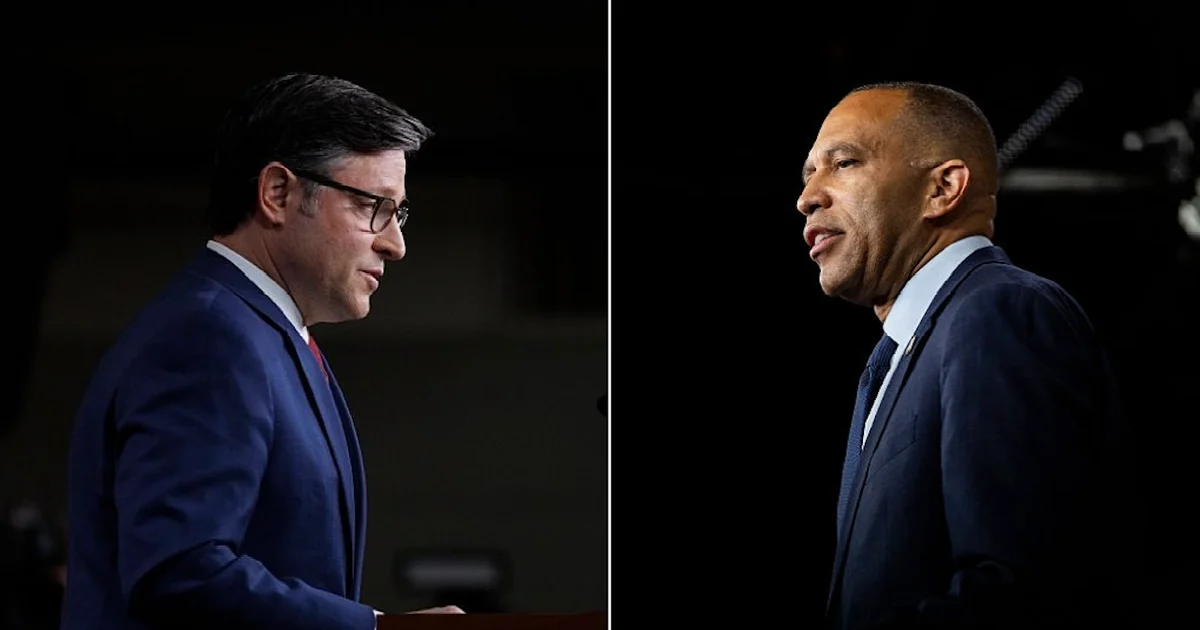
As voters head to the polls across the United States for the 2026 midterm elections, the battle for control of the House of Representatives has reached a fever pitch. With all 435 seats up for grabs, the political landscape is defined by a complex intersection of new congressional boundaries, lingering dissatisfaction with the current administration, and intense local competition. The stakes are immense: Democrats require a net gain of just three seats to reclaim the majority, while Republicans are fighting to preserve their legislative foothold in a cycle where presidential approval ratings are historically low.
The Legislative Landscape and Redistricting Battles
The 2026 election cycle is uniquely complicated by mid-decade redistricting efforts that have fundamentally altered the electoral map. In an attempt to solidify their hold on power, Republicans in seven states pursued aggressive redistricting strategies, aiming to tilt the scales in 15 additional districts in their favor. Democrats responded with their own tactical maneuvering, particularly in California, where they redrew congressional maps to make five previously competitive districts less favorable to GOP candidates.
This cartographic warfare has created a new set of metrics for electoral success. Under these newly established boundaries, President Donald Trump won 22 districts in 2024 that are currently represented by Democrats. Conversely, the shifting lines have resulted in a scenario where eight GOP-held districts were carried by then-Vice President Kamala Harris during the 2024 presidential election. This phenomenon of "ticket-splitting"—where voters choose a president from one party and a representative from another—has diminished compared to the 2024 cycle, yet it remains a critical factor in the few remaining truly competitive districts.
Voter Sentiment and Presidential Approval
The prevailing narrative of the 2026 midterms is undeniably tethered to the performance of the incumbent administration. Early exit polls indicate that President Trump is tracking toward the lowest approval rating for a president in a midterm election cycle, currently hovering at 38%. This figure is notably lower than his standing during his first term and falls beneath the approval levels seen by George W. Bush in 2006, a year that saw the GOP suffer significant losses in both chambers of Congress.
Approximately six in ten voters identified the president as a central factor in their decision-making process for the House. This motivation is heavily polarized: Democratic voters are largely driven by a desire to provide a check on the executive branch, citing opposition to the president as their primary catalyst for turnout. In contrast, Republican voters appear less motivated by direct support for the president than in previous cycles, signaling a potential shift in the base’s engagement strategy.
Operational Challenges: Ballot Scanners in New York
Election Day has not been without its logistical hurdles. In New York’s competitive 17th District, where incumbent Republican Representative Mike Lawler is facing a robust challenge from Democrat Cait Conley, officials in Westchester County reported significant malfunctions with ballot scanners.
The New York State Board of Elections attributed the failures to a late-stage programming change implemented in one municipality. While the updated programming was successfully deployed for early voting, machines in other parts of the county were reportedly running on the original software, leading to a mismatch that prevented the scanning of ballots. Officials emphasized that emergency ballot procedures were immediately activated to ensure that no voter was disenfranchised. Representative Lawler noted that both Republican and Democratic campaigns were coordinating with election officials to resolve the impasse, maintaining a bipartisan front to ensure the integrity of the vote. "Every valid vote will be counted," the Board of Elections stated, seeking to reassure a public on edge due to the district’s high-stakes nature.
Historical Precedent and the "Midterm Curse"
History provides a sobering backdrop for the current GOP leadership. Since 1934, it has been a political rarity for a sitting president’s party to gain seats during a midterm election. The "midterm curse"—where the party in power loses momentum due to the lack of a presidential candidate on the ballot and general voter fatigue—has been the rule rather than the exception.
There are only three notable exceptions in the last century. In 2002, George W. Bush saw his party gain eight seats following the national rally-around-the-flag effect post-9/11. In 1998, Democrats gained four seats during the Bill Clinton administration, though they remained in the minority. In 1934, Franklin D. Roosevelt’s party added nine seats to their majority. For House Speaker Mike Johnson, however, these historical trends are irrelevant. Campaigning in Virginia’s 2nd District, Johnson dismissed the current polling data as inaccurate. "It feels like 2024 to me when we swept the table," he told supporters, arguing that pollsters are consistently undercounting Republican support because their methodology fails to account for voters who are unwilling to engage with polling organizations.
Analyzing the Competitive Field
Of the 435 seats being contested, more than 40 are categorized as highly competitive. CBS News currently classifies 17 of these as "toss-ups," with 13 held by Republicans and four by Democrats. These districts represent the final frontier of the 2026 election, where small shifts in turnout or minor local issues could determine the balance of power in Washington.
The current House composition—219 seats for the GOP and 214 for the Democrats—reflects the razor-thin margins that have defined the last two years. With two vacancies resulting from the earlier resignations of Representative Tony Gonzales (R-TX) and Representative Sheila Cherfilus-McCormick (D-FL), the path to a 218-seat majority is exceptionally narrow.
Implications for the Next Two Years
The outcome of these elections will dictate the legislative agenda for the remainder of the president’s term. A shift in the majority would effectively paralyze the administration’s ability to pass significant legislation, likely ushering in an era of gridlock and aggressive oversight. Conversely, if Republicans hold the House, they will likely seek to solidify their legislative platform, potentially pushing for further tax reforms, adjustments to energy policy, and a continuation of the investigations that have characterized the current session.
As polls begin to close and the tallying of votes commences, the nation watches to see if the "midterm curse" will hold true or if the GOP’s local ground game and redistricting efforts will prove sufficient to withstand the headwinds of low presidential approval. Regardless of the outcome, the 2026 midterms underscore a deeply divided electorate and a legislative system that is increasingly sensitive to the granular details of district-level politics and the procedural mechanics of the voting process itself. With the final results expected in the coming hours, the focus remains on whether the current narrow margin of power will hold, shift, or deepen in the face of shifting national sentiment.

