
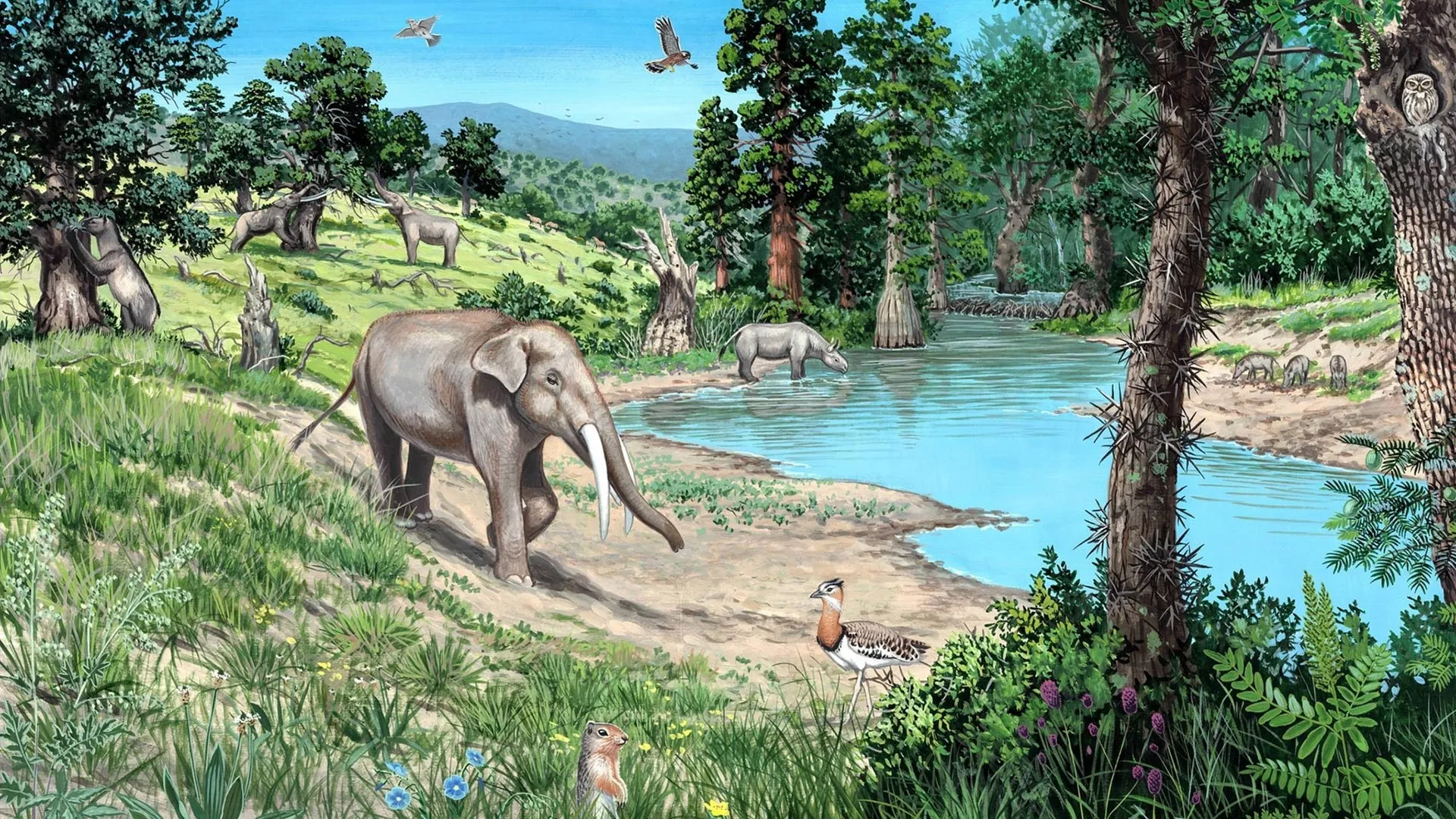
For centuries, the prevailing narrative of European prehistory has been defined by the "closed-forest paradigm"—a mental image of a continent blanketed in dense, impenetrable, and dark primeval forests that stretched from the Atlantic coast to the Ural Mountains. This vision of an ancient wilderness, where sunlight rarely touched the forest floor, has served as the bedrock for modern conservation policies, dictating how nations rewild their landscapes and manage biodiversity. However, a sweeping new study led by researchers at Aarhus University has upended this long-standing assumption, suggesting that the Europe of the last 20 million years was not a monochromatic expanse of trees, but a vibrant, sun-drenched mosaic of open woodlands, grassy meadows, and wildflower-rich clearings.
A New Chronology of the European Landscape
The findings, published in the journal Biological Conservation, draw upon a 23-million-year timeline that stretches back to the Miocene epoch. While previous ecological studies have often been constrained by limited temporal scope or single-method analysis, this investigation utilized a multi-proxy approach. By integrating fossilized pollen, charcoal records from ancient wildfires, chemical isotopic signatures from the teeth and bones of extinct herbivores, and cutting-edge environmental DNA (eDNA) extracted from ancient sediments, researchers have reconstructed a landscape that defied the modern obsession with forest density.
This research indicates that the "dark forest" model is an outlier in the deep history of the continent. For the vast majority of the last 20 million years, Europe experienced shifting environmental cycles—not just during ice ages, but during temperate and warm periods as well—that favored a heterogeneous landscape. This mosaic, maintained by natural disturbance, provided the evolutionary cradle for much of the flora and fauna that characterize the European continent today.
The Role of Mega-Herbivores in Ecosystem Engineering
At the heart of this ancient landscape were the mega-herbivores: elephants, rhinoceroses, aurochs, and wild bison. These massive creatures served as the primary architects of the European wilderness. Unlike the contemporary perception of forests as static entities that must be protected from clearing, the study highlights that these animals were essential ecosystem engineers. Through constant grazing, browsing, and the physical churning of the soil as they moved through their territories, they prevented the unchecked encroachment of dense canopy forests.
This persistent ecological pressure created a "disturbance regime" that allowed light-demanding species—such as wildflowers, shrubs, and grasses—to flourish in the gaps between tree clusters. Consequently, the biodiversity of the European wilderness was not a byproduct of forest stability, but a direct result of environmental flux. The loss of these large wild herbivores in recent centuries has fundamentally altered the continent’s trajectory, leading to the "scrubbing over" of open habitats and a subsequent decline in species that depend on sunlit, diverse vegetation.
Fact-Based Analysis: The Misalignment of Reforestation
The implications of these findings for modern environmental policy are profound. Currently, many European nations, including Denmark, incentivize reforestation efforts that focus on planting dense, fast-growing tree stands as a primary strategy for carbon sequestration and biodiversity protection. The researchers argue that these practices are essentially working against the grain of evolutionary history.
"The study shows that current reforestation practices are on the wrong track," notes Professor Jens-Christian Svenning, the senior author of the study and a leading voice at the Center for Ecological Dynamics in a Novel Biosphere (ECONOVO). "This will not only be harmful for biodiversity; it will be in direct contradiction to the type of ecosystems that Europe’s species have evolved in over millions of years."
By prioritizing uniform forest cover, modern policies may be inadvertently driving the extinction of species that are specialized for the mosaic landscapes of the past. The study suggests that if conservationists aim to protect the true evolutionary heritage of Europe, they must pivot from a "trees-only" model toward a "mosaic-management" model. This involves active land management that mimics the disturbance once provided by mega-herbivores, including the reintroduction of large grazers and the deliberate maintenance of open, shrubby corridors.
Challenging the Cultural Myth of the Primeval Forest
The "closed-forest" narrative is more than just a scientific hypothesis; it is deeply embedded in European cultural identity. The dark, mysterious forest is a staple of folklore, literature, and the collective European imagination. The study by the Aarhus team highlights the tension between this cultural myth and the biological reality. Many species that we currently associate with human-altered farmland—such as the European hamster, various larks, and specific wildflowers like the poppy—were long thought to be "followers" of human agriculture.
However, the new evidence suggests these species are actually ancient survivors of the open woodlands and meadows that existed long before the dawn of agriculture. By viewing these species as "weeds" of human civilization, conservationists may be failing to recognize their rightful place in a naturally diverse, non-forested wilderness. The findings suggest that the boundary between "nature" and "human-managed" is far more porous than previously assumed, as humans have essentially been occupying the niches left behind by the loss of ancient mega-fauna.
Official Responses and Scientific Context
The research has prompted discussions among conservationists regarding the future of European land-use subsidies. Organizations focused on rewilding, such as Rewilding Europe, have previously argued for the importance of natural grazing, but this study provides the long-term empirical data needed to shift the debate from a focus on "forest cover" to "habitat diversity."
Independent ecological analysts suggest that while carbon sequestration remains a critical goal, the metric of "number of trees planted" is an insufficient proxy for environmental health. The inclusion of eDNA analysis in this study is particularly significant, as it allows scientists to "see" the presence of species in historical sediments even when macro-fossils are absent. This technology has provided a high-resolution snapshot of vegetation change, offering a level of confidence in these findings that was previously unattainable.
Broader Impact and Implications for Global Policy
While the study focuses on Europe, the implications resonate globally. The "closed-forest paradigm" is not unique to Europe; it has influenced conservation policies in North America and parts of Asia as well. The tendency to equate "nature" with "trees" often obscures the critical value of grasslands and savannas, which are frequently misclassified as "degraded" forests rather than stable, high-biodiversity ecosystems in their own right.
Moving forward, the researchers advocate for a paradigm shift in how we measure the success of ecological restoration. Instead of aiming for a return to a specific, idealized version of a forest, policies should be designed to support "dynamic landscapes." This means:
- Prioritizing Structural Diversity: Restoration should aim for a variety of heights and densities, rather than uniform tree cover.
- Integrating Natural Herbivory: Policy frameworks should encourage the reintroduction and protection of large herbivores as essential components of ecosystem maintenance.
- Reframing Biodiversity Metrics: Indicators of success should be based on the survival of species adapted to open-canopy and mosaic environments, rather than forest-specific markers.
- Addressing the "Green Carbon" Bias: While forests capture carbon, grasslands and meadows also serve as vital carbon sinks—particularly in their soils—and must be valued equally in climate mitigation strategies.
The journey of the last 20 million years provides a clear, data-driven directive: the future of European wilderness depends on our ability to look past the canopy. By embracing the complexity of a mosaic landscape—a system that is bright, varied, and inherently dynamic—we can better honor the evolutionary history of the continent. The dense, dark forests of our modern imagination may have a place, but they are not the only, nor necessarily the most important, face of the European wild. To restore nature effectively, we must stop trying to "fix" it into a state of static density and instead learn to manage the messy, vibrant, and sun-drenched chaos that defined the continent long before we arrived.

