
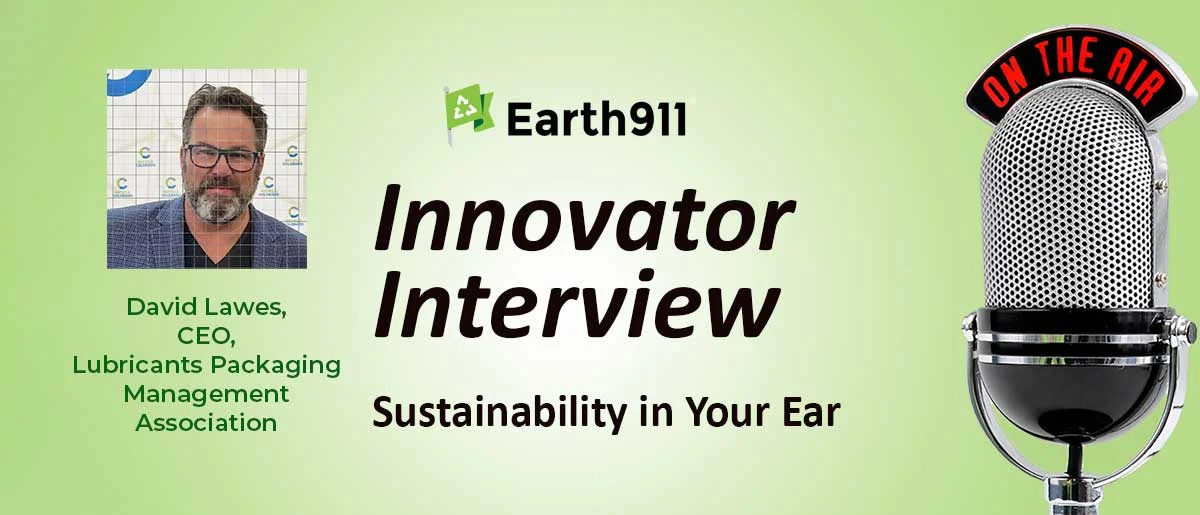
Colorado has officially become the epicenter of a transformative shift in American environmental policy with the launch of the nation’s first specialized Extended Producer Responsibility (EPR) program dedicated to motor oil and its problematic packaging. Led by the Lubricants Packaging Management Association (LPMA), this initiative aims to address a long-standing environmental loophole: the mismanagement of over a billion gallons of used motor oil and the millions of plastic containers that hold it. By shifting the financial and operational burden of recycling from taxpayers and municipalities to the producers themselves, Colorado is setting a precedent that could redefine industrial waste management across the United States.
The Scope of the National Motor Oil Crisis
To understand the significance of the Colorado program, one must first look at the staggering statistics surrounding motor oil consumption and disposal in the United States. According to industry data and environmental assessments, Americans dispose of approximately 1.3 billion gallons of used motor oil annually. While this substance is highly recyclable, the current infrastructure captures only about 800 million gallons.
The disparity in these figures represents a massive environmental risk. A single gallon of used motor oil, if disposed of improperly, has the potential to contaminate one million gallons of fresh water. Furthermore, even the oil that is "recycled" in the current U.S. system is often not utilized to its highest potential. A significant majority of collected used oil is burned as a low-grade industrial fuel rather than being re-refined into new high-quality lubricants. While burning provides a one-time energy use, it does not support a circular economy. Re-refining, by contrast, requires about one-third of the energy of refining oil from crude and allows the lubricant to be used indefinitely.
The packaging presents an even more complex challenge. Motor oil is typically sold in High-Density Polyethylene (HDPE) bottles. While HDPE is a highly recyclable plastic, the residual oil inside these bottles makes them a pariah in the world of municipal recycling. Most curbside recycling programs explicitly reject motor oil containers because the residual oil acts as a contaminant, ruining entire batches of other plastics and damaging the mechanical components of Material Recovery Facilities (MRFs). Consequently, less than 1% of motor oil containers are recycled in most U.S. states, with the vast majority ending up in landfills where the residual oil eventually leaches into the soil.
The Birth of the Lubricants Packaging Management Association (LPMA)
Recognizing that the status quo was unsustainable and that legislative pressure was mounting, five of the world’s largest oil producers—BP Lubricants, Chevron, ExxonMobil, Shell, and Valvoline—joined forces in September 2024 to create the Lubricants Packaging Management Association (LPMA).
The LPMA was established as an independent Producer Responsibility Organization (PRO). Its mission is to design, implement, and manage a specialized collection and recycling system specifically for petroleum products. The formation of this group marks a rare moment of industry-wide alignment, as these competitors have recognized that a unified, sector-specific approach is more efficient and cost-effective than attempting to navigate a patchwork of general recycling mandates.
David Lawes, the CEO of LPMA, is the architect of this strategy. Lawes is a seasoned veteran in the field of environmental policy, having spent two decades developing EPR frameworks. Most notably, Lawes spent ten years regulating EPR programs in Canada, where he oversaw the motor oil recycling program in British Columbia. Under his leadership, that program achieved a staggering 96% recycling rate for oil containers—a figure that stands in stark contrast to the near-zero rates seen in the United States.
Colorado’s Legislative Landscape: A Choice for Industry
The catalyst for the LPMA’s work in Colorado was the state’s landmark legislation regarding producer responsibility. Colorado law gave petroleum producers a pivotal choice: they could either join the Circular Action Alliance (CAA), a general-purpose PRO that manages all packaging and printed paper recycling in the state, or they could develop their own sector-specific program.

The LPMA chose the independent path. The rationale behind this decision was rooted in the unique hazards and logistical requirements of petroleum products. General-purpose recycling programs are designed for aluminum cans, cardboard, and clean plastics. They are not equipped to handle the hazardous nature of used oil or the specialized cleaning processes required to recycle oil-contaminated HDPE.
"This is not about skirting the law or finding an easier pathway," Lawes explained during a recent industry summit. "It is about meeting the same results in an industry-friendly way. Petroleum packaging requires specialized handling that general-purpose programs simply cannot provide efficiently. By creating a dedicated stream, we ensure that the oil is recovered and the plastic is processed without contaminating the rest of the state’s recycling efforts."
The British Columbia Model: A Blueprint for Success
The Colorado program is heavily modeled after the successes seen in Western Canada. In British Columbia, the EPR program for lubricants has created a robust network of return-to-retail and specialized collection depots. This system ensures that consumers have a convenient, free-of-charge way to dispose of both used oil and empty containers.
The Canadian model works because it creates a closed-loop system. The producers pay environmental fees into a fund managed by the PRO. These funds are then used to subsidize the collection and transportation of the waste to specialized facilities. Because the volume of waste is consolidated, it becomes economically viable for recyclers to invest in the technology needed to "wash" the plastic and re-refine the oil.
In British Columbia, this has resulted in:
- 96% Recovery Rate: Nearly every bottle sold is returned.
- High-Value End Markets: The washed HDPE is turned back into new oil bottles or industrial piping.
- Re-refining Dominance: A higher percentage of oil is returned to the lubricant market rather than being burned.
Lawes and the LPMA are now working to replicate this infrastructure in Colorado, adjusting for the state’s unique geography and the larger scale of the American market.
Chronology of Implementation
The transition to this new system is moving through several critical phases:
- September 2024: Founding of the LPMA by BP, Chevron, ExxonMobil, Shell, and Valvoline.
- Late 2024 – Early 2025: Filing of the independent program plan with the Colorado Department of Public Health and Environment (CDPHE).
- 2025 Phase-In: Establishment of a statewide network of collection points. This includes partnerships with auto parts stores, service centers, and municipal hazardous waste facilities.
- 2026 Reporting: The first full year of data collection to measure recovery rates against the state’s mandated targets.
Technical Challenges and Innovative Solutions
One of the primary technical hurdles the LPMA faces is the "de-oiling" of plastic. When an HDPE bottle is crushed, the residual oil is squeezed into the pores of the plastic. Standard recycling washes cannot remove this deep-seated contamination.
To solve this, the LPMA is looking toward specialized centrifugal cleaning technologies and solvent-based washing systems. Once the plastic is cleaned to a specific "parts-per-million" threshold of residual oil, it can be pelletized and used as "post-consumer resin" (PCR). The goal is to reach a point where new motor oil bottles are made from at least 25% to 50% recycled content, significantly reducing the demand for virgin plastic derived from natural gas.

Furthermore, the program is addressing the "DIYer" (Do-It-Yourself) market. While professional oil change shops have existing bulk oil collection systems, individuals who change their own oil at home are the primary source of improper disposal. The Colorado program focuses heavily on making "return-to-retail" as easy as buying the oil in the first place.
Stakeholder Reactions and Economic Impact
The reaction from various sectors has been cautiously optimistic. Environmental groups have praised the move as a long-overdue step toward corporate accountability. "For too long, the cost of cleaning up petroleum waste has been externalized onto the public," said a representative from a Denver-based environmental advocacy group. "Having the ‘Big Five’ take responsibility for their packaging is a massive win for Colorado’s water quality."
From an economic perspective, the program is expected to create a "green-collar" job surge. Specialized collection, logistics, and processing require a workforce that didn’t exist under the old "landfill-only" model. Additionally, by harvesting the plastic and oil as resources, Colorado is keeping the economic value of these materials within the state’s supply chain.
However, some smaller oil producers have expressed concern regarding the administrative costs of joining a PRO. The LPMA has countered these concerns by highlighting that a unified system reduces the individual compliance burden that would otherwise be imposed by state regulators.
The Road Toward a National Standard
The implications of Colorado’s experiment extend far beyond its borders. Currently, the U.S. recycling landscape is a "patchwork" of varying state laws. California, Oregon, and Washington are all watching Colorado’s progress closely as they consider expanding their own EPR laws to include hazardous materials and petroleum products.
David Lawes suggests that the ultimate goal should be a harmonized system. "If every state has a different set of rules for how an oil bottle must be labeled or collected, it creates an immense amount of friction and cost for the industry," Lawes noted. "Colorado is the testing ground. If we can prove that this model works here—both for the environment and for the companies involved—it becomes the blueprint for a national standard."
The success of the LPMA in Colorado could signal the end of the era where motor oil containers are considered "un-recyclable." By combining the regulatory muscle of state government with the logistical expertise of the world’s largest energy companies, the program aims to turn a billion-gallon waste problem into a sustainable, circular resource. As the program moves into its full implementation phase in late 2025 and 2026, the eyes of the nation will be on the Rocky Mountain State to see if this "first-of-its-kind" initiative can truly change the mechanics of American recycling.

