
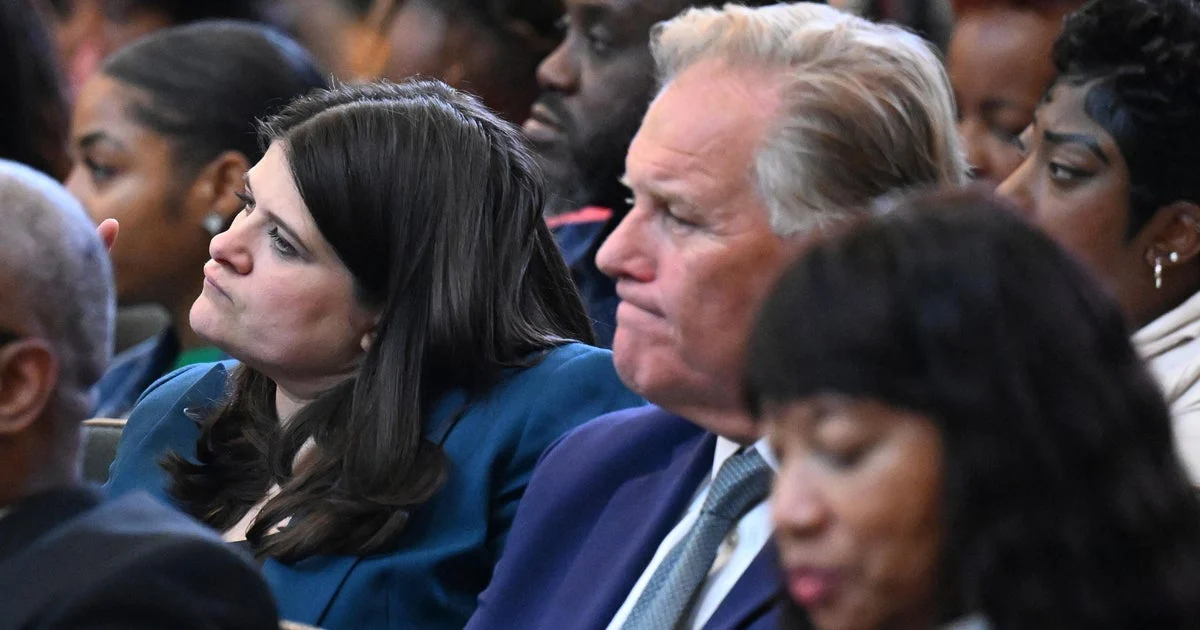
In a stunning political development that has upended the final stretch of the 2026 election cycle, Democratic Representative Haley Stevens announced her endorsement of Republican Senate candidate Mike Rogers on Sunday, November 1, 2026. The move follows an escalating and deeply personal rift between Stevens and her fellow Democrat, Democratic U.S. Senate nominee Abdul El-Sayed. The public break culminated in a joint appearance by Stevens and Rogers at a Detroit church, sending shockwaves through political circles nationwide and drawing fierce condemnation from national Democratic leadership, alongside praise from prominent Republicans.
The intraparty fracture exposes deep ideological and strategic fault lines within the Democratic Party in the crucial Midwestern battleground state of Michigan. As voters head to the polls to decide control of the United States Senate, the unexpected alliance between a sitting Democratic congresswoman and a former Republican congressman highlights how local disputes and contentious rhetoric over foreign policy can rapidly destabilize high-stakes national campaigns.
Chronology of the Rift and the Road to Endorsement
The roots of the current crisis extend back to the contentious August 2026 Democratic primary for the U.S. Senate seat in Michigan. In that race, Haley Stevens narrowly lost the nomination to Abdul El-Sayed. During the primary campaign, Stevens received substantial backing from the Senate Democrats’ principal campaign arm, positioning herself as a pragmatic institutionalist, whereas El-Sayed galvanized progressive and left-leaning factions of the party.
Following the primary, party leadership attempted to project unity ahead of the general election. However, underlying tensions boiled over the final week of October 2026. Stevens publicly called on El-Sayed to disavow and condemn an outside political advertisement. The controversial ad drew a direct link between U.S. military aid to Israel and rising domestic grocery prices, a comparison Stevens and Jewish community leaders characterized as antisemitic.
While El-Sayed stated that the advertisement was not produced by his official campaign and noted that he disagreed with its specific contents, he simultaneously accused Stevens of "relitigating a primary that ended three months ago." El-Sayed urged the party to refocus on pressing domestic issues facing everyday Michiganders, such as affordability, health care, and the economy.
The friction reached a breaking point over the weekend of November 1. Stevens was initially scheduled to appear alongside El-Sayed and prominent South Carolina Representative Jim Clyburn at a high-profile Democratic unity event. However, El-Sayed rescinded the invitation, stating publicly that he would prefer to avoid distractions from the key policy issues of the campaign and asserting that Stevens was no longer welcome within his campaign orbit.
Responding swiftly to being barred from the Democratic nominee’s inner circle, Stevens took to social media to announce her withdrawal of support from El-Sayed and her unexpected endorsement of his Republican opponent, Mike Rogers. On Sunday morning, Stevens and Rogers converged at the Perfecting Church in Detroit, sitting together during services and later addressing reporters in a joint press conference.
Reactions from the Candidates and Key Figures
During the joint press appearance in Detroit, Mike Rogers expressed profound appreciation for Stevens’ decision, framing the endorsement as a principled stand against divisive rhetoric.
"This is more a statement about standing together against hate and the future of this state and this country than it is anything else," Rogers told reporters. The Republican candidate, who has anchored his campaign on economic nationalism and traditional conservative principles, commended Stevens for maintaining her integrity and listening to the legitimate concerns of Michigan’s Jewish voters and broader communities.
Rogers revealed that he received a direct phone call from Stevens early Sunday morning, during which they discussed the long-term trajectory and stability of Michigan. He noted that Stevens deliberately reminded him during their conversation that she remains a proud member of the Democratic Party, despite her decision to cross party lines for this specific contest.
Abdul El-Sayed dismissed the political impact of the endorsement when questioned by reporters later that afternoon.
"I actually don’t think about Haley Stevens," El-Sayed said. "This is a state of 10 million people who deserve a lot better from their government. I’m a lot more focused on the 9,999,998 that are not the ones who are talking about [this]."
Stevens defended her actions by emphasizing that her decision was not an outright abandonment of the Democratic Party, but rather a targeted rebuke of what she views as unacceptable rhetoric within the progressive wing of the party.
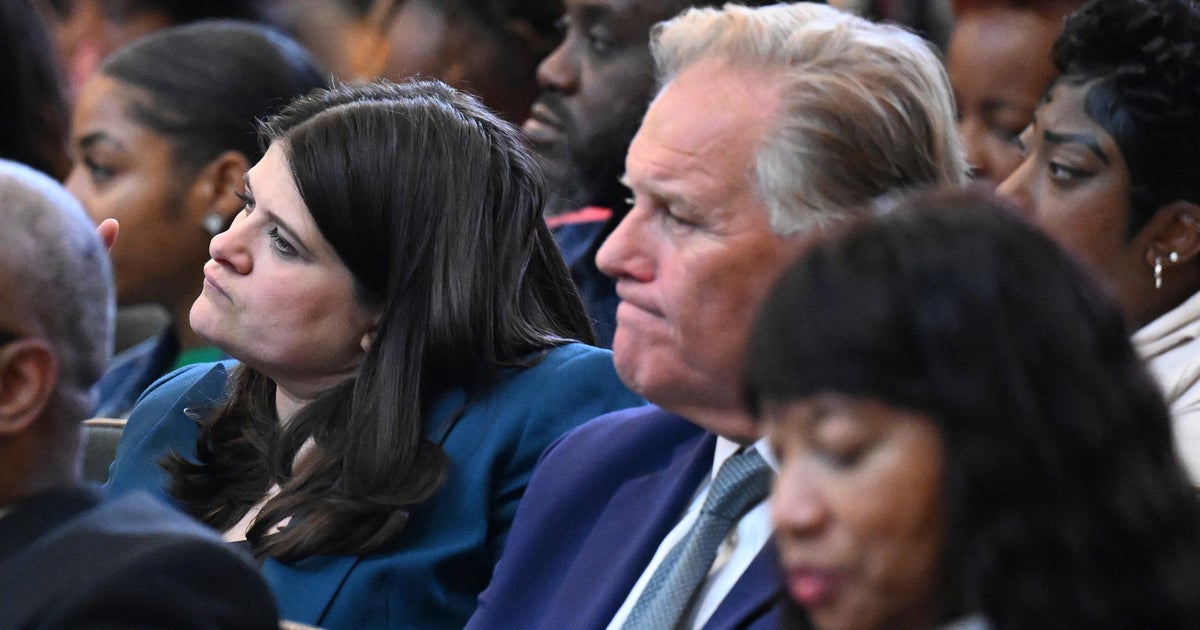
"It is this one vote," Stevens stated. "And I will tell you why: Because when you see hate, when you see us standing with Hasan Piker, and repeated hate, it’s not acceptable. That’s it. It’s my personal and private decision. It’s a Michigan moment, and everyone is entitled to their opinion."
Fallout Within Stevens’ Congressional Office and the Michigan Democratic Party
The political repercussions within Stevens’ own professional and political network were immediate and severe. Hours before her joint appearance with Rogers, her long-serving chief of staff, Justin German, tendered his resignation alongside a significant portion of her congressional and campaign staff.
In a public statement shared via media reports, German expressed shock and heartbreak over Stevens’ alignment with the Republican nominee, reaffirming that he and the departing staff members remain committed supporters of El-Sayed and the broader Democratic ticket.
"This election is too important to sow division or stand on the sidelines," German wrote. "Those of us who are Michigan voters are supporting Democrats up and down the ballot and have been working all season to elect strong Democratic majorities to the House and Senate — we will continue to do so."
Additional departures included Logan Basch, Stevens’ former communications director, and Joetta Appiah, her former press secretary and campaign spokesperson. Appiah asserted publicly that Stevens was "walking back on everything her campaign stood for" and urged voters to maintain their focus on the election outcome.
National and state Democratic leaders reacted with swift condemnation. Senate Minority Leader Chuck Schumer issued a scathing statement denouncing the move.
"Senate Democrats are united in our support for Abdul El-Sayed, because he will fight for the economic interests of working families in Michigan, unlike Mike Rogers, who is a tool of Donald Trump and billionaire donors," Schumer said. On social media, Schumer characterized the endorsement as a "despicable betrayal from Rep. Stevens."
Michigan Democratic Party Chair Curtis Hertel announced that Stevens is "not a current member of the Michigan Democratic Party, nor will she be in the future." Representative Debbie Dingell of Michigan similarly minimized the drama, arguing that voters remain exclusively focused on economic affordability rather than political maneuvering.
Conversely, prominent Republicans seized the moment to amplify their messaging. Former President Donald Trump took to social media to praise Stevens’ political courage.
"Her following is huge, and the level of respect from the People of Michigan, especially our African American and Jewish populations, is virtually unparalleled," Mr. Trump wrote. "Haley said what few people are willing to say. She showed great and almost unprecedented loyalty to the Great People of Michigan with what she did."
House Speaker Mike Johnson, campaigning alongside Mr. Trump in Iowa, confirmed that he had spoken directly with Stevens following her announcement to offer encouragement and support.
Implications for the Balance of Power in the U.S. Senate
The Michigan Senate race represents one of the most closely watched and financially intensive contests of the 2026 midterm cycle, carrying profound implications for the national balance of power in the United States Senate. With control of the chamber resting on razor-thin margins, both national parties have poured unprecedented resources into the state.
Political analysts note that while candidate endorsements from defeated primary rivals rarely swing vast blocks of voters on their own, the psychological and media impact of an intraparty defection of this magnitude is unprecedented in modern Michigan political history. For Rogers, the endorsement provides a powerful validation narrative designed to appeal to moderate suburban voters, independent stakeholders, and specific demographic blocs who might otherwise hesitate to support a standard conservative platform. For El-Sayed, the challenge lies in quickly consolidating the traditional Democratic base, neutralizing the distraction of the public feud, and refocusing the electorate on core economic metrics and party unity.
As early voting concludes and Election Day approaches, the ultimate impact of Representative Stevens’ historic crossover endorsement will be decided by the voters of Michigan, whose verdict will shape not only the composition of the United States Senate but also the future ideological direction of the state’s Democratic Party.

