

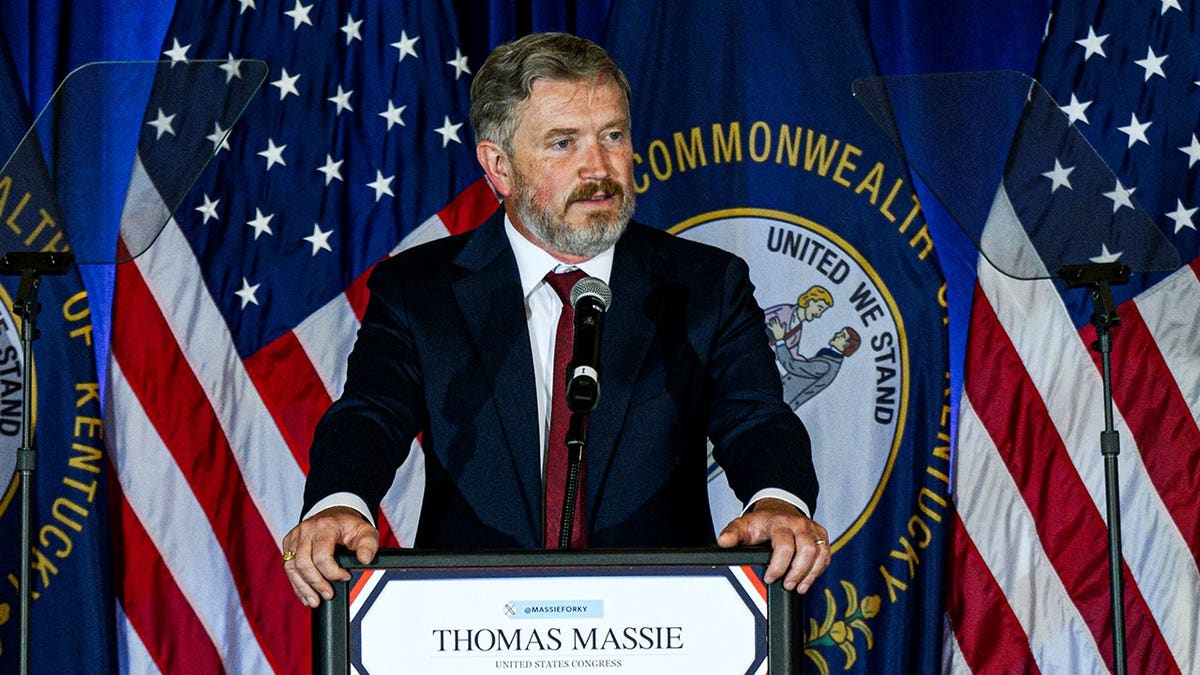
In a procedural maneuver that has ignited significant debate within the halls of Congress, House Speaker Mike Johnson, R-La., ordered the House of Representatives to adjourn early, effectively stalling a high-stakes legislative challenge initiated by Rep. Thomas Massie, R-Ky. The move comes as Massie filed eight distinct articles of impeachment against Secretary of Defense Pete Hegseth, a development that under standard House rules would have mandated immediate floor consideration of the measures. By opting for an early recess, the House leadership has effectively pushed the issue past the upcoming midterm elections, deferring any potential debate or vote until the chamber reconvenes in mid-November.
The abrupt departure of lawmakers has drawn sharp criticism from procedural hawks who argue that the decision was a calculated attempt to shield the Pentagon leadership from a potentially bruising public vote. As the political calendar narrows, the intersection of impeachment politics, administrative oversight, and election-year pressures has placed the House Republican leadership in a precarious position.
The Genesis of the Impeachment Effort
Rep. Thomas Massie’s filing of eight articles of impeachment against Secretary Hegseth represents a significant escalation in the ongoing friction between certain conservative members of the House and the current Department of Defense leadership. While the specific grievances outlined in Massie’s articles remain subject to intense scrutiny, they reportedly address allegations of administrative overreach and questions regarding the secretary’s adherence to constitutional and statutory mandates.
Under the rules of the House, impeachment resolutions are categorized as "privileged business," meaning they must be addressed by the chamber within a specific timeframe once introduced. By filing these articles, Massie effectively created a ticking clock that forced the Speaker’s hand. Had the House remained in session, the chamber would have been required to entertain a motion either to debate the merits of the articles or, more likely, to dispose of them through a "motion to table."

The Mechanics of the Motion to Table
The "motion to table" is a common, highly effective parliamentary tool used in the House to kill an unfavorable proposal without forcing members to vote directly on the substance of the issue. In the context of an impeachment resolution, tabling the motion allows the majority party to avoid a public, recorded vote on whether to remove a cabinet official—a vote that carries significant political weight.
If a motion to table is offered and approved, the underlying impeachment resolution is effectively discarded without further deliberation. However, if the motion to table fails, the House is then forced to proceed to a formal vote on the impeachment articles themselves. This "up-or-down" vote is exactly what many members of Congress seek to avoid, as it requires them to take a definitive, public stance on the removal of a high-ranking official, which can have unpredictable consequences among their respective constituents and donor bases.
In an interview regarding the procedural maneuvering, Representative Massie suggested that the decision to adjourn was a direct response to the precariousness of the current floor count. "A vote on a motion to table," Massie remarked, "he may not have survived that vote." This assessment implies that there may be sufficient dissatisfaction with Secretary Hegseth’s tenure among the rank-and-file—or at least enough skepticism—that a motion to table might not have commanded a majority, potentially leading to a floor vote on the articles of impeachment themselves.
Chronology of Legislative Tension
The current impasse is the result of months of mounting tension regarding executive branch accountability. Since the appointment of Pete Hegseth as Secretary of Defense, his tenure has been marked by several controversial policy shifts and a series of high-profile, often contentious, appearances before various congressional committees.
- Mid-2026: Secretary Hegseth initiates a series of organizational restructuring efforts within the Pentagon, drawing early ire from lawmakers concerned about the pace and scale of the changes.
- Late Summer 2026: Congressional oversight committees begin requesting additional documentation regarding the secretary’s decision-making process, leading to a breakdown in communication between the executive and legislative branches.
- Early Fall 2026: Representative Massie signals his intent to pursue a more aggressive oversight strategy, citing a lack of responsiveness from the Department of Defense.
- November 2026: The filing of eight formal articles of impeachment by Representative Massie triggers the mandatory procedural timeline.
- Immediate Adjournment: Speaker Mike Johnson announces the early recess of the House, effectively pausing the legislative clock until the post-midterm session.
Broader Implications for Congressional Oversight
The decision to avoid a vote through early adjournment highlights a growing trend in the House: the prioritization of party unity and the protection of the executive branch’s political standing over the traditional, often messy, processes of congressional oversight. When the House reconvenes in mid-November, the political landscape will be significantly altered by the results of the midterm elections. Depending on the margins in the House, the appetite for an impeachment battle may shift dramatically.

If the election results in a smaller majority for the incumbent party, the leadership may find it increasingly difficult to suppress future motions to impeach or censure cabinet members. Conversely, a strong showing could embolden leadership to continue using procedural tools like the motion to table to maintain control over the legislative agenda.
Furthermore, this event underscores the volatility of the current political environment, where even cabinet-level appointments are increasingly subject to the threat of impeachment. Historically, impeachment has been a tool of last resort, reserved for grave abuses of power or criminal conduct. The increasing frequency with which members of Congress are introducing articles of impeachment suggests a fundamental shift in how the legislative branch views its role in checking the executive.
Analysis: A Strategic Retreat or Necessary Efficiency?
Supporters of Speaker Johnson argue that the early adjournment is a matter of practical necessity. With the midterm elections looming, members are under immense pressure to return to their districts to campaign. Engaging in a prolonged, divisive impeachment debate—particularly one that might ultimately result in a tabled motion—could be viewed as a distraction from the legislative priorities the party wishes to highlight to voters.
However, critics, including Representative Massie and his allies, contend that this is a dereliction of duty. They argue that the House has a constitutional obligation to vet the fitness of executive branch officials and that by running out the clock, the leadership is effectively abdicating its oversight role. The fact that the articles were filed with such specificity suggests that there is a faction within the Republican party that is willing to break with leadership to force a debate on the Department of Defense’s current trajectory.
The Path Forward
When the House returns in mid-November, the articles of impeachment filed by Representative Massie will still technically be on the table, unless they are withdrawn. The question will then be whether the incoming House composition and the political fallout from the midterm elections provide a more or less favorable environment for such a move.
For Secretary Hegseth, the reprieve provided by the early adjournment offers a temporary shield against a direct floor challenge. Nevertheless, the underlying issues—the questions regarding his administrative policies and the skepticism of certain conservative lawmakers—will not simply vanish during the recess. The episode serves as a clear indication that the relationship between the Pentagon and the legislative branch will remain a focal point of intense scrutiny in the coming months.
As the political dust settles, the event remains a study in the power of procedure. In the United States Congress, the ability to control the legislative calendar is often just as important as the ability to command a majority of votes. By opting to send the House home, Speaker Johnson has effectively exercised the ultimate form of power: the ability to decide not just what the House debates, but when—or if—it debates at all. Whether this strategy will pay dividends in the long term or merely delay an inevitable confrontation remains to be seen.

