
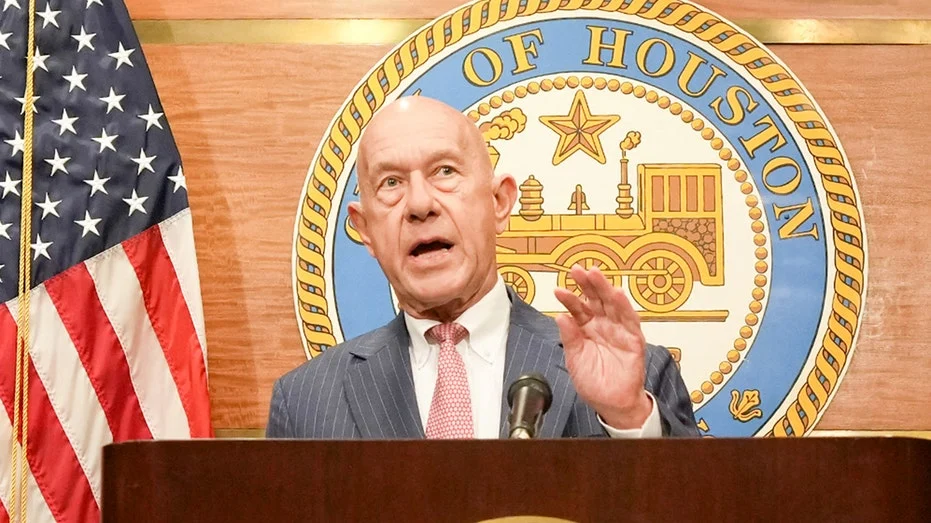
In a significant pivot that marks a departure from previous state-mandated enforcement protocols, Houston Mayor John Whitmire announced on Friday that the city will scale back its cooperation with federal immigration authorities. This policy shift arrives in the immediate aftermath of a transformative election cycle in Texas, which saw the defeat of Republican Governor Greg Abbott and the election of Democratic Senator-elect James Talarico, signaling a broader ideological realignment in the Lone Star State.
The mayor’s new directive explicitly prohibits Houston Police Department (HPD) officers from notifying U.S. Immigration and Customs Enforcement (ICE) during routine "nonviolent contacts," such as traffic stops or minor regulatory infractions. This decision effectively reinstates a more restrictive approach to federal-local cooperation, directly challenging the executive orders previously enforced by the outgoing gubernatorial administration.
A Shifting Political Landscape in Texas
The political climate in Texas has undergone a rapid metamorphosis. For the first time since 1988—the year Senator-elect James Talarico was born—the state has elected a Democrat to a U.S. Senate seat. The departure of Governor Greg Abbott after three terms has created a vacuum of power that is already being filled by local leaders eager to decouple municipal governance from the state’s previous "tough-on-immigration" posture.
Governor-elect Gina Hinojosa, who is set to take office in January, has been a vocal critic of the state’s aggressive posture toward sanctuary cities. While Mayor Whitmire’s executive order precedes the gubernatorial transition, it serves as a bellwether for the shift in regional governance. Analysts suggest that the move is designed to alleviate the "anxiety" felt by immigrant communities who have spent years navigating the threat of state-level funding cuts and the possibility of swift federal intervention in minor police encounters.
Chronology of Conflict: Houston’s Immigration Policy
The relationship between the City of Houston and federal authorities has been a point of contention for several years, characterized by a series of back-and-forth policy adjustments:
- March 2025: Mayor Whitmire and Police Chief Noe Diaz implemented a policy requiring that, if a background check revealed an immigration-related warrant, a sergeant would be summoned to coordinate with ICE. The policy included a 30-minute threshold; if federal agents could not arrive within that window, the individual would be released.
- April 2025: The Houston City Council passed a formal ordinance to codify these limitations. However, the move triggered an immediate response from Austin, as Governor Abbott threatened to withhold over $100 million in state funding for the city. Simultaneously, Texas Attorney General Ken Paxton initiated an investigation into the city’s adherence to state immigration law.
- Summer 2025: Under immense financial pressure and legal scrutiny, the city revised its policy to allow officers greater discretion in notifying ICE and waiting for federal agents, effectively bringing the city into compliance with the state’s mandates.
- November 2025: Following the November election results, Mayor Whitmire rescinded the state-compliant revisions, directing HPD to refrain from ICE notifications for non-jailable, nonviolent offenses.
The Debate Over Public Safety and Federal Partnerships
The Department of Homeland Security (DHS) has expressed formal disappointment regarding the mayor’s announcement. In a statement provided to the press, a DHS spokesperson emphasized that local law enforcement participation is a vital component of the federal strategy to apprehend individuals who have committed serious crimes.
"Partnerships with local law enforcement are critical to having the resources we need to arrest criminal illegal aliens across the country," the spokesperson noted. The federal agency pointed to specific case studies to justify their position, citing the apprehension of individuals like Alexander Montano of Cuba, who was convicted of homicide and burglary, and other foreign nationals previously detained in the Houston area for sex offenses against children and violent crimes.
The federal position relies on the premise that when local jurisdictions limit contact with ICE, federal officers are forced to operate in more public, less controlled environments to locate and apprehend targets. According to DHS data, seven of the top ten safest cities in the United States maintain robust cooperation agreements with ICE, a statistic the agency uses to counter the argument that sanctuary policies enhance public safety.
Conversely, proponents of the mayor’s new directive argue that the previous policy created an environment of distrust between the police and the immigrant community. By restricting ICE interactions to serious, jailable offenses, supporters argue that the city can ensure that victims of crimes and witnesses are not afraid to interact with law enforcement for fear of being turned over to federal immigration authorities.
Economic and Legal Implications
The economic stakes of this policy reversal remain substantial. By ignoring the previous executive order from the outgoing governor, Houston faces potential litigation or renewed threats of funding cuts. However, with a new administration set to take the helm in Austin in early 2026, the legal framework governing these state-city disputes may soon favor local autonomy.
The financial risk is not limited to the $100 million previously threatened by the state; it also includes the potential for protracted legal battles between the Texas Attorney General’s office and the City of Houston. As Mayor Whitmire noted in his statement, he views the current directive as a "responsible" and "more effective policy" that balances the need for public order with the practical realities of managing a diverse, international city.
Broader Impact: A Template for Other Cities?
Houston’s policy change is being watched closely by other major metropolitan areas across the United States. As cities balance the mandates of state governments against the needs of their local populations, the "Houston Model"—which distinguishes between violent, jailable offenses and minor infractions—may become a blueprint for other urban centers looking to distance themselves from federal immigration enforcement.
Critics argue that this approach creates a "patchwork" of enforcement across the country, making it difficult for federal authorities to maintain a consistent national security strategy. Supporters, however, view it as a return to the principle of "community policing," where local resources are dedicated to solving local crimes rather than acting as an auxiliary force for federal agencies.
As the city transitions into the new year, the effectiveness of this policy will be measured not just by crime statistics, but by the social cohesion of Houston’s diverse neighborhoods. The mayor has signaled that his focus remains on "building a stronger Houston," a goal he clearly believes is best served by reducing the direct interaction between city patrol officers and federal immigration agents.
With Governor-elect Hinojosa expected to shift the state’s approach to immigration enforcement, it remains to be seen whether the tension between Austin and Houston will dissipate or whether the new state administration will maintain the hardline stance of its predecessor. For now, the Houston Police Department is operating under a new set of instructions, marking a pivotal moment in the ongoing national debate over the role of local law enforcement in the federal immigration system.

