
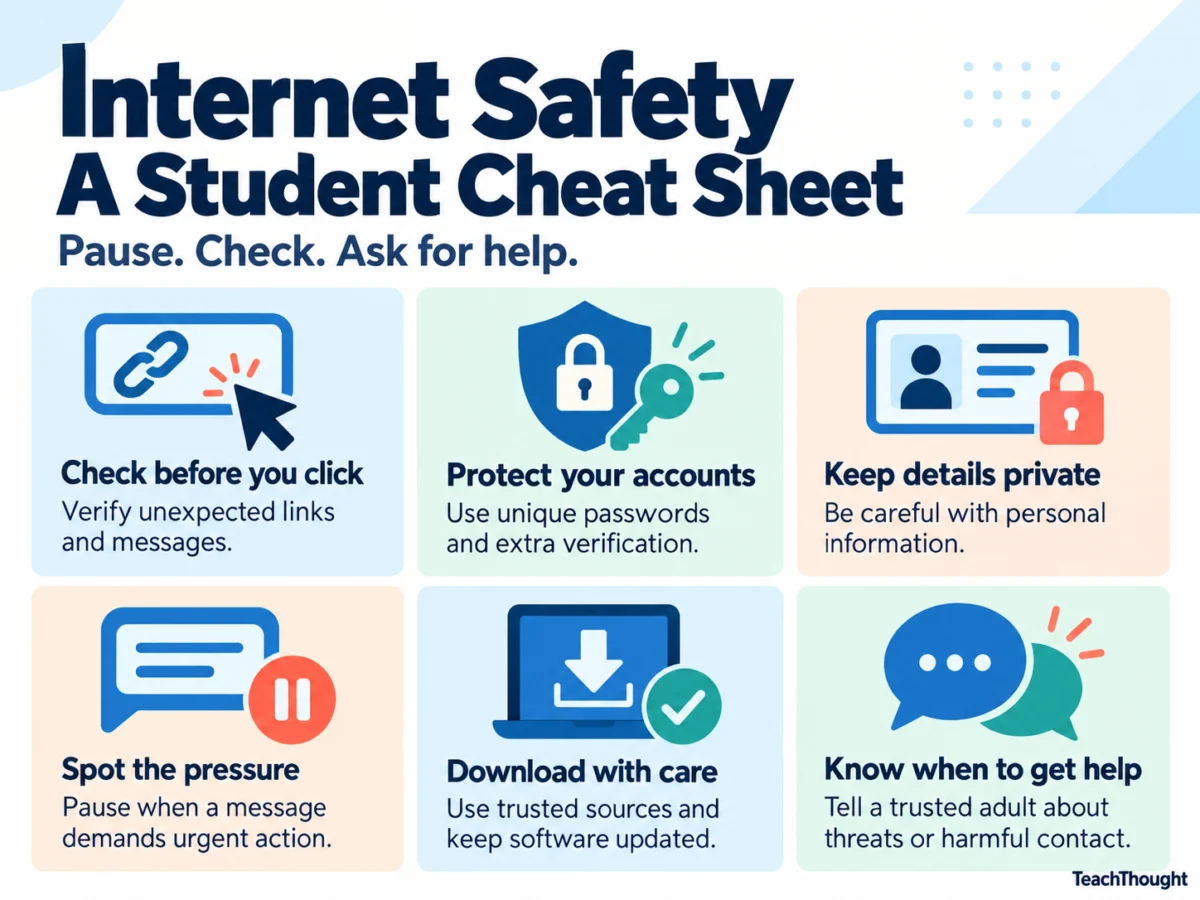
The contemporary educational environment exists at the intersection of traditional classrooms and an increasingly complex digital ecosystem. As students routinely navigate school-issued accounts, collaborative learning platforms, immersive gaming environments, instant messaging group chats, and generative artificial intelligence tools, the definition of student safety has expanded far beyond physical boundaries. Modern internet safety is no longer merely about restricting access to harmful content; it is the active, cognitive ability to recognize high-risk digital situations, execute safer behavioral choices, and secure immediate intervention when incidents occur.
Educational experts and cybersecurity authorities emphasize that digital fluency does not inherently equate to digital discernment. A student who can effortlessly operate a smartphone application or execute complex software commands may still lack the critical evaluation skills required to assess the underlying authenticity of a digital message, the hidden motivations of an online contact, or the privacy implications of a software installation prompt. Consequently, educational institutions worldwide are shifting from rigid, punitive internet restriction models toward comprehensive digital citizenship curricula that empower students to make informed, safe, and ethical decisions online.
The Evolution of Digital Risk and the Necessity of Proactive Education
The landscape of online threats facing students has evolved dramatically over the past two decades. In the early era of the internet, safety protocols primarily focused on basic malware protection and avoiding simplistic pop-up advertisements. Today, students encounter sophisticated social engineering schemes, deepfake manipulation technologies, coordinated cyberbullying within encrypted group chats, and predatory behavior disguised as peer-friendly social interaction.
According to data compiled by cybersecurity and child safety organizations, including the Cybersecurity and Infrastructure Security Agency (CISA) and the National Center for Missing & Exploited Children (NCMEC), digital threats have become more personalized and psychologically manipulative. Phishing attacks no longer rely solely on poorly worded mass emails; they frequently impersonate trusted school services, educational software logins, or peer accounts. Furthermore, the proliferation of generative AI tools has introduced unprecedented challenges, including the unauthorized creation and dissemination of fabricated student imagery and simulated relationships that complicate a young person’s understanding of digital boundaries.
In response to these escalating complexities, educators and policy makers are advocating for a structured, preemptive approach. Rather than reacting to crises after breaches or harassment occur, schools are embedding safety training directly into daily instructional practices. This approach aligns with broader digital citizenship frameworks, which dictate that students must learn not only how to protect their own personal security and privacy but also how to contribute constructively and safely to the online communities they inhabit.
Deconstructing Deception: Advanced Phishing and Social Engineering Awareness
One of the most persistent vulnerabilities for students in modern educational settings involves deceptive digital messaging, commonly known as phishing. Historically, digital literacy programs taught students to identify suspicious messages based on glaring spelling errors, unfamiliar logos, or suspicious sender addresses. However, modern cyber adversaries utilize advanced techniques to compromise legitimate accounts, replicate school branding, and craft hyper-targeted communications.
A message appearing to originate from a teacher, a school IT administrator, a popular gaming platform, or a familiar cloud storage service can easily bypass a student’s initial skepticism if evaluated solely on superficial markers like correct grammar or official logos. To counter this, security experts stress that students must evaluate the nature of the request rather than the identity of the sender.
Effective educational modules train students to scrutinize calls to action that demand immediate compliance. Common red flags include requests to urgently enter account credentials, share multi-factor authentication verification codes, download unverified file attachments, purchase digital goods, or act before an arbitrary deadline. These deceptive attempts routinely arrive across multiple channels, including institutional email, SMS text messages, direct messaging applications, and malicious QR codes posted in public or semi-private digital spaces.
Security professionals recommend a standardized verification protocol: students should never utilize the contact information or links embedded within a suspicious message. Instead, they should independently access the service via its official application or a pre-saved browser bookmark and verify the claim through a trusted, separate communication channel. For instance, if a student receives an urgent notification claiming their school account is scheduled for immediate deactivation unless they click an external link, the appropriate response involves navigating directly to the official school portal or consulting IT personnel in person.
Account Hygiene and Proactive Cybersecurity Measures
Protecting digital infrastructure requires robust preventive habits established long before a security incident occurs. Cybersecurity authorities, including CISA through its "Secure Our World" initiative, emphasize four core pillars of digital hygiene: recognizing phishing attempts, utilizing strong and unique passwords, enabling multi-factor authentication (MFA), and maintaining up-to-date software.
Within the school environment, students frequently underestimate the vulnerability of shared or poorly secured accounts. A pervasive misconception among adolescents is that sharing passwords serves as a token of friendship or trust. Educators must explicitly dismantle this notion, teaching students that credential sharing compromises personal accountability and opens pathways to identity theft, academic dishonesty, and unauthorized access to sensitive educational records.
To manage the cognitive load of remembering complex credentials for multiple platforms, students are encouraged to utilize password managers where permitted by institutional policy. Furthermore, enabling MFA adds a crucial secondary layer of defense, ensuring that even if a password is compromised, unauthorized users cannot access the account without physical possession of a secondary device or verification code. Students must also be instructed never to approve unsolicited sign-in prompts or share verification codes with peers, even if the requester claims to be experiencing technical difficulties.
Navigating Personal Data Disclosure and Digital Footprints
The traditional absolute directive to "never share personal information online" has become obsolete in an era where educational curricula rely heavily on digital learning management systems, collaborative cloud tools, and specialized software applications. Telling students to withhold all information renders modern schooling practically impossible.
A more functional and discerning approach shifts the inquiry from an absolute prohibition to a contextual evaluation: Does this specific person or digital service genuinely require this specific piece of information to fulfill its intended educational or functional purpose?
Students must practice evaluating data requests across various scenarios, such as a mobile game requesting a home address, a public social media post revealing a regular school pickup location, an online quiz asking for security questions that mirror account-recovery parameters, or an unverified educational tool demanding excessive device permissions. Teachers are encouraged to vet all instructional software prior to classroom implementation, ensuring that the technology complies with student privacy regulations and operates with the minimum amount of identifying data necessary.
Identifying Manipulation, Coercion, and Online Exploitation
Unsafe digital interactions rarely begin with overt threats or intimidation; they frequently commence through grooming behaviors characterized by excessive compliments, unearned attention, digital gifts, in-game currency rewards, or superficial offers of academic assistance. Consequently, relying solely on the antiquated concept of identifying a "stranger" is insufficient for protecting students in hyper-connected environments.
Educators must train students to recognize shifts in the dynamics of online interactions, focusing on indicators of pressure, premature secrecy, and emotional manipulation. For older students, particularly adolescents navigating complex social and romantic dynamics, educational programs must directly address severe issues such as sextortion—the act of threatening to distribute intimate images to extract financial compensation or additional compromising media.
According to resources provided by the National Center for Missing & Exploited Children (NCMEC), students must be informed that if they become victims of sextortion, they should seek immediate help from a trusted adult or authority figure, regardless of whether they previously trusted the perpetrator or initially shared the media voluntarily. Schools must maintain clear, supportive reporting pathways that assure students they will receive intervention rather than immediate punitive measures for making poor initial choices.
Responsible Digital Citizenship and Harassment Mitigation
The phenomenon of digital harassment and cyberbullying is frequently amplified by the architectural design of modern communication platforms, particularly group chats. A localized disagreement between two individuals can rapidly escalate into systemic harassment when peers engage in pile-ons, redistribute humiliating screenshots, or share private locations.
Effective digital citizenship curricula emphasize that bystanders carry a distinct responsibility to avoid exacerbating harm. Students are taught specific intervention strategies: refusing to retaliate, halting the redistribution of harmful material, utilizing platform-specific reporting tools, and notifying trusted adults or school administrators. While blocking a harasser can limit direct contact, students must understand that blocking may not completely resolve threats that migrate across multiple platforms.
When documenting harassment for administrative or legal review, students and staff must preserve objective details such as user handles, timestamps, and direct links where safely achievable. Crucially, safeguarding protocols strictly prohibit asking students or staff to download, store, or forward exploitative or sexual images of minors as evidence. Incidents involving the suspected sexual exploitation of minors must be handled in strict accordance with institutional safeguarding policies and reported immediately through appropriate legal channels, such as the NCMEC CyberTipline.
Evaluating Software Downloads, Device Permissions, and AI Integration
The proliferation of browser extensions, game modifications, study aids, and simulated artificial intelligence companions introduces significant vectors for digital risk. Students frequently encounter prompts requesting expansive permissions to access device microphones, high-definition cameras, local file storage systems, or real-time location data under the guise of improving functionality.
Educational institutions stress that software installations and permission prompts must be treated as critical decision-making moments. Students must be instructed to utilize approved institutional installation channels, avoid bypassing device security protections to complete coursework, and critically evaluate whether a requested permission aligns logically with the tool’s intended function—such as questioning why a basic digital timer requires access to keystrokes across all websites.
The integration of artificial intelligence into daily learning environments further complicates the safety landscape. Beyond foundational internet safety practices, AI education must address the ethical and psychological implications of generated content. The unauthorized creation, manipulation, or dissemination of fabricated digital imagery depicting classmates can inflict severe emotional and social harm. Educational policy dictates that any student targeted by manipulated media must receive immediate institutional support and validation, without being subjected to burdensome evidentiary standards to prove the falsity of the material. Specialized guidance from organizations such as the Australian eSafety Commissioner underscores the necessity of monitoring privacy risks and inappropriate boundaries associated with simulated AI companions and relationships.
Establishing Post-Incident Response Protocols
Comprehensive internet safety instruction remains incomplete without a clearly defined, accessible response plan for when security breaches, harassment, or exposure to disturbing content occur. Students must be empowered with actionable knowledge regarding whom to contact and what specific information is required to facilitate a rapid, effective intervention.
| Incident Scenario | Immediate First Response Protocol |
| :|^l | :|^l |
| Credential Compromise | Promptly notify a trusted adult or school IT administrator; execute the legitimate service’s official account recovery procedures to secure access. |
| Suspicious Software Download | Immediately cease using the file or installer; consult IT staff or a trusted adult; avoid interacting with secondary pop-up prompts or advertised "fixes." |
| Coercive Messages or Threats | Seek adult intervention immediately; refrain from transferring funds or sharing additional media; utilize designated platform and institutional reporting channels. |
| Exposure to Disturbing Content | Immediately navigate away from the material and inform a trusted adult; continuous viewing is unnecessary to establish that the content is harmful. |
Educators must communicate clearly regarding the legal and institutional limits of confidentiality, ensuring that students understand when disclosures mandate mandatory reporting to school administration or external law enforcement agencies. In cases of immediate physical danger or severe criminal activity, emergency services must be contacted without delay.
Conclusion: Institutional Implications and Fostering Practical Competency
Ultimately, building enduring internet safety and digital citizenship relies on moving beyond passive theoretical rules into active, practical decision-making exercises. Educational experts recommend routine, low-stakes classroom simulations—such as analyzing a fictional phishing message, evaluating a complex permission request, or navigating a challenging group-chat scenario—in a controlled environment that encourages critical thinking without requiring students to disclose personal trauma or private accounts.
By embedding these structured practices into everyday curricula, educational institutions bridge the gap between technological access and digital responsibility. Ensuring that students possess not only the technical know-how to navigate complex digital environments, but also the cognitive discernment to recognize risk and the institutional trust to seek help, remains a fundamental pillar of modern education.

