
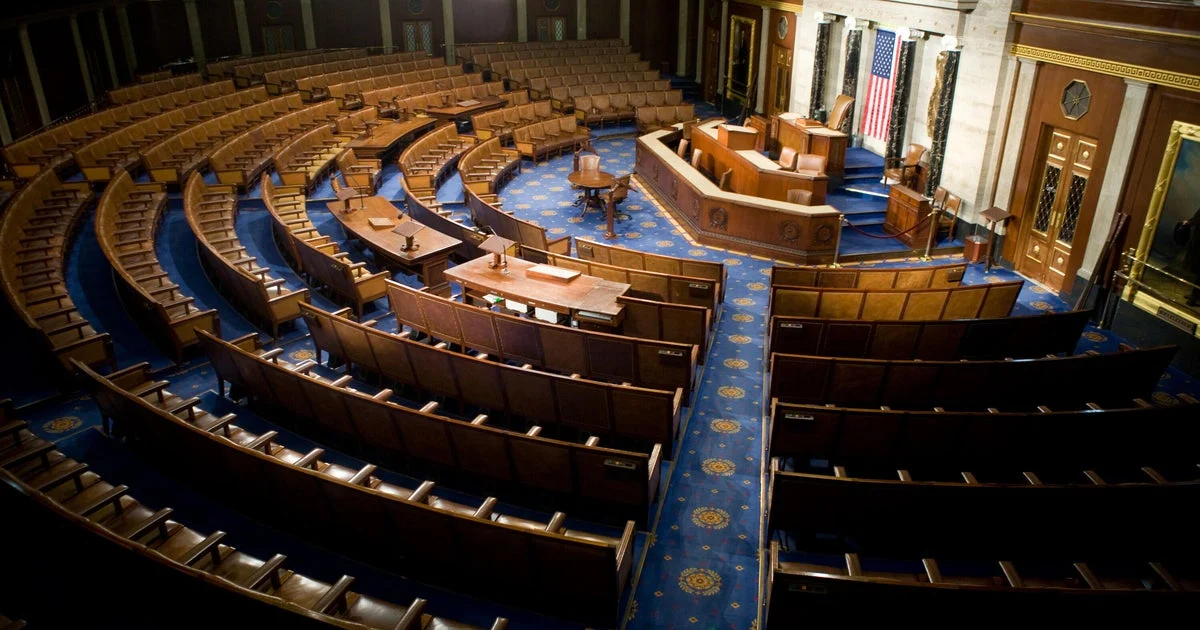
The political landscape of Capitol Hill underwent a profound transformation on Sunday as a newly elected class of House members arrived in Washington, D.C., for their official congressional orientation. This incoming cohort steps into the halls of power in the wake of the 2026 midterm elections, a political cycle defined by seismic shifts that successfully flipped control of both chambers of Congress to the Democratic Party. Following a grueling campaign season characterized by aggressive redistricting efforts, sharp debates over governance, and widespread voter anxiety regarding the national economy, these freshman lawmakers now face the monumental task of translating campaign rhetoric into legislative reality.
Interviews conducted with incoming members from both sides of the aisle reveal a striking, albeit unsurprising, convergence around a single, dominant theme: the cost of living. Whether hailing from newly flipped suburban districts or deep-seated rural strongholds, lawmakers-elect arrive with explicit mandates from constituents who feel squeezed by persistent inflation, exorbitant housing markets, and skyrocketing utility costs. Yet, even as they share a general focus on economic relief, the ideological divide over how to achieve these goals remains stark. Democrats prepare to wield their newly minted majorities with an eye toward sweeping legislative interventions and rigorous executive oversight, while Republicans—reeling from a minority status they did not anticipate—seek pathways to relevance, bipartisan collaboration, and damage control.
The Aftermath of the 2026 Midterms: A Transformed House
The 2026 midterm elections will be studied by political scientists for generations as a masterclass in voter volatility and unexpected outcomes. In the months leading up to November, numerous states engaged in aggressive partisan redistricting—often dubbed "dummymandering" by critics—designed to safeguard and expand Republican margins in the House of Representatives. However, a profound voter backlash against perceived federal overreach, economic stagnation, and localized scandals upended these calculations.
Democrats successfully flipped more than three dozen Republican-held seats. These victories stretched far beyond traditional Democratic strongholds, penetrating deep into suburban enclaves across the northeastern United States and capturing historically conservative regions in South Texas that had shown a distinct rightward drift in previous cycles. The result is a radically altered congressional arithmetic. The Democratic Party now commands majorities in both the House and the Senate, placing them firmly in the driver’s seat of the legislative branch during the final two years of the current presidential term.
For the Republican Party, the transition from majority power—or the anticipated expansion of it—to a significant minority status has triggered internal reckoning. New GOP members arrive in Washington tasked not only with representing their districts under altered institutional dynamics but also with redefining their party’s national message. The message sent by the electorate on the first Tuesday of November was clear: voters demanded a fundamental recalibration of legislative priorities to address everyday financial struggles.
The Democratic Agenda: Affordability, Oversight, and Bold Ambitions
For the incoming class of Democrats, the mandate is clear, but the execution will require a delicate balancing act between ambitious domestic reform and assertive congressional oversight.
Scott Wiener, who secured victory in California’s 11th Congressional District to succeed veteran lawmaker Nancy Pelosi, emphasized that economic relief must take center stage without overshadowing the party’s constitutional duties. "We can walk and chew gum, but lowering people’s cost of living is the most important," Wiener stated upon his arrival in Washington.
The strategy for achieving this economic relief varies by district, reflecting the diverse constituencies that power the modern Democratic caucus. Adrian Boafo, the representative-elect for Maryland’s 5th Congressional District, has tailored his primary legislative focus to the unique economic ecosystem of his region. Home to tens of thousands of federal workers, Boafo’s district has been deeply impacted by recent federal workforce reductions and policy shifts.
"Federal workers are extraordinarily important… 85,000 federal workers in my district, 30,000 in the state who have been laid off. I mean, so federal workers is probably the number one, two, and three priority for me," Boafo noted, highlighting the localized employment crises that federal legislators must navigate.
Meanwhile, Luke Bronin, representing Connecticut’s 1st Congressional District, argued that the magnitude of current systemic failures demands an equally massive legislative response. Speaking to reporters on Sunday, Bronin urged his party to cast aside caution.
"I think as a Democratic Party, we have to bring a whole new energy to this fight," Bronin said. "You know, when things are deeply broken, like healthcare or the housing market, or electricity prices going through the roof, we cannot be afraid to offer bold answers and be courageous about pushing through. And I want to see us go on offense."
In addition to economic reform, House Democrats are gearing up for aggressive investigative work. Bronin and other incoming progressives stressed that the electorate’s dissatisfaction extended beyond pocketbook issues to encompass a profound weariness with political corruption. "At the same time, I think we do have to be serious about oversight and accountability," Bronin added. "The type of corruption we’re seeing right now is unlike anything we’ve seen in our history, and the American people just made pretty clear that they’re disgusted by it and they want to see an end to it."
The Republican Pivot: Navigating Minority Status and Finding Common Ground
For freshman Republicans, orientation week serves as an abrupt introduction to the realities of Capitol Hill politics from the minority side of the aisle. Having anticipated a triumphant return to power, GOP newcomers are instead forced to strategize on how to remain effective advocates for their constituents while lacking the gavel-wielding control of committee rooms.
Chris Stigall, the newly elected Republican representative for Missouri’s 6th Congressional District, acknowledged the sobering reality of the election results. "There was a message sent last Tuesday night, and I hope, as a new member, I can be on the ground level of figuring out how we can reconnect and better message to the needs of the American people," Stigall said Sunday.
This sentiment of introspection is mirrored across the incoming freshman class, particularly among those representing agricultural and working-class districts where economic pressures manifest differently than in urban centers. Charlie Hatcher, the Republican representative-elect for Tennessee’s 5th Congressional District—who secured his seat after defeating an incumbent embroiled in controversy—pointed to the agricultural sector as a vital indicator of national economic health. Hatcher’s primary concern centers on the escalating cost of diesel fuel.
"Price of diesel fuel is affecting most everybody, especially farmers. And I’m a farmer, and that’s one of my top issues as well," Hatcher explained. "So it’s a price of fuel that’s affecting everything all the way down the line. Transportation, logistics, groceries… It’s all connected to that."
Recognizing the mathematical reality of the new House floor, several GOP representatives-elect expressed a pragmatic willingness to cross the aisle, identifying targeted areas where bipartisan consensus might be forged despite ideological differences.
Chris McGowan, the incoming Republican representative for Iowa’s 4th Congressional District, emphasized the necessity of cooperation. "I think first and foremost we have to recognize that my party is now in a significant minority," McGowan said. "So we’re going to have to work very, very hard to meet the new legislators representing the Democratic Party and where we can collaborate, cooperate, communicate on issues of shared interest, we certainly look forward to doing so."
Similarly, Jon Bonck, a Republican representative-elect from Texas’s 38th Congressional District, outlined specific conservative policy goals that he hopes might find a receptive audience among moderate Democrats or pragmatic dealmakers. "If it’s fixing housing affordability, deregulating industries, or getting the government out of healthcare, I’d love to meet Democrats that will do those kinds of things—cut taxes, give more money back to people," Bonck stated.
The Progressive Wing Expands Its Influence
As individual lawmakers staked out their regional and ideological positions, party factions mobilized to solidify their influence within the incoming Congress. The Congressional Progressive Caucus held an introductory press briefing on Sunday to welcome its largest incoming class in history, signaling that the left flank of the Democratic Party intends to push the leadership toward transformative policy outcomes.
Rep. Greg Casar of Texas, chair of the Progressive Caucus, announced that the group is incorporating at least 25 new members into its ranks. Casar argued that the expanded Democratic majority eliminates the excuses of the past, during which narrow margins and conservative Democratic holdouts stymied progressive ambitions.
"In the past, Democrats, with a narrow majority, have failed to pass Social Security expansion or taxing billionaires because special interests have been able to peel off just one or two members," Casar asserted, setting expectations for a more assertive legislative push during the upcoming term.
Rep. Pramila Jayapal, Chair Emerita of the Caucus, reinforced these remarks by outlining the core tenets that the progressive bloc will champion in the new Congress. "Taking on corruption, taking on affordability, making sure we end endless wars," Jayapal summarized, encapsulating the ideological anchor that will drive progressive negotiations with both party leadership and the executive branch.
Broader Implications and Outlook for the 120th Congress
The convergence of these diverse freshman perspectives in Washington highlights the complex governing environment that will define the incoming congressional term. The shift in congressional control fundamentally alters the political leverage of the executive branch, transforming Capitol Hill from a cooperative or defensive bulwark into an independent center of gravity equipped with robust subpoena power and legislative initiative.
Analysts note that while the Democratic majorities in the House and Senate provide a clear pathway for passing party-aligned legislation, the thin margins in specific sub-factions will require master-class legislative maneuvering. The ability of leadership to bridge the gap between pragmatic suburban moderates—who won in tightly contested, historically Republican districts—and energized progressives will determine whether the 120th Congress achieves landmark legislative success or bogs down in internal ideological friction.
Furthermore, the shared focus on economic affordability presents both an opportunity and a trap for lawmakers. While voters across the political spectrum agree on the existence of a cost-of-living crisis, the prescribed solutions—ranging from progressive tax reform and heavy federal intervention in housing and healthcare to conservative deregulation, tax cuts, and energy independence—remain fundamentally opposed.
As orientation sessions conclude and the administrative machinery of Capitol Hill prepares for the formal swearing-in of the new members, the underlying tension of the 2026 midterms remains palpable. The freshman class arrives bearing the direct grievances of an American electorate eager for relief, accountability, and competence. How these newly minted legislators navigate the institutional realities of Washington will ultimately dictate not only the legislative legacy of the current term but also the political fortunes of both major parties heading into the next national electoral cycle.

