
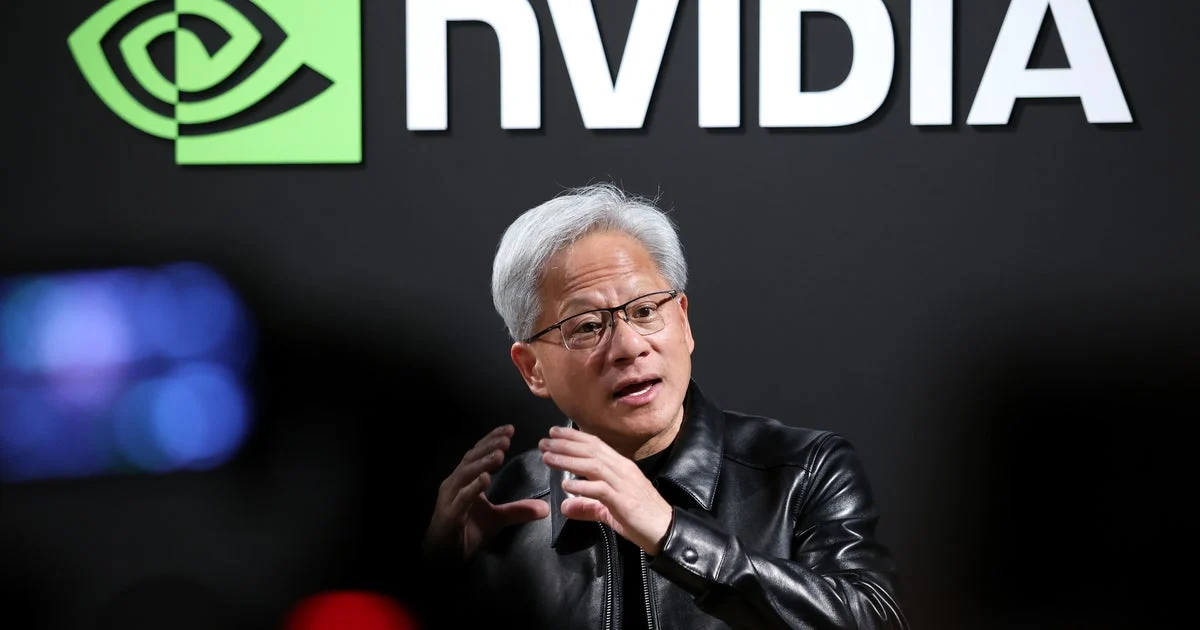
Nvidia, the California-based semiconductor giant that has become the cornerstone of the global artificial intelligence infrastructure, officially announced on Sunday that its board of directors has launched an independent investigation into co-founder and CEO Jensen Huang. The move follows a cascade of reports suggesting that the executive may have been the target of a sophisticated intelligence operation orchestrated by agents acting on behalf of the Chinese Ministry of State Security.
The company’s board stated that a dedicated committee of independent directors, supported by outside legal counsel, will lead the probe. While the board emphasized that there is currently no evidence that company trade secrets, proprietary intellectual property, or U.S. national security interests have been compromised, the decision to initiate a formal review underscores the extreme sensitivity surrounding Nvidia’s role in the global technological arms race.
The Allegations and the Megaspeed Connection
The focus of the inquiry centers on the relationship between Jensen Huang and Alice Huang, a prominent Chinese businesswoman and former executive at Megaspeed, a Singapore-based data center operator. Megaspeed has emerged as a significant player in the Southeast Asian technology market, having purchased over $4.8 billion worth of high-end Nvidia artificial intelligence chips within the last 24 months.
According to reporting by The New York Times, U.S. intelligence officials have expressed concerns that Alice Huang—who transitioned from a career in Chinese broadcast media to the top echelons of the tech sector—may have been utilizing her professional proximity to the Nvidia CEO as a vehicle for espionage. The allegations suggest that this personal and professional association was intended to facilitate unauthorized access to strategic insights regarding the distribution of AI hardware, which remains under stringent U.S. export controls.
In response to the growing international scrutiny, the Chinese government has dismissed the claims as unfounded. Last month, Beijing’s diplomatic spokespeople described the narrative as "groundless speculation," characterizing the allegations as a politically motivated attempt to stifle the competitiveness of Chinese firms in the global AI market.
Jensen Huang’s Personal and Professional Response
In a dual-pronged response to both the corporate investigation and personal revelations, Jensen Huang issued a candid statement to Nvidia’s global workforce. Beyond addressing the national security concerns, the CEO admitted to being "unfaithful" to his wife, offering a public apology for the personal pain caused to his family.
"There is no excuse for what I did. I am deeply sorry," Huang wrote. "I have fallen short of the responsibilities I owe to our company, our board, and our shareholders. I am fully committed to Nvidia and will work to earn back the trust of everyone who has supported me."
Regarding the espionage allegations, Huang emphasized his full cooperation with the board’s internal committee. "I love our country and our company," he stated. "I am committed to protecting Nvidia and supporting America’s national security. I am proud and grateful to be an American." A company spokesperson confirmed that Huang maintains the board’s support and remains dedicated to his duties as CEO.
Chronology of Events
- Late 2024: U.S. intelligence agencies begin tracking the activities of various high-level contacts between foreign nationals and key Silicon Valley executives.
- October 2026: Initial reports surface in The New York Times regarding the investigation into Alice Huang and her potential ties to Chinese intelligence, linking her role at Megaspeed to an effort to influence Nvidia’s leadership.
- Late October 2026: China’s foreign ministry formally denies all allegations of espionage regarding the matter, labeling the claims as a fabrication.
- November 8, 2026: Nvidia’s Board of Directors formally announces the formation of an independent committee to investigate the potential risks posed by foreign intelligence efforts targeting the CEO.
- November 8, 2026: Jensen Huang issues an apology to his family and the company, pledging total transparency throughout the investigation.
Broader Context: The Semiconductor Geopolitical Landscape
The investigation takes place against a backdrop of intensifying economic competition between the United States and China. As the world’s most valuable company, Nvidia occupies a precarious position at the center of this rivalry. The U.S. Department of Commerce has imposed rigorous restrictions on the sale of advanced AI chips to China, fearing that such hardware could be weaponized to accelerate military modernization, surveillance capabilities, and cryptanalysis.
Nvidia’s chips, particularly its H100 and Blackwell series, are considered the "gold standard" for training large language models (LLMs). The company reported an extraordinary quarterly profit of $59.69 billion in August 2026, a testament to the insatiable global demand for AI processing power. Because of this, any perceived vulnerability in Nvidia’s leadership is viewed as a high-stakes issue for U.S. national security.
When asked about the situation during a press engagement on Sunday, Secretary of State Marco Rubio declined to provide specifics, citing the matter as an "internal corporate affair." However, observers note that the U.S. government maintains a vested interest in the integrity of Nvidia’s supply chain and the security of its executive team, given that the company is effectively a critical component of the American defense-industrial base.
Analysis of Implications
The fallout from this investigation could be multifaceted. First, it places the spotlight on the "gatekeeper" role of CEOs in the tech sector. As these individuals manage companies with valuations exceeding trillions of dollars, they are increasingly being treated as geopolitical targets. The incident raises questions about the vetting processes for executives interacting with foreign entities, particularly those operating in regions where the lines between private business and state intelligence are often blurred.
Second, the investigation may signal a shift in corporate governance regarding transparency. By proactively announcing an independent investigation, the Nvidia board is attempting to reassure shareholders that the company is insulated from individual indiscretions or external coercion. However, the revelation of personal misconduct by a CEO often creates a "distraction risk" that can impact stock volatility and investor confidence.
Finally, the geopolitical dimension cannot be ignored. Should the investigation conclude that foreign intelligence successfully compromised the company’s inner circle—even if the technical secrets remained intact—it could lead to even more restrictive export controls and heightened scrutiny of all technology firms operating at the intersection of AI and national security.
As the independent committee begins its work, the tech world will be watching closely. For Nvidia, the goal is to resolve the matter swiftly to prevent a long-term erosion of trust. For the broader industry, the saga of Jensen Huang serves as a sobering reminder that in the age of artificial intelligence, the most important hardware in the world is not just a chip, but the leadership required to steward it.

