
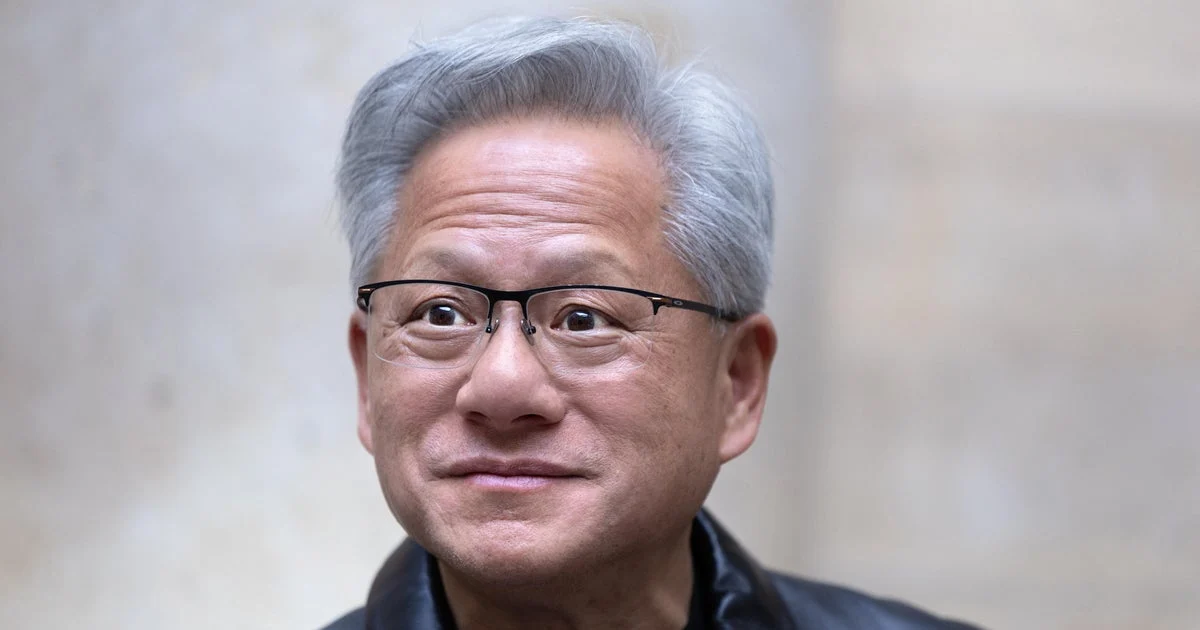
Nvidia shares plummeted in after-hours trading on Wednesday following reports that the board of directors is preparing to terminate the employment of longtime CEO Jensen Huang. The move comes as the company navigates a deepening crisis surrounding a personal relationship that has drawn the scrutiny of U.S. intelligence agencies. Shares of the semiconductor giant, which has been the cornerstone of the artificial intelligence revolution, fell more than 8% to $159.51, extending a massive market sell-off that has wiped out over $450 billion in shareholder value since the investigation was first disclosed on November 8, 2026.
The crisis stems from an internal investigation into an extramarital affair between Huang and an executive identified as Alice Huang, who is not related to the CEO. While personal indiscretions are often treated as private matters in corporate environments, the involvement of U.S. intelligence officials has elevated this situation to a matter of national security. According to reports, Alice Huang is suspected of having ties to China’s Ministry of State Security, raising profound concerns regarding the potential exposure of sensitive intellectual property and proprietary data held by Nvidia, which currently leads the global market in AI-focused graphics processing units (GPUs).
Chronology of the Crisis
The unfolding events have occurred in rapid succession, catching Wall Street and the tech industry off guard.
- November 8, 2026: Nvidia officially announces that its board of directors has launched an investigation into the conduct of CEO Jensen Huang. The disclosure triggers an immediate negative reaction in the markets.
- November 9–10, 2026: Reports emerge linking the investigation to an extramarital affair involving an individual allegedly connected to Chinese intelligence.
- November 11, 2026 (Sunday): Jensen Huang sends a formal communication to the global workforce at Nvidia, admitting to the affair and expressing remorse.
- November 11, 2026 (Wednesday): News surfaces that the board is moving toward a forced resignation, causing a significant late-day drop in the company’s stock price.
Corporate Governance and Ethical Standards
The scrutiny surrounding Huang centers on the strict Code of Conduct established by Nvidia. The document explicitly outlines that employees must avoid situations where personal relationships create a conflict of interest. A critical component of this policy includes the "Social Media Test," which instructs staff to consider whether they would be comfortable with their actions becoming public knowledge. If an employee cannot defend their actions on a public forum, the policy states, "do not proceed."
Governance experts argue that Huang’s position as the face of the company—and the primary architect of its current market dominance—makes these violations particularly damaging. By failing to disclose the nature of the relationship, Huang allegedly breached his fiduciary duty to the company and its shareholders, creating a scenario where the firm’s most sensitive strategic assets could be compromised.
Financial Implications and Market Volatility
Nvidia has been the primary beneficiary of the generative AI boom. Under Huang’s leadership, the company’s market capitalization surged to historic highs, driven by the insatiable demand for its H100 and Blackwell-series chips. However, the current instability has sent shockwaves through the semiconductor index.
The $450 billion loss in market capitalization represents one of the most significant single-event valuation declines in the history of the S&T sector. Institutional investors, including major pension funds and index trackers, are now forced to re-evaluate their exposure to the firm. Analysts suggest that the uncertainty surrounding the leadership transition could impede the company’s ability to secure long-term government contracts, particularly those involving defense and federal computing, due to the cloud of suspicion now hanging over its executive suite.
The National Security Dimension
The intersection of private conduct and national security is a rarity in modern corporate news, yet it reflects the high-stakes environment of the modern semiconductor industry. As the primary provider of the hardware required to train Large Language Models (LLMs), Nvidia’s operational security is synonymous with American technological superiority.
Lawmakers in Washington have begun to demand transparency regarding the scope of the intelligence investigation. If it is found that Huang’s relationship facilitated the transfer of, or provided access to, trade secrets or roadmaps for future chip architectures, the consequences could extend beyond the boardroom. Federal regulators may impose strict oversight or even limit the company’s export capabilities to certain regions, further complicating an already delicate geopolitical landscape.
Leadership Transition and Future Outlook
Jensen Huang has been synonymous with Nvidia since he co-founded the firm in 1993. His leadership style, often described as visionary and hands-on, was instrumental in pivoting the company from a gaming-centric hardware manufacturer to the essential backbone of the AI era. His potential departure leaves a massive void at the top of the organization.
The board’s decision to oust the founder marks a departure from typical corporate handling of executive scandals. Usually, companies might opt for a reprimand, a pay cut, or a supervised leave of absence. The decision to move directly toward termination suggests that the board has discovered information that is either legally indefensible or poses an existential threat to the company’s survival.
"The board is in a difficult position," said an analyst covering the tech sector. "On one hand, you have the person who built the company into a trillion-dollar entity. On the other, you have a security breach that could trigger federal investigations, export bans, and a total loss of trust from enterprise clients. The board has clearly decided that the risk of keeping him outweighs the value of his leadership."
Internal Impact and Employee Morale
The internal culture at Nvidia, which has been characterized by high-performance expectations and a strong sense of mission, is currently in flux. With two of Huang’s family members also employed at the company, the personal toll of the scandal is significant. In his apology letter, Huang acknowledged the pain caused to his wife and children, noting, "There is no excuse for what I did. I am deeply sorry."
However, for many of the thousands of engineers and employees tasked with maintaining the company’s competitive edge, the primary concern remains the future of their projects. The uncertainty surrounding leadership often leads to a "brain drain," where top-tier talent begins to look for more stable environments. The company’s ability to retain its high-caliber research and development teams will be a critical metric for investors to watch in the coming weeks.
Conclusion: A Turning Point for Big Tech
As the investigation continues, the focus will shift to how the company plans to reorganize its leadership structure. Investors are calling for a swift, transparent transition to prevent further erosion of shareholder confidence. The case of Jensen Huang serves as a stark reminder of the complexities of modern corporate leadership, where the personal lives of CEOs can rapidly escalate into matters of international importance.
Whether Nvidia can recover its market momentum will depend largely on the firm’s ability to distance itself from the controversy and demonstrate that its security protocols are robust enough to withstand even the most significant executive failures. As of the latest update, the board has not released an official timeline for the appointment of a successor, leaving the industry to wait and see what happens next in this unfolding saga of silicon and secrets.

