
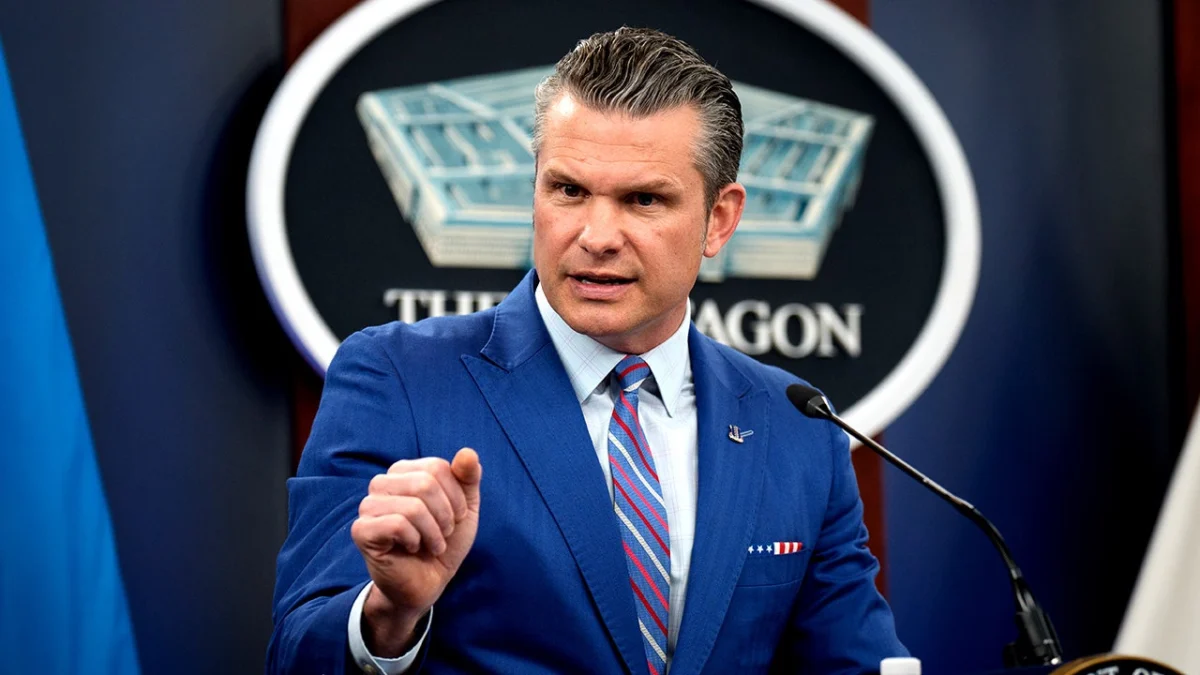
In an era where the integrity of democratic processes has become a cornerstone of national security, Secretary of War Pete Hegseth has issued a sweeping directive mobilizing the entire U.S. Defense Intelligence Enterprise to safeguard the 2026 midterm elections. The directive, issued in September, marks a significant escalation in the Pentagon’s posture, ordering a "no-fail" mobilization of military intelligence, cyber assets, and geospatial capabilities to detect, deter, and disrupt foreign interference before it can manifest on American soil.
While the Department of Defense has played an increasing role in election security over the past decade, Hegseth’s order is notable for its breadth. It moves beyond the traditional oversight of U.S. Cyber Command and the National Security Agency (NSA), explicitly tasking the Defense Intelligence Agency (DIA) and the National Geospatial-Intelligence Agency (NGA) with integrating election security into their core operational missions. This shift reflects a growing consensus within the national security establishment: the threat posed by foreign adversaries is no longer limited to direct cyberattacks on voting infrastructure but has evolved into a sophisticated, multifaceted campaign of influence and psychological operations.
A Decade of Escalation: From Russiagate to 2026
The trajectory of American election security efforts can be traced back to the 2016 presidential election, a watershed moment that exposed significant vulnerabilities in the U.S. political system. The subsequent "Russiagate" investigations revealed that foreign state actors could penetrate the American information space, sow discord, and potentially influence voter sentiment without ever physically altering a ballot.
Following the 2016 cycle, the U.S. government underwent a fundamental paradigm shift. In 2018, ahead of the midterm elections, the Pentagon and intelligence community formed the "Russia Small Group," a specialized task force designed to provide a cohesive, cross-agency response to foreign meddling. This structure proved effective, evolving into a more permanent, joint Election Security Group that combined the NSA’s unparalleled signals intelligence capabilities with Cyber Command’s offensive cyber authorities.
By 2022, then-Cyber Command chief Gen. Paul Nakasone codified this work, describing election security as an "enduring, no-fail mission." This doctrine held that the best defense against foreign interference is a proactive, forward-leaning posture—identifying and neutralizing threats in the adversary’s own digital backyard before they reach U.S. servers or networks.

The Scope of the Hegseth Directive
Secretary Hegseth’s recent directive serves as a formal reinforcement of this doctrine, ensuring that the mission is not merely a task for cyber-specialists but a priority for the entirety of the Defense Intelligence Enterprise. According to officials familiar with the order, the directive mandates three primary actions:
- Enhanced Intelligence Collection: The Defense Intelligence Agency and other specialized agencies are tasked with prioritizing the collection and analysis of data related to foreign influence campaigns, specifically identifying the origins of state-sponsored disinformation.
- Operational Synchronization: Cyber Command is directed to coordinate closely with the Department of Homeland Security (DHS) and the FBI to ensure that military intelligence reaches civilian authorities in real-time, allowing for a rapid domestic response.
- Proactive Neutralization: Where authorized, Cyber Command is empowered to disrupt foreign infrastructure—such as botnets or servers used to disseminate malicious content—provided such operations occur outside the United States.
While the Pentagon has declined to release specific details regarding the implementation of this order, the directive implicitly grants broad flexibility to field commanders. It underscores that the U.S. military’s role is primarily focused on threats originating from abroad, respecting the constitutional divide that leaves the administration of elections to state and local authorities.
The Evolving Threat Landscape
As Americans prepare for the 2026 midterms, the threat landscape has grown more complex. Intelligence officials note that while there is currently no evidence of successful foreign interference with physical voting machines or the tabulating of ballots, the methodology of adversaries has shifted toward more insidious targets.
Artificial intelligence (AI) has emerged as a primary concern. The ability of hostile nations to use AI-generated deepfakes, automated social media bots, and hyper-targeted disinformation campaigns has significantly lowered the cost of entry for foreign intelligence services. Rep. Jim Himes, D-Conn., ranking member of the House Intelligence Committee, has consistently warned that the integration of AI into foreign influence operations poses a "transformative threat" to the stability of public discourse.
Current intelligence reports indicate that Russia remains the most aggressive actor in the space, utilizing a blend of cyber-espionage and influence operations to target specific candidates and exacerbate internal political divisions. China, conversely, has demonstrated a more surgical approach, focusing its efforts on candidates or policies that it perceives as detrimental to its strategic interests, particularly concerning trade and regional security in the Indo-Pacific. Iran also remains a factor, frequently engaging in efforts to undermine confidence in democratic institutions through digital psychological operations.
The Institutional Response: A Complex Web
The U.S. approach to election security is inherently collaborative, involving a complex web of federal, state, and local agencies. The Pentagon acts as the "tip of the spear" in the international arena, utilizing its vast signals and geospatial intelligence capabilities to track foreign adversaries. However, the domestic perimeter is managed by the DHS’s Cybersecurity and Infrastructure Security Agency (CISA) and the FBI.

The challenge, according to national security experts, lies in the "hand-off." Information gathered by the Pentagon must be vetted, declassified where possible, and disseminated to state election officials who may not have high-level security clearances.
Gen. Joshua Rudd, the current leader of Cyber Command and the NSA, has emphasized that the military is "postured and ready" to support this interagency effort. In testimony before Congress, Rudd highlighted that the military’s effectiveness is predicated on its ability to "understand our adversaries" through persistent engagement—a strategy of "defending forward" that has become the hallmark of U.S. cyber strategy.
Implications for the 2026 Midterms
The political stakes of the 2026 midterms are immense, with several highly contested races in states such as Texas, Ohio, Michigan, Wisconsin, and Georgia. These battlegrounds are considered prime targets for foreign adversaries seeking to tip the scales or, more effectively, to cast doubt on the results.
The Pentagon’s heightened focus, while intended to bolster confidence, also raises questions about the scope of military involvement in domestic political matters. However, officials argue that the military is not "intervening" in the election but rather "securing the environment" against external aggression. By focusing on foreign actors—often thousands of miles away—the Department of Defense seeks to prevent the interference from ever reaching the domestic sphere.
Yet, the lack of transparency regarding the specifics of Hegseth’s directive has led to some calls for further oversight. Critics argue that without clear metrics for what constitutes "success," the military’s role in information operations could expand in ways that lack sufficient accountability. Conversely, supporters of the move argue that in an era of asymmetric warfare, the traditional boundaries of military action must be fluid to keep pace with adversaries who do not recognize those same boundaries.
Analysis: A New Normal for National Security
The transformation of election security into a permanent, "no-fail" military mission represents a fundamental shift in how the United States defines national defense. Historically, the military’s role was to protect the nation from physical invasion; today, it is tasked with protecting the nation’s democratic "software"—the information, trust, and processes that underpin the republic.

This mission is fraught with difficulty. Foreign adversaries are constantly iterating, moving away from crude hacking attempts toward more subtle, long-term influence operations that are harder to detect and even harder to counter without encroaching on free speech or civil liberties.
As the 2026 midterms approach, the Pentagon’s apparatus is fully engaged. The success of this mission will not be measured by a single event, but by the absence of disruption. For Secretary Hegseth and the intelligence community, the objective is clear: to ensure that when citizens head to the polls, their choices remain their own, free from the shadow of foreign manipulation.
Whether this mobilization is sufficient to counter the rapidly evolving tactics of adversaries remains to be seen. What is certain, however, is that the era of viewing elections as purely domestic affairs is over. They are now, by necessity, a central component of the U.S. national security strategy, requiring the same level of attention, investment, and strategic planning as any conventional military conflict. The 2026 midterms will serve as a critical test for this integrated approach, setting the precedent for how the United States will defend its democratic values against a persistent and increasingly sophisticated global threat.

