
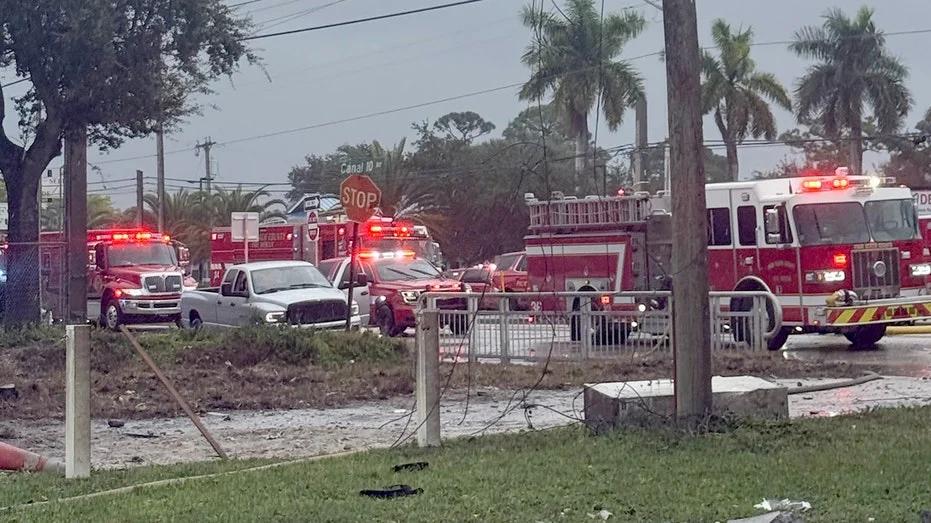
A tragic aviation incident unfolded on a Sunday afternoon in South Florida when a private corporate jet carrying nine people plummeted from the sky and slammed into a residential neighborhood in Palm Beach County. The catastrophic crash, which occurred roughly nine miles away from the Mar-a-Lago estate, erupted into a massive fireball, triggering an immediate, large-scale emergency response and closing major thoroughfares in the area. Federal regulators have since stepped in to launch a comprehensive investigation into the mechanics and final moments of the doomed flight, which had originated in Texas and was bound for the Caribbean.
The incident has sent shockwaves through the local community and renewed scrutiny over aviation safety, private air travel corridors, and emergency preparedness in densely populated residential zones. As local authorities work tirelessly to secure the crash site and mitigate environmental and structural hazards, aviation experts and federal investigators are piecing together the puzzling telemetry data that preceded the fatal descent.
The Fatal Flight Path and Initial Incident Details
The aircraft involved in the disaster was a Learjet 60, a twin-engine midsize business jet manufactured by Bombardier Aerospace, known for its speed and high-altitude performance capabilities. According to preliminary data and flight tracking records provided by Flightradar24, the aircraft departed from Austin-Bergstrom International Airport in Texas at approximately 3:37 p.m. local time on Sunday, November 1.
The flight, carrying a total of nine occupants—including crew members and passengers—was chartered to fly to North Eleuthera Airport in the Bahamas. The initial leg of the journey appeared routine. The Learjet climbed steadily through the Texas airspace, eventually reaching a standard cruising altitude of 41,000 feet as it traversed the Gulf of Mexico toward the Florida peninsula.
Everything appeared normal until the aircraft approached the airspace near Naples, Florida. At approximately 5:35 p.m., tracking logs indicate the aircraft initiated a controlled descent down to 35,000 feet. What transpired over the next fifteen minutes remains the central focus of federal investigators. At 5:48 p.m., the plane briefly climbed before executing a sharp, steep, right-hand descent. Within moments, the aircraft dropped rapidly out of the sky, careening toward a populated residential area near Cresthaven, Florida, where it impacted the ground at approximately 12:50 p.m. local time—a timeline discrepancy currently being reconciled by aviation analysts evaluating disparate time zone data feeds.
Upon impact, the aircraft ruptured, igniting a ferocious fireball that sent thick, black plumes of smoke billowing into the South Florida sky. The sheer intensity of the fire and the scattering of debris across residential yards created an immediate hazard for homeowners and bystanders in the vicinity.
Emergency Response and Immediate Aftermath
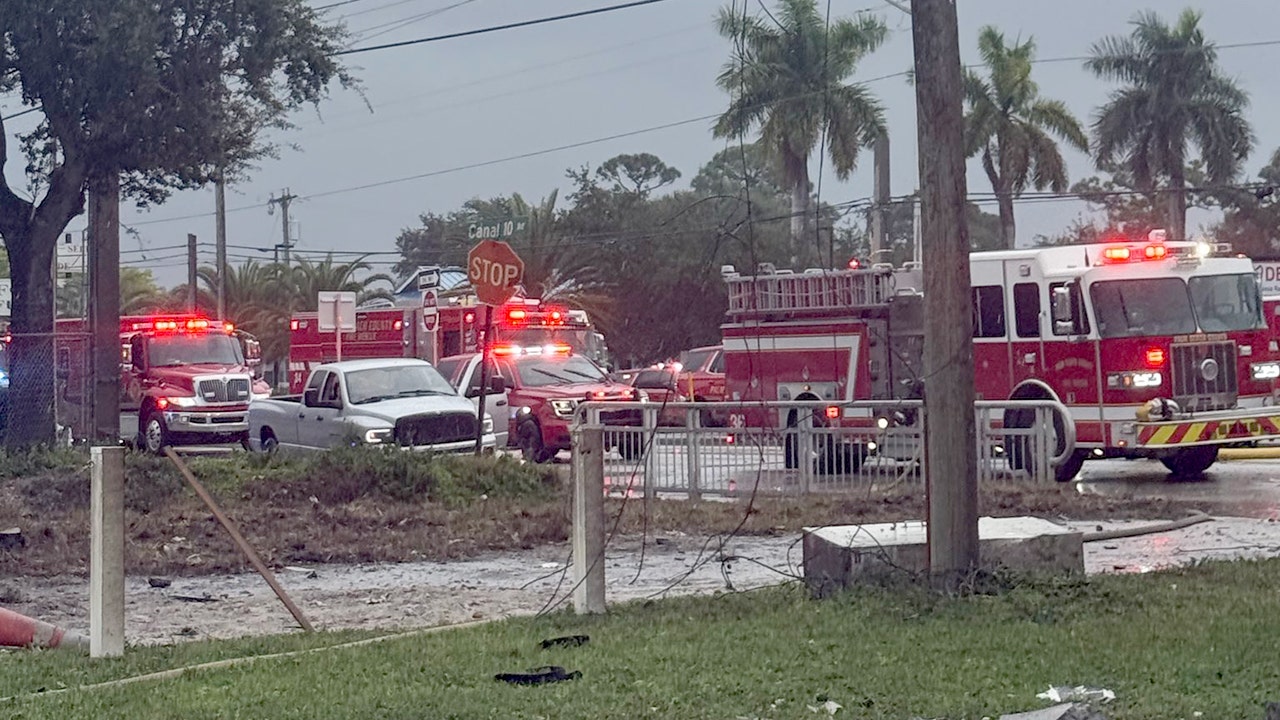
The response from local emergency services was swift and overwhelming. Palm Beach County Fire Rescue units rushed to the scene within minutes of the impact, deploying engines, hazardous materials teams, and rescue personnel to combat the raging inferno and secure the perimeter.
Authorities immediately locked down the surrounding infrastructure to facilitate rescue operations and prevent civilians from entering the hazardous zone. Law enforcement agencies closed Military Trail between Cresthaven Boulevard and 10th Avenue North, a critical artery that services significant residential and commercial traffic in the region.
Palm Beach County Fire Rescue issued urgent advisories via social media channels, specifically urging motorists and local residents to completely avoid the area. In an official post on X, the agency designated the event as an "Aircraft Incident," warning the public that it would develop into an "extended incident" due to the complex nature of the wreckage investigation and recovery efforts.
Local residents reported hearing a thunderous roar followed by a deafening blast as the aircraft struck the ground. Several homeowners captured the terrifying final moments on cell phone cameras and home security systems, with footage subsequently circulating on social media platforms showing the jet in a steep downward trajectory before disappearing behind a horizon of rooftops, immediately followed by a massive plume of fire and smoke. Remarkably, initial reports from the ground indicated that no residents on the ground were killed or critically injured, though property damage to surrounding fences, roofs, and vegetation was substantial.
Federal Investigation Led by the NTSB
The magnitude of the crash immediately triggered federal oversight. The Federal Aviation Administration (FAA) released a formal statement confirming the details of the flight plan, the aircraft type, and the passenger manifest.
"The FAA and National Transportation Safety Board will investigate," the agency announced in its preliminary briefing. "The NTSB will be in charge of the investigation and will provide all updates."
A team of NTSB investigators, specializing in aircraft wreckage analysis, air traffic control operations, and human factors, was dispatched to the scene to initiate the daunting task of piecing together the puzzle. Investigators will systematically recover the aircraft’s components, map the debris field, and search for onboard recording devices, including the cockpit voice recorder (CVR) and flight data recorder (FDR), if equipped and recoverable on this specific model of the Learjet 60.
In addition to physical wreckage analysis, federal investigators will subpoena maintenance logs, review the pilot’s training history and medical records, analyze air traffic control voice communications and radar tapes, and evaluate weather conditions in the region at the time of the descent. The sudden, unexplained maneuver from cruising altitude—moving from a descent to a brief climb, followed immediately by an aggressive, steep right turn—suggests that the flight crew may have been battling a catastrophic mechanical failure, a sudden onboard emergency, or a severe control surface malfunction.
Context and Safety Record of the Learjet 60
The Learjet 60 is a widely utilized corporate jet known for its performance and reliability, having been a staple of private aviation fleets for decades. Powered by Pratt & Whitney Canada PW305A turbofan engines, the aircraft typically seats up to eight passengers in addition to a two-person flight crew, though configurations can vary.
While the Learjet series has historically maintained a generally acceptable safety record comparable to other high-performance business jets, any incident involving a rapid, uncontrolled descent draws intense scrutiny from aviation safety advocates. Over the years, federal safety agencies have periodically issued airworthiness directives or safety alerts regarding specific systems on similar airframes, though it remains entirely premature to attribute Sunday’s crash to any systemic mechanical defect prior to the conclusion of the NTSB’s rigorous, multi-month investigation.
The proximity of the crash site to Mar-a-Lago—roughly nine miles away—initially drew heightened security concerns from federal and local law enforcement agencies, though officials quickly confirmed that the incident was an aviation accident with no indications of foul play, intentional targeting, or security threats directed at the political landmark.
Broader Implications for Private Aviation and Infrastructure
As the community of Cresthaven and the broader Palm Beach area begin the arduous process of healing, the tragedy highlights the inherent risks associated with low-altitude aviation over densely populated suburban environments. South Florida, with its dense network of private airfields, bustling international airports, and frequent corporate air traffic, is no stranger to aviation transit. However, accidents occurring directly within residential neighborhoods inevitably spark renewed community anxiety regarding flight paths, zoning regulations, and the safety margins required for corporate and private aircraft operating over populated terrain.
Furthermore, the incident underscores the critical importance of robust air traffic management and the ongoing need for rigorous safety oversight within the private charter sector. While commercial airlines operate under notoriously strict regulatory frameworks and continuous federal monitoring, the private charter and corporate aviation industry encompasses a diverse array of operators, maintenance providers, and ownership structures.
In the coming weeks, as the NTSB sifts through telemetry data, recovers physical components, and interviews witnesses, aviation professionals will watch closely for preliminary findings. Any insights gleaned from the flight data recorder or air traffic control transcripts could yield vital lessons for the entire private aviation community, potentially leading to new safety recommendations or procedural adjustments designed to prevent similar disasters in the future.
For now, the focus in South Florida remains fixed on honoring the victims, supporting the grieving families impacted by the loss of the nine individuals on board, and allowing federal investigators the time and space necessary to uncover the definitive truth behind why a routine flight to the Bahamas ended in tragedy just minutes off its path.

