
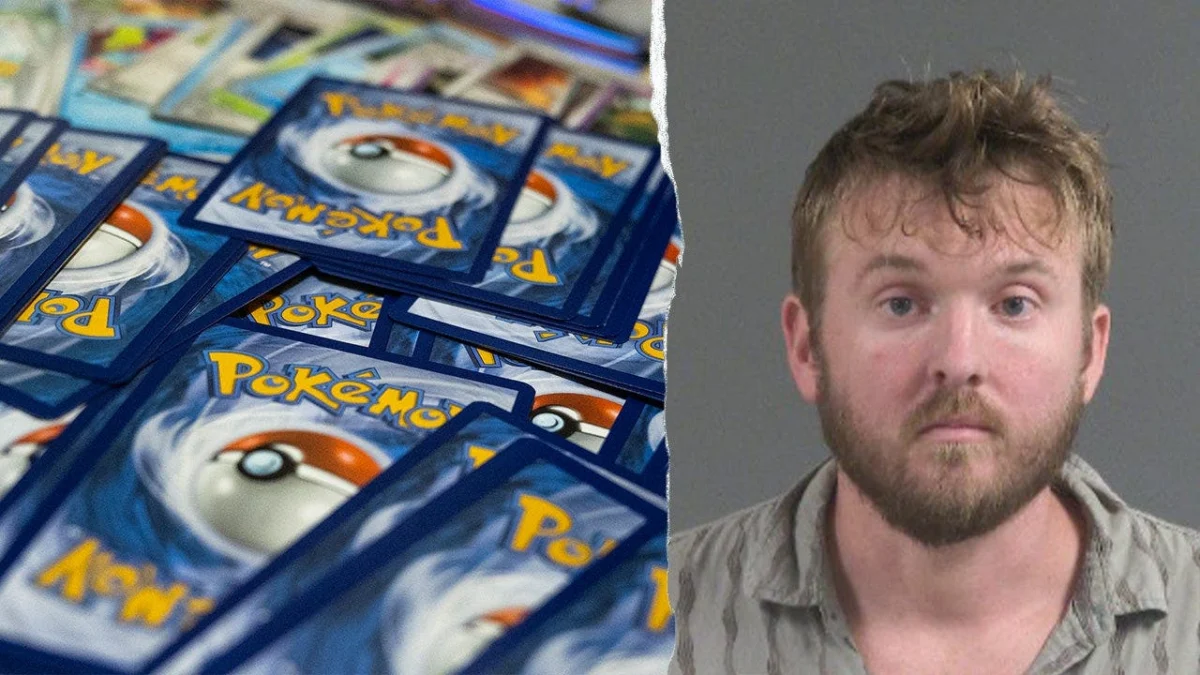
The pursuit of rare collectibles has crossed a legal and ethical boundary in Charleston, South Carolina, where a 35-year-old father faces criminal charges after allegedly abandoning his six-year-old daughter overnight outside a retail store. The incident highlights an escalating national trend of extreme behavior driven by the booming secondary market for Pokémon trading cards.
John-Michael Dooley was taken into custody by the Charleston Police Department on November 6 following an early-morning emergency response at a local Target location. Authorities report that Dooley left the young girl sleeping on the pavement wrapped in a blanket to hold his spot in an overnight queue for a highly anticipated Pokémon card set release. The case has sparked widespread outrage, renewed conversations regarding parental accountability, and brought fresh scrutiny to the security challenges retailers face during high-demand collector drops.
The Early Morning Discovery and Police Response
The sequence of events began unfolding in the dark hours of November 6. According to local law enforcement, Charleston police officers were dispatched to the Target store at approximately 2:30 a.m. following urgent reports from concerned citizens regarding an unattended child.
When officers arrived at the scene, they discovered a makeshift camp consisting of a pillow, a blanket, and a sleeping six-year-old girl. Witnesses in the line informed police that the young girl had originally arrived hours earlier accompanied by her father, joining a growing crowd of enthusiasts eager to secure exclusive merchandise when the store opened later that morning.
However, investigators pieced together that sometime after 1:00 a.m., Dooley elected to leave the retail premises. Equipped only with a pillow and a blanket, the child was left completely alone on the sidewalk while her father returned to the comfort of his home.
As the hours passed and temperatures dipped, fellow patrons in the line noticed the adult guardian’s prolonged absence. After roughly an hour elapsed with no sign of Dooley’s return, the crowd grew increasingly alarmed for the child’s safety and wellbeing. Concerned citizens ultimately intervened by contacting emergency services.

When Dooley eventually strolled back to the storefront later that morning, waiting witnesses readily identified him to law authorities. Officers immediately detained the 35-year-old father. During subsequent questioning, investigators stated that Dooley freely admitted to abandoning his daughter on the sidewalk so she could maintain his prime position in the queue while he slept at home.
Following the investigation, police confirmed that the young girl was unhurt physically. She was immediately removed from the scene and placed into the protective custody of the South Carolina Department of Social Services. Dooley was transported to the Al Cannon Detention Center, where he was formally charged with unlawful conduct toward a child. Online jail records indicate he has since been released.
The Phenomenal Rise of Pokémon Trading Card Culture
The extreme lengths to which collectors will go to secure new merchandise are rooted in the massive economic and cultural resurgence of the Pokémon franchise. Originally launched in Japan in the mid-1990s, the property spanning video games, anime, and collectible cards has transformed into one of the highest-grossing media franchises in human history.
While standard booster packs traditionally retail for modest prices—usually hovering around $5—the modern landscape of trading card collecting has been completely altered by rarity tiers, limited print runs, and a lucrative secondary market. Modern and vintage cards alike can command hundreds, thousands, or even hundreds of thousands of dollars among passionate collectors and speculative investors.
This particular overnight campout was organized in anticipation of the latest major expansion set rollout: Mega Evolution—Delta Reign. The release drew crowds nationwide, mirroring patterns seen during previous high-profile product drops. Because major retailers often limit purchases per customer and operate on a strictly first-come, first-served basis, enthusiasts frequently form queues hours—or even days—before doors open.
However, the commercialization of the hobby has steadily attracted bad actors. Security professionals note that the combination of high liquidity, portability, and substantial aftermarket valuations has turned trading card aisles into prime targets for both desperate consumers and organized criminal elements.
A Broader Trend of Retail Crime and Collector Desperation
The Charleston incident is not an isolated event, but rather part of a troubling nationwide wave of criminal activity and erratic behavior surrounding trading card releases. Law enforcement agencies across the United States have reported soaring rates of retail theft, vandalism, and violent confrontations tied directly to collectible card games.

Just weeks prior to the Charleston arrest, law enforcement in California busted several high-profile retail theft rings targeting Pokémon merchandise. In San Francisco, local police apprehended juvenile suspects linked to a violent robbery involving pepper spray, where perpetrators deployed high-tech tools to bypass security measures. Meanwhile, in Brentwood, California, masked bandits executed a lightning-fast heist, storming a local hobby shop and making off with tens of thousands of dollars worth of rare cards in under sixty seconds. The brazen robbery forced the business owner to drastically upgrade security infrastructure and alter business operations.
Security analysts point out that retail giants and specialty hobby shops are increasingly forced to rethink how they manage product releases. In many cases, stores have had to implement lottery systems, digital queueing applications, or hire private security guards to manage crowds and prevent safety hazards. Despite these measures, incidents like the one in Charleston demonstrate that the pressure to secure limited inventory can push individuals to compromise basic safety and legal boundaries.
Legal and Societal Implications
The charges levied against John-Michael Dooley highlight the severe legal ramifications of child neglect and endangerment. Under South Carolina law, unlawful conduct toward a child is a serious offense designed to protect minors from situations that place their physical or mental health at unreasonable risk.
Legal experts note that prosecutors take unattended minor cases particularly seriously when environmental factors—such as overnight exposure, late-night urban environments, and lack of supervision—threaten a child’s safety. Beyond the immediate criminal proceedings, the involvement of the South Carolina Department of Social Services indicates that Dooley will face rigorous family court evaluations regarding custody and future parental responsibilities.
Child welfare advocates have expressed profound shock over the incident, emphasizing that no consumer good, regardless of its monetary value or collectibility, justifies placing a vulnerable child in potential danger. Psychologists and sociologists observing the hobby’s explosive growth suggest that the convergence of gambling-like mechanics in booster pack openings, combined with high-stakes financial speculation, can distort judgment and lead individuals to prioritize material acquisition over fundamental familial duties.
As retailers prepare for upcoming holiday shopping seasons and future trading card expansions, industry leaders are calling for tighter coordination with local law enforcement and more standardized protocols for crowd management. For the community in Charleston, however, the immediate focus remains on the well-being of the six-year-old child navigating the aftermath of a night that exposed the dark side of modern collecting culture.

