
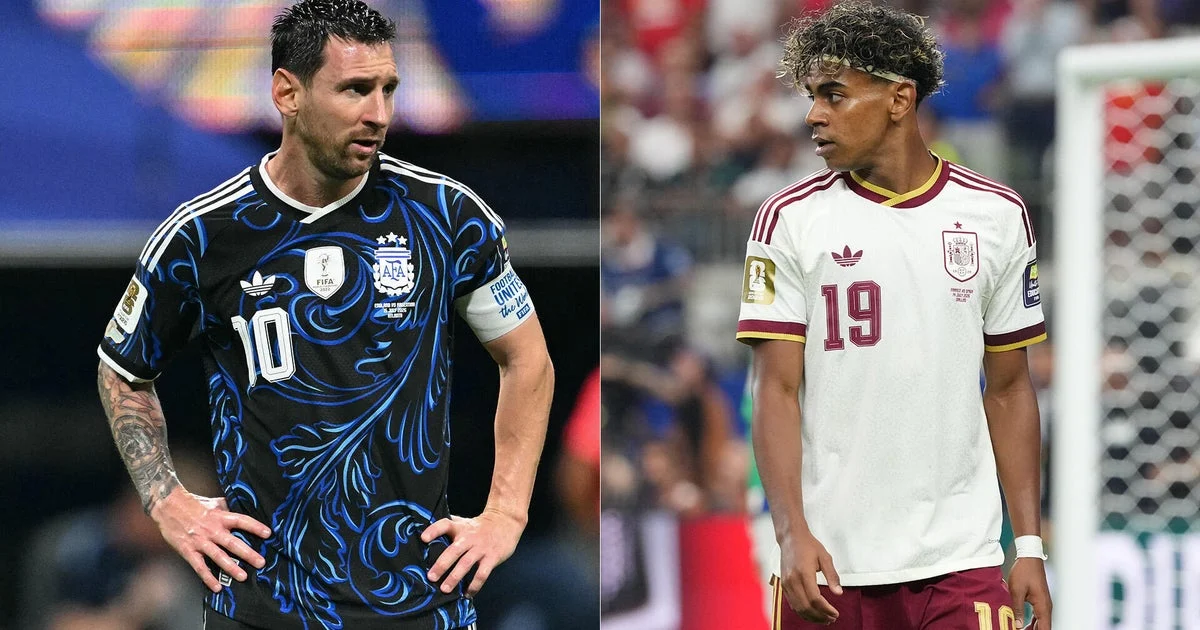
As the historic 39-day tournament draws to a dramatic close, soccer fans globally have been on an emotional rollercoaster, experiencing moments of heartbreak, pure joy, and intense controversy across the sprawling host nations of the United States, Canada, and Mexico. From an initial field of forty-eight nations—the largest FIFA World Cup in history—only two titans remain: Spain, in pursuit of its second coveted World Cup title, and Argentina, aiming for an unprecedented back-to-back championship, a feat not achieved in over six decades.
The stage is set for a monumental showdown at MetLife Stadium, with kickoff scheduled for July 20, 2026. The narrative leading into this final is rich with compelling storylines, pitting Spain’s formidable 37-game unbeaten streak against Argentina’s recent dominance in international football, spearheaded by the enduring brilliance of Lionel Messi. Paul Tenorio of The Athletic succinctly captured the essence of the matchup to CBS News, stating, "Spain came into the tournament as the favorite. This is a team that now is riding a 37-game unbeaten streak going into the finals." He contrasted this with Argentina, remarking, "Argentina is Argentina. They’ve won three consecutive international tournaments going into this World Cup, and they’ve done it with the best player of all time, [Lionel] Messi being kind of the heartbeat of the team. You can tell that the Argentina players are playing for Messi." This final is not merely a game; it is a battle for legacies, a test of tactical prowess, and a celebration of football’s global appeal.
Spain’s Quest for a Second Star: A New Golden Generation Rises
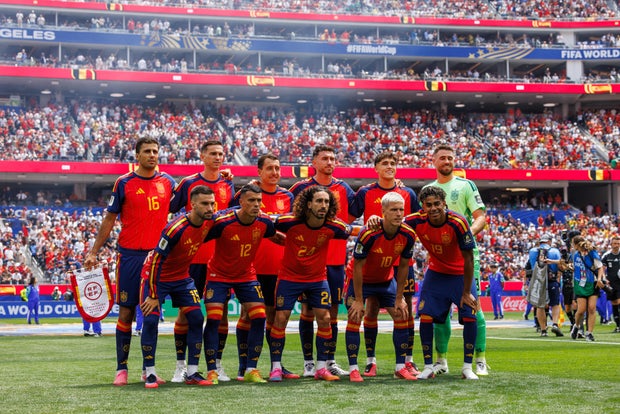
Spain, often dubbed ‘La Roja,’ enters this final as a team transformed, having shed the vestiges of its past golden era to embrace a vibrant new generation. Their sole World Cup triumph came on July 11, 2010, in Johannesburg, South Africa, a hard-fought 1-0 victory over the Netherlands. That team, boasting legends like Xavi, Andrés Iniesta, David Villa, Gerard Piqué, Sergio Ramos, and Iker Casillas, etched its name in history not just by winning, but by becoming one of only two teams ever to lose its opening match and go on to lift the trophy – the other being Argentina itself in 1978. Spain also holds the distinction of being the first European nation to win a World Cup played outside Europe.
The current squad under coach Luis de la Fuente, who took the helm after a disappointing Round of 16 exit in Qatar in 2022, represents a deliberate passing of the torch. De la Fuente, having previously coached Spain’s U-19 and U-21 teams, meticulously integrated young talents into the senior squad, fostering a cohesive unit. His roster for the 2026 World Cup features several prodigious players, including 19-year-old Pau Cubarsí and 21-year-old Dean Huijsen in defense, signaling a clear shift towards youth and dynamism.
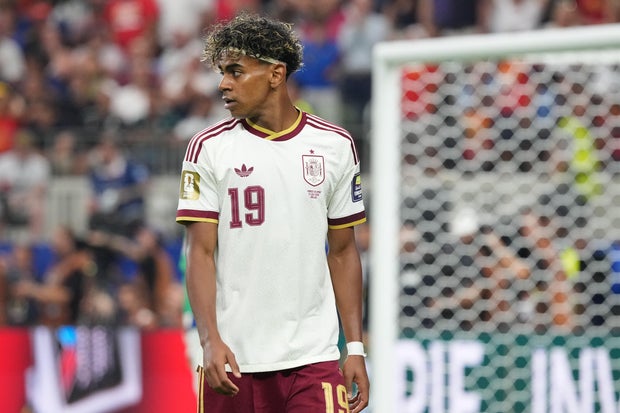
The undeniable breakout star for Spain in this tournament has been Lamine Yamal. At just 19 years old, Yamal’s electrifying performances have captivated audiences, building on his pivotal role in Spain’s 2024 Euro title victory. Fifteen players from that Euro-winning squad are now part of the World Cup final roster, showcasing the continuity and strength of this burgeoning era. Yamal himself, in a "60 Minutes" interview last year, articulated the high expectations surrounding his team: "I think that I have very high expectations. I think it’s been a long time since Spain was a serious contender to win the World Cup. I see that the country is excited. I am very excited… I feel good. I’m really looking forward to it, and I’m going to enjoy it a lot." His words resonate with the national sentiment, as Spain strives to reaffirm its place at the pinnacle of international football.
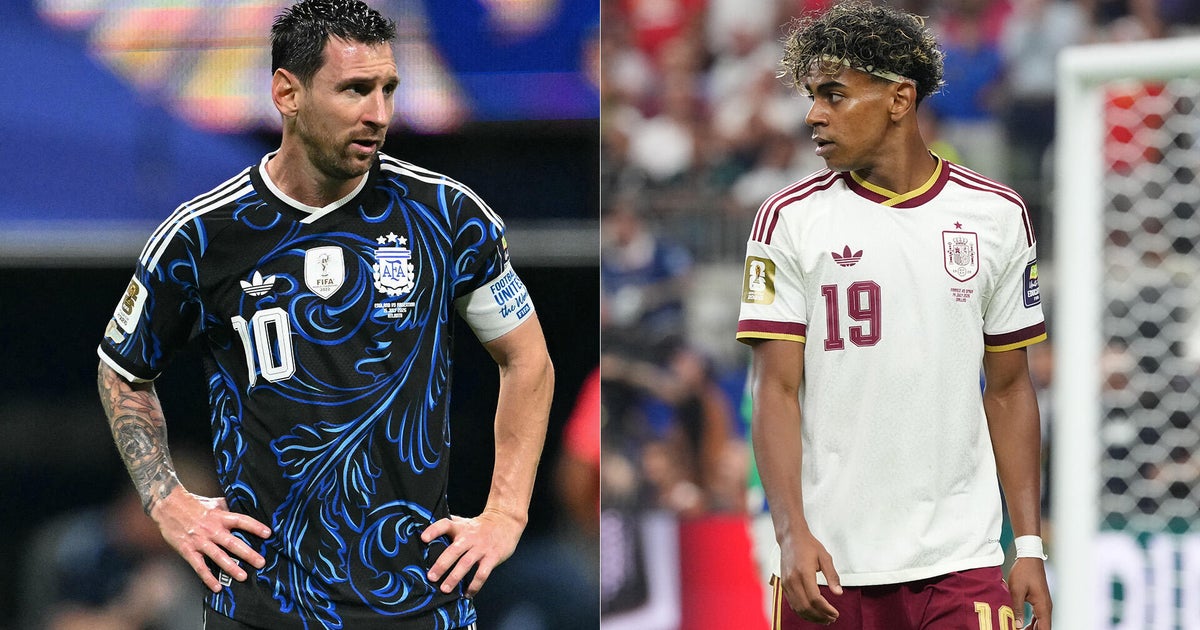
Spain’s journey to the final has been underpinned by an astonishing 37-match unbeaten run in regulation time, a streak that now matches Italy’s all-time world record for international football. Their defensive solidity has been a hallmark of their campaign. In their seven World Cup matches leading up to the final, Spain has conceded a mere single goal, a concession against Belgium (2-1) in a thrilling quarterfinal encounter. Goalkeeper Unai Simón has been a rock between the posts, maintaining a record-breaking 650 minutes without conceding a goal, the longest scoreless streak recorded at this tournament. This defensive prowess will be crucial against an Argentine attack spearheaded by Lionel Messi.
Offensively, Spain has also found multiple avenues for success. 29-year-old Mikel Oyarzabal has been a prolific scorer, netting five goals since the start of the World Cup and matching David Villa’s record for the most goals scored by a Spaniard in a single tournament. Oyarzabal and Yamal have been at the forefront of Spain’s attacking endeavors, with 22 and 23 attempts on goal, respectively, demonstrating their consistent threat. However, their defense, marshaled by veterans and burgeoning talents alike, faces its ultimate test against the unparalleled offensive capabilities of Argentina’s captain, Lionel Messi. De la Fuente’s tactical genius will be tested in how he structures his team to contain arguably the greatest player of all time while maintaining their offensive rhythm.
Argentina’s Bid for Back-to-Back Glory: Messi’s Final Dance
Argentina, entering this World Cup as the reigning champions, carries the weight of history and the hopes of a nation on its shoulders. ‘La Albiceleste’ aims to achieve a rare feat: becoming the first team to win back-to-back World Cup titles since Brazil accomplished it in 1958 and 1962, and only the third nation ever, alongside Italy (1934, 1938). Their dramatic victory over France in the 2022 World Cup final in Qatar, securing their third title, ended a 36-year drought and cemented Lionel Messi’s legendary status.
This 2026 tournament has seen Messi further solidify his unparalleled legacy. At 39 years old, he has become the all-time leading scorer in men’s World Cup history, accumulating an astonishing 21 goals across six World Cup tournaments. In this edition, he is currently tied with France’s Kylian Mbappé as the leading scorer with eight goals, showcasing his undiminished scoring prowess. Messi also leads the tournament in attempts on goal with 34, highlighting his constant threat. His record for the most FIFA World Cup appearances stands at an incredible 32 matches, and he is one of only two players, alongside Portugal’s Cristiano Ronaldo, to have participated in six World Cups – a testament to his longevity and consistent excellence at the highest level.
Coach Lionel Scaloni, the architect of Argentina’s 2022 triumph, has meticulously managed his squad, strategically evolving it while preserving its core spirit. He opted to leave out nine players from the 2022 winning squad, introducing several fresh faces to provide vital support for Messi and reinforce the defensive line. Players like Julian Álvarez and Lautaro Martínez, though present in 2022, have taken on even more significant roles, contributing crucial goals and assists throughout the tournament. Martínez, in particular, proved his mettle in the semifinal against England, heading in a decisive stoppage-time goal from a Messi pass to propel Argentina into its seventh World Cup final.
Midfielder Enzo Fernández, who burst onto the scene in 2022 as the youngest Argentinian to score a World Cup goal since Messi, has continued to impress. His masterful equalizer in the semifinal against England, a testament to his vision and composure, was a crucial moment in Argentina’s campaign. These young talents, combined with the experience of Messi and others, create a balanced and formidable team.
In goal, Emiliano Martínez has once again proven why he is regarded as one of the best keepers in the world. Known for his intimidating presence, psychological tactics, and penalty shoot-out heroics, ‘Dibu’ Martínez returned to the World Cup final as the reigning Golden Glove winner from 2022. His consistent excellence was recognized again in 2024, making him the only goalkeeper to win The Best FIFA Goalkeeper award twice. His ability to command his area, make crucial saves, and rattle opponents will be a significant factor against Spain’s potent attack.
Argentina’s path through the tournament has been a testament to their resilience and unwavering belief, often needing to dig deep to overcome challenges. Their collective spirit, often described as ‘playing for Messi,’ adds another layer of emotional intensity to their campaign. A victory would not only secure back-to-back titles but would also crown Messi’s extraordinary career with an unprecedented double, further solidifying his claim as the greatest of all time.
The Road to MetLife: A Tournament of Drama and Records
The 2026 FIFA World Cup, jointly hosted by the United States, Canada, and Mexico, has been a spectacle of unprecedented scale and drama. The expansion to 48 nations presented new challenges and opportunities, allowing more teams to participate on football’s grandest stage. Over 39 days, fans witnessed thrilling group stage upsets, nail-biting knockout encounters, and the emergence of new stars alongside the reaffirmation of established legends.
For Spain, their journey began with high expectations, quickly reinforced by their dominant performances and the establishment of their incredible unbeaten streak. They navigated a challenging group, demonstrating both offensive flair and defensive solidity. Their knockout stage saw them overcome resilient opponents, including a tough quarterfinal clash against Belgium and a strategic semifinal victory over France, where their control of possession and clinical finishing proved decisive.
Argentina’s path, while equally challenging, highlighted their experience and clutch performance under pressure. As defending champions, they were the target for every opponent, yet they managed to maintain their composure. Their group stage saw moments of brilliance and resilience, setting the tone for a challenging knockout phase. They faced formidable opponents in the latter stages, including a tense quarterfinal against Switzerland and a hard-fought semifinal against old rivals England, which required late-game heroics to secure their spot in the final.
The tournament has also been marked by several significant records and milestones. Beyond Messi’s individual achievements, the sheer number of goals, the intensity of the rivalries, and the global viewership have underlined the growing appeal and competitive nature of international football. The expanded format brought diverse playing styles and passionate fan bases, contributing to a vibrant atmosphere across the host cities.
Clash of Styles and Legacies: A Final Preview
The World Cup final between Spain and Argentina presents a fascinating tactical battle, a true clash of footballing philosophies. Spain, under Luis de la Fuente, has perfected a style built on fluid possession, intricate passing, and disciplined defense. Their midfield, often controlling the tempo, aims to starve opponents of the ball while their young, dynamic attackers like Yamal and Oyarzabal exploit spaces. Their defensive record speaks volumes about their collective effort and the individual brilliance of Unai Simón.
Argentina, on the other hand, while capable of possession, often thrives on a more direct, counter-attacking approach, leveraging the unparalleled genius of Lionel Messi. Their strength lies in their ability to absorb pressure and then unleash devastating attacks, with Messi dictating play, creating chances, and finishing with lethal precision. The supporting cast of Álvarez, Martínez, and Fernández provides both defensive cover and offensive thrust, while Emiliano Martínez’s presence in goal adds a psychological edge.
Key individual matchups will likely decide the outcome. How Spain’s defense, particularly their central midfielders and defenders, manages to contain Messi will be paramount. A concerted team effort to deny him space and time on the ball will be crucial. Conversely, Argentina’s backline will need to be incredibly disciplined against Spain’s intricate passing movements and the explosive runs of Yamal. The midfield battle, featuring Spain’s technical maestros against Argentina’s tenacious enforcers and playmakers like Fernández, will be pivotal in dictating the flow of the game.
Beyond the tactical intricacies, this final carries immense symbolic weight. For Spain, a victory would solidify the arrival of a new golden generation, proving that their 2010 triumph was not an anomaly but the beginning of a rich footballing heritage. It would be a testament to de la Fuente’s vision and the belief in youth. For Argentina, a back-to-back title would be a historic achievement, cementing their status as one of football’s greatest dynasties and providing a fitting, possibly final, crowning moment for Lionel Messi’s extraordinary international career. The emotional resonance of such a victory for a nation that lives and breathes football would be profound.
Implications Beyond the Pitch
The 2026 World Cup final has implications that extend far beyond the 90 minutes (or more) of play on the field. The tournament’s expanded format and shared hosting duties have already set new benchmarks for global sports events. The final, held in the heart of the New York metropolitan area, is expected to draw record viewership, further boosting FIFA’s global reach and revenue. The economic impact on the host cities and nations has been substantial, from tourism and infrastructure development to increased brand visibility.
For the winning nation, the immediate aftermath will be a period of national celebration and pride, potentially inspiring a new generation of footballers and fans. For the losing side, while disappointment will be palpable, the journey to the final itself is a significant achievement, highlighting the strength and potential of their respective footballing programs. The narratives created by this final will be discussed and analyzed for years to come, shaping the historical discourse of the beautiful game.
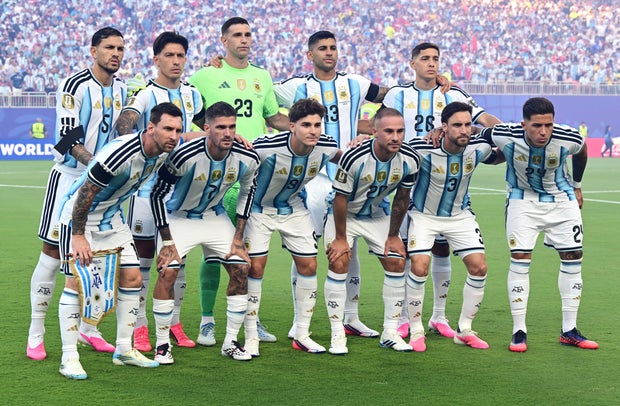
As the world tunes in to MetLife Stadium, the anticipation is not just for a football match, but for a moment in history where legacies will be forged, records will be broken, and a new chapter in the FIFA World Cup story will be written. The stage is set for a truly unforgettable final between two footballing giants.
Elizabeth Campbell contributed to this report.

