

The publication of Nathan Maynard’s The Science of Discipline: 8 Strategies for Empowering Educators and Engaging Students has reignited a long-standing debate within the American educational system regarding the fundamental nature of student behavior and the role of schools in shaping character. As schools grapple with a post-pandemic landscape marked by rising rates of classroom disruption and mental health concerns, Maynard’s work offers a "restorative" approach that views misconduct not as a moral failing, but as a symptom of unmet needs or missing cognitive skills. However, critics and educational traditionalists argue that this shift toward a therapeutic model of schooling risks abandoning the essential task of moral formation and the establishment of shared institutional norms.
The Core Conflict: Empathy vs. Accountability
At the heart of the current disciplinary divide is a philosophical disagreement about human nature. Drawing on the political philosophy of James Madison in Federalist No. 51, traditionalists argue that institutions exist precisely because human beings are not inherently "angels." In this view, children are capable of both great kindness and significant disruption; therefore, the role of the school is to restrain impulsive behavior while cultivating habits of self-command.
Nathan Maynard’s restorative vision, however, aligns with a lineage of educational thought tracing back to Jean-Jacques Rousseau, suggesting that disorder is often a reaction to the "heavy hand" of adult authority. Maynard posits that behavior is a form of communication. When a student acts out, he argues, they are signaling a "skill gap," emotional overload, or a breakdown in human connection. Under this framework, the educator’s role shifts from a rule-enforcing authority figure to a diagnostician and mentor.
While this vision is lauded for its humanity and focus on dignity, it raises significant questions about the efficacy of removing clear consequences. Critics suggest that by treating all misconduct as a psychological "need," schools may inadvertently reward disruption and fail to prepare students for the realities of adult accountability.
A Chronology of Disciplinary Philosophy in American Schools
The evolution of school discipline in the United States has moved through several distinct eras, leading to the current tension between restorative and traditional models.
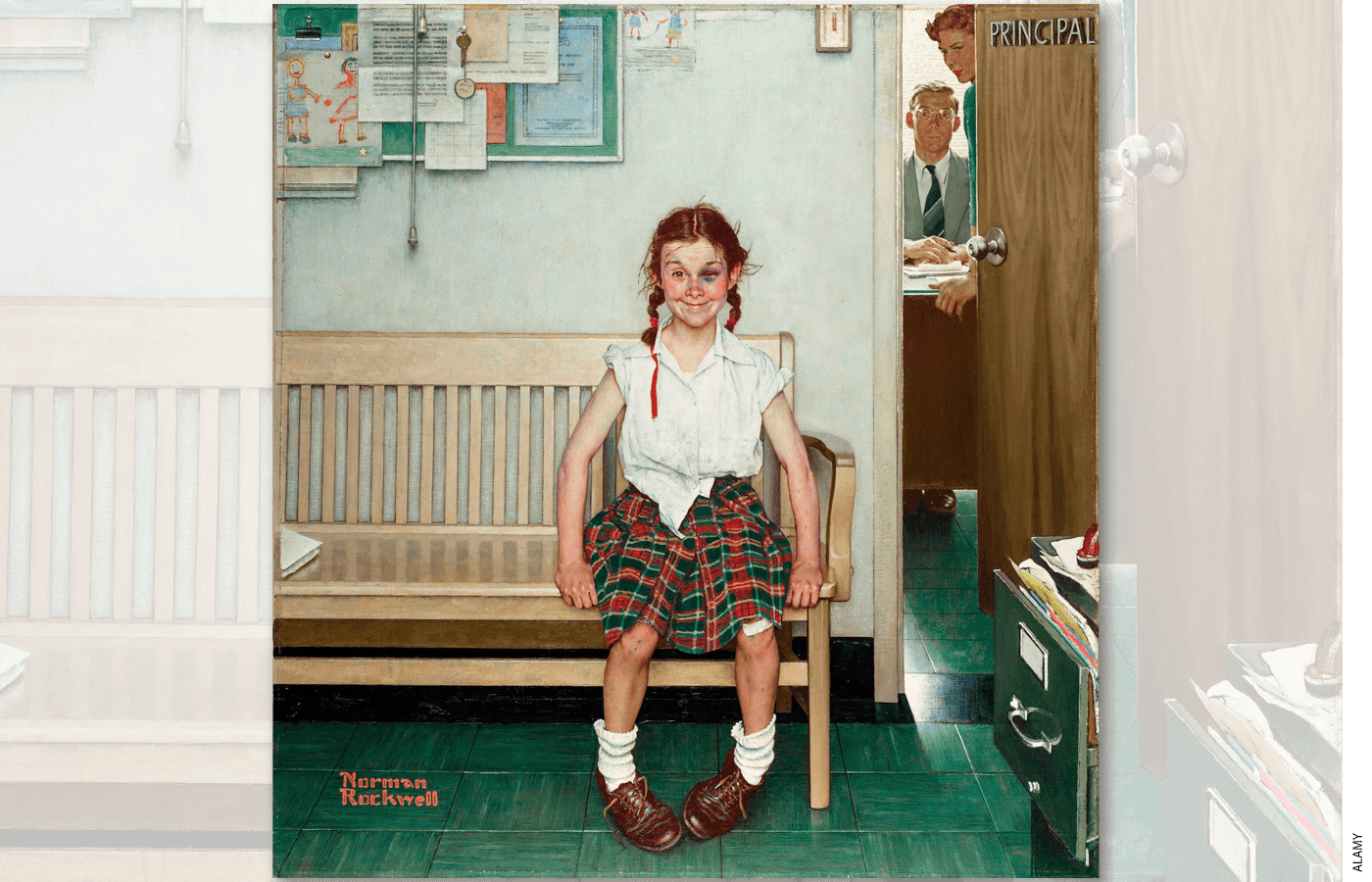
- The Mid-20th Century (Moral Clarity): Represented by the iconic 1953 Norman Rockwell painting, The Young Lady with the Shiner, this era was defined by clear boundaries and a shared understanding of "right and wrong." Discipline was seen as an external tool used to internalize moral values.
- The 1990s (Zero Tolerance): In response to rising crime rates and high-profile school violence, many districts adopted "Zero Tolerance" policies. This era was characterized by mandatory suspensions and expulsions for specific infractions, aimed at ensuring safety but later criticized for disproportionately affecting minority students.
- The 2010s (The Restorative Turn): During the Obama administration, federal guidance encouraged schools to move away from punitive measures. Research into the "School-to-Prison Pipeline" led to the widespread adoption of Restorative Justice (RJ) and Social-Emotional Learning (SEL) frameworks.
- 2020-2024 (The Post-Pandemic Crisis): Following the COVID-19 lockdowns, schools reported a surge in behavioral issues. This period saw a heightened focus on "trauma-informed care," with many educators adopting Maynard’s view that discipline must be therapeutic rather than punitive.
- 2025-2026 (The Current Debate): The release of The Science of Discipline (2026) arrives at a moment of "behavioral fatigue" among teachers, many of whom feel that restorative practices have led to a loss of classroom control and a decline in academic standards.
Supporting Data on Disciplinary Trends and Outcomes
The shift toward restorative practices is supported by some data but challenged by other metrics regarding school climate and academic achievement.
According to data from the National Center for Education Statistics (NCES), nearly 84% of public schools reported that the COVID-19 pandemic negatively impacted student behavior. Furthermore, a 2023 survey of educators found that "lack of student discipline" was a primary driver of teacher attrition, with over 40% of teachers considering leaving the profession due to classroom management challenges.
Research on the effectiveness of restorative justice has yielded mixed results. A comprehensive study by the RAND Corporation on restorative practices in Pittsburgh Public Schools found that while the program successfully reduced suspension rates and improved the overall school climate according to teachers, it did not lead to improvements in academic performance. In some instances, math scores for middle school students actually declined, suggesting that the time diverted to "restorative circles" and emotional regulation may come at the expense of instructional minutes.
Moreover, a 2018 study by the Thomas B. Fordham Institute revealed a "discipline gap" in perception: while administrators often favor restorative approaches, classroom teachers are significantly more likely to support the use of suspensions for serious infractions to maintain a safe learning environment for the majority of students.
Analyzing the "Replacement Skills" Framework
Maynard’s primary strategy involves teaching "replacement skills" instead of applying traditional consequences. For example, his framework suggests:
- For disruptive talking: Assigning the student a leadership role in a presentation to "channel" their energy.
- For defiance: Granting the student an authoritative role in a class activity to transform defiance into "positive leadership."
While innovative, this approach is criticized for creating a "moral hazard." Traditionalists argue that if a disruptive student is rewarded with a leadership position, the "quietly cooperative" students receive a message that misconduct is the fastest route to attention and status. This raises the question of whether discipline is an individual interaction between an adult and a child or a public signal that establishes the norms of the entire community.

The Identity Theory of Schooling
A significant enrichment to this debate comes from the work of Nobel Prize-winning economist George Akerlof and Rachel Kranton. In their 2002 paper, Identity and Schooling, they argue that schools are social institutions that shape a student’s identity. In this context, "identity" refers to the social roles students inhabit—such as "scholar," "athlete," or "rebel."
Akerlof and Kranton suggest that students are motivated not just by rewards and punishments, but by the "identity utility" they gain from following the norms of their chosen group. A school with a strong, coherent culture creates an environment where being a "scholar" carries high status.
From this perspective, the weakness of Maynard’s restorative model is its hyper-focus on individual needs at the expense of institutional culture. If a school does not enforce shared norms, it fails to provide students with a "scholar identity" to step into. Discipline, therefore, is not just about stopping a specific bad behavior; it is about protecting the integrity of the community so that students want to belong to it.
Official Responses and Professional Perspectives
The reaction to the "Science of Discipline" movement has been polarized across the educational spectrum.
Proponents of Restorative Justice: Advocacy groups like the Dignity in Schools Campaign argue that traditional discipline is a form of "exclusionary practice" that harms vulnerable populations. They contend that Maynard’s focus on neuroscience and empathy is the only way to ensure equity and long-term psychological health for students who have experienced trauma.
Teacher Unions: Organizations such as the American Federation of Teachers (AFT) have expressed a nuanced view. While supporting the intent of restorative practices, union leadership has frequently pointed out that these programs are often implemented without the necessary staffing, time, or training, leaving teachers to manage high-needs students without the "teeth" of traditional discipline to back them up.

Policy Analysts: Robert Pondiscio of the American Enterprise Institute (AEI) argues that the shift toward a therapeutic model represents an "abdication" of the school’s role in moral education. He suggests that by "explaining away" behavior as a neurological response, schools deny children the opportunity to exercise agency and learn that their choices have consequences.
Broader Impact and Implications for Civil Society
The debate over school discipline carries implications far beyond the classroom. If the primary task of schooling is to prepare students for citizenship in a free society, then the method of discipline used in schools serves as a blueprint for their understanding of the law and social obligation.
A system based entirely on "understanding the causes" of behavior risks creating a generation that views all rules as negotiable and all consequences as "trauma." Conversely, a system that is purely punitive may fail to cultivate the empathy and self-reflection necessary for a healthy democracy.
The ultimate challenge for 21st-century educators is to find a balance between the "diagnostic" approach favored by Maynard and the "formative" approach of traditionalists. A healthy school environment requires adults who are capable of understanding a child’s struggles while remaining committed to the high standards and firm boundaries that turn children into self-governing adults. As the debate over The Science of Discipline continues, the central question remains: are schools therapeutic clinics, or are they the "nurseries of democracy" responsible for the formation of character?

