
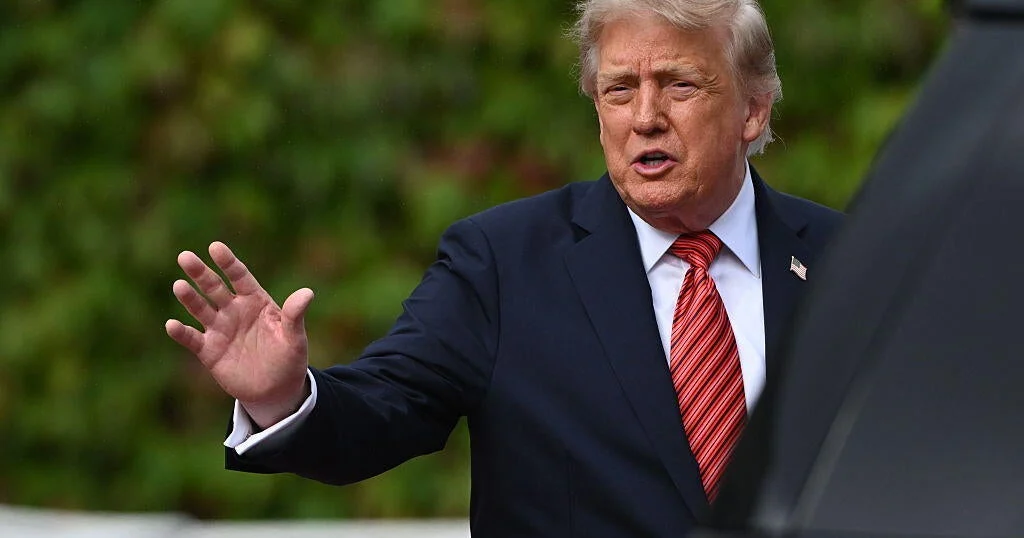
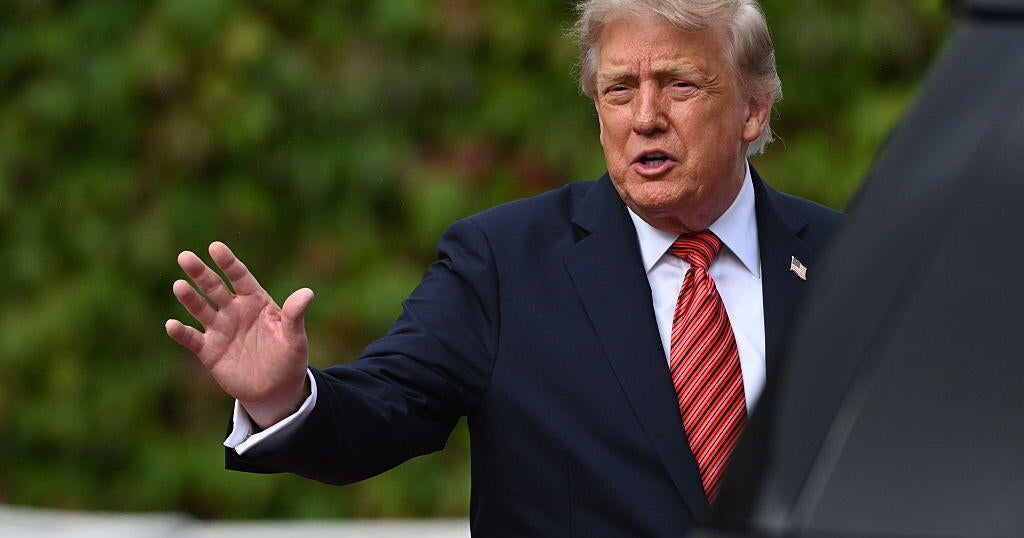
President Donald Trump touched down in Dublin on Saturday, September 12, 2026, launching a high-stakes, multi-day itinerary that combines high-level European diplomacy with personal commercial interests. Centered around a visit to his luxury oceanfront golf resort in Doonbeg to attend a premier professional golf tournament, the president’s journey immediately generated international headlines. In a departure from the traditional cautious diplomatic language maintained by his predecessors, Mr. Trump publicly endorsed the concept of a unified Ireland, remarking that the unification of the Republic of Ireland and Northern Ireland "may as well happen now."
The comments, made during discussions with Irish Prime Minister Micheál Martin, have injected fresh momentum into a decades-long constitutional debate that has long sensitive roots across the British Isles. While the American leader’s remarks were welcomed by some nationalist circles, they drew swift pushback from pro-British unionist leaders in Northern Ireland, underscoring the enduring fragility of political dynamics established by a generational peace accord nearly three decades ago.
Chronology of the Dublin Arrival and High-Level Meetings
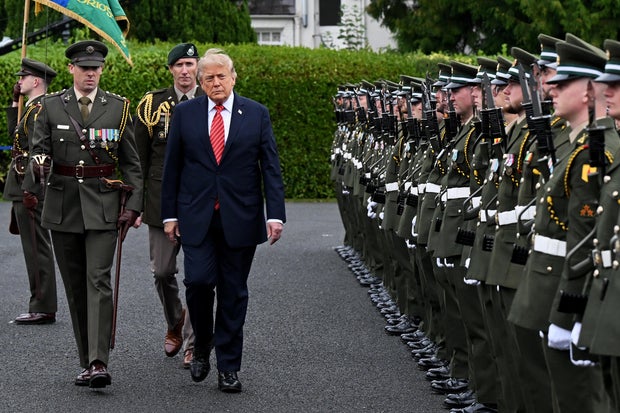
The presidential itinerary kicked off early Saturday morning with a formal arrival ceremony at Áras an Uachtaráin, the official residence of the Irish president in Dublin. President Trump was greeted by Ireland’s elected head of state, President Catherine Connolly, before proceeding to review an honor guard.
The ceremonial pageantry quickly gave way to substantive and politically charged meetings. Following his engagement with President Connolly, Mr. Trump sat down with Prime Minister Micheál Martin to discuss bilateral trade, international relations, and regional stability. It was during these talks that the American president veered into the delicate territory of constitutional reform on the island of Ireland.
"I don’t want to cause any problems, but I’d love to see it unified. I think it would be a fantastic thing," Mr. Trump told reporters during the Dublin meetings, while acknowledging the geopolitical reality that "the U.K. will have something to say about it, obviously."
By Sunday, the president doubled down on the theme while addressing a gathering of American and Irish business leaders hosted at the U.S. ambassador’s residence in Dublin. During the address, he candidly admitted that there is "no good answer" to the complex reunification question, highlighting the friction inherent in the ongoing debate.
Historical Context and the Northern Ireland Status
The issue of a united Ireland is rooted in the partition of the island a century ago. In 1921, following the Irish War of Independence, the island was divided into the self-governing, predominantly Roman Catholic Irish Free State in the south, while a six-county region in the northeast—characterized by a Protestant unionist majority—remained part of the United Kingdom as Northern Ireland.
This partition sowed the seeds for decades of sectarian and political friction, which erupted into a brutal thirty-year period of civil conflict known as the Troubles, spanning from the late 1960s to 1998. The conflict claimed over 3,500 lives and left deep psychological scars across communities on both sides of the border.
The violence was largely brought to a close by the historic Good Friday Agreement, also known as the Belfast Agreement, signed on April 10, 1998. The United States played an instrumental role in brokering the accord, which established a power-sharing government in Northern Ireland and formalized a pathway for potential constitutional change. Under the terms of the 1998 accord, a border poll, or referendum on unification, must be called by the British Secretary of State for Northern Ireland if it appears likely that a majority of the electorate would vote in favor of leaving the United Kingdom to join the Republic of Ireland.
Despite the relative peace established over the last 28 years, the ultimate political status of Northern Ireland remains a profoundly sensitive and unresolved issue. Previous U.S. administrations—most notably that of former President Joe Biden, who frequently emphasizes his deep ancestral and emotional ties to Ireland—have historically maintained a strict diplomatic neutrality on the question of unification, carefully avoiding endorsements of either nationalist or unionist aspirations.
Official Responses and Regional Fallout
President Trump’s casual endorsement of immediate unification triggered immediate reactions across the political spectrum in the United Kingdom and Northern Ireland.
Unionist politicians, who fiercely protect Northern Ireland’s constitutional place within the United Kingdom, reacted with sharp indignation. Gavin Robinson, leader of the pro-British Democratic Unionist Party (DUP), took to social media platform X to condemn the remarks. "As unionists we are not interested in the destruction of our country by joining with the Irish Republic," Robinson wrote.
Meanwhile, officials in London reiterated existing British government policy regarding the threshold for a border poll. U.K. Prime Minister Andy Burnham stated firmly the previous month that a unity referendum was "off the table" for the foreseeable future. Elaborating on that stance, Burnham’s office emphasized that the British government would only consider authorizing a referendum "when public opinion has changed to the point where the call has to be considered." When pressed regarding President Trump’s recent remarks, Downing Street officials declined to offer a direct rebuttal, instead pointing reporters back to Burnham’s prior measured statements on the matter.
Diplomatic Tensions and Civil Unrest in Dublin
In addition to discussions on constitutional reform, President Trump’s meeting with Irish President Catherine Connolly carried notable personal and political subtexts. Connolly, a veteran left-wing politician and prominent voice in Irish politics, had previously participated in street protests against the American leader during his first term in office in 2019. Known for her strong support of Palestinian causes, Connolly has frequently criticized historical U.S. foreign policy in the Middle East and once famously labeled Mr. Trump a "bully."
Following their closed-door discussions on Saturday, President Connolly released a carefully worded official statement indicating that she had conveyed to the U.S. president "the strong view of the Irish people that the normalization of war and genocide can never be accepted." As a symbolic gesture during their exchange, Connolly presented Mr. Trump with a curated collection of works by the late, acclaimed Irish poet Michael Longley, prominently featuring the sonnet "Ceasefire."
When asked by reporters to characterize the nature of his encounter with the Irish head of state, President Trump initially deferred to his protocol chief, Monica Crowley, before offering a brief assessment under persistent questioning. "We discussed a lot of things, quickly," Mr. Trump said, describing the meeting simply as "very nice."
Outside the official venues, the visit also served as a focal point for public dissent. A coalition of left-wing opposition groups, anti-military organizations, pro-Palestinian activists, and environmental advocates organized large-scale demonstrations across Dublin on Saturday. Protesters gathered to voice their disapproval of U.S. foreign policy, environmental policies, and the president’s return to Ireland.
Transition to the Irish Open and Commercial Interests
Following the conclusion of his political meetings and diplomatic obligations in Dublin, President Trump transitioned the focus of his trip to the western coast of Ireland. He traveled directly to his luxury oceanfront golf resort in Doonbeg, County Clare, where he is scheduled to attend the prestigious Irish Open.
The president’s presence at the tournament highlights a continuing trend of merging high-profile political appearances with assets tied to his family’s commercial enterprise, the Trump Organization. An avid golfer who frequently utilizes his properties in Florida, New Jersey, and Virginia for both recreation and official business, Mr. Trump’s itinerary underscores the unique intersection of his public office and private business holdings.
The Irish Open marks the second high-profile European Tour event hosted or attended in connection with a Trump-owned property this year. Last month, the Nexo Championship was successfully held at the president’s golf resort in Aberdeen, Scotland. Earlier in the year, Trump-owned properties in Doral, Florida, and Bedminster, New Jersey, also played host to major professional golf tournaments, drawing both sports enthusiasts and scrutiny from ethics watchdogs regarding the commercial overlap of the presidency.
Implications and Broader Analysis
Political analysts suggest that while President Trump’s comments on a unified Ireland are unlikely to force an immediate shift in British constitutional policy or accelerate the timeline for a border poll, they carry significant rhetorical weight. By stepping into a debate that past American administrations have historically treated with diplomatic ambiguity, Mr. Trump has injected external validation into the nationalist narrative, forcing unionist leaders to forcefully reassert their position on the international stage.
At the same time, the juxtaposition of high-level state meetings, sharp exchanges over international human rights with Irish leaders, street protests in Dublin, and a weekend of professional golf at a personal resort encapsulates the distinct, unorthodox nature of international diplomacy in the Trump era. As the president prepares to conclude his European trip and return to the United States, the ripple effects of his remarks on Northern Ireland’s constitutional future are expected to reverberate across Dublin, Belfast, and London for weeks to come.

