
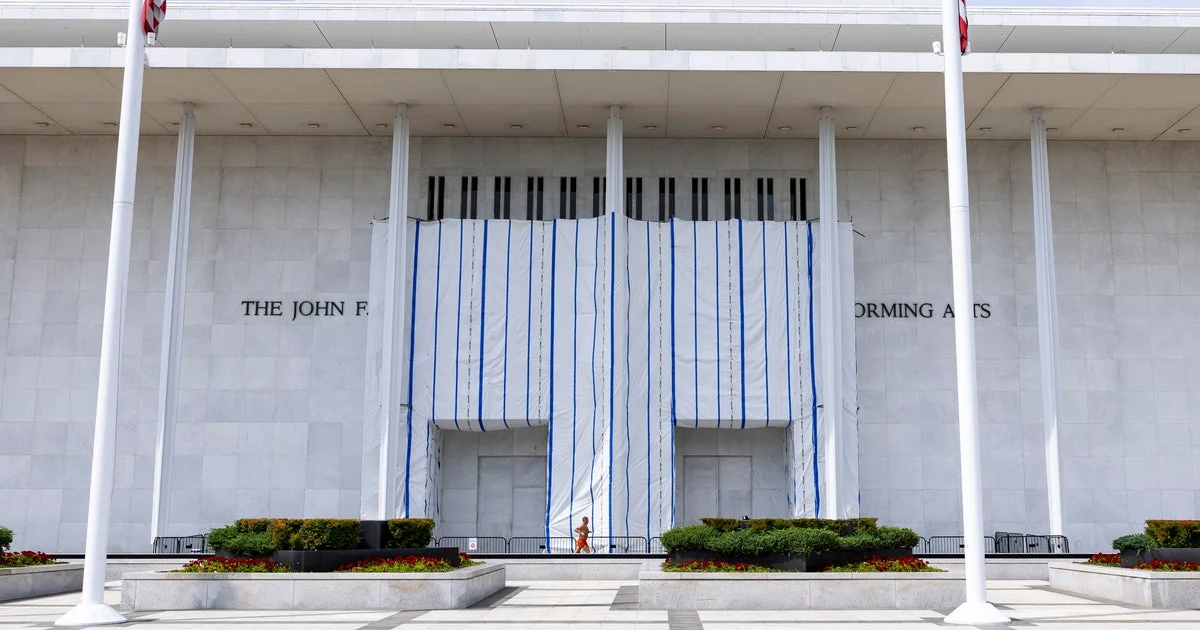
The Trump-aligned board of the John F. Kennedy Center for the Performing Arts voted on Tuesday to immediately close the historic institution for extensive renovations, marking a dramatic escalation in a protracted multi-year conflict involving presidential legacy, federal funding, and the structural integrity of the nation’s premier living memorial to the 35th president. The decision arrives on the heels of repeated warnings from President Donald Trump and his political allies on the board, who have asserted that the venue faces imminent financial collapse and structural ruin unless comprehensive remedial action is taken.
The sudden closure vote, confirmed by a source familiar with the proceedings, coincides with a series of high-stakes legal clashes between the federal government and opponents of the administration’s efforts to imprint the president’s name on the facility. For more than a year, the administration has pursued a twofold agenda: an overhaul of the center’s performing arts programming paired with structural revitalization, and a permanent administrative rebranding that would explicitly incorporate Mr. Trump’s name into the institutional identity of the federal landmark.
Chronology of the Dispute and Legal Battles
The friction surrounding the Kennedy Center has evolved through a rapid sequence of legislative, executive, and judicial actions over the past twelve months, creating a complex chronology of institutional power struggles in the nation’s capital.
In December of the previous year, the Kennedy Center board voted to officially rename the institution "The Donald J. Trump and The John F. Kennedy Memorial Center for the Performing Arts." Shortly following this vote, maintenance crews added the president’s name to the building’s prominent exterior facade.
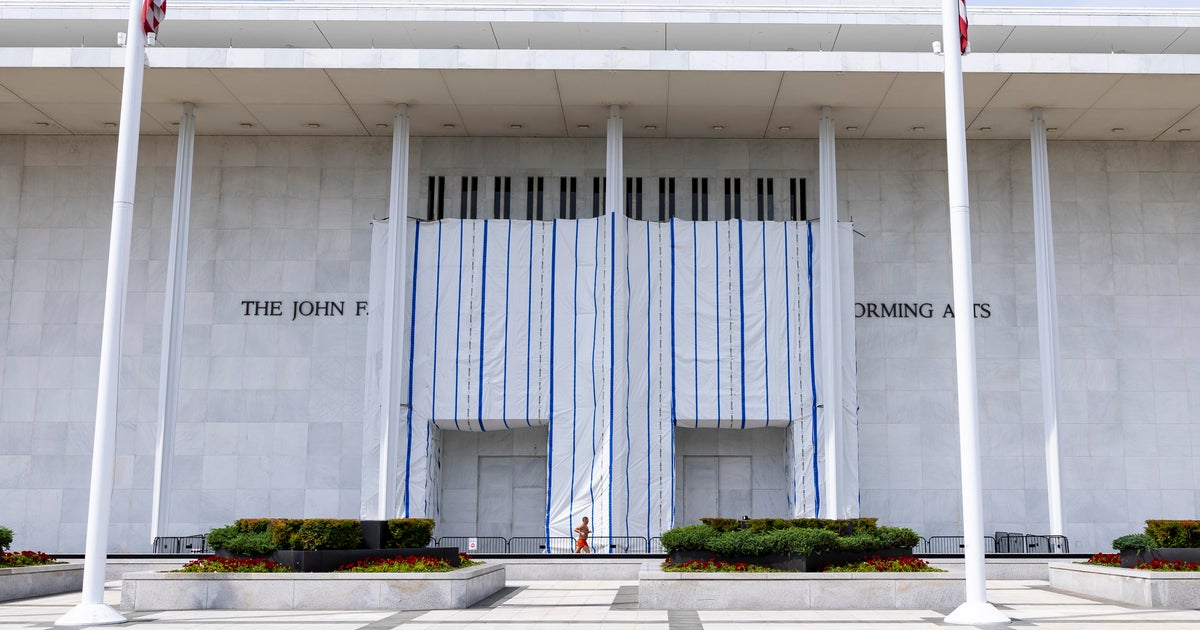
The renaming and subsequent architectural alterations immediately drew swift opposition from preservationists, congressional Democrats, and descendants of the Kennedy family, culminating in legal challenges. In May, U.S. District Judge Christopher Cooper ruled that the addition of Mr. Trump’s name had been executed illegally, pointing to statutory guidelines governing federal memorials. Judge Cooper ordered the immediate removal of the name and temporarily blocked the administration from executing a sweeping closure of the venue for renovations. Following this ruling, the exterior wall displaying the original inscription was obscured by a tarp-covered scaffold.
Despite the judicial setback, the board voted again in August, approving a modified inscription reading "Renovated and Restored by President Donald J. Trump" to be placed beneath the main title of the building. This maneuver prompted a renewed legal challenge from opponents, including Democratic Representative Joyce Beatty of Ohio, who filed lawsuits seeking to permanently enjoin the board from altering the property.
On Tuesday morning, prior to the board’s vote on the immediate closure, Judge Cooper issued another decisive ruling against the administration. "Defendants cannot install memorials for President Trump or anyone or anything else at the Kennedy Center without Congress’s blessing," Judge Cooper wrote in his opinion. A spokesperson for the Department of Justice promptly announced that the federal government intends to appeal Tuesday’s ruling to the U.S. Court of Appeals for the D.C. Circuit.
High-Level Interventions and Boardroom Friction
The Tuesday board meeting underscored the intense personal investment of the executive branch in the management and branding of the cultural center. According to a source familiar with the proceedings, both President Trump and Commerce Secretary Howard Lutnick—whose wife, Allison Lutnick, serves on the Kennedy Center board—participated via telephone calls during the deliberations.
The meeting was reportedly contentious. Rep. Beatty, serving as a Democratic member of the board and acting as a plaintiff in the ongoing litigation, issued a public statement alleging that the president had "verbally berated" her in the moments leading up to the historic vote. The confrontation highlights the sharp political polarization surrounding the governance of a board traditionally characterized by bipartisan cultural stewardship.
Following the board’s unanimous or majority-backed decision to shutter the facility immediately, President Trump took to Truth Social to outline the conditions under which actual construction would commence. In his post, the president stated that physical work on the center would be paused until the U.S. Court of Appeals for the D.C. Circuit rules on the Justice Department’s appeal regarding the initial renaming order.
"If the ruling is a negative one, which it should not be, and is not overturned by the U.S. Supreme Court, the Reconstruction and the Renovation of The Kennedy Center will not take place," Mr. Trump wrote. Additionally, the president claimed to have personally secured $17 million in private donations intended to support the center and "keep it afloat" during the transition. To date, the specific sources of these contributions have not been publicly disclosed by the administration, leaving financial analysts and congressional oversight committees seeking clarity on the origin and management of these funds.
Financial and Structural Arguments
The legal defense mounted by the Justice Department has consistently centered on the physical deterioration of the facility, which opened along the Potomac River in 1971. Government attorneys have submitted court filings describing the venue’s infrastructure as "dangerously dilapidated, outdated, and decrepit."
The administration argues that decades of heavy usage, combined with mounting operational losses and deferred maintenance, have placed the living memorial into a "financial and structural death spiral." Proponents of the closure argue that a comprehensive shutdown is the only viable method to execute necessary engineering updates, asbestos abatement, HVAC modernizations, and theatrical rigging replacements.
To support these capital improvements, Congress approved $250 million last year specifically earmarked for the renovation project. While federal lawmakers on both sides of the aisle have historically acknowledged the need for infrastructure upgrades to the aging brutalist structure designed by architect Edward Durell Stone, critics of the current board argue that the diagnostic of "structural ruin" has been weaponized to force through administrative restructuring and unapproved memorialization.
Broader Implications for Federal Cultural Institutions
The forced closure of the Kennedy Center carries significant implications for the performing arts landscape in Washington, D.C., and across the United States. As a federally chartered bureau within the Smithsonian-adjacent cultural ecosystem, the center hosts hundreds of performances, educational outreach programs, and national honors ceremonies annually. An indefinite shutdown threatens to displace resident companies, including the National Symphony Orchestra and the Washington National Opera, disrupting seasons planned years in advance.
Furthermore, the legal battle establishes a critical precedent regarding the executive branch’s authority over federally funded monuments and memorials. Under federal statute, alterations to commemorative works on federal property typically require explicit congressional authorization and review by agencies such as the National Capital Planning Commission and the Commission of Fine Arts. The administration’s persistent attempts to bypass these statutory channels through board-level votes have forced the federal judiciary to draw clear boundaries regarding executive overreach in public architecture.
Legal scholars note that the pending appellate review in the D.C. Circuit will likely determine not only the fate of the president’s name on the building facade but also the degree of autonomy federal boards possess when executing capital projects against the backdrop of active litigation. As the legal teams prepare their briefs for the higher court, the physical doors of the nation’s primary performing arts center face an unprecedented period of darkness, caught between competing visions of historical preservation, executive authority, and cultural heritage.

