
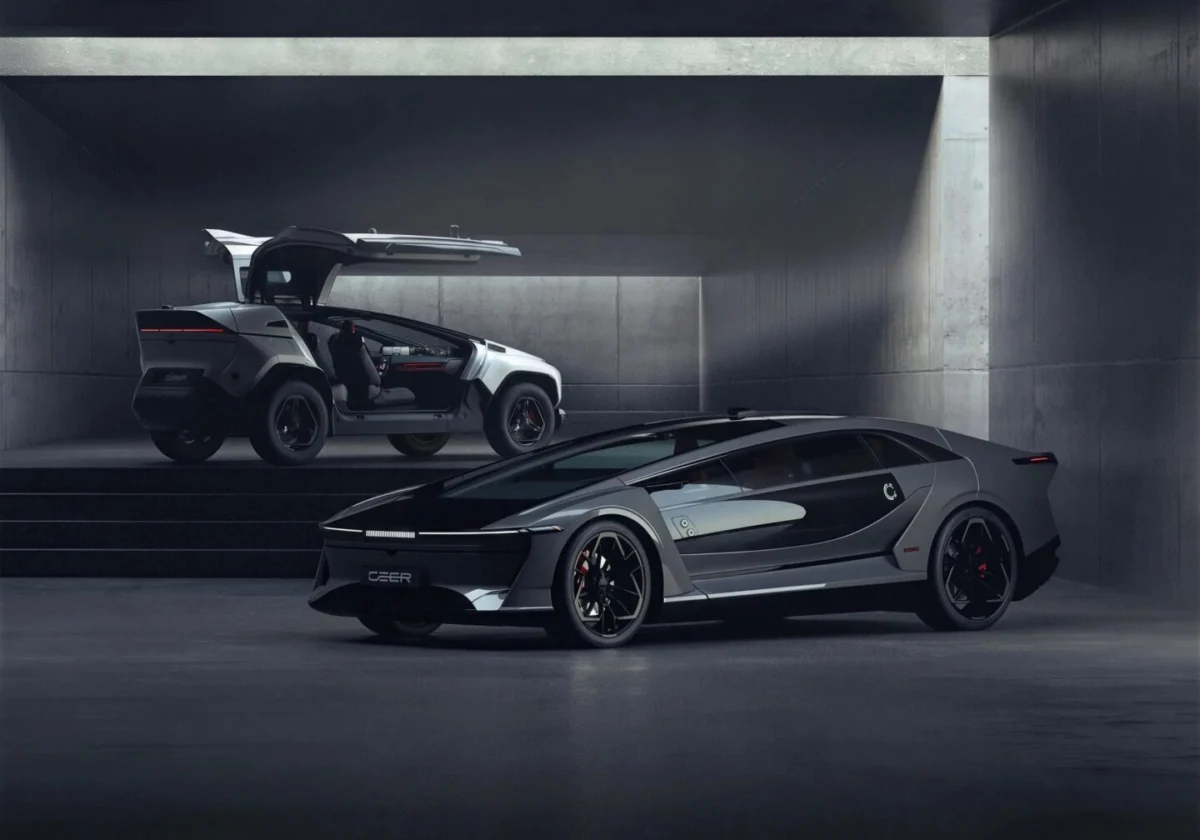
King Abdullah Economic City, Saudi Arabia — Saudi Arabia has officially stepped into the realm of domestic automobile manufacturing with the launch of Ceer, the Kingdom’s very first homegrown carmaker. Established as a high-stakes joint venture between the Saudi Public Investment Fund (PIF) and technology manufacturing giant Foxconn, Ceer represents a monumental shift in the industrial ambitions of the Gulf nation. Unveiled at a dedicated complex in King Abdullah Economic City, just north of Jeddah, the debut of Ceer introduces two radical flagship electric vehicles—the Exobot sedan and SUV—signaling a definitive stride toward the realization of Saudi Arabia’s Vision 2030 economic diversification mandate.
For decades, the Saudi economy has relied predominantly on hydrocarbon revenues. However, under Vision 2030, the Kingdom has actively aggressively pursued aggressive industrial diversification, seeking to foster high-tech sectors, establish local manufacturing capabilities, and create sustainable employment opportunities for its rapidly growing population. Ceer, whose name translates from Arabic as “to drive forward,” is engineered to be the physical embodiment of this progressive national strategy.
Chronology and Industrial Genesis
The path to Ceer’s official launch has been meticulously plotted as part of a broader government-led initiative to build a localized automotive supply chain from the ground up.
- October 2022: The Saudi Public Investment Fund officially announces the creation of Ceer as a joint venture with Hon Hai Precision Industry Co., better known as Foxconn, alongside licensing technology components from BMW.
- 2023–2025: Development phases focus heavily on engineering platform architectures capable of withstanding the harsh desert climate of the Middle East, while simultaneously constructing the sprawling production complex in King Abdullah Economic City.
- September 2026: Ceer pulls the covers off its inaugural lineup—the Exobot sedan and SUV—showcasing futuristic design elements, proprietary software infrastructure, and high-performance electric powertrains.
- Target 2030: Ceer aims to expand its commercial portfolio to a total of seven distinct vehicle models, incorporating both pure battery-electric vehicles (BEVs) and hybrid options, while laying the groundwork for potential international export.
- Target 2034: The company projects the creation of approximately 35,000 direct and indirect jobs within the local economy as suppliers and support ecosystems cluster around the manufacturing hub.
Design Innovation Meets National Heritage
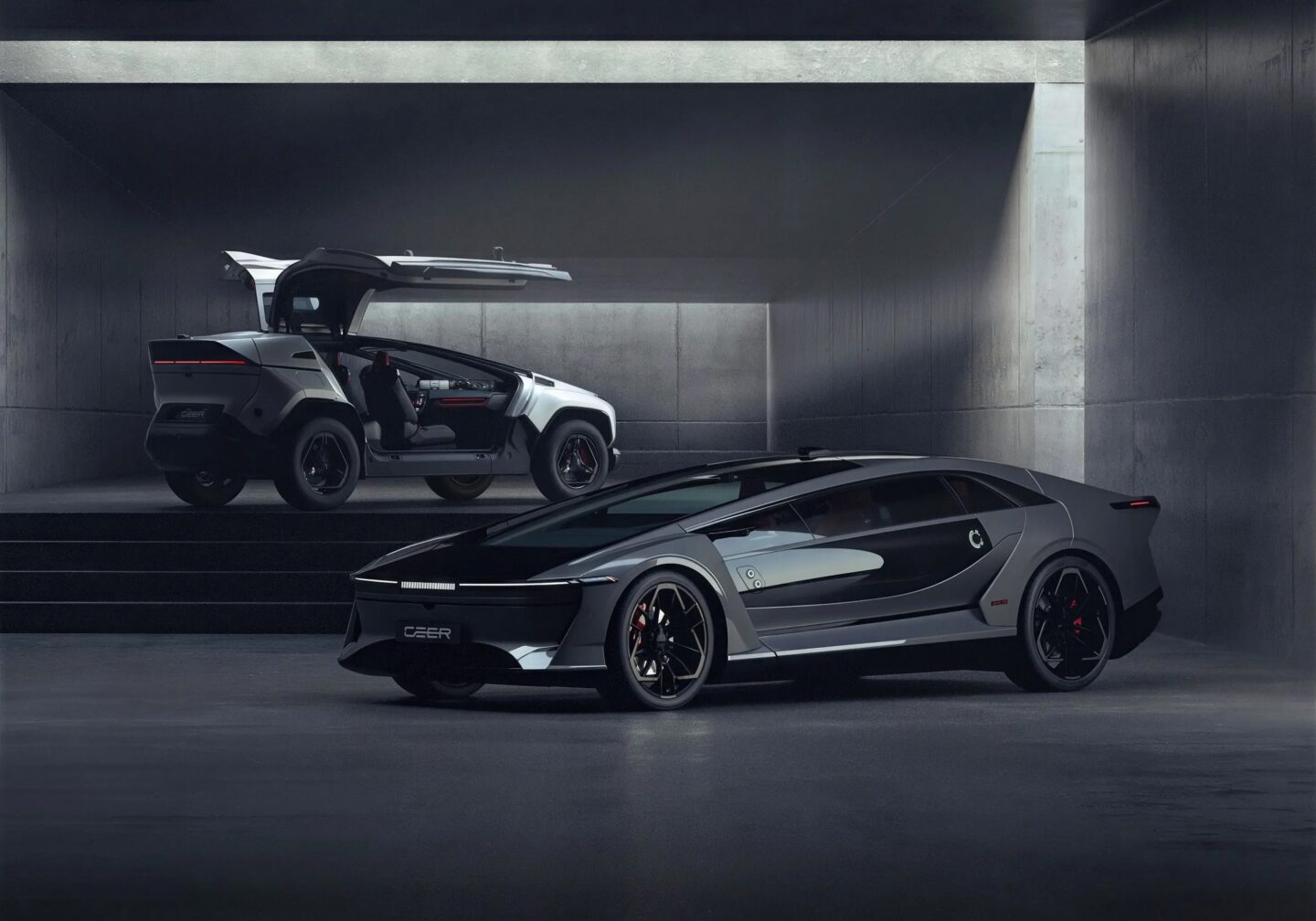
The Exobot lineup defies conventional startup conservatism, featuring striking exterior aesthetics that evoke cinematic sci-fi elements while incorporating distinct nods to Saudi history. Both the sedan and the SUV utilize pillarless designs equipped with falcon-wing doors, branded locally as the "Shahin Wing." Engineered to operate within standard parking spaces without requiring excessive lateral clearance, these dynamic entryways are paired with electrochromatic glass on the lower door panels. At the push of a button, drivers can dim or clear the glass panels to dramatically enhance side visibility—a particularly practical feature for the robust SUV variant.
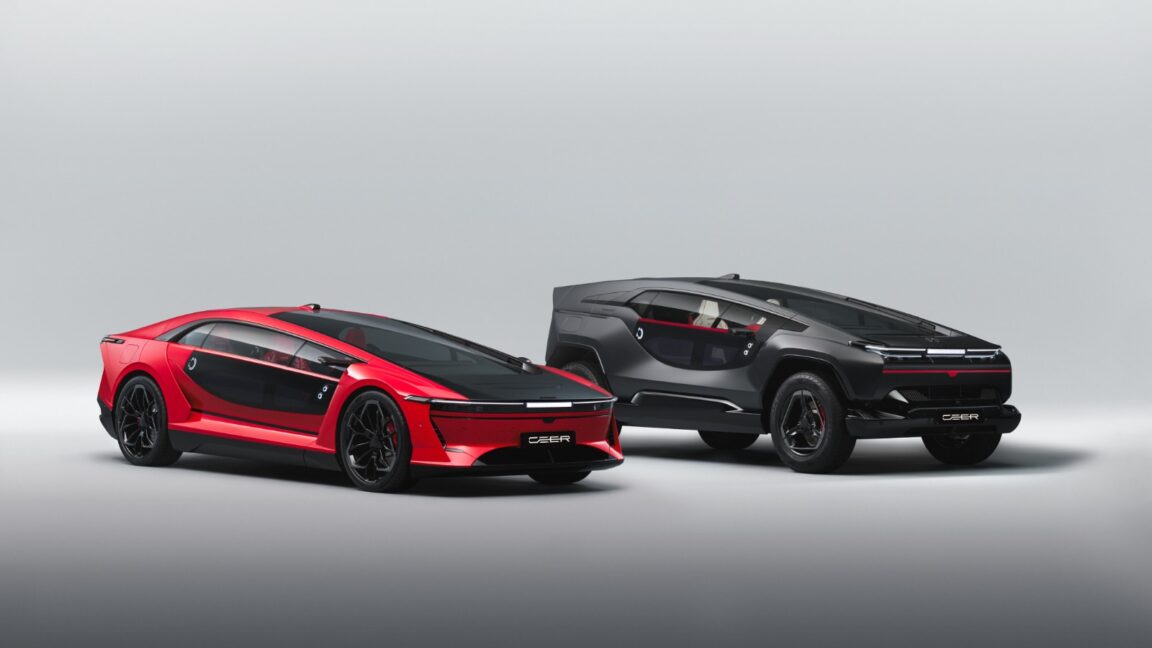
Subtle national symbolism is woven directly into the vehicle architecture. Both the front and rear light bars consist of precisely 32 independent illumination elements, a direct tribute to 1932, the year the modern Kingdom of Saudi Arabia was officially established.
Inside the cabin, the technology suite is anchored by an expansive 48-inch digital instrument cluster stretching across the entire dashboard, running a custom-developed infotainment operating system visually inspired by the Riyadh skyline. Recognizing the extreme thermal realities of the Gulf region, Ceer engineers developed a specialized climate control feature dubbed "Halo cooling," which generates a localized thermal barrier of chilled air between the cabin’s glass roofing and the passengers’ heads. Additional interfaces include a 10-inch central media cluster and an 8-inch rear-passenger display, alongside native integration for Apple CarPlay and Android Auto. Furthermore, the vehicle relies on an advanced over-the-air (OTA) software update infrastructure to continuously refine performance metrics, battery management, and infotainment capabilities.
Powertrain Architecture and Performance Metrics
Beneath their futuristic exteriors, the Exobot models pack high-performance engineering specifications designed to rival the most established luxury electric vehicle platforms globally.
Built upon an advanced 800-volt electrical architecture, the launch models feature a robust 112-kWh battery pack. Estimated driving ranges under older European testing cycles reach over 310 miles (500 km) for the heavier SUV variant and upwards of 373 miles (600 km) for the aerodynamic sedan. In practical, real-world driving conditions, users can reliably anticipate a functional range spanning between 300 and 400 miles per charge.
Utilizing a high-output tri-motor layout equipped with sophisticated torque vectoring, the Exobots deliver a staggering 1,111 horsepower (828 kW) and 1,100 lb-ft (1,500 Nm) of torque. This immense power translates to blistering acceleration figures: the sedan launches from zero to 62 mph (100 km/h) in just over two seconds, while the SUV accomplishes the same feat in 2.4 seconds, with a standing quarter-mile time clocked at roughly 10 seconds.
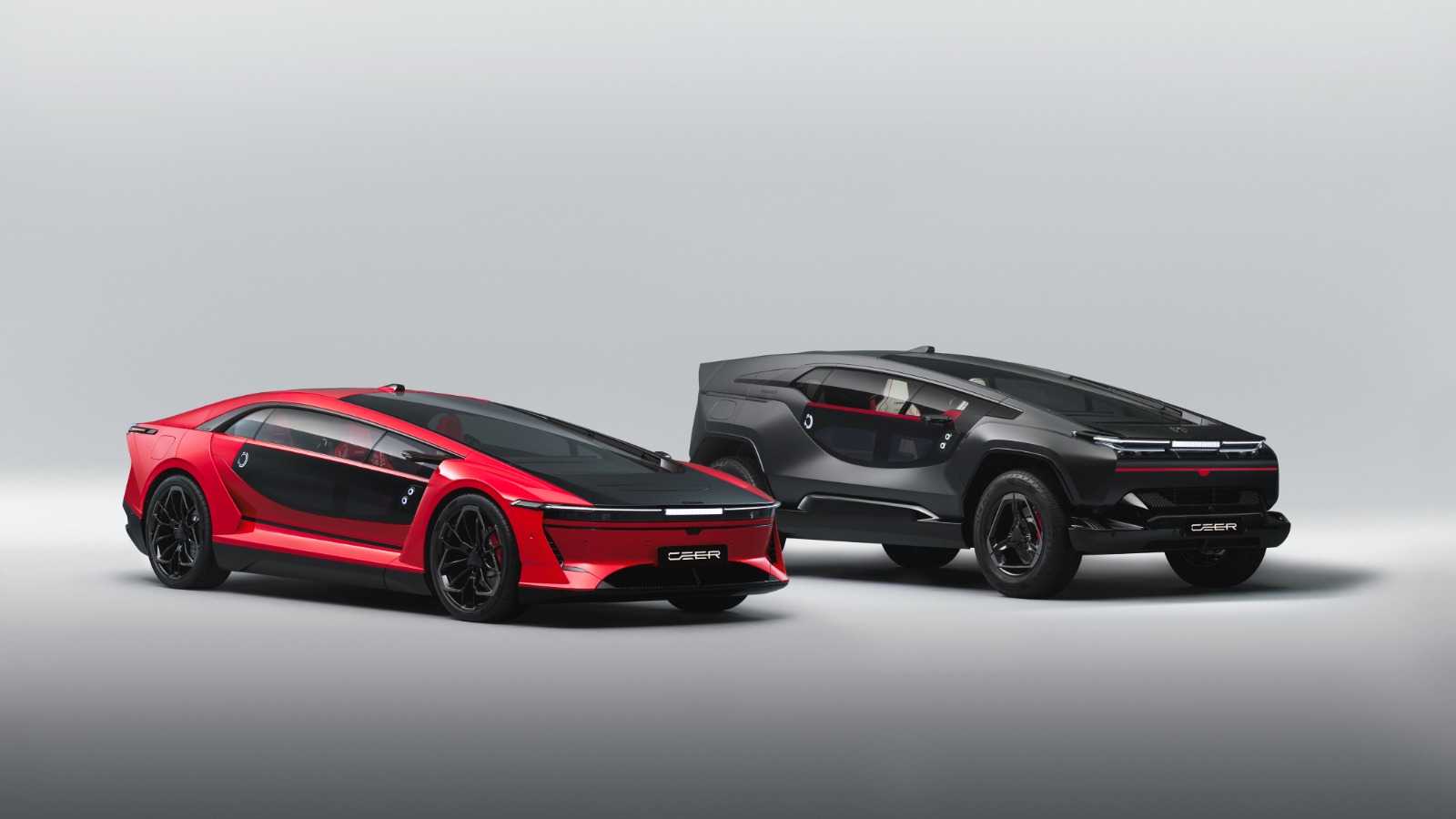
To manage power delivery and ride quality across varied topography, the vehicles feature an active air suspension system and an advanced steer-by-wire setup. The latter replaces traditional mechanical steering linkages with electrical impulses, enabling ultra-precise wheel articulation, though it does mandate the use of a futuristic steering yoke rather than a traditional circular wheel. When utilizing DC fast-charging infrastructure compatible with the 800-volt system, the battery pack can replenish its charge from baseline levels to 80 percent in approximately 30 minutes.
Official Responses and Industry Leadership
Ceer’s executive leadership brings decades of legacy automotive and startup experience to the venture. Chief Executive Officer James Deluca, whose extensive background includes senior manufacturing roles at General Motors and executive leadership at VinFast, emphasizes that the brand’s rapid development cycle is rooted in disciplined engineering execution.
During the official global reveal, Deluca recounted guidance provided by the Crown Prince during early design consultations: "If the world goes left, we go right." This philosophy underpins Ceer’s strategy to bypass incremental adaptation and immediately enter the global EV conversation with high-performance, technologically dense alternatives.
Chief Technology Officer Markus Leitner underscored the company’s core engineering differentiator during technical briefings. "Everyone has triple motors," Leitner noted. "Everyone has torque vectoring. Everyone has air suspension. What we do better than anyone else is integrate that all together to provide the best driving experience."
Broader Economic Impact and Market Implications
The launch of Ceer carries profound macroeconomic implications for Saudi Arabia. Unlike various external investments made by the Public Investment Fund into foreign automotive startups—such as its major stake in Lucid Motors—Ceer is wholly owned by the PIF, positioning it as a foundational pillar of national industrial sovereignty.
Economists note that automotive manufacturing acts as a powerful economic multiplier. Historically, for every direct job created within an automotive assembly plant, multiple ancillary positions are generated across supply chains, logistics, raw material processing, and retail support structures. By anchoring production within King Abdullah Economic City and requiring tier-one suppliers to establish local facilities nearby, the Saudi government expects the sector to support tens of thousands of skilled jobs by the mid-2030s.
However, market analysts point out that the ultimate test for Ceer will extend far beyond the halo appeal of its initial flagship sports models. While the Exobot sedan and SUV serve as technological showcases for what the joint venture can achieve, the long-term commercial viability of the brand will hinge on the successful rollout of upcoming mainstream vehicle segments. These future models will need to balance competitive affordability with high build quality to capture market share against an increasingly saturated field of affordable imports, particularly aggressive competitors from Chinese automotive brands currently dominating the domestic Saudi market.
Furthermore, as part of the "Saudi Made" branding initiative under Vision 2030, consumer preference is expected to favor domestically produced goods that actively reinvest in national prosperity. By providing a home-grown alternative to international automotive giants, Ceer is attempting to forge not merely a commercial product, but an enduring symbol of industrial pride for Saudi Arabia as it navigates the post-oil economic horizon.

