
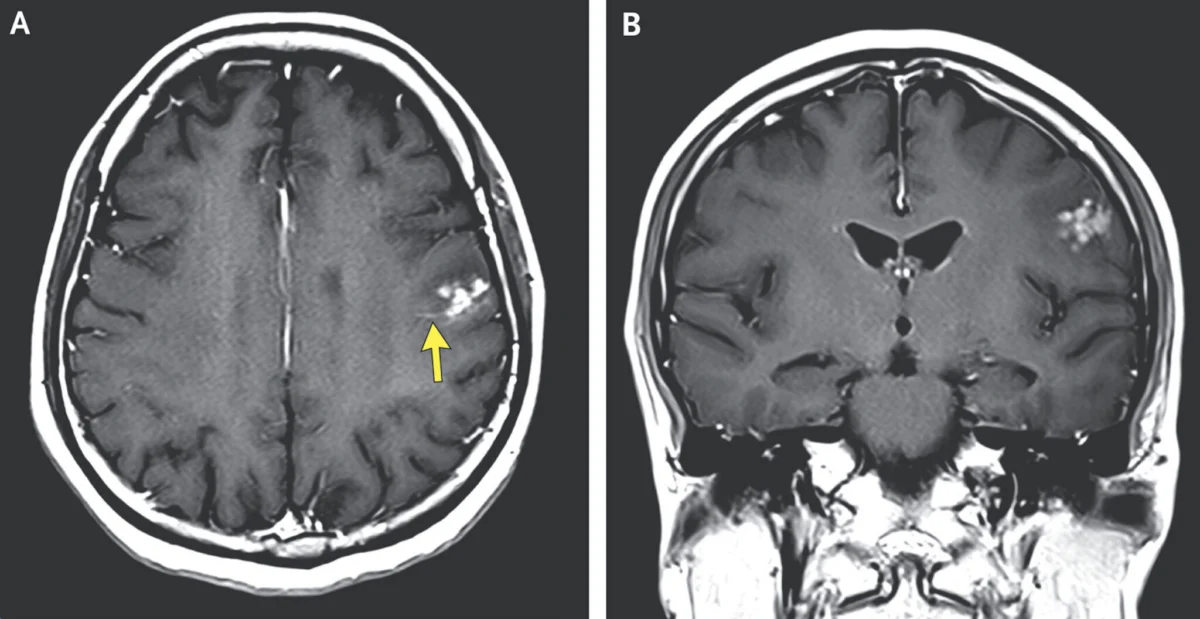
A routine workday for a rice farmer in the Philippines took a terrifying turn when the right side of her body suddenly began to judder uncontrollably. Without any warning signs such as a severe headache, acute confusion, or localized muscle weakness, the woman experienced a terrifying motor episode that lasted approximately one minute, during which her right arm and leg shook violently. Recognizing the severity of the neurological event, she sought immediate medical evaluation at a local hospital emergency department.
Initial physical and neurological examinations performed by the attending emergency physicians yielded entirely normal results, showing no outward signs of trauma, stroke, or systemic illness. Puzzled by the sudden onset of focal motor seizures in an otherwise healthy patient, the medical team ordered advanced neuroimaging. Magnetic resonance imaging (MRI) of the brain uncovered an unexpected and alarming finding: a distinct, bright cluster of nodules surrounded by fluid localized within the left frontal lobe. Reviewing the scans alongside the patient’s occupational background, the diagnostic team quickly zeroed in on a rare and insidious culprit: parasitic worm eggs embedded inside cerebral tissue.
Detailed findings of the case were subsequently documented and published in the New England Journal of Medicine. According to the medical report, physicians diagnosed the patient with neuroschistosomiasis, an uncommon and potentially severe neurological complication stemming from an infection by a parasitic blood fluke belonging to the genus Schistosoma. In the specific geographic region of the Philippines, the predominant species responsible for this condition is Schistosoma japonicum. While the parasite is also endemic to parts of China and Indonesia, historical public health campaigns successfully eradicated the species from Japan, despite its species identifier.
The Complex Life Cycle of the Blood Fluke
Understanding how a microscopic parasite originating in aquatic environments managed to lodge itself inside a human brain requires examining the intricate and complex life cycle characteristic of Schistosoma japonicum. Public health agencies, including the Centers for Disease Control and Prevention, classify the life cycle of these blood flukes as multifaceted, relying on multiple hosts to complete their development stages.
The cycle typically begins when infected mammalian hosts—which can include humans, rodents, and various livestock—shed parasite eggs through their feces or urine into freshwater environments. Under favorable environmental conditions, these eggs hatch into free-swimming larval forms known as miracidia. Upon hatching, the microscopic larvae actively seek out specific species of freshwater aquatic snails, which serve as the essential intermediate hosts.
Once they locate a suitable snail, the miracidia bore into its tissues, undergoing significant developmental changes through two distinct larval stages. Following this amplification phase within the mollusk, late-stage larvae known as cercariae burst out of the snail host. These free-swimming cercariae develop a characteristic forked tail, enabling them to navigate aquatic environments in search of a definitive mammalian host.
Unlike many other waterborne parasites that require ingestion to establish an infection, cercariae possess the remarkable and aggressive biological ability to directly penetrate intact human skin. Once they breach the dermal barrier, the parasites enter the circulatory system, embarking on a complex migration through the vascular network. They travel first to the lungs, pass through the heart, and eventually settle in the liver, where they mature into adult worms over the course of several weeks.
Pathology and Aberrant Migration
Within the human host, adult male and female Schistosoma worms establish a permanent pairing arrangement. The slender female worm resides snugly within a specialized ventral groove, known as the gynaecophoric canal, running along the length of the thicker male worm. Once paired, these adult couples migrate to the large blood vessels situated within the abdominal cavity, specifically those connecting the hepatic portal system of the liver to the intestines.
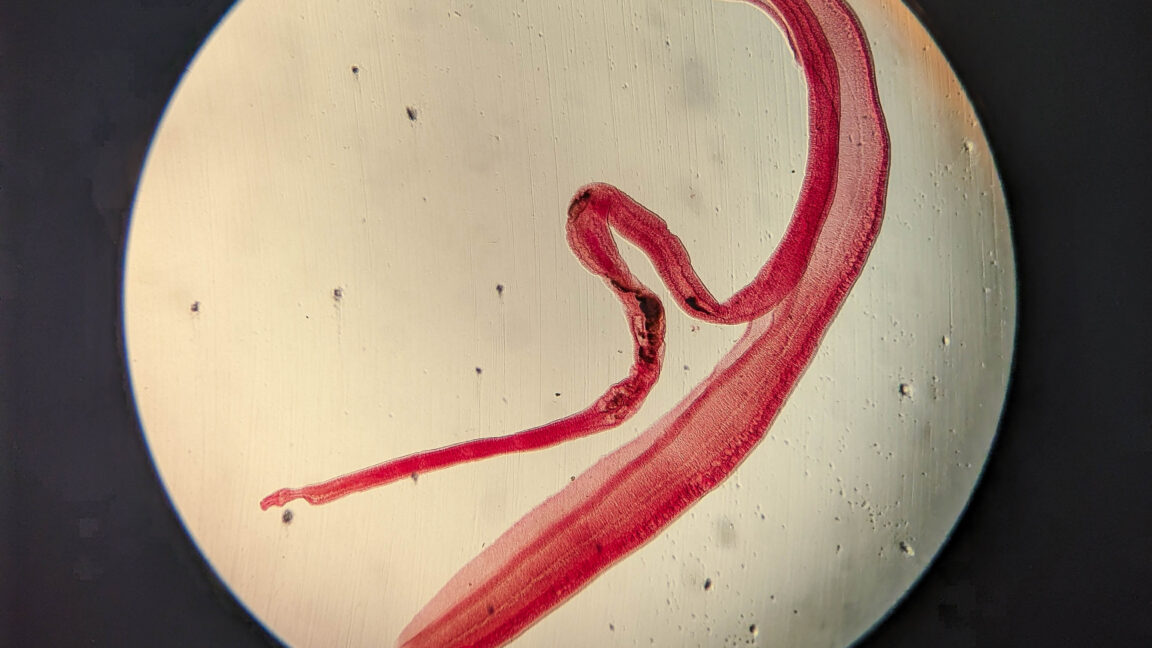
From this vascular niche, the mature pairs continuously produce thousands of eggs. Under normal physiological conditions, these eggs traverse the wall of the intestines to be excreted in feces, perpetuating the environmental life cycle. However, pathology arises when eggs become trapped within host tissues instead of reaching the intestinal lumen. The immune system mounts a vigorous granulomatous inflammatory response around these trapped ova, leading to tissue damage, fibrosis, and organ dysfunction.
In rare instances, known as ectopic or aberrant migration, parasite eggs or even adult worms bypass their typical visceral pathways and enter the arterial circulation. When ova enter the systemic arterial network, they can be distributed to distant organs, including the spinal cord and the brain. The deposition of Schistosoma eggs within cerebral tissue results in cerebral schistosomiasis, or neuroschistosomiasis, a clinical entity that can mimic brain tumors, abscesses, or stroke-like events. When eggs lodge in the frontal lobe—as was observed in the Filipino rice farmer—they frequently provoke focal inflammation, edema, and localized cortical irritation, which directly triggers focal motor seizures.
Occupational Risks and Endemic Realities
The case highlights the persistent occupational hazards faced by agricultural workers in endemic regions of Southeast Asia. Rice farming requires prolonged and frequent contact with standing freshwater environments, such as flooded paddy fields, where freshwater snails thrive and cercariae are actively shed into the water column. Millions of agricultural workers across the Philippines remain vulnerable to schistosomiasis due to the inescapable nature of their daily labor.
Public health officials emphasize that occupational exposure is the single greatest risk factor for contracting the infection. Without adequate personal protective equipment, such as waterproof boots and barrier garments, farmers wading through muddy, snail-infested waters remain continually exposed to skin-penetrating cercariae. Furthermore, limited access to sanitation infrastructure in rural farming communities facilitates the continuation of the parasite’s life cycle, as untreated human waste frequently enters agricultural water sources.
Clinical Management and Therapeutic Implications
Treating neuroschistosomiasis requires a delicate and multidisciplinary medical approach designed to eliminate the underlying parasitic infection while aggressively managing central nervous system inflammation. Standard therapeutic protocols typically involve the administration of praziquantel, an oral antiparasitic medication effective against adult blood flukes. However, killing the adult worms or destroying tissue-bound eggs can sometimes exacerbate localized inflammatory responses due to the sudden release of parasite antigens.
Consequently, physicians frequently prescribe concomitant corticosteroid therapy to suppress immune-mediated inflammation within the brain, thereby reducing cerebral edema and preventing further seizure activity. In the case of the Filipino rice farmer, timely medical intervention, accurate imaging interpretation, and targeted pharmaceutical management are critical for controlling symptoms and preventing long-term neurological sequelae.
Broader Public Health Implications
Medical experts and parasitologists point to this case as a vital reminder of the diagnostic challenges posed by neglected tropical diseases in modern clinical practice. Even as advanced neuroimaging techniques improve the detection of unusual cerebral lesions, identifying rare etiologies relies heavily on taking a thorough occupational and travel history.
Global health organizations continue to advocate for comprehensive schistosomiasis control programs in endemic regions. These initiatives focus on mass drug administration of praziquantel to at-risk populations, improvements in rural sanitation and access to clean water, and public health education campaigns aimed at reducing occupational water contact. Addressing the root environmental and socioeconomic drivers of schistosomiasis remains essential to protecting agricultural workers from severe systemic and neurological complications.

