
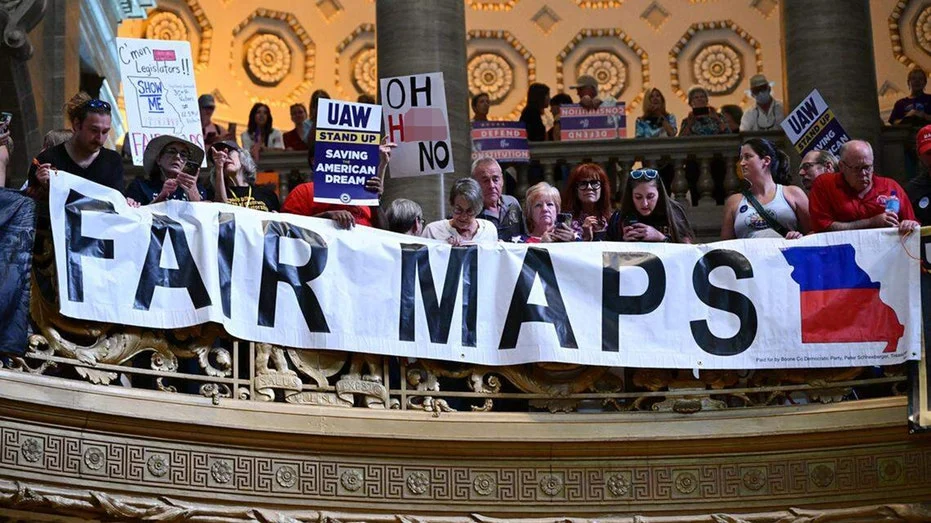
In a decisive move aimed at stabilizing the electoral landscape ahead of the upcoming midterms, the United States Supreme Court issued an unsigned order on Friday mandating that Missouri utilize its 2022 congressional district map for the 2026 election cycle. This ruling serves as a judicial injunction against the implementation of a more recent 2025 map, which had been the subject of intense litigation and political controversy. By declining to hear arguments to replace the existing boundaries, the high court has effectively frozen the status quo, ensuring that Missouri voters will head to the polls under the same geographic configurations that defined the state’s representation over the previous two years.
The order, which lacked any noted dissents, provides a clear instruction to both the U.S. District Court and the Court of Appeals: they are explicitly prohibited from blocking the use of the 2022 map, nor are they permitted to mandate the adoption of the contested 2025 iteration. For the state of Missouri, this resolution brings an abrupt end to months of legal maneuvering that threatened to upend the state’s congressional representation mere months before the filing deadlines for the 2026 primary elections.
A Chronology of the Redistricting Dispute
The controversy surrounding Missouri’s congressional maps is rooted in the decennial census process, which traditionally triggers the redrawing of electoral districts to account for population shifts. Following the 2020 census, Missouri’s Republican-led legislature faced significant hurdles in reaching a consensus on new boundaries, leading to a protracted period of negotiation that finally resulted in the 2022 map.
However, the political climate in the state legislature shifted in the years following the 2022 midterms. In 2025, GOP lawmakers sought to introduce a new redistricting plan. Proponents of the 2025 map argued that the changes were necessary to better reflect contemporary demographic shifts and to streamline voter representation. Conversely, critics and Democratic stakeholders contended that the new map was an attempt to maximize Republican advantages in suburban districts, effectively diluting the voting power of minority populations and urban centers.
Throughout 2025, the legal battle intensified. Multiple lawsuits were filed by voting rights advocacy groups and individual citizens, arguing that the 2025 plan constituted an unconstitutional gerrymander. Lower courts were inundated with motions, injunctions, and emergency appeals, creating a state of uncertainty for election officials tasked with preparing for the 2026 ballot. By the time the case reached the Supreme Court, the primary concern for the justices appeared to be the preservation of administrative continuity and the prevention of last-minute electoral chaos.
The Legal and Administrative Implications
The Supreme Court’s intervention underscores a recurring theme in American jurisprudence: the judiciary’s reluctance to allow mid-cycle redistricting that threatens to disrupt the stability of election administration. By upholding the 2022 map, the Court has signaled that while legislatures possess the authority to draw districts, that power is subject to reasonable constraints—particularly when the timing of such changes risks disenfranchising voters or creating insurmountable logistical hurdles for state election boards.
From an administrative standpoint, the use of the 2022 map provides much-needed clarity for the Secretary of State’s office and local election authorities. Updating precincts, notifying voters of changes in their congressional districts, and verifying candidate eligibility are processes that require months of preparation. Had the 2025 map been allowed to proceed, the state would have faced a high probability of significant technical errors and voter confusion during the transition period.
Supporting Data and Political Context
Missouri currently holds eight seats in the U.S. House of Representatives. Under the 2022 map, the state has seen a relatively stable partisan split, with Republicans holding a firm majority. The 2025 proposal, had it been implemented, was projected by several independent analysts to solidify the Republican hold on at least six of those eight seats, potentially rendering the remaining districts less competitive.
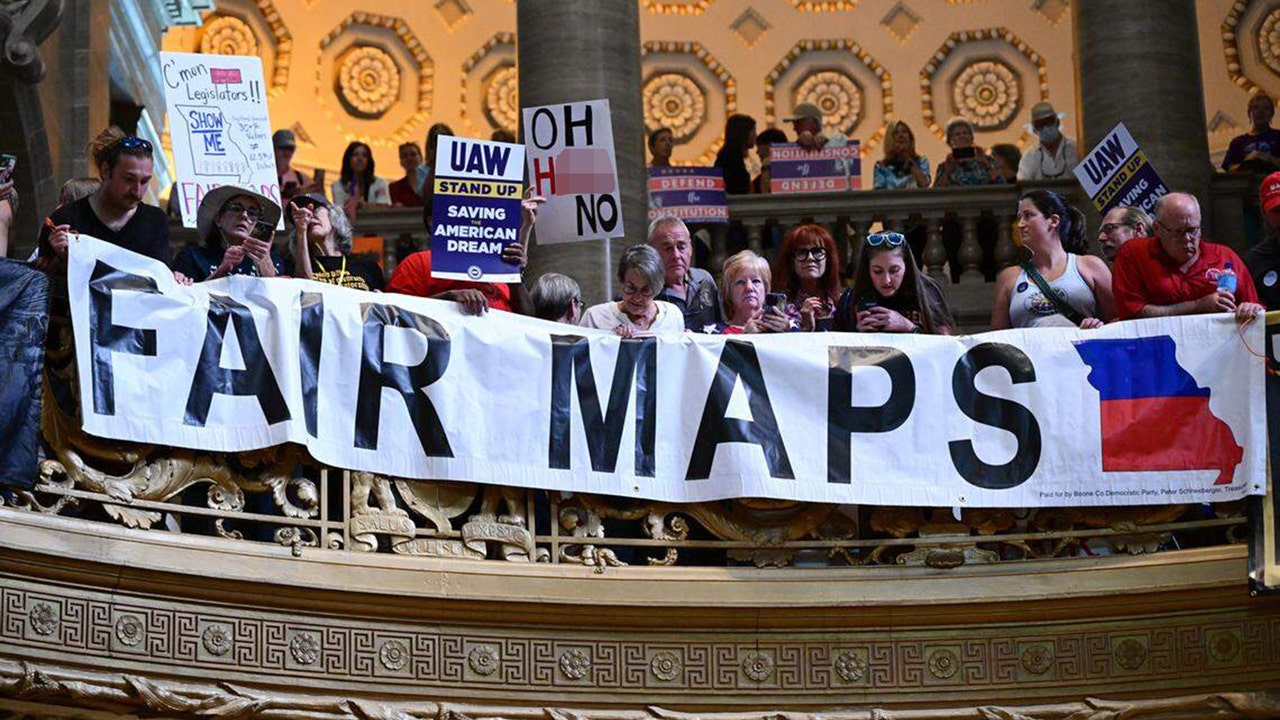
Data from the 2022 midterms indicated that the existing boundaries resulted in a turnout rate consistent with historical norms for the region. Political scientists note that the stability of district lines often correlates with higher voter participation, as constituents become familiar with their representatives and the issues specific to their local geography. By maintaining the 2022 lines, the Supreme Court has essentially opted for predictability over the legislative desire for partisan realignment.
Reactions and Stakeholder Perspectives
The reaction to the Supreme Court’s order has been polarized, reflecting the broader national debate over redistricting. Republican leaders in the Missouri General Assembly expressed disappointment, characterizing the ruling as an unnecessary interference in the state’s legislative sovereignty. They maintain that the 2025 map was a lawful exercise of their constitutional duty to ensure that district populations remain balanced and reflective of current census data projections.
On the other side of the aisle, Democratic lawmakers and voting rights organizations have lauded the decision as a victory for electoral fairness. "The Supreme Court has rightly recognized that the integrity of our election process must come before partisan attempts to redraw maps for political gain," a spokesperson for a prominent voting rights coalition stated following the announcement. For these groups, the 2022 map, while not perfect, is viewed as a more equitable distribution that prevents the most egregious forms of packing and cracking.
Legal experts observing the case have noted that the Court’s decision is consistent with its broader trend of avoiding the "political thicket" of redistricting whenever possible, unless a clear constitutional violation—such as a blatant racial gerrymander—is present. By issuing an unsigned, unanimous-style order, the justices effectively signaled that this particular dispute did not rise to the level of requiring a full-scale constitutional overhaul.
Broader Impact on the 2026 Midterms
The impact of this ruling extends beyond the borders of Missouri. As a state that often serves as a bellwether for national trends, the resolution of its redistricting dispute offers a blueprint for how the federal courts may handle similar challenges in other states. The clear message from the Supreme Court is that the burden of proof for implementing late-cycle map changes is exceptionally high, and that the administrative burden of such changes will weigh heavily against their implementation.
For candidates running for Congress in Missouri in 2026, the playing field is now set. Incumbents and challengers alike can focus their campaigns on policy issues rather than the uncertainty of changing district lines. This stability is expected to facilitate more substantive campaigning, as candidates will not have to pivot their strategies to account for the sudden inclusion or exclusion of large swaths of voters within their districts.
Furthermore, the ruling serves as a cautionary tale for state legislatures across the country regarding the timing of redistricting. The court has effectively established a "point of no return" for map changes, suggesting that if a state intends to update its districts, it must do so with enough lead time to avoid triggering federal intervention.
Conclusion: A Return to Stability
As the 2026 midterm election season approaches, the Missouri congressional landscape remains tethered to the 2022 boundaries. While the legal battle over the 2025 map has concluded, the underlying debates regarding representation, partisan influence, and the constitutional limits of redistricting remain active issues in American political life.
The Supreme Court’s decision on Friday was not a commentary on the inherent fairness of the 2022 map, but rather a pragmatic judicial intervention to preserve the orderly conduct of the democratic process. By removing the 2025 map from the table, the Court has ensured that the upcoming election will be defined by the candidates’ platforms and the will of the voters, rather than by the mechanics of district line manipulation. For the citizens of Missouri, the ruling offers a rare moment of certainty in an increasingly volatile political environment, allowing the focus of the 2026 campaign to remain where it belongs: on the representation of the people.

