
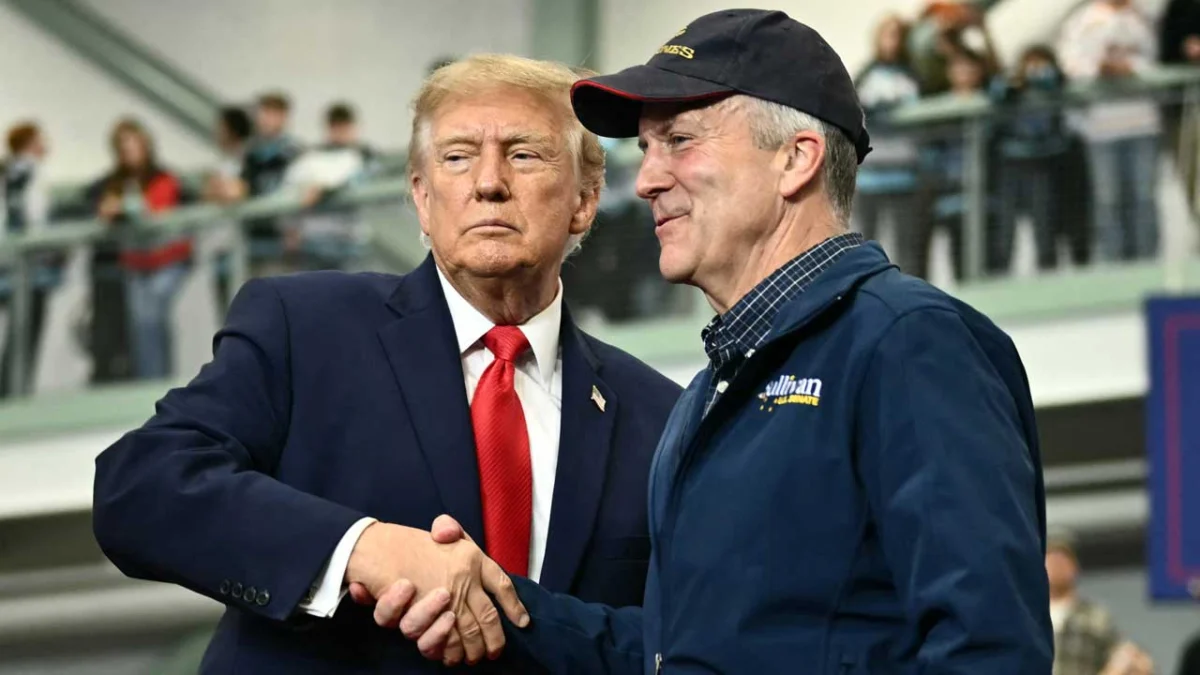
A federal judge in Alaska has dismissed a high-stakes lawsuit filed by the Department of Justice that sought to delay the certification of the state’s pivotal U.S. Senate election. The legal challenge, which emerged just 48 hours before the midterms, centered on the appearance of two candidates with nearly identical names on the ballot—a controversy that has become colloquially known as the "Decoy Dan" scheme. While the U.S. District Court has ruled against the government’s attempt to stall the certification process, the DOJ has signaled an immediate intent to appeal, setting the stage for a protracted legal battle that could reach the 9th U.S. Circuit Court of Appeals.
The Origin of the "Decoy Dan" Controversy
The controversy involves Republican incumbent Senator Dan S. Sullivan and a challenger named Daniel J. Sullivan Jr. The presence of two candidates sharing a name—and effectively the same moniker on the ballot—raised immediate concerns among state election officials and the federal government regarding voter confusion. The Department of Justice alleged that the candidacy of Daniel J. Sullivan Jr. was not a legitimate political effort but a coordinated attempt to siphon votes away from the incumbent and manipulate the outcome of a race that could determine the balance of power in the U.S. Senate.
The legal action sought to block the certification of Democratic nominee Mary Peltola should she emerge victorious, arguing that the alleged "spoiler" strategy fundamentally compromised the integrity of the electoral process. The core of the DOJ’s argument was that the intentional introduction of a namesake candidate created an environment where voters could not reliably express their intent, thereby violating the sanctity of the ballot.
Judicial Ruling and Procedural Hurdles
U.S. District Judge Sharon Gleason’s decision to dismiss the lawsuit was rooted in procedural and jurisdictional concerns. In her ruling, Judge Gleason noted that the federal government failed to demonstrate a viable mechanism to investigate voter intent without violating the core principle of ballot secrecy. Furthermore, the court emphasized the principle of federalism, noting that the management, oversight, and certification of state-level elections are primarily the responsibility of the state of Alaska.
By attempting to intervene in the certification process, the DOJ was viewed by the court as overstepping into the domain of state election boards. The judge concluded that the federal government had not provided sufficient evidence that the alleged confusion reached a threshold that would legally necessitate the invalidation of the state’s established certification timeline. However, the DOJ remains adamant, arguing that the court dismissed the case on procedural grounds and failed to address the substantive allegations regarding the potential criminal nature of the "spoiler" candidacy.
A Timeline of Escalating Tensions
The timeline of this dispute has been remarkably condensed, reflecting the urgency of the midterm election cycle:
- Pre-Election Filing: Reports emerged suggesting that individuals with ties to the Democratic campaign of Mary Peltola were involved in the recruitment and support of Daniel J. Sullivan Jr. to run as a spoiler.
- The Lawsuit: The DOJ filed suit seeking an injunction against certification, citing the need for an investigation into voter confusion and the legitimacy of the ballot.
- The Ruling: On the Sunday prior to the Tuesday election, Judge Gleason denied the motion, stating the federal government failed to show a legal basis for interference.
- The Appeal: Following the denial, the DOJ confirmed its intention to escalate the case to the 9th Circuit, maintaining that the integrity of the federal seat was at stake.
- Governor’s Intervention: Alaska Governor Mike Dunleavy, a Republican, has publicly questioned the legitimacy of the situation, signaling that he may decline to certify a result if the "Decoy Dan" influence is found to have skewed the outcome.
Political Implications of Ranked-Choice Voting
The situation in Alaska is further complicated by the state’s adoption of a ranked-choice voting system. In this format, voters rank candidates in order of preference. If no candidate secures a majority of first-choice votes, the candidate with the lowest number of votes is eliminated, and their supporters’ second-choice votes are redistributed.
The presence of a candidate with a nearly identical name is particularly potent in a ranked-choice environment. If voters intended to select the incumbent, Senator Dan S. Sullivan, but accidentally selected Daniel J. Sullivan Jr., those votes could be siphoned away or, in the case of elimination, redistributed in a way that does not reflect the voter’s true intent. Political analysts suggest that in a razor-thin Senate race, even a small percentage of confused voters could be the difference between a Republican hold and a Democratic gain.
Official Responses and Denials
The candidates at the center of the storm have adopted starkly different postures. Senator Dan S. Sullivan has expressed his intent to accept the final results of the election, though he has remained vocal in his criticism of his namesake challenger, characterizing the candidacy as a cynical attempt to deceive the electorate.
Conversely, Democratic nominee Mary Peltola has categorically denied any involvement in the recruitment or support of the challenger. Her campaign has labeled the allegations as a distraction tactic designed to undermine the democratic process. Daniel J. Sullivan Jr. has also denied any coordination with the Democratic party, maintaining that his candidacy is a legitimate exercise of his rights as a citizen to run for public office.
Meanwhile, Senator Tim Scott and other prominent Republicans have publicly declared the "Decoy Dan" plot a potential criminal offense, calling for a thorough federal investigation. The involvement of the DOJ has added a layer of federal weight to these accusations, suggesting that the matter will not conclude simply with the casting of ballots.
Broader Impact on Election Integrity
This case highlights a growing anxiety regarding election security and the potential for bad-faith actors to exploit nuances in ballot naming conventions. Legal scholars have noted that while there are few laws preventing individuals from running for office under similar names, the systematic recruitment of "spoiler" candidates to cause confusion creates a new frontier for election litigation.
The conflict in Alaska serves as a bellwether for how state and federal authorities might interact in future elections. Should the 9th Circuit Court of Appeals choose to hear the case, the resulting precedent could redefine the scope of federal oversight in state elections. If the court finds that the federal government can intervene when there is evidence of systematic attempts to confuse voters, it could lead to increased scrutiny of candidate vetting processes across the country.
Economic and Policy Considerations
The uncertainty surrounding the Alaska Senate seat has direct implications for the national legislative agenda. With the Senate currently divided along narrow margins, every seat is essential for both parties to advance their platforms. The potential for a delayed or contested certification threatens to leave a seat vacant or under-represented during the critical transition period following the midterm elections.

For voters in Alaska, the controversy has created a sense of fatigue and confusion. Many are now calling for legislative reforms to the state’s ballot access laws, specifically regarding name similarity and the requirements for running for office. Governor Dunleavy’s office has indicated that the state legislature may consider drafting new requirements to ensure that candidates are clearly distinguishable, potentially including middle initials or occupation identifiers on ballots in future cycles.
Conclusion
As the legal maneuvers continue, the eyes of the nation remain fixed on Alaska. The intersection of ranked-choice voting, allegations of political sabotage, and the aggressive involvement of the Department of Justice creates a volatile environment for the conclusion of the election. While the immediate court ruling has provided a temporary resolution, the underlying tensions regarding the legitimacy of the campaign and the potential for a contested victory remain unresolved.
The upcoming appeal in the 9th Circuit will likely focus on whether the federal government has the authority to step into a state-run election to protect the "intent" of the voter, a question that reaches into the heart of American democratic principles. Until a final judicial determination is reached, the status of the Alaska Senate seat remains in limbo, serving as a reminder of the fragility of electoral processes when faced with calculated efforts to exploit them. As the country moves past the midterms, the "Decoy Dan" controversy will likely remain a key case study in the ongoing national debate over election integrity, ballot access, and the role of the federal government in state-level politics.

