

In 2021, the catastrophic failure of the regional power grid during Winter Storm Uri served as a sobering wake-up call for the American Midwest. As temperatures plummeted and demand for electricity surged, the Southwest Power Pool (SPP)—the organization responsible for managing grid reliability across 14 states—was forced to implement rolling blackouts to prevent a total systemic collapse. In Nebraska, the Omaha Public Power District (OPPD) was among the utilities tasked with shedding load to protect the grid’s integrity. Three years later, while the immediate scars of that emergency have faded, a new, more persistent crisis is emerging: the region is running out of the very electricity required to fuel its own economic expansion.
The challenge is no longer just about surviving the next polar vortex; it is about scaling up a century-old infrastructure to meet the voracious appetite of a modern, digitized economy. Driven by a nationwide boom in data centers, an accelerating push toward the electrification of transportation, and the expansion of industrial manufacturing, the demand for power in the Omaha metropolitan area is outpacing supply. For the 419,000 customers served by OPPD, this energy scarcity is becoming a defining bottleneck for the state’s prosperity.
A Legacy of Constraint and the Shift in Grid Demands
To understand the current impasse, one must look at the structural evolution of the grid. Prior to 2021, utilities were largely focused on cost-efficiency and incremental growth. Winter Storm Uri, however, exposed the vulnerability of aging infrastructure, fuel supply chain fragility, and the limitations of transmission lines. The resulting mandate from the SPP required utilities to maintain higher reserve margins—essentially keeping more "extra" power on standby to handle extreme weather.
While this improved reliability, it consumed much of the excess capacity that utilities had previously kept in reserve for potential economic development. Today, OPPD estimates it has less than 100 megawatts of available capacity for new or expanding large-scale projects. When compared to the power requirements of modern industrialization—where a single hyperscale data center can demand 1,000 megawatts and large manufacturing plants often require upwards of 100 megawatts—the available margin is effectively zero.
This shortfall arrives at a precarious moment for Nebraska. The state is navigating a projected $208 million budget deficit, and tax revenues have seen a significant contraction compared to recent years. Economic development is viewed by state leaders as the primary lever to pull to offset these shortfalls, yet the lack of available power is forcing companies to look elsewhere.
The Collision of Industrial Growth and Infrastructure Limits
The tension between economic ambition and physical reality is playing out in real-time. According to data provided by OPPD, the utility’s industrial load is projected to balloon from 32 percent of its total demand today to 52 percent by 2035. Much of this growth is attributed to the rise of data centers, which provide significant tax revenue and technological prestige but also demand constant, high-volume energy consumption that challenges the base-load stability of the grid.
The queue for new energy is extensive. As of September, projects totaling nearly 2,000 megawatts are actively working through the connection process with OPPD through 2031, with another 5,000 megawatts of potential interest currently being vetted. Javier Fernandez, the outgoing president and CEO of OPPD, has been transparent about the dilemma: the utility is caught between the risk of under-building—which would stifle the region’s growth—and the risk of over-building, which could saddle ratepayers with the costs of massive, underutilized infrastructure projects.
"We are bending over backwards," Fernandez noted in recent discussions. "How do we bridge this? Can we buy capacity from other utilities? Literally, no one has excess capacity. Everyone is in the same boat as we are."
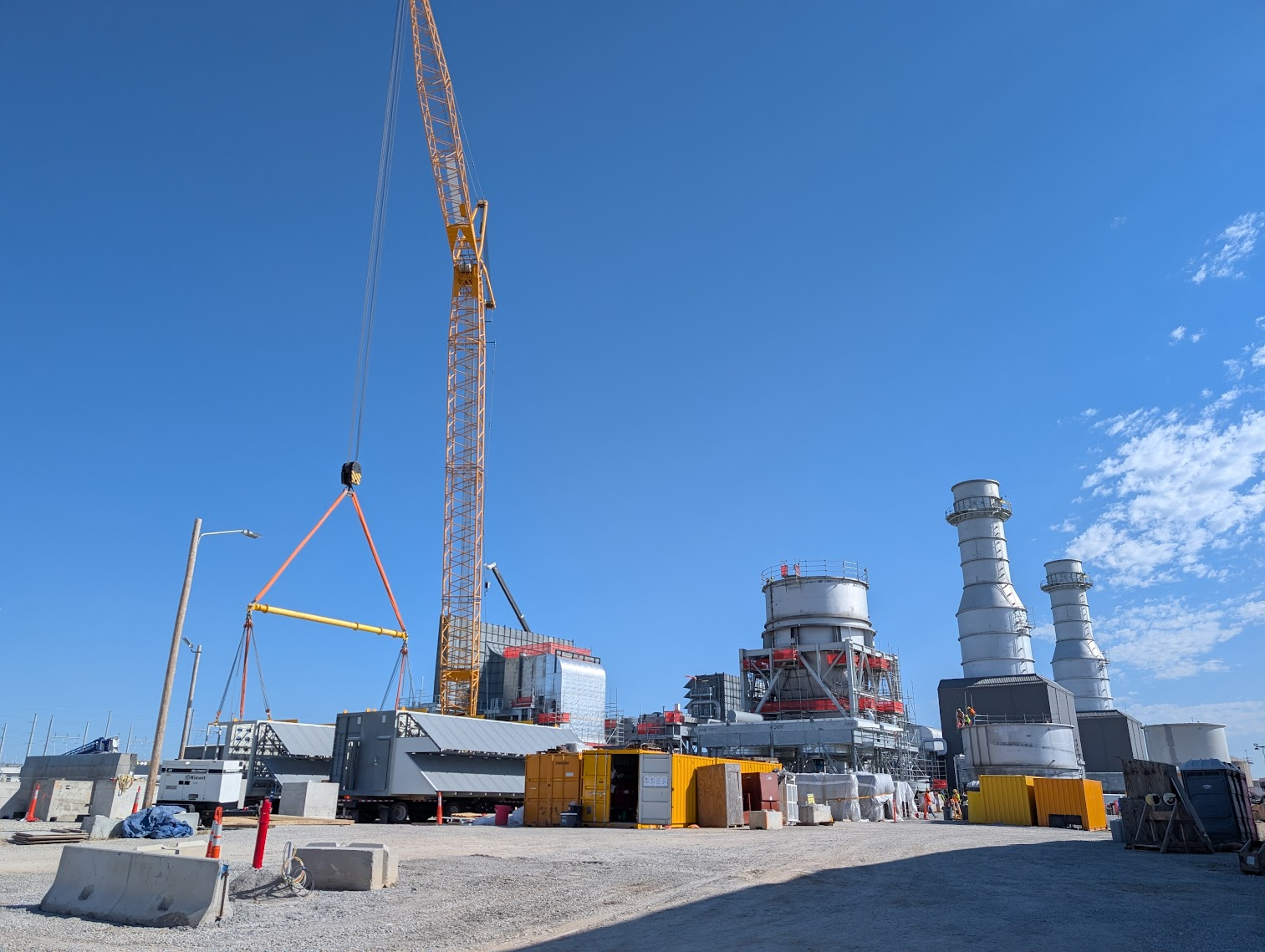
The Complexity of Expansion: Natural Gas and Renewables
The path to increasing capacity is fraught with regulatory, financial, and social hurdles. To meet the projected demand, OPPD is evaluating an expansion of its energy portfolio that could range from 1,000 megawatts on the conservative end to more than double its current 4,583-megawatt capacity.
The strategy involves a hybrid approach, relying on both natural gas—valued for its reliability—and renewable energy sources like wind and solar, which are increasingly the most cost-effective to operate. However, both paths face headwinds. The natural gas sector is currently experiencing a severe equipment supply chain crisis, leading to lead times that make rapid deployment nearly impossible. Conversely, while renewables remain the most economical long-term investment, they are facing significant localized opposition.
Across Nebraska, several renewable energy projects have stalled due to pushback from community members and local boards. Concerns regarding the usage of agricultural land, fire risks, and the preservation of rural landscapes have created a political environment where "not in my backyard" (NIMBY) sentiment often triumphs over regional energy needs. This creates a paradox: the same communities that demand economic growth and high-paying jobs are often the most resistant to the infrastructure developments required to power them.
The Economic Stakes: A Competitive Disadvantage
The Greater Omaha Chamber of Commerce has been vocal about the danger of inaction. Heath Mello, president and CEO of the Chamber, has urged the utility to adopt a planning horizon that extends well beyond 2036. The stakes are clear: energy availability is now cited as one of the top two reasons the Omaha region loses business deals to competing states.
For site selectors, the math is simple. If a state cannot guarantee a consistent, scalable supply of electricity, it is removed from the consideration list before negotiations even begin. Larry Gigerich, chair of the Site Selectors Guild, notes that this is a nationwide phenomenon, but it is particularly acute in regions that have historically relied on a stable, modest energy growth model. "Now it’s a true competition," Gigerich said, "and we can’t generate enough new power fast enough to meet everybody’s needs."
Looking Ahead: The Need for Unified Policy
The challenge for Nebraska is one of coordination. There is a distinct disconnect between the state’s aggressive economic development goals and its energy planning policies. Without a unified mandate from the state legislature, county officials, and city leaders, utilities like OPPD are left to make high-stakes, multi-billion-dollar bets in a vacuum of public policy.
Some members of the OPPD board have suggested that if the state wants to remain competitive, it must provide a clear roadmap that prioritizes specific types of industrial growth. If energy is a finite resource, the state must decide whether it wants to prioritize data centers, which require massive, consistent power, or manufacturing facilities, which might provide different types of job growth and local economic multipliers.
As Fernandez prepares to depart the utility at the end of the year, his message to the region is one of urgency. "If Omaha doesn’t grow, if Omaha doesn’t prosper, the rest of the state very likely won’t," he said. The upcoming decade will be a litmus test for the region’s ability to reconcile its traditional values with the requirements of a high-tech future. Whether the grid is expanded through a massive build-out of new generation or whether the region is forced to throttle its own growth due to energy scarcity remains the central, unresolved question of Nebraska’s economic policy.
Ultimately, the crisis serves as a microcosm for the American energy transition. As the nation shifts toward an economy defined by electrification and digital infrastructure, the physical limitations of the grid are no longer a background concern—they are the primary constraint on the future of the American dream. The ability of a region to build, innovate, and adapt will depend entirely on its willingness to power the future it claims to want.

