
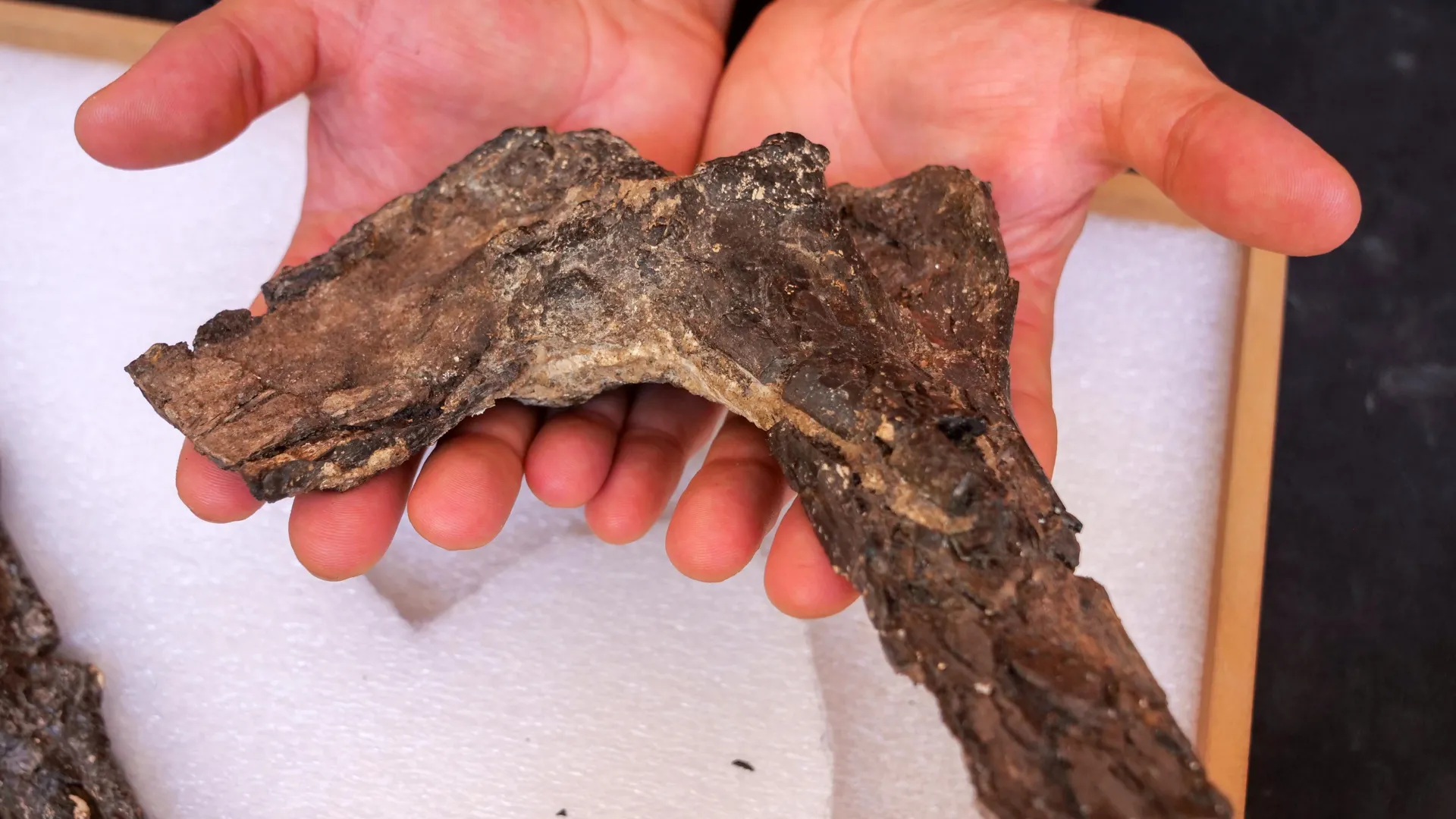
In a landmark achievement for the field of molecular paleontology, an international team of researchers has successfully identified fossilized red blood cells and definitive chemical signatures of hemoglobin within the skeletal remains of a Cretaceous-era theropod. The study, published in the Proceedings of the National Academy of Sciences, focuses on the Aratasaurus museunacionali, a meat-eating dinosaur unearthed in the Crato Formation of northeastern Brazil. This discovery fundamentally alters the scientific consensus regarding the longevity of organic molecules, which were previously thought to degrade entirely within a fraction of the time this specimen has existed.
The Chronology of a Scientific Breakthrough
The journey to this discovery began with the initial excavation of the Aratasaurus fossil. The Crato Formation is a geological treasure trove known for its exceptional preservation of fossils, often capturing soft tissues through the process of lagerstätte—a term used by paleontologists to describe sedimentary deposits that exhibit extraordinary fossil richness or completeness.
Following the excavation, the specimen underwent years of rigorous analysis by researchers from Curtin University in Australia, the Japan Agency for Marine-Earth Science and Technology, the Brazilian National Museum, the Regional University of Cariri, and Johns Hopkins University. The research team, led by John Curtin Distinguished Professor Kliti Grice, utilized advanced spectroscopic and chemical imaging techniques to probe the interior of the dinosaur’s limb bones.
By 2021, the preliminary findings began to suggest that the vascular canals—the microscopic channels that once facilitated blood flow—contained more than just mineralized debris. In the months that followed, the team verified the presence of heme-derived molecules, effectively creating a direct molecular window into the physiology of a creature that roamed the Earth during the Early Cretaceous period, approximately 115 million years ago.
Analytical Breakdown: How Biological Molecules Defy Decay
The primary challenge in paleontology has always been the "molecular clock." Under standard geological conditions, proteins, DNA, and cellular membranes are highly susceptible to hydrolysis, oxidation, and microbial degradation. Once an organism dies, its biological components typically break down into simpler compounds within a few thousand to a few million years.
The Aratasaurus specimen, however, benefited from a unique set of taphonomic conditions—the processes that occur between an organism’s death and its eventual discovery as a fossil. The study indicates that the preservation of these blood cells was facilitated by the presence of hausmannite, a manganese oxide mineral. This mineral acted as a geochemical stabilizer, effectively sealing the red blood cells within a "natural time capsule."
Chemical analysis confirmed the presence of heme, a vital component of hemoglobin, the protein responsible for transporting oxygen throughout the circulatory systems of vertebrates. Furthermore, the team identified amino acids associated with collagen, the structural protein that provides the framework for bones and connective tissues. The combination of rapid burial in low-oxygen, sediment-rich environments and the subsequent mineralizing action of hausmannite prevented the rapid decomposition that typically claims such delicate biological material.
Official Perspectives and Expert Commentary
The significance of these findings has drawn widespread attention from the global scientific community. Professor Kliti Grice, the study’s lead author and director of the WA-Organic and Isotope Geochemistry Centre at Curtin University, emphasized the magnitude of the results during a press briefing.
"To detect intact heme-derived molecules in 115-million-year-old red blood cells is astonishing," Professor Grice stated. "It not only extends the known fossil record of blood, but it also offers a direct molecular window into the physiology of long-extinct animals so we may better understand them and the world they lived in."
Professor Martin Van Kranendonk, head of the School of Earth and Planetary Sciences at Curtin University, echoed these sentiments, noting that the research represents a paradigm shift in how geochemists and paleontologists approach the study of "deep time." According to Van Kranendonk, the collaborative nature of the study—spanning continents and disciplines—highlights the necessity of interdisciplinary approaches in modern science. "These results are changing how we understand the preservation of molecular structures over vast timescales and under harsh conditions," he remarked.
Implications for the Future of Paleobiology
For decades, the standard assumption in the scientific community was that biomolecules like hemoglobin could not survive for more than a few million years. This discovery invalidates that assumption, prompting a re-evaluation of fossil collections worldwide. If such molecules can survive in the conditions provided by the Crato Formation, it is highly probable that similar traces exist in other fossils previously deemed "exhausted" of biological information.
This realization opens new avenues for investigating the evolution of metabolism and thermoregulation in dinosaurs. By analyzing the remnants of hemoglobin, researchers may eventually be able to estimate the oxygen-carrying capacity of dinosaur blood, providing concrete data on the metabolic rates of these extinct animals. Such insights would bridge the gap between static skeletal reconstructions and dynamic biological models, allowing for a more nuanced understanding of how dinosaurs functioned in their respective ecosystems.
Beyond Earth: The Astrobiology Connection
Perhaps the most ambitious implication of the study lies in the field of astrobiology. As humanity looks toward Mars and the icy moons of the outer solar system, the search for life—or the chemical signatures of past life—is a primary mission objective. The Aratasaurus discovery proves that biological signatures can persist in a detectable state for over 100 million years, provided the geological environment remains stable.
Astrobiologists are now tasked with rethinking their criteria for identifying potential biosignatures in extraterrestrial environments. If life once existed on a planet like Mars, the environmental conditions—such as burial in mineral-rich, low-oxygen sediments—could potentially preserve organic molecules for eons. The methods developed by Professor Grice’s team for identifying heme-derived signatures are now being viewed as a potential framework for future exobiology instruments, which may be tasked with scanning for similar "molecular ghosts" in the Martian regolith.
Conclusion: A New Era of Molecular Discovery
The discovery of 115-million-year-old blood molecules in a theropod dinosaur is more than just a curiosity; it is a transformative event for science. It challenges the perceived limitations of organic preservation and necessitates a more sophisticated, molecule-focused approach to the study of the past. As the international team continues to refine their detection methods, the broader scientific community expects to see a surge in similar studies, potentially revealing that the fossil record is far richer in biological data than previously imagined.
Supported by the Australian Research Council, this study serves as a testament to the power of persistent, high-precision research. As we look backward into the Mesozoic era, we are now armed with new tools to interrogate the very blood that once powered the giants of the past, proving that while bones may be the frame of history, molecules are its living memory. This landmark research, published in the Proceedings of the National Academy of Sciences, ensures that the Aratasaurus museunacionali will remain a cornerstone of paleontological study for decades to come, anchoring our understanding of how life endures against the relentless tide of geological time.

