
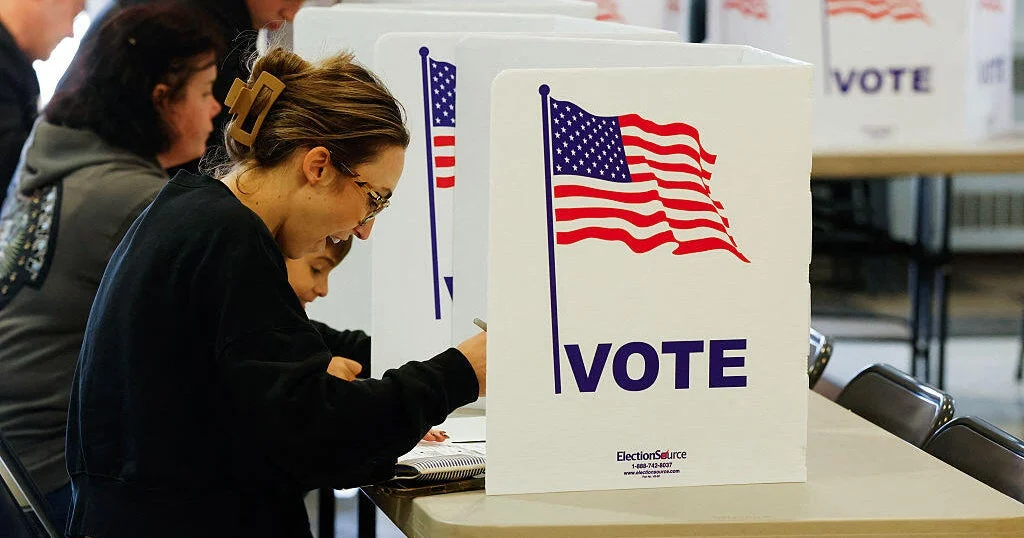
As millions of Americans cast their ballots on Tuesday, November 3, 2026, the nation faces a pivotal midterm election cycle that will decide control of both chambers of Congress, shape state leadership, and test the resilience of local and federal election infrastructure. Against a backdrop of economic anxiety—highlighted by gas prices reaching a historic high for any Election Day—voters are navigating a series of logistical challenges, legal skirmishes, and last-minute campaign controversies across key battleground states.
Control of the federal government hangs in the balance. Republicans currently defend a razor-thin majority in the House of Representatives, where 47 competitive battleground districts are projected to dictate the majority, while the Senate features 11 highly contested seats that could shift the current 53-47 Republican advantage. Early turnout indicators show unprecedented momentum in several regions, setting the stage for what election officials and experts warn could be a protracted and intensely scrutinized night of race calls.
Logistical Hurdles and Technical Glitches Disrupt Voting
Election day has not been without friction. In Westchester County, New York, voting was disrupted early Tuesday when ballot scanners at the majority of polling locations failed to recognize and accept ballots. According to the New York State Board of Elections, the malfunction stemmed from a late programming change implemented for a municipal race that was never properly deployed to countywide machines.
State and local officials rushed to reassure voters, emphasizing that the scanners were rejecting unrecognized ballots rather than miscalculating votes. Voters were instructed to cast paper ballots via established emergency procedures to be securely stored and counted later. Attorney General Letitia James and House Administration Committee observers confirmed they were closely monitoring the situation.
Similar technical challenges surfaced in Fulton County, Georgia—the state’s most populous county, encompassing Atlanta. Officials reported paper jams at one polling site and power-related memory concerns at another, affecting roughly 1,000 early-voting ballots. The county election board scheduled an emergency evening session to publicly rescan the affected physical ballots or memory cards to guarantee complete transparency and accuracy, though Georgia Secretary of State Brad Raffensperger noted he did not expect the hiccup to delay statewide results.
Meanwhile, severe weather conditions threatened ballot access in other parts of the country. In Florida’s St. Lucie County, a rare "1,000-year" extreme rainfall event triggered localized flooding, forcing the supervisor of elections to temporarily relocate several precincts due to impassable roads.
Security Warnings, Misinformation, and DOJ Monitoring
The lead-up and opening hours of Election Day were marked by heightened vigilance surrounding voter security, misinformation, and federal oversight. In Fulton County, election officials issued an urgent warning to voters regarding unauthorized text messages falsely claiming that polling locations had been changed. Officials clarified that the texts did not originate from the county’s legitimate notification system, known as FALCON, and urged residents to verify their precincts through official state voter portals.
At the federal level, the Department of Justice initiated an unprecedented oversight effort, deploying approximately 1,000 election monitors and observers to all 50 states to ensure compliance with federal voting rights statutes, including the Voting Rights Act and the Help America Vote Act.
However, the DOJ’s footprint sparked pushback from state officials. Secretaries of state in Michigan and New Mexico reported that federal monitors had overstepped boundaries by asking poll workers unusual questions or requesting training materials. Both states later confirmed they received assurances from the Justice Department that the concerns had been addressed and resolved without disrupting voting operations.
Legal Battles Over Ballots Reach the Highest Courts
The judiciary remained deeply enmeshed in election procedures right up to Tuesday morning. Late Monday, the U.S. Supreme Court issued a one-line, unsigned order denying a last-minute request by the Trump administration to force California election officials to separate mail-in ballots cast by approximately 20,000 individuals alleged to be noncitizens. The high court’s refusal left intact lower rulings blocking the demand.
Simultaneously, a complex procedural battle unfolded within the U.S. Court of Appeals for the 9th Circuit. The full appeals court reinstated a panel decision that granted a Justice Department request to freeze a lower court’s temporary restraining order. That order had previously barred the administration from pressing election workers in California and Washington to sequester ballots returned by alleged noncitizens under threat of prosecution. The ruling left local election workers grappling with conflicting directives over whether to isolate specific batches of votes.
High-Profile Senate Showdowns Define the Midterms
Control of the Senate hinges on a handful of fiercely contested races where national issues intertwine with unique local dynamics:
Michigan: The battle for an open U.S. Senate seat between Democrat Abdul El-Sayed and Republican Mike Rogers was upended over the weekend when Democratic Rep. Haley Stevens announced a cross-party endorsement of Rogers, citing ideological differences. While Rogers touted Stevens’ "courage" during his final campaign stops, Democratic figures like Rep. Debbie Dingell argued the endorsement backfired, serving to galvanize minority and progressive communities behind El-Sayed. On Tuesday morning, President Donald Trump added fuel to the fire with sharp social media criticisms targeting El-Sayed.
Texas: In one of the most expensive and closely watched races in the country, Republican Ken Paxton and Democrat James Talarico clashed over economic anxiety, immigration enforcement, and millions of dollars in outside spending. Both candidates made final appeals to the state’s surging Hispanic electorate, a demographic viewed as critical to the outcome.
Maine: Five-term incumbent Republican Sen. Susan Collins faced a vigorous challenge from Democrat Troy Jackson. Despite trailing in some recent polls, Collins projected confidence, telling voters that "the only poll that counts is the one on Election Day," while voters weighed the broader implications of congressional power balances.
Alaska: The state’s unique ranked-choice voting system faced heightened scrutiny in the Senate race, complicated by the presence of a second candidate named Dan Sullivan on the ballot—a teacher recruited into the race amid ongoing inquiries into ballot presentation and voter clarity.
Economic Pressures and Final Closing Arguments
Economic concerns served as a dominant undercurrent for voters casting their ballots. According to data from AAA, gas prices averaged $4.15 per gallon nationwide on Tuesday, marking the highest price point for any Election Day in U.S. history and surpassing the previous record of $3.80 set in 2022. Candidates across the political spectrum sought to leverage public frustration over the cost of living, inflation, and affordability in their final pitches.
On the eve of the election, political leaders offered starkly different visions for the country’s trajectory. President Trump delivered his closing message from the Lincoln Memorial Reflecting Pool in Washington, D.C., framing the midterms as a crucial referendum on stopping political extremists and preserving what he termed the "golden age of America." Interior Secretary Doug Burgum defended the location, noting that urban renewal projects in the capital serve as proof that "Americans do not have to accept decline."
Conversely, Democratic leaders and progressive challengers emphasized themes of economic relief, healthcare access, and institutional checks and balances.
Implications for the Evening and Beyond
As polling stations across the country begin to close, election experts and officials are cautioning the public against expecting immediate results in every race. Close margins in key House and Senate districts mean that definitive control of Congress may not be known on election night.
Election security specialists have repeatedly stressed that delayed race calls are a standard function of rigorous vote-counting procedures rather than an indicator of irregularities. With historic voter turnout in early and mail-in voting—including records set in states like Minnesota—election workers face a massive volume of ballots to process. As the nation watches the returns roll in, the focus shifts to the integrity of the vote-counting process and the peaceful transition of legislative power.

