
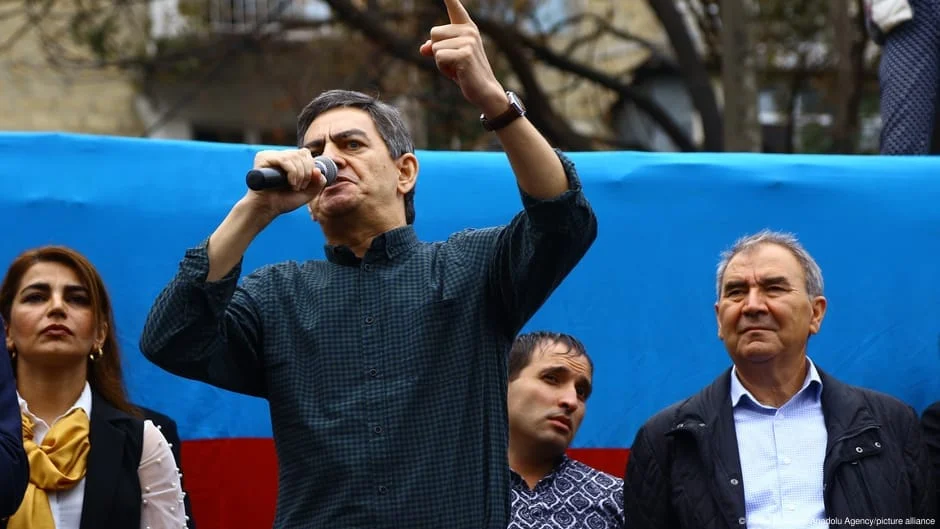
One year has passed since the arrest of Ali Karimli, the long-standing chairman of the Azerbaijani Popular Front Party (APFP), yet the veteran opposition figure remains behind bars, facing severe charges that have ignited a firestorm of international condemnation. Karimli’s ongoing detention, alongside his political advisor Mammad Ibrahim, serves as a focal point for what rights monitors describe as an intensified crackdown on dissent by the Azerbaijani government. As the legal proceedings continue behind closed doors, the case has become a litmus test for the country’s commitment to human rights and the rule of law.
A Chronology of Confrontation
The legal saga began on November 29, 2025, when authorities took Karimli and Ibrahim into custody. The State Security Service of Azerbaijan leveled charges under Article 278.1 of the Criminal Code, alleging that the defendants were engaged in activities aimed at the violent seizure of power and the subversion of the constitutional order. If convicted, Karimli and Ibrahim face between 12 and 20 years in prison, with the potential for life imprisonment.
The prosecution’s narrative rests on claims that Karimli conspired with Ramiz Mehdiyev, the former head of the Presidential Administration, to incite unrest during a mass rally in Baku in July 2020. According to the State Security Service, this conspiracy involved foreign intelligence elements and was intended to facilitate the seizure of the parliament and state television buildings.
However, Karimli has vehemently denied these allegations. In a 15-page court motion, he countered that he did not attend the rally in question, noting that his party was not among the organizers. He characterized the charges as a transparent attempt to neutralize his political influence, arguing that he has consistently advocated for democratic reform through legal and peaceful channels. "I accept only one way of coming to power — through democratic elections," he stated in his motion, which the court officially added to the case file while rejecting his plea for dismissal.
The Landscape of Repression
The arrest of Karimli is not an isolated event but rather the latest chapter in a multi-year trend of administrative and judicial pressure on the Azerbaijani political opposition. The APFP has been a persistent voice of dissent since the early 2000s, and its members have frequently been the target of state-led investigations.
Mammad Ibrahim’s history of incarceration underscores the patterns of harassment reported by human rights groups. In 2016, he served a three-year sentence on "hooliganism" charges that Human Rights Watch labeled as spurious. The repeat targeting of such officials has led organizations like Amnesty International to conclude that the government is engaged in a systematic effort to "crush all political opposition."
Denis Krivosheev, Amnesty’s deputy director for Eastern Europe and Central Asia, stated in December 2025 that the detention of Karimli is an "outrage" that reflects the ongoing consolidation of authoritarian practices within the country. The lack of transparency surrounding the current trial—conducted behind closed doors under the guise of protecting "state secrets"—has only deepened suspicions regarding the legitimacy of the judicial process. Foreign diplomats and independent observers have been barred from the courtroom, preventing any external verification of the evidence presented by the prosecution.
Detention Conditions and Human Rights Concerns
As the trial progresses, attention has shifted to the physical and mental well-being of the defendants. The situation has become increasingly dire, according to family members and legal counsel. Turkel Karimli, the opposition leader’s son who resides in the United States, has reported a marked deterioration in his father’s health.
Reports indicate that access to essential services has been inconsistent. At one point during the summer, the facility restricted Karimli’s drinking water to a mere five liters per week, a measure that Amnesty International warned could constitute a form of torture or cruel, inhuman, and degrading treatment. Following reports that Karimli fainted during an August 6 court hearing due to severe dehydration, authorities marginally increased his water allowance to ten liters.
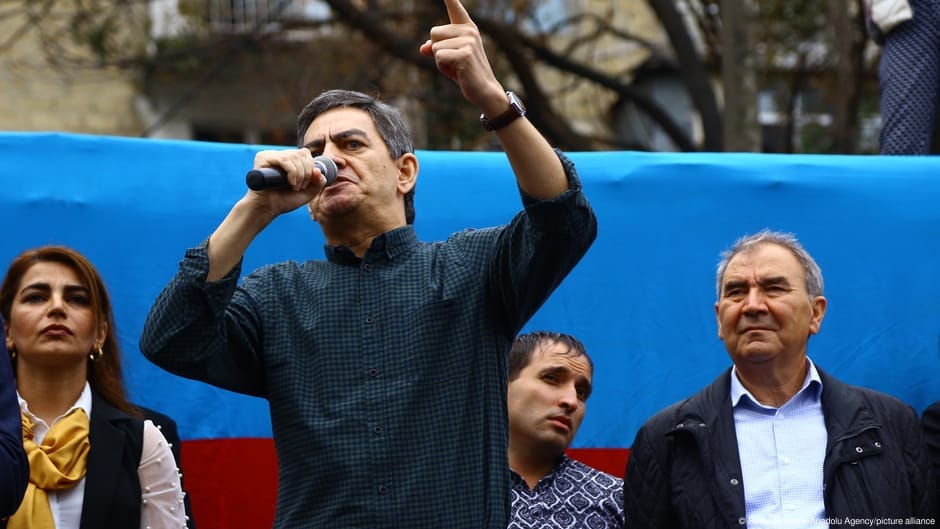
Similarly, Mammad Ibrahim faces health challenges, including chronic kidney issues and insomnia, which his family claims are not being adequately addressed by prison medical staff. Despite efforts by his family to facilitate independent medical examinations, access remains restricted, and his family continues to navigate the financial burden of his incarceration.
International Reaction and Diplomatic Fallout
The international community has not remained silent on the matter. On October 8, the European Parliament passed a formal resolution demanding the immediate and unconditional release of Karimli and other political prisoners in Azerbaijan. The resolution highlighted the need for the government to provide the detainees with adequate medical care and full access to legal counsel.
In a symbolic gesture of global recognition, Karimli was awarded the 2026 Magnitsky Human Rights Award, underscoring his status as a prominent symbol of the struggle for democratic values.
Despite this external pressure, the Azerbaijani government remains defiant. During a joint press conference in Baku on November 18, Azerbaijani Foreign Minister Jeyhun Bayramov addressed the case when questioned by his German counterpart, Johann Wadephul. Bayramov asserted that the legal process is proceeding in accordance with domestic law and that opposition affiliation provides no immunity from criminal prosecution. "The court will make the final decision," Bayramov stated, maintaining the government’s official stance that the proceedings are strictly a domestic matter of national security.
Implications for the Azerbaijani Political Order
The continued detention of Ali Karimli signifies a critical shift in the Azerbaijani political landscape. For two decades, the APFP has functioned as a central pillar of the opposition. While founding members like Rahim Hajiyev have stated that the party continues to operate through collective leadership, the loss of its chairman has created a vacuum of visibility and strategic direction.
The strategy employed against the APFP appears twofold: the physical removal of its leadership through long-term incarceration and the continuous, low-level harassment of its rank-and-file members, particularly those active on social media platforms. This dual approach aims to diminish the party’s capacity for mass mobilization and to discourage public engagement with political alternatives.
Moreover, the attempt to link Karimli to Ramiz Mehdiyev—a former stalwart of the ruling establishment—suggests an effort by the state to frame the opposition as being in league with disgruntled former elites. By portraying the opposition as a tool for "foreign intelligence" and internal sabotage, the government effectively delegitimizes dissent, framing it as an existential threat to state stability.
A Test of Democratic Resilience
As the trial moves into its second year, the case of Ali Karimli remains a focal point for the future of civil society in Azerbaijan. The lack of transparency, the reported conditions of detention, and the overarching political nature of the charges present a significant challenge to the international community’s engagement with Baku.
Whether the government chooses to maintain its current trajectory of repression or pivots toward a more inclusive political environment remains to be seen. However, as long as the courtroom doors remain locked to the public and the health of the accused continues to decline, the case will continue to draw sharp criticism from global human rights organizations. For Karimli and Ibrahim, the courtroom is not merely a place of legal defense, but a venue where the broader struggle for the soul of Azerbaijani democracy is being played out, largely in the shadows.

