
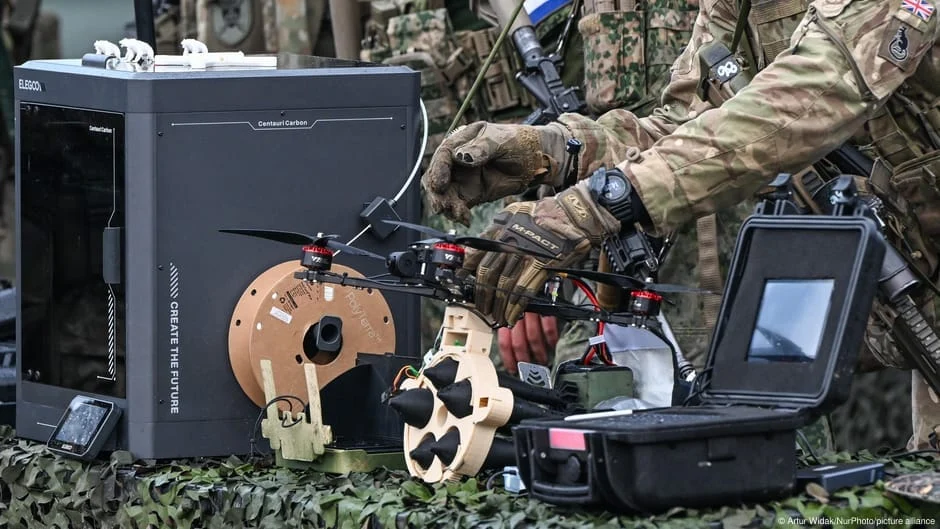
The landscape of modern warfare is undergoing a fundamental transformation as Germany and Ukraine solidify a new industrial partnership centered on the mass production of advanced unmanned aerial vehicles (UAVs). Following a high-level summit in Berlin between German Defense Minister Boris Pistorius and his Ukrainian counterpart, Yevhenii Khmara, the two nations have formally committed to the joint manufacture of Ukrainian reconnaissance drones on German soil. This landmark agreement, anchored by a €34 million investment, marks a departure from traditional military aid models, shifting toward a sustainable, integrated production ecosystem. The initiative leverages the expertise of the German aerospace firm Wingcopter and the Ukrainian drone developer Shadow Flytech, who have established a specialized joint venture to produce the "Babka" (Dragonfly) reconnaissance system.
A Chronology of the Drone Alliance
The genesis of this partnership lies in the rapid, combat-proven evolution of Ukraine’s domestic drone sector. Since the initial 2014 conflict in the Donbas, Ukraine has transitioned from a modest operator of legacy surveillance craft to a global laboratory for autonomous warfare. The trajectory of this evolution is marked by several pivotal milestones:
- 2014–2021: Ukraine establishes a baseline drone industry, though production remains limited and reliant on off-the-shelf commercial components.
- February 2022: Russia launches its full-scale invasion, acting as a catalyst for exponential growth in the Ukrainian defense-tech sector. State approval for drone models surges from just seven in 2022 to 67 by 2023.
- July 2026: President Volodymyr Zelenskyy and European Commission President Ursula von der Leyen formally launch the EU-Ukraine "Drone Alliance." This framework institutionalizes the integration of Ukrainian combat experience with European industrial capacity.
- Late 2026: Ukraine shifts its supply chain strategy, successfully reducing dependency on Chinese-manufactured components from 90% in early 2024 to approximately 28% within the first eight months of 2026.
The Strategic Shift: From Donation to Production
The shift toward co-production represents a maturation of the Western-Ukrainian security relationship. Early in the conflict, the international response was defined by the rapid donation of existing stockpiles—artillery, tanks, and man-portable air-defense systems. However, as the conflict transitioned into a war of attrition, the limitations of donor-nation reserves became apparent.
The "Drone Deal" strategy, pursued by Kyiv, seeks to move beyond the constraints of international charity. By entering into long-term bilateral agreements with nations such as the Netherlands, Norway, Finland, the United Kingdom, and various Gulf states, Ukraine is securing its supply chain. The United Kingdom’s recent commitment to produce the "Octopus" interceptor drone under license is a prime example of this strategy, ensuring that production can occur in geographically secure locations while incorporating Ukrainian design specifications that have been refined in the crucible of active combat.
Economic and Technical Data Analysis
The scale of the current drone effort is unprecedented for a mid-sized military power. As of mid-2026, the Ukrainian Ministry of Defense reported that 95% of all drones procured for the armed forces are manufactured domestically. This feat is supported by a robust network of approximately 200 companies operating within the Ukrainian defense-tech ecosystem.
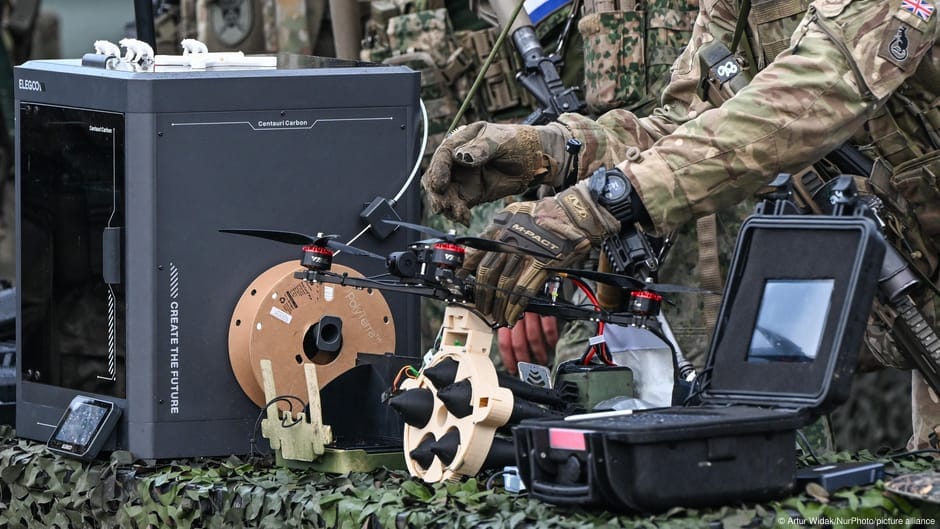
The economic implications are equally significant. While small, tactical attack drones are frequently lost in combat—necessitating high-volume, low-cost production—the goal of reaching an annual output of 20 million units requires a global industrial effort. Germany’s €34 million contribution serves as seed capital for this scale-up. The collaboration also addresses a critical technological hurdle: the transition from Chinese-sourced microchips and motors to Western-standard, resilient components. This de-risking of the supply chain is essential for ensuring that Ukrainian drones remain operational even when facing sophisticated Russian electronic warfare (EW) countermeasures.
Expert Perspectives on the ‘Partnership of Equals’
Nico Lange, director of the Berlin-based Institute for Risk Analysis and International Security (IRIS), emphasizes that the world has historically underestimated the underlying industrial potential of Ukraine. "Ukraine is not just an industrial country; it is a country of engineers," Lange noted. "The synergy between their software expertise and the robust manufacturing capabilities of European partners creates a unique strategic advantage."
This partnership is viewed by geopolitical analysts as a "partnership of equals." Ukraine provides the intellectual property—battlefield-tested software and hardware designs—while European partners provide the industrial infrastructure, capital, and high-end manufacturing standards. This arrangement provides an additional layer of security for Ukraine: by decentralizing production across the European continent, the output is shielded from the persistent Russian missile and drone strikes that frequently target Ukrainian industrial sites.
Broader Geopolitical Implications
The proliferation of these defense agreements extends well beyond the European theater. Ukraine has actively engaged with partners in the Middle East, including Saudi Arabia, Qatar, and the United Arab Emirates. This outreach serves a dual purpose: it secures alternative funding and components for Ukraine, while simultaneously providing these nations with access to state-of-the-art counter-drone intelligence and defense systems.

The implications for the European security architecture are profound. By integrating the Ukrainian military industry into the European framework, the EU is effectively creating a shared security space that extends to the front lines of the continent. This integration is not merely about the present conflict; it is a long-term play to ensure that Ukraine remains a permanent and self-sustaining component of the European defense-industrial base.
Challenges and Future Outlook
Despite the momentum, significant challenges remain. The primary constraint for the "Drone Alliance" is not necessarily design capability, but the logistics of mass-market manufacturing and the acquisition of critical raw materials. As the conflict continues to rely heavily on electronic warfare, the demand for "hardened" electronics—those resistant to jamming—has skyrocketed.
Furthermore, the integration of Artificial Intelligence (AI) into these platforms is accelerating. As seen in recent developments, AI is no longer a peripheral technology but a core component of target acquisition and navigation in GPS-denied environments. The collaboration between German and Ukrainian engineers is increasingly focused on these advanced software layers, which determine the lethality and survivability of the systems on the front line.
As Germany moves toward formalizing its entry into the long-term Drone Deal framework, the success of the Babka drone project will serve as a template for future defense integration. If the production targets—aiming for 20 million units annually—are met, the European defense sector will have effectively created a new, decentralized model of military production. This model not only addresses the immediate existential threat faced by Ukraine but also provides a blueprint for how democratic nations can sustain high-intensity defensive operations in the age of autonomous, low-cost aerial warfare.
In conclusion, the deepening of German-Ukrainian defense ties marks a pivotal chapter in the history of the war. By moving from the role of a recipient of aid to an active co-producer of advanced military technology, Ukraine is reinforcing its position as an essential pillar of European security. The success of these joint ventures will likely influence the trajectory of the conflict and define the standard for defense-industrial cooperation for years to come.

