
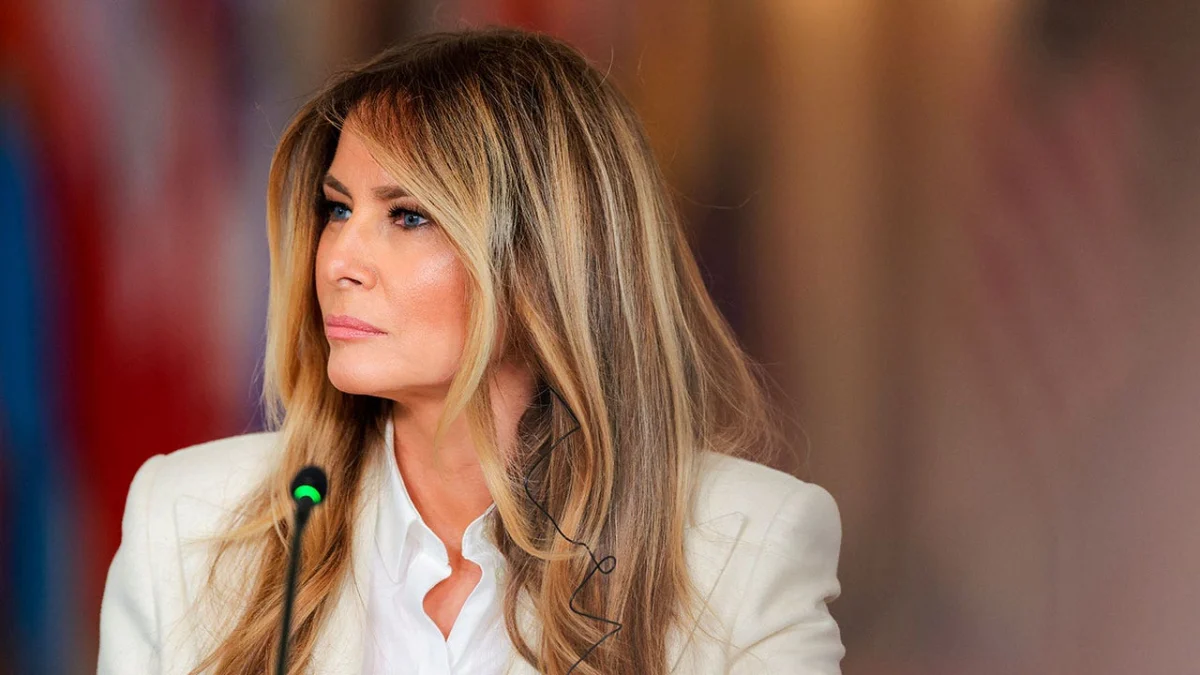
First Lady Melania Trump has issued a formal appeal to the 22 Democratic governors who have yet to commit to the Fostering the Future Accounts initiative, a cornerstone of her broader policy agenda aimed at improving economic outcomes for children within the American foster care system. The program, which creates tax-advantaged custodial savings accounts for foster youth that transition into traditional Individual Retirement Accounts (IRAs) upon the child reaching the age of 18, is currently implemented or pledged in all states led by Republican governors.
In a statement released on Saturday, the First Lady underscored that the financial stability of vulnerable youth should remain insulated from partisan divides. Highlighting the current geographical disparity, she noted that while Governors Josh Green of Hawaii and Jared Polis of Colorado have broken with their Democratic counterparts to support the program, the vast majority of blue states remain on the sidelines.
The Evolution of the Fostering the Future Initiative
The Fostering the Future program did not emerge in a vacuum; it represents the culmination of a multi-year policy evolution that began during the First Lady’s initial "Be Best" campaign. Launched in 2021 as a scholarship-centric effort, the initiative was designed to bridge the gap between foster care and higher education. Over the subsequent years, the scope of the program expanded significantly, moving from a private-sector-supported scholarship model to a comprehensive federal and global policy framework.
In September 2025, the First Lady signaled a major shift in strategy by announcing a global coalition dedicated to the integration of childhood education with advanced technological curricula, including robotics and artificial intelligence. This focus on "future-proofing" children who lack traditional familial support structures culminated in the White House summit held in March 2026. The summit, which drew international attention and high-level engagement—including a notable appearance by Britain’s Queen Camilla—highlighted the administration’s pivot toward using institutional assets to guarantee long-term economic mobility for foster children.
Chronology of Federal Integration
The legislative and executive momentum behind these programs reached a zenith in November 2025, when President Donald Trump signed an executive order titled "Fostering the Future for American Children and Families." This order served as the primary mechanism for modernizing the child welfare system by mandating inter-agency cooperation. The directive effectively streamlined the bureaucracy surrounding child welfare, allowing the federal government to coordinate with state-level agencies to facilitate the adoption of the First Lady’s savings vehicle.
The following timeline details the key milestones of the initiative:
- 2021: Launch of the Fostering the Future scholarship program under the Be Best umbrella.
- September 2025: Announcement of a global coalition focused on AI and technical education for foster youth.
- November 2025: President Trump signs the Fostering the Future executive order to modernize the welfare system.
- June 2026: Official launch of the Fostering the Future Accounts, a federally backed investment vehicle.
- March 2027: The First Lady calls for federal legislative action to codify the executive order into permanent law.
The Mechanics of Fostering the Future Accounts
At its core, the Fostering the Future Account is designed to address the "wealth gap" that often plagues individuals exiting the foster care system. Statistically, children who age out of foster care are significantly more likely to experience homelessness, unemployment, and food insecurity compared to their peers. By providing a tax-advantaged custodial account, the program seeks to provide these youth with a liquid asset base the moment they reach legal adulthood.
The accounts are structured to be portable, allowing them to follow the child even if they move between jurisdictions or transition into independent living. By converting to IRAs at age 18, the program incentivizes long-term financial planning and provides a mechanism for compounding interest that many foster youth previously lacked access to due to a lack of institutional financial guidance.
Supporting Data and Socioeconomic Implications
Research from the Department of Health and Human Services indicates that approximately 400,000 children are in the U.S. foster care system on any given day. Transitioning from this environment into adulthood is widely considered one of the most precarious phases of development. Economic analysts observing the program suggest that the success of these accounts depends heavily on state-level administration.
"The challenge with asset-building programs for foster youth is the lack of institutional consistency," says Dr. Helena Vance, a policy analyst specializing in child welfare economics. "By establishing a federal framework, the First Lady’s initiative attempts to solve the ‘geography problem’—where a child’s economic future is currently determined by the specific social safety net policies of the state in which they happen to be placed."
If the remaining 22 states were to adopt the program, it would ensure that nearly every child in the foster care system has access to a standardized financial vehicle, regardless of the political climate in their home state.
Official Responses and Political Landscape
The effort to secure support from Democratic governors has been met with varying degrees of public response. While Governor Josh Green of Hawaii and Governor Jared Polis of Colorado have framed their support as a pragmatic investment in the long-term workforce, other governors have remained cautious, citing concerns over administrative costs and the potential for federal overreach into state-controlled child welfare budgets.
The First Lady’s office has emphasized that the program is voluntary and designed to supplement existing state efforts rather than replace them. However, the pressure to conform is mounting. Recent headlines, such as those regarding California Governor Gavin Newsom’s recent public praise for certain administration policies, have sparked internal debates within the Democratic Party regarding the optics of opposing popular, child-focused legislation.
Congressional advocates for the program have also begun to apply pressure, with members of the House Committee on Ways and Means recently suggesting that they may seek to tie federal foster care grants to the adoption of these account structures. This legislative push aims to turn the First Lady’s executive order into permanent, bipartisan law, effectively removing the discretion of state governors to opt out.

Broader Impact and Future Outlook
The initiative represents a fundamental shift in how the federal government views its role in the lives of foster youth. By moving away from purely subsistence-based support—such as food and housing assistance—and toward capital ownership, the program mirrors private-sector wealth-building strategies.
As the program moves into its second year of implementation, the focus will likely shift to the efficacy of the AI-integrated education programs that run alongside the financial accounts. The administration contends that by pairing financial assets with high-level technical training, they are providing a holistic exit strategy for foster children, preparing them for a modern, digital-first economy.
The success of this endeavor will be measured by the participation rates of the remaining 22 states and the subsequent graduation rates of the first cohort of children to use these accounts. As the First Lady stated in her most recent appeal, the goal is to elevate the needs of children above the reach of political friction. Whether the remaining governors will acquiesce to this request in the coming months remains one of the most closely watched developments in domestic policy, as the administration continues to frame the issue as a fundamental "birthright" for American youth.

