
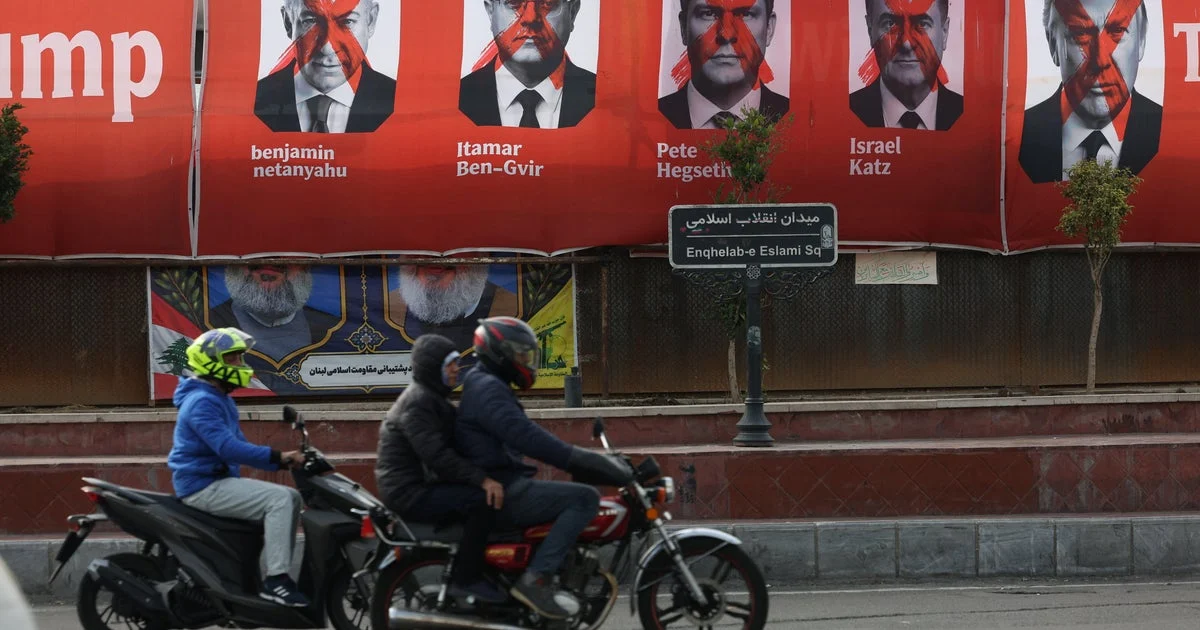
The geopolitical landscape of the Middle East remains severely fractured as a protracted conflict involving the United States, Israel, Iran, and various regional proxies enters a dangerous new phase. In the latest escalation, Bahrain’s interior ministry reported that a civilian industrial facility was struck in an Iranian attack, sparking a significant fire and causing material damage. Fortunately, no casualties were reported from the strike, which marks the fourth attempted attack by Iran within Bahrain’s borders in approximately a week. This resurgence of hostilities follows a relative two-month lull in activity targeting U.S.-associated assets in the Gulf, signaling a volatile turning point in a war that has fundamentally reshaped global energy markets, diplomatic alignments, and domestic politics across multiple continents.
The incident in Bahrain underscores the persistent vulnerability of Gulf nations that host crucial Western military infrastructure. Bahrain serves as the vital home port for the U.S. Navy’s Fifth Fleet. While U.S. officials confirmed that new attack attempts launched by Iran had no direct impact on American forces or military assets in the region, the persistent targeting of civilian and commercial nodes highlights the asymmetrical nature of the ongoing hostilities.
Chronology of Escalation: Maritime Chokepoints and Regional Crossfire
The recent surge in violence is not isolated to Bahrain. The vital maritime corridor of the Strait of Hormuz—through which roughly a fifth of the world’s oil and natural gas historically passed—has become a primary theater of kinetic engagement. On Saturday alone, the United Kingdom Maritime Trade Operations (UKMTO) reported that two commercial tankers were attacked in the strait. One outbound tanker was struck on the stern by an unknown projectile, while a second vessel sustained damage to its engine room. These incidents mirror a strike the previous day that caused an onboard fire on another passing tanker.
Compounding the maritime instability, Iranian state media claimed that its air defense network shot down a U.S. drone over Qeshm Island in the strait. While U.S. Central Command (CENTCOM) denied carrying out any new strikes on Friday following reports of explosions over the strategic island, a U.S. military official confirmed that American fighter jets had executed precision strikes on an Islamic Revolutionary Guard Corps (IRGC) missile site on Qeshm earlier in the week. Washington maintains that these actions are strictly in self-defense, executed in response to persistent IRGC aggression targeting U.S. personnel and regional assets.
Further compounding regional instability, the southern front involving Yemen’s Iran-backed Houthi movement has intensified. The Saudi-led coalition reported intercepting multiple ballistic missiles and drones targeting Riyadh and the southern Saudi region of Jazan. These defensive actions followed coalition airstrikes on the Houthi-held Red Sea port city of Hodeida. The Houthis have openly designated Riyadh’s King Abdullah Financial District as a military target, issuing evacuation warnings to civilians and foreign investors, thereby expanding the economic and psychological toll of the conflict well beyond the immediate combat zones.
Diplomatic Impasse and Stalled Negotiations
Despite the relentless cycle of strikes and counter-strikes, backchannel diplomatic efforts continue to stutter forward. Qatari mediators recently traveled to Tehran, holding two hours of talks with Iranian deputy foreign minister Kazem Gharibabadi. However, formal negotiations between the United States and Iran aimed at brokering a comprehensive ceasefire and reopening the Strait of Hormuz have remained stalled for months.
Iran’s foreign ministry has maintained a hardline stance. Foreign Minister Abbas Araghchi stated that while regional talks must be given a chance, the ongoing U.S. blockade of Iranian ports and the Strait of Hormuz must be lifted rationally. Tehran has outlined a strict set of preconditions for any cooperative dialogue, demanding an end to the war on all fronts, the unfreezing of billions in Iranian assets, the lifting of sweeping oil sanctions, and the cessation of the U.S. naval counter-blockade.
"Our position is clear: as long as Iran’s demands are not met, the discussion on the Strait of Hormuz and its opening is pointless," Araghchi declared via state television, while reiterating Tehran’s dual readiness for both continued dialogue and self-defense.
International Posturing and Strategic Calculations
In Washington and other global capitals, leaders are weighing long-term strategies to permanently neutralize perceived security threats. President Trump, speaking to the press, asserted his desire to forge a "permanent" deal with Tehran that would indefinitely bar the regime from acquiring a nuclear weapon, expressing deep skepticism regarding the trustworthiness of Iranian negotiating partners. Trump also noted that during recent trilateral discussions with Russian President Vladimir Putin and Chinese leader Xi Jinping, the three world powers extensively discussed global nuclear non-proliferation and the imperative of ensuring Iran never achieves atomic capability.
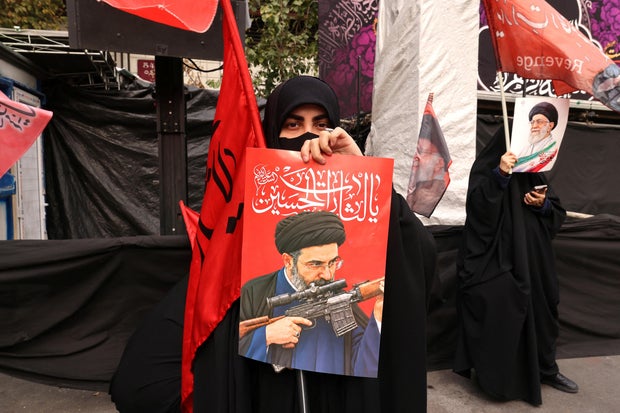
However, Tehran has vehemently pushed back against shifting U.S. rhetoric. Iranian Foreign Ministry spokesperson Esmaeil Baqaei sharply criticized recent assertions by Washington that Iran may be seeking to develop chemical or biological weapons. Comparing the claims to historical intelligence failures preceding the 2003 Iraq war, Baqaei dismissed the allegations as part of a familiar and fraudulent political script designed to manufacture pretexts for continued confrontation.
Domestically, the war continues to exert immense political pressure. In the United States, a bipartisan war powers resolution aimed at reining in the executive branch’s authority to conduct strikes against Iran narrowly failed in the Senate by a 51-48 vote. The vote highlighted growing legislative fatigue following midterm elections where voters frequently cited the economic toll and geopolitical risks of the Iran conflict as primary concerns. Concurrently, Gold Star families have expressed profound frustration with the Pentagon’s handling of investigations into the devastating March 1 drone strike at Port Shuaiba in Kuwait, which killed six U.S. Army Reserve soldiers—marking the single deadliest attack on American troops in the current conflict.
Meanwhile, political turbulence in Israel adds another layer of complexity. Opposition leader Gadi Eisenkot, tasked with forming a new government to oust Prime Minister Benjamin Netanyahu, has vowed to expedite coalition-building talks amid reports that the outgoing administration is actively weighing a fresh joint military offensive with the United States. Netanyahu’s government remains deeply alarmed by Iran’s rapid reconstruction of its ballistic missile manufacturing infrastructure and its ongoing efforts to fortify nuclear and military sites deep underground.
Implications and Outlook
As the conflict approaches the end of its first year, the intersection of stalled diplomacy, hardened military postures, and asymmetric maritime warfare creates a precarious status quo. While leaders in Washington and Jerusalem contemplate the tactical utility of renewed military initiatives to degrade accelerating Iranian defensive capabilities, the economic fallout—evident in persistent maritime disruptions and volatile energy markets—continues to reverberate globally. With regional proxies like the Houthis escalating campaigns against Gulf infrastructure, and Tehran steadily modernizing its asymmetric strike capabilities through newly unveiled dual-missile launchers, the path toward a sustainable regional settlement remains exceedingly narrow.

