

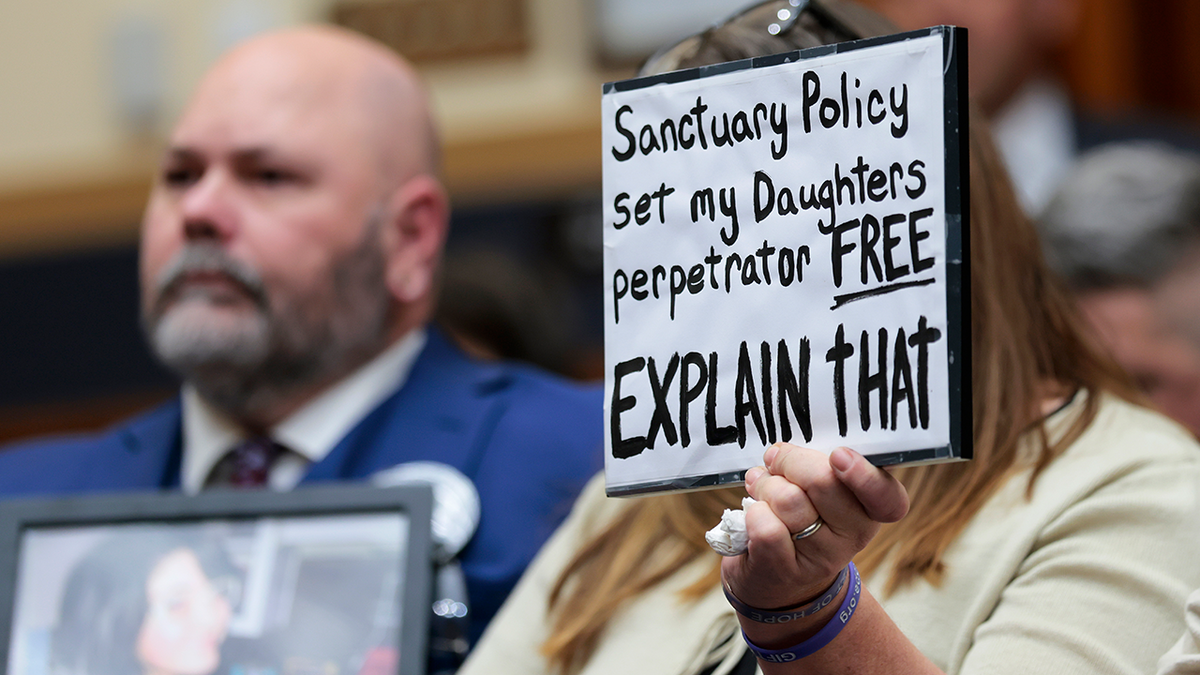
The ongoing national debate over immigration enforcement and criminal justice reform intensified following a poignant gathering in Washington, D.C., where grieving families shared harrowing accounts of the violent deaths of their children. Jessica Anne Gorman, whose 18-year-old daughter Sheridan Gorman was killed in Chicago earlier this year, sharply criticized Democratic lawmakers for their support of sanctuary city policies and their demeanor during a recent congressional hearing. The event brought together high-ranking administration and law enforcement officials alongside "Angel families"—a term used to describe relatives of individuals killed by undocumented immigrants or individuals with repeated criminal records—to honor victims of violent crime and address systemic policy failures.
The confrontation underscores a deepening political and cultural chasm regarding local immigration policies, public safety, and the accountability of elected officials. While proponents of sanctuary city policies argue that limiting cooperation with federal immigration authorities fosters trust between local communities and law enforcement, critics contend that such measures compromise public safety by shielding violent offenders from deportation. The personal testimonies delivered in Washington have elevated the human cost of these policy debates, transforming abstract legislative disputes into visceral reminders of systemic breakdowns.
Chronology of Tragedy and Congressional Testimony
The sequence of events leading to the recent congressional clashes traces back to March, when Sheridan Gorman, an 18-year-old student at Loyola University Chicago, was shot and killed while visiting friends near a pier and lighthouse in Chicago. Investigators subsequently charged Jose Medina, a Venezuelan national who had entered the United States illegally and was previously released following a shoplifting arrest in Chicago, with her murder. The revelation that Medina had prior contact with local law enforcement but was released rather than transferred to federal immigration authorities under sanctuary city protocols galvanized local and national opposition to Chicago’s municipal policies.

Months later, Jessica Gorman testified before the House Judiciary Committee during a hearing dedicated to examining the real-world impacts of sanctuary city policies. The proceedings, designed to evaluate the enforcement of federal immigration laws and the cooperation of local municipalities, featured testimony from several families who lost loved ones to violent crime. However, the emotional weight of the hearings was overshadowed by reports of friction between the grieving relatives and certain Democratic members of Congress.
During her remarks in Washington, Jessica Gorman recalled hearing laughter from lawmakers while she recounted the final moments of her daughter’s life. She specifically took aim at Representative Pramila Jayapal, D-Wash., who had expressed frustration during the proceedings over the repetition of similar hearings, remarking that there were numerous other legislative priorities demanding congressional attention. Gorman expressed profound dismay at what she perceived as a lack of empathy and a dismissive attitude toward victims’ families, noting that lawmakers allocate limited time for testimonies yet demonstrated impatience with hearing the full scope of the tragedies. Furthermore, Gorman alleged that Representative Jerry Nadler, D-N.Y., appeared to be sleeping during portions of the proceedings, further fueling outrage among the attendees.
Broader Perspectives on Criminal Justice and Systemic Failures
While the discussion in Washington heavily focused on the intersection of immigration policy and violent crime, the gathering also shed light on broader frustrations with the American criminal justice system as a whole. Stephen Federico, father of Logan Federico—who was killed while visiting friends at the University of South Carolina—delivered a stark critique of repeat offenders and judicial leniency.
Logan Federico’s alleged killer, 30-year-old Alexander Dickey, was identified as a career criminal with dozens of prior arrests who shot and killed her during a home break-in. Unlike the Gorman case, Dickey was a domestic citizen rather than an undocumented immigrant. Federico seized upon the distinction to argue that failures in public safety extend far beyond immigration policy, pointing to systemic flaws involving inadequate information-sharing, procedural bottlenecks, weak judicial rulings, and lenient prosecutorial practices.

"My daughter wasn’t killed by an illegal alien," Stephen Federico stated during the event. "She was killed by a home-grown American career criminal that we arrested 39 damn times. And he was on the street. Tell me that makes sense." Federico’s remarks underscored a bipartisan frustration among many victims’ families regarding how individuals with extensive criminal histories manage to evade prolonged incarceration or effective rehabilitation.
Supporting Data and Policy Implications
The debate over sanctuary cities and criminal recidivism is supported by complex data regarding crime rates, immigration enforcement, and municipal governance. Sanctuary policies generally prohibit local law enforcement agencies from honoring Immigration and Customs Enforcement (ICE) detainers unless accompanied by a judicial warrant, a practice designed to conserve local resources and encourage immigrant communities to report crimes without fear of deportation. However, opponents argue that these policies create loopholes that allow dangerous offenders to re-enter communities rather than facing federal removal proceedings.
According to data compiled by various law enforcement organizations and federal agencies, thousands of individuals with prior criminal convictions or pending charges are released from local custody annually due to non-cooperation policies. Federal officials, including Attorney General Todd Blanche, FBI Director Kash Patel, border czar Tom Homan, and drug czar Sara Carter—all of whom were present at the Washington gathering—have repeatedly emphasized the necessity of inter-agency cooperation to curb violent crime and protect vulnerable populations.
The implications of these testimonies extend directly into legislative chambers, where lawmakers remain deadlocked over comprehensive reform. House Republicans continue to advance legislation aimed at penalizing sanctuary jurisdictions and mandating cooperation with federal immigration authorities. Conversely, congressional Democrats frequently defend local autonomy, arguing that federalizing local policing undermines community trust and that broad legislative crackdowns infringe upon constitutional principles of federalism.
Official Responses and Future Outlook
As the political fallout from the congressional hearings continues to resonate, public relations offices and congressional leadership have found themselves navigating intense public scrutiny. Fox News Digital reached out to Representative Pramila Jayapal’s office for comment regarding the specific criticisms leveled by Jessica Gorman, though formal responses had not been immediately issued.
The convergence of immigration debates and criminal justice accountability ensures that the narratives of families like the Gormans and the Federicos will remain central to upcoming legislative sessions. As advocacy groups on both sides of the aisle mobilize resources ahead of upcoming policy debates, the personal stories of victims serve as powerful catalysts for political action, shaping public opinion and legislative priorities across the nation.

