
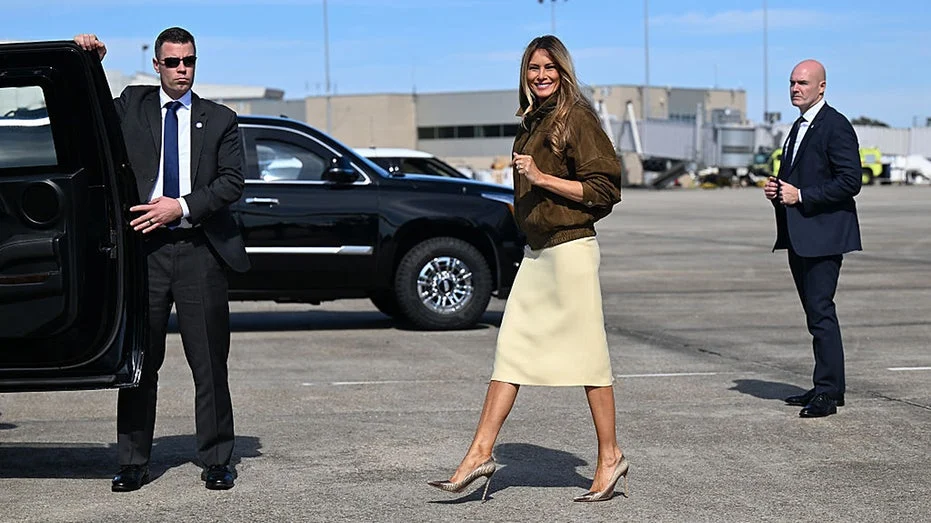
BATON ROUGE, La. — First lady Melania Trump arrived in Baton Rouge this past Saturday to headline a significant philanthropic milestone for higher education accessibility, announcing a $7.2 million scholarship endowment at Louisiana State University (LSU). The initiative, which serves as a cornerstone of her "Fostering the Future" program, is designed to provide comprehensive financial support for students who have transitioned out of the foster care system, offering them a pathway to academic stability and professional success.
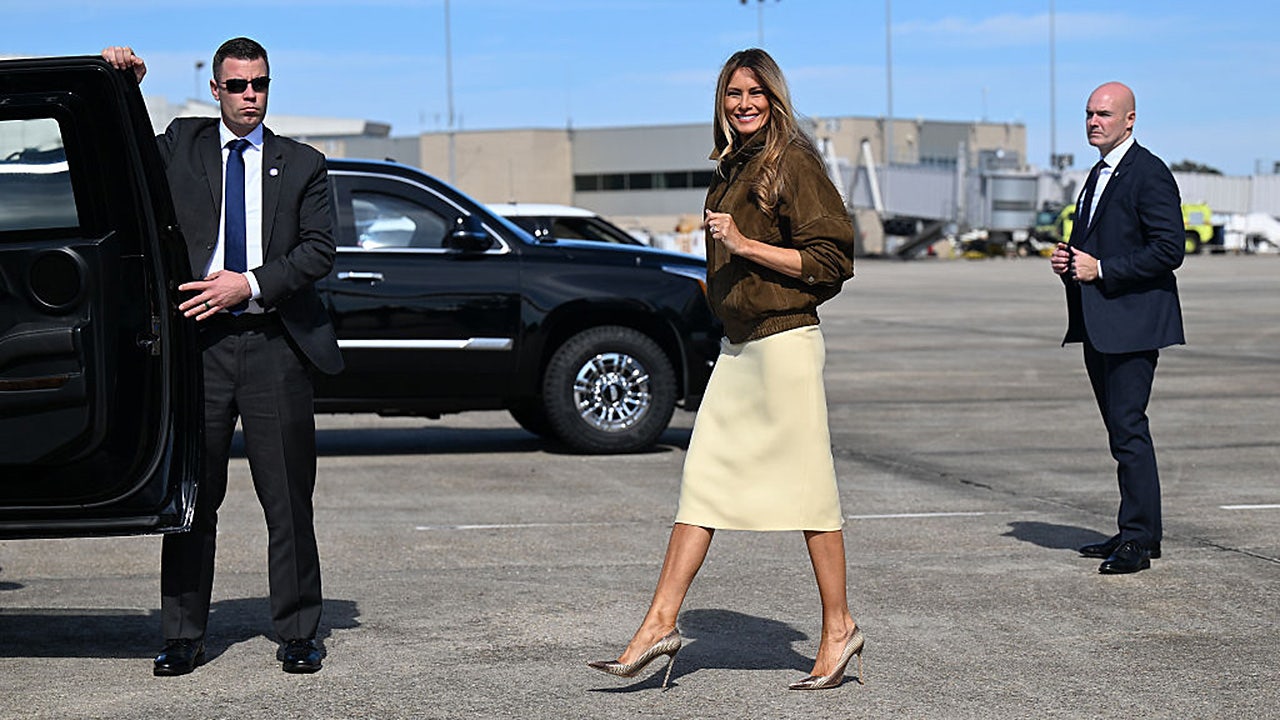
The event, held at Patrick F. Taylor Hall, served as a convergence of academic prestige, political advocacy, and the intense, high-energy atmosphere of college football weekend. Dressed in a polished yet seasonally appropriate ensemble—a Dalma suede bomber jacket by Nour Hammour, paired with an Adam Lippes skirt and signature Manolo Blahnik pumps—the first lady addressed a crowd of donors, university officials, and student beneficiaries.
A Financial Foundation for Students in Need
The newly announced endowment is the result of a coordinated fundraising effort involving both private sector commitment and institutional philanthropy. The $7.2 million total is headlined by a $5 million leadership gift from the MMR Group, a Baton Rouge-based electrical and mechanical construction firm led by LSU alumnus James B. "Pepper" Rutland. The remaining $2.2 million was raised through the collective efforts of 75 dedicated LSU Foundation donors.
LSU President Wade Rousse emphasized the long-term impact of these contributions, noting that the $5 million leadership gift alone is projected to generate approximately $200,000 in annual interest. These funds are specifically earmarked to cover tuition, mandatory fees, textbooks, and on-campus room and board—the primary financial hurdles that often prevent former foster youth from completing their degree programs.
"At LSU, we believe talent is everywhere, but we understand that opportunity is not," Rousse stated during the ceremony. The sentiment underscores a growing recognition in American higher education regarding the specific needs of "independent" students—those who lack the traditional family financial safety net and face systemic barriers to entry.
The Fostering the Future Initiative: Background and Evolution
The Fostering the Future program was launched by the first lady in 2021 as a pillar of her broader "BE BEST" initiative. Since its inception, the program has focused on creating a network of support that goes beyond mere tuition assistance, aiming to foster a campus culture that recognizes the unique challenges faced by students who have spent time in foster care.
Nationwide, the initiative has expanded its reach significantly. As of this semester, 26 universities across the United States are actively supporting approximately 100 Fostering the Future scholars. By integrating these students into the campus fabric through mentorship, housing security, and financial aid, the program seeks to mirror the stability that traditional students often receive from their families.

The program’s growth is part of a broader national conversation regarding the "foster-to-career" pipeline. Statistics from the Annie E. Casey Foundation and other child welfare advocates have long indicated that youth who age out of foster care face significantly lower rates of college graduation compared to their peers. Initiatives like this are designed to mitigate those disparities by treating education as a permanent, non-negotiable asset.
A Symbolic Intersection of Sport and Service
The atmosphere in Baton Rouge was electric, as the announcement coincided with one of the most significant weekends in the SEC calendar: the rivalry matchup between the LSU Tigers and the Alabama Crimson Tide. The university leaned into the spirit of the day, incorporating the first lady’s initiative into the game-day experience.
LSU cheerleaders accompanied the first lady during the presentation, while the university’s mascot, Mike the Tiger, presented the symbolic scholarship checks while sporting a custom "Be Best" T-shirt. Former LSU head coach Ed Orgeron was also in attendance, participating in the presentation of a commemorative football crafted by Big Game USA.
The integration of the program into the game-day spectacle was thorough: players featured special Fostering the Future patches on their jerseys, and helmet decals were worn to raise awareness. A custom-minted challenge coin was prepared for the opening coin toss, serving as a reminder to the thousands of fans in attendance of the philanthropic mission underpinning the event.

In a lighthearted moment that drew applause from the crowd, LSU Foundation President and CEO Krista Raney compared the scholarship numbers between the two rival schools. Noting that LSU currently supports 14 Fostering the Future scholars while the University of Alabama supports nine, she remarked, "Mrs. Trump, what I heard you say is that LSU has 14 scholarship recipients and Alabama has nine. So I think that means we’ve already won the first point."
Official Responses and Legislative Context
The event drew high-profile support from across the Louisiana political spectrum. Among those present were Louisiana Governor Jeff Landry, first lady Sharon Landry, and House Majority Leader Steve Scalise, R-La. Their presence signaled a strong bipartisan consensus on the value of private-public partnerships in addressing social welfare gaps.
The first lady used the platform to reiterate her call for legislative action. She has frequently challenged Congress to elevate the provisions of her foster care executive orders into permanent federal law, arguing that providing stability for these young adults is not merely a policy goal but a fundamental birthright.
"This achievement will give young people from foster care an anchor of stability, a strong educational foundation, and a chance to build a wonderful life," the first lady said. "To the Fostering the Future scholars here today, and throughout America: I see you. I believe in you. And I will keep working to create new opportunities with you."

Broader Implications and Future Outlook
The success of the $7.2 million endowment at LSU serves as a template for other universities looking to address student homelessness and financial precarity. By securing a permanent endowment, the university ensures that the scholarship fund is insulated from the volatility of annual budget cycles, providing a sustainable, multi-generational impact.
Analysts observing the event point to several key implications:
- Sustainability: By relying on a mix of a major anchor gift (the $5 million from MMR Group) and smaller, diverse contributions from the LSU Foundation, the model provides a blueprint for fiscal resilience in higher education philanthropy.
- Cultural Normalization: By integrating the scholarship program into the highly visible world of SEC football, LSU is helping to destigmatize the status of foster youth on campus. When elite athletic programs and major donors publicly celebrate these students, it alters the campus social dynamic, making the university a more welcoming environment.
- Policy Advocacy: The first lady’s continued focus on this issue maintains pressure on federal legislators. By highlighting the success of these students in a public forum, she forces the foster care system’s outcomes into the national spotlight, keeping the topic of "aging out" of the system at the forefront of the legislative agenda.
As the ceremony concluded, the first lady was presented with a handcrafted wooden bowl made from a fallen limb of one of LSU’s iconic oak trees—a fitting symbol for an initiative aimed at nurturing growth from deep, established roots.
With the football game serving as a backdrop, the core message of the day remained focused on the long-term potential of the students. As the first lady noted, "A great education does more than prepare someone for work life. It gives something no one can ever take away." For the students supported by the newly established endowment, that "something" is the promise of a future defined by their achievements rather than their past circumstances.

