
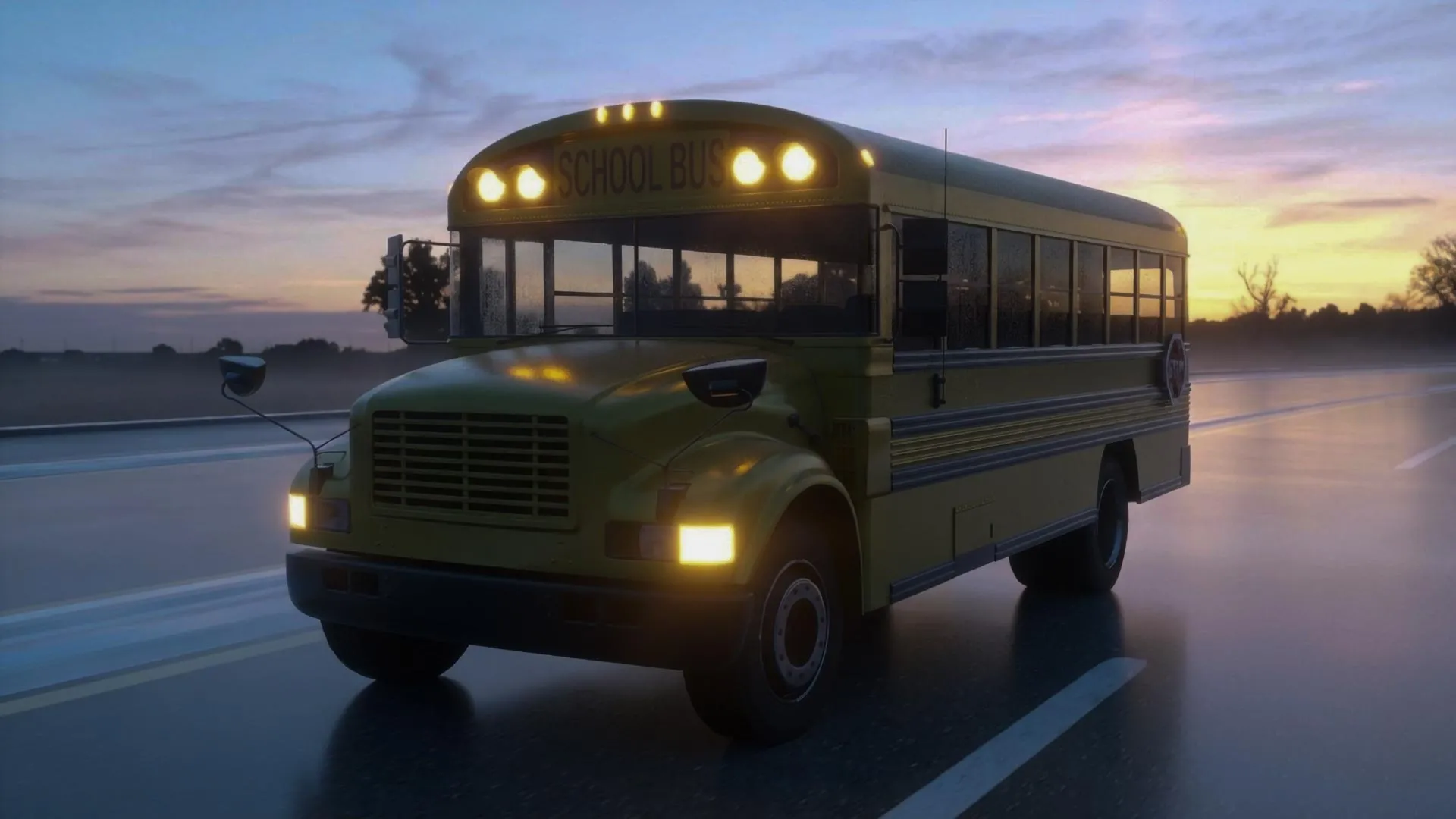
The legislative push to make Daylight Saving Time (DST) permanent, often championed as a way to provide brighter, more active evenings for the American public, has encountered a significant scientific roadblock. New research conducted by a team at the University of Washington and published in the journal Current Biology suggests that the policy, if enacted at the federal level, would impose a hidden cost on the nation’s youth: a staggering increase in the number of children forced to commute to school in total darkness.
The study estimates that a nationwide shift to permanent DST would result in at least 2 billion additional trips to school in the dark during the winter months. This finding has reignited a contentious debate in Washington, D.C., pitting the desire for extended evening light against the documented risks of compromised pedestrian safety and the biological necessity of morning sunlight for human development.
The Legislative Path and Current Stalemate
The movement to "lock the clock" has gained substantial political traction over the past few years. Proponents argue that the twice-annual transition between Standard Time and DST is antiquated, disruptive to productivity, and harmful to physical health. In March 2022, the U.S. Senate unanimously passed the Sunshine Protection Act, a bill intended to make Daylight Saving Time the permanent standard for the entire country. However, the legislation stalled in the House of Representatives, where concerns regarding its broader societal impacts began to take root.
Despite the federal impasse, individual states have not waited for Washington. To date, 19 states have passed legislation or resolutions expressing support for permanent DST, stipulating that their changes would trigger upon federal authorization. These states include, among others, Washington, Georgia, Alabama, and Mississippi. The momentum suggests a widespread public appetite for change, yet the logistical reality of such a shift—particularly for school districts—is proving far more complex than the simple legislative text implies.
Quantifying the Darkness: A Geographic Analysis
To move the debate beyond political rhetoric, researchers at the University of Washington sought to quantify the actual impact on students. By utilizing high-resolution geographic data, enrollment statistics, and school start times for 14 of the 19 states that have passed supportive legislation, the team modeled the difference between the current bi-annual clock change and a permanent DST system.
The results are sobering. In Washington state alone, the change would force nearly 35 million additional school commutes to occur before sunrise between the months of November and March. In states with earlier school start times, the impact is even more pronounced. Georgia, for instance, would see an estimated 71 million additional dark commutes. When extrapolated to a national scale, the team arrived at a conservative estimate of 2 billion additional dark trips per year.
Crucially, the research team emphasized that this figure is likely an underestimation. Their model assumed a standard 8:00 a.m. departure time for students. In reality, many schools across the United States begin classes much earlier, and when factoring in before-school programs, athletics, and breakfast services, the number of children navigating dark streets and bus stops in the early morning would be substantially higher.
Safety Concerns and the "Sunshine Destruction" Paradox
The primary argument for the Sunshine Protection Act is the benefit of extra daylight in the evening, which could theoretically boost outdoor activity and economic participation. However, Horacio de la Iglesia, a biology professor at the University of Washington and the senior author of the study, argues that this gain is illusory.
"It’s called the ‘Sunshine Protection Act’ because you get an extra hour of light at the end of the day. But you will take that hour from the morning," de la Iglesia explained. "You could call it the ‘Sunshine Destruction Act.’ These dark mornings will inequitably affect children who have to go to school at a certain time. It’s a very tangible metric that anybody from any state or socioeconomic background can relate to."
The safety implications are backed by historical traffic data. Analysis of U.S. Department of Transportation records indicates that fatal crashes involving school-aged pedestrians are significantly more common during periods of darkness. By shifting the morning commute into the pre-dawn window, the nation risks increasing the exposure of children—many of whom are walking, biking, or waiting for buses—to traffic at a time when visibility is at its lowest.
The Biological Necessity of Morning Light
Beyond the immediate physical danger of traffic accidents, the research highlights a fundamental biological concern: the role of sunlight in regulating human circadian rhythms. Exposure to bright, natural light in the morning is essential for synchronizing the internal biological clock, which governs sleep, hormone production, mood, and cognitive performance.
For adolescents, whose biological clocks are already shifting toward later schedules due to hormonal changes, the deprivation of morning light could be particularly disruptive. The current, albeit debated, trend of delaying high school start times to accommodate teenage sleep patterns would be undermined if the sunrise is effectively pushed an hour later by the clock change.
"When we send kids to school in the dark, we are depriving them from an opportunity to get that morning daylight," said Guadalupe Rodríguez Ferrante, a postdoctoral researcher and lead author of the study. "We wanted to know what the cost is for these children, and we wanted actual numbers—a real count of children based on the precise geographic location of their schools."
Geographic Vulnerabilities and Policy Trade-offs
The study identified specific regions that would bear the brunt of these changes. Schools located near the western edges of time zones are already subject to later sunrises; under permanent DST, these locations would experience significantly prolonged periods of morning darkness.
For example, states like Alabama and Mississippi, where the average school day begins before 8:00 a.m., would see a ten-fold increase in dark commutes. In these districts, the transition would represent a fundamental change in the daily experience of students and families. As Rodríguez Ferrante noted, "Some districts probably never experience a dark commute under the current system, and if this passes, suddenly they will wake up to this new reality that their kids are going to school in the dark."
Proponents of the change have occasionally suggested that schools could simply delay their start times to mitigate the impact of darker mornings. However, the researchers caution that this solution is deceptively simple. If school start times are shifted forward by an hour to match the later sunrise, then work schedules, public transit, and home life must also shift.
"If we do that, you will end up going to work later. And everything is going to get delayed," de la Iglesia noted. "You will get out of work an hour later, and you will miss the opportunity to enjoy your evening light. Essentially, we’re just going to be realigning everybody to solar time. That, by definition, is Standard Time."
The Road Ahead: Balancing Competing Interests
The findings published in Current Biology represent a critical contribution to a debate that has largely been framed by personal preference rather than data-driven policy analysis. As the federal government continues to weigh the potential for a permanent clock change, the trade-offs are becoming increasingly clear.
The desire for "longer summer evenings" has been the primary driver of the movement, but the research suggests that the cost of achieving this—specifically during the winter months—is a fundamental disruption to the safety and health of the nation’s school-aged children. Whether legislators will prioritize the convenience of evening light over the established risks of dark-morning commutes remains to be seen.
The study, which included a diverse team of researchers including high school student Daniel Zhang and undergraduate students from the University of Washington, underscores that the debate is not merely about clocks and legislation. It is a debate about the structure of daily life, the safety of the most vulnerable citizens, and the adherence to natural circadian cycles that govern human health. As it stands, the proposal for permanent Daylight Saving Time faces significant scrutiny, with the evidence suggesting that the "Sunshine Protection Act" may do more to harm the morning than it does to protect the evening.

