
The landscape of America
’s technological infrastructure faces a significant inflection point following a series of sweeping Democratic victories in the 2026 midterm elections. Wall Street analysts and political researchers report that the electoral outcomes have energized local opposition to the rapid, often contentious buildout of massive data centers designed to fuel the artificial intelligence revolution. With voters approving numerous local ballot measures to restrict facility construction and several newly elected governors campaigning on explicit moratoriums, the multi-billion-dollar expansion of AI infrastructure is encountering unprecedented political and regulatory headwinds.
Electoral Outcomes and Local Ballots
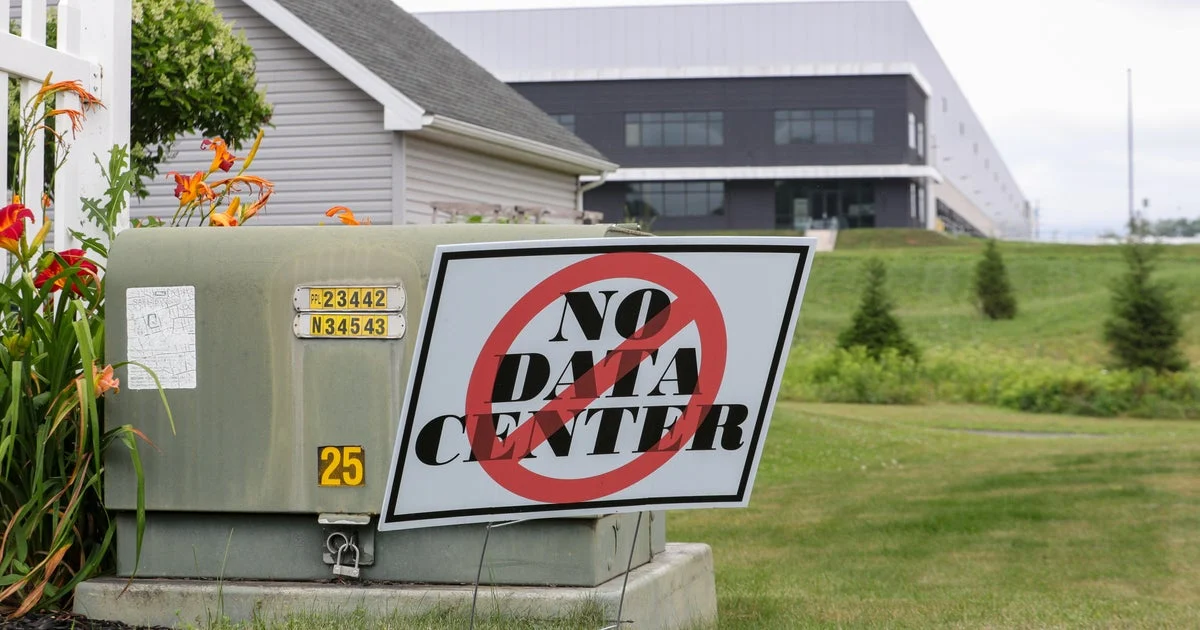
The primary catalyst for this shifting regulatory environment is the widespread grassroots pushback against the energy-intensive facilities required to run modern AI models. According to a comprehensive analysis by political research firm Redbud Consulting, voters across California, Illinois, Maine, Ohio, New York, and other states approved 38 separate ballot measures restricting data centers by Wednesday afternoon following the election. In stark contrast, only a single community—Harwood, North Dakota—voted to approve a new data center facility.
Public sentiment heavily favors these restrictions. A CBS News poll conducted earlier in the summer revealed that Americans oppose the construction of new data centers in their local areas by a margin of more than 2-to-1. Concerns over massive energy consumption, strain on local electrical grids, noise pollution, and water usage have transformed data centers from quiet industrial projects into major political flashpoints.
The midterm results elevate these local grievances to state-level governance. Several incoming governors and state legislators rode a wave of anti-data center sentiment to victory, pledging to impose strict oversight, review legacy tax incentives, and halt construction permits while environmental and economic impacts are reassessed.
Texas and Georgia: Ground Zero for the Infrastructure Slowdown
Market analysts have identified key regional markets where the political shift will have an immediate impact. Texas, which accounts for roughly 25% to 30% of all data center capacity projected to come online nationally by 2030, stands at the center of the debate.
In the race for governor, Democrat Gina Hinojosa secured a victory over incumbent Republican Greg Abbott. Hinojosa centered a portion of her campaign on implementing a temporary moratorium on data center construction to safeguard the state’s power grid. Industry experts note that Governor Abbott had already initiated a suspension of certain data center approvals, providing a seamless transition for Hinojosa to extend the freeze without necessarily requiring new legislation. Gordon Johnson, CEO and founder of GLJ Research, noted that Hinojosa’s win could effectively stall the integration of 13 gigawatts of planned data-center power in the state, threatening Texas’s status as the foundational bedrock of the American AI buildout.
Meanwhile, Georgia—recognized as the third-largest data center market in the United States—also experienced a major political shift. Keisha Lance Bottoms won the Georgia gubernatorial race after campaigning on a platform that included pausing new data center development. In media statements following her victory, Bottoms confirmed plans to immediately sign an executive order pausing construction and initiating a comprehensive administrative review of the lucrative tax incentives that previously spurred rapid development in the state. Bottoms expressed confidence that the move would face minimal legislative resistance, noting that numerous local governments in Georgia had already begun implementing similar local freezes.
Market Reactions and Financial Implications
The electoral results triggered immediate volatility in financial markets. On Wednesday, semiconductor manufacturers, hardware suppliers, and other equities closely tied to data center construction experienced sharp sell-offs as investors digested the likelihood of prolonged permitting delays and rising compliance costs.
Seema Shah, chief global strategist at Principal Asset Management, emphasized that future data center developments will likely be burdened by mandatory requirements to directly invest in local electrical grid upgrades. Furthermore, the potential rollback or expiration of tax incentives could significantly inflate capital expenditure for developers. Shah noted that while these hurdles will increase costs for prospective facilities, they may paradoxically enhance the market value of existing infrastructure that is already fully powered, permitted, and operational.
Despite short-term market jitters and anticipated construction delays, broader macroeconomic forecasts suggest the long-term economic impact will remain manageable. Stephen Dover, chief market strategist at Franklin Templeton, argued that the AI trade and infrastructure buildout had shown signs of overheating. Dover suggested that a politically enforced slowdown could ultimately benefit the market by weeding out excessive capital investments that lacked strong returns.
Economic Outlook and Broader Implications
Economists from Oxford Economics echoed this sentiment in a recent report, pointing out that a more restrictive policy environment toward data centers will inevitably stretch project timelines. However, they concluded that a more measured pace of construction over the medium to long term is not necessarily detrimental to the broader macroeconomy. By tempering unbridled expansion, local communities, utility providers, and state governments gain crucial breathing room to upgrade aging energy grids and establish sustainable environmental frameworks.
As the political dust settles from the 2026 midterms, the tech sector and Wall Street must navigate a transformed regulatory landscape. While the artificial intelligence revolution remains a dominant force driving economic growth, the era of frictionless, rapid data center expansion across the United States has officially drawn to a close, replaced by a new era of state-level oversight, community resistance, and deliberate fiscal caution.

