
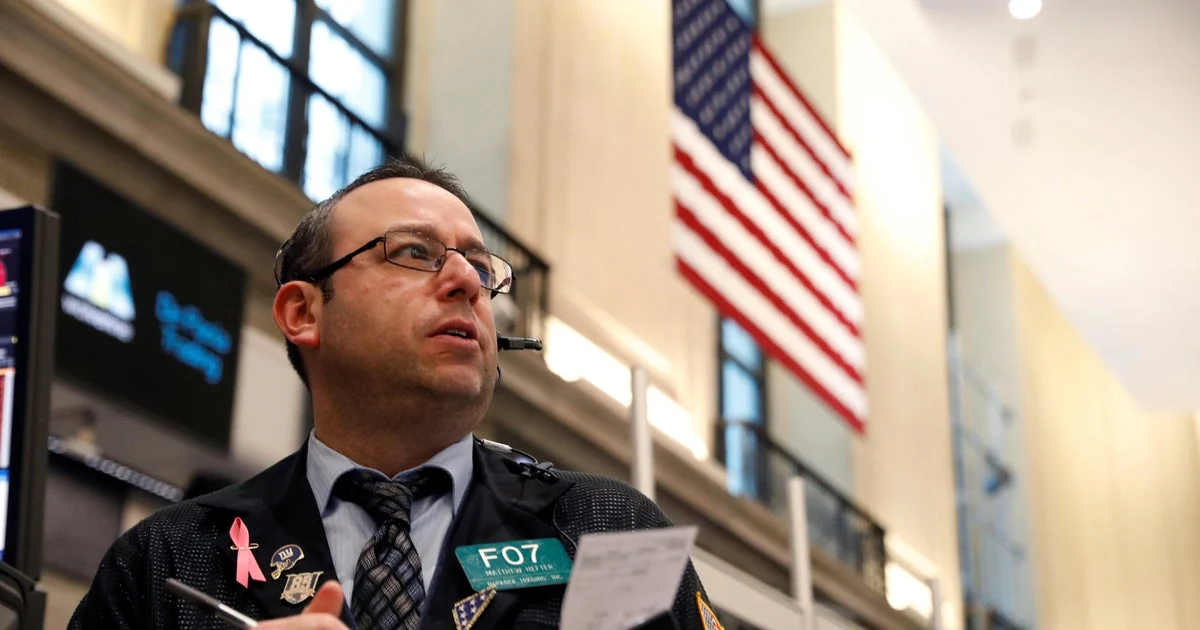
The Dow Jones Industrial Average surged by nearly 1,600 points, or 3%, on Wednesday, marking the index’s most significant single-day gain of 2026. This dramatic market rally followed the announcement of sweeping Democratic victories in the midterm congressional elections, a result that shifted the legislative landscape and sparked an immediate, positive reaction from Wall Street. Investors, buoyed by the conclusion of a period of political uncertainty, pushed the broader S&P 500 up 120 points, or 1.6%, to a closing high of 7,689, while the tech-heavy Nasdaq Composite Index added 1.4% to its valuation.
The market’s enthusiastic response suggests that traders were less concerned with the specific party in power and more relieved by the end of the electoral cycle. As Adam Crisafulli, head of Vital Knowledge, noted in a report to investors, the conclusion of the midterms removes a major cloud of uncertainty that had hung over the markets for months. By putting this political hurdle in the rearview mirror, investors are now positioned to focus on the traditional end-of-year seasonal tailwinds that historically favor equities.
A Chronology of the 2026 Midterm Market Impact
The 2026 midterm cycle was characterized by intense rhetoric and high stakes, particularly concerning the future of artificial intelligence regulation, energy policy, and the federal debt trajectory. As results poured in late Tuesday and early Wednesday, the market reacted with volatility before finding a clear upward trajectory.
- Early Wednesday Morning: Initial results confirmed that Democratic candidates had secured majorities in both the House and the Senate.
- Market Open: Major indexes opened higher, with financial, industrial, and solar sectors leading the initial charge.
- Midday Trading: The Dow Jones Industrial Average crossed the 1,000-point gain threshold as retail and institutional investors moved to rebalance portfolios in anticipation of a gridlocked legislative environment.
- Market Close: The rally sustained momentum through the bell, with the Dow finishing up 3%, the S&P 500 up 1.6%, and the Nasdaq up 1.4%.
The Paradox of Gridlock and Market Performance
Wall Street analysts have long maintained that political gridlock—a scenario where the legislative branch is controlled by one party and the executive branch by another—is often a catalyst for stock market growth. With Democrats now holding control of both chambers of Congress and President Trump retaining his veto power, the likelihood of radical, market-disrupting legislation passing is effectively neutralized.
Stephen Brown of Capital Economics emphasized that the magnitude of the Democratic gains does not fundamentally alter the near-term policy outlook. Because the Democratic majority lacks the numbers required to bypass a Senate filibuster, and because President Trump holds the power to veto any bill he deems contrary to his administration’s goals, the country is entering a period of forced compromise or, more likely, stasis.
Historically, the stock market has shown a remarkable ability to perform well regardless of which party controls the levers of power. According to data provided by Edward Jones, the S&P 500 has risen an average of 15.5% in the six months following the previous 14 midterm elections dating back to 1970. This trend suggests that investors prioritize economic fundamentals—such as corporate earnings, interest rate environments, and consumer spending—over the partisan composition of Washington.
Sector Winners and Losers
The market’s reaction was not uniform across all sectors. The shift in power triggered a significant rotation in capital. Solar power companies, which stand to benefit from Democratic-led energy policies, saw their share prices climb. Conversely, stocks associated with the "Trump trade"—specifically his social media conglomerate and companies owned by prominent Republican donors—faced downward pressure.
Trump Media & Technology Group saw its share price plummet nearly 25% on Wednesday. Similarly, shares of Tesla and SpaceX, both helmed by Elon Musk, a vocal supporter of the Republican party, fell by 3.3% and 3.8%, respectively. Analysts suggest this is a reflection of investors recalibrating their exposure to companies whose growth strategies were tied to the success of specific political outcomes or regulatory environments favorable to the former president.
The Artificial Intelligence and Data Center Landscape
One of the most critical areas for future investment is the massive infrastructure buildout required to support the burgeoning artificial intelligence sector. This year has seen data center spending drive markets to record highs, though concerns regarding a potential "AI bubble" have persisted.
Jeff Buchbinder of LPL Research noted that while the federal government’s influence on the macro-economy may be limited by gridlock, the practical implementation of AI infrastructure—such as power grid upgrades and data center zoning—often occurs at the state and local level. The loss of key governorships for Republicans, particularly in states like Texas, could signal a change in the regulatory environment for large-scale industrial projects.
"LPL Research continues to expect the buildout to occur, but strong performances by Democrats in key data center states may slow it down some," Buchbinder explained. This potential for regulatory friction could increase costs for companies in the semiconductor, machinery, and power generation sectors, which have been the primary beneficiaries of the AI boom thus far.
Economic Fundamentals vs. Political Noise
Despite the intensity of the election results, major financial institutions remain focused on the broader macroeconomic picture. The Wells Fargo Investment Institute recently issued a report reaffirming that economic growth, inflation, and interest rate policy remain the primary drivers of long-term investment performance.
"We do not expect sweeping policy changes," the analysts stated. "More likely, in our view, is a split-government alignment on affordability, energy policy, and opportunities from artificial intelligence."
As the dust settles on the 2026 midterms, the focus for the remainder of the year will likely shift back to the Federal Reserve’s upcoming interest rate decisions and the health of the holiday retail season. While the political transition will undoubtedly bring new committee chairmen and a different set of priorities to Capitol Hill, the fundamental strength of the American economy appears to remain the bedrock of the current market rally.
Contextualizing the Market’s Resilience
It is worth noting that the market’s resilience is bolstered by strong corporate profits reported throughout the third quarter of 2026. Even as the political landscape shifted, many S&P 500 companies exceeded earnings expectations, providing a cushion for investors who might otherwise have been spooked by the electoral shift.
The role of the "not in my backyard" (NIMBY) movement also remains a significant factor for investors to track. As Democratic lawmakers gain influence, there is an expectation that local environmental regulations and community oversight of large infrastructure projects will be prioritized. For investors in data centers and utility-scale power, this may mean a more arduous permitting process, though the sheer scale of the demand for AI processing power is expected to persist regardless of legislative hurdles.
Conclusion: A Look Ahead
As the nation moves toward the final weeks of 2026, the market’s record-breaking performance on Wednesday serves as a testament to the stability of the U.S. financial system. While the political divide remains deep, the consensus among analysts is that the structure of the incoming Congress is well-suited to prevent extreme volatility.
Investors are now looking toward the upcoming fiscal year with a focus on how the new congressional leadership will approach the expiration of current tax provisions and the ongoing debate regarding credit card interest rate caps. While these issues remain on the legislative agenda, the market’s behavior this week indicates a high degree of confidence that the U.S. economy is robust enough to handle whatever policy debates lie ahead.
For now, the rally is a clear signal: the market has digested the news, accounted for the political shift, and decided that the prospect of a predictable, gridlocked Washington is exactly what it needed to finish the year on a high note. Whether this trend continues into 2027 will depend on the continued health of the labor market and the ability of corporate America to maintain its profit margins in a rapidly evolving technological and political environment.

