
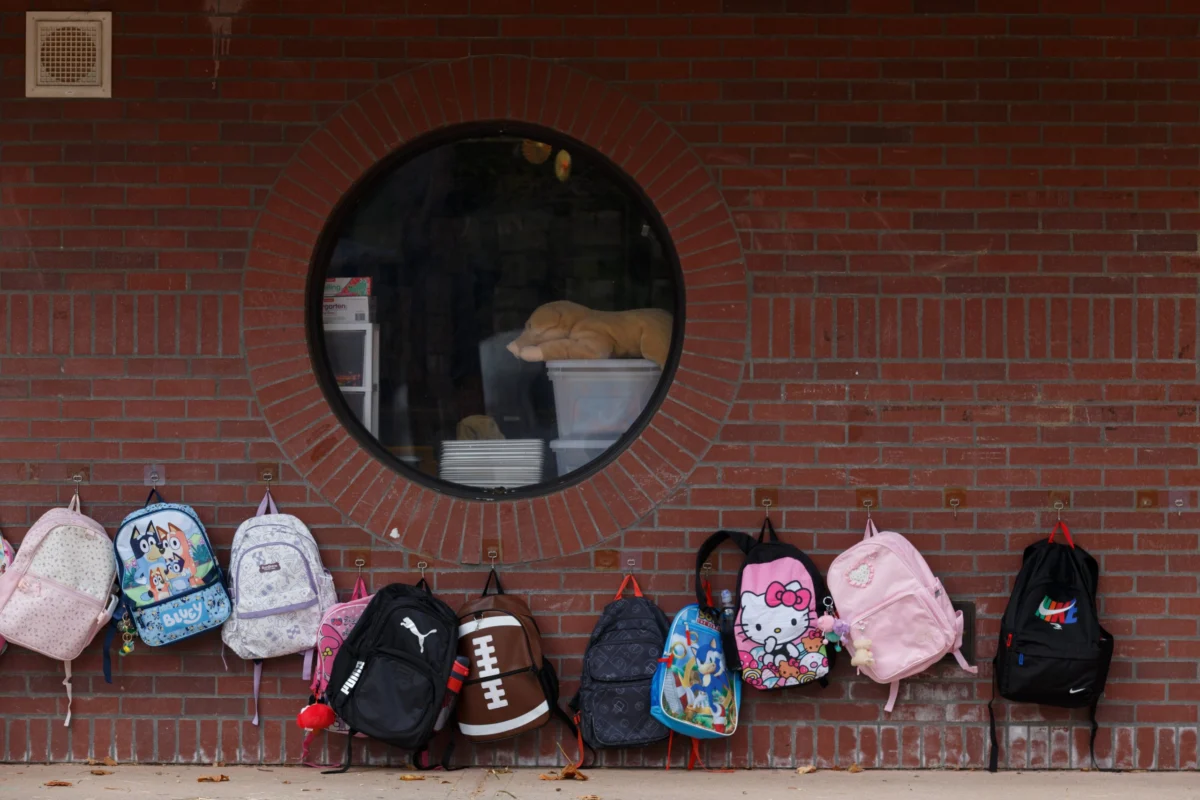
Minutes before the first bell rang on a humid August morning in 2026, fifth-grader Penny Núñez-Brandão stood outside the gates of Glen Cove Elementary School in Vallejo, California. She scanned the sea of faces, searching for the familiar friends who had walked the halls with her at her previous campus. After a moment, she turned to her mother, Kimberly, with a heavy realization. "I don’t see any," she said. "None of my friends are coming."
Penny is one of thousands of students across the United States caught in the middle of a systemic transformation of public education. As birth rates continue a multi-decade decline and pandemic-era federal relief funding evaporates, school districts nationwide are facing a harsh fiscal reality. Faced with shrinking tax bases and under-utilized facilities, many are resorting to the most painful of administrative tools: the wholesale closure of neighborhood schools.

A Nationwide Trend of Consolidation
The scale of this shift is unprecedented in the modern era. According to an analysis of federal data conducted by Big Local News at Stanford University, 1,156 public schools shuttered during the 2025–2026 academic year. This represents the highest volume of closures since the onset of the COVID-19 pandemic.
However, the data reveals a deeper, more structural imbalance. While the number of schools is dropping, student enrollment is declining at a significantly faster pace. Between 2019 and 2024, public school enrollment nationwide fell by approximately 1.4 million students—a roughly 3 percent decrease. Researchers note that school closures are currently lagging behind enrollment drops, suggesting that the "closure cliff" is far from over. Economists and education analysts predict that without significant intervention, school districts could face a collective loss of $11.5 billion in state revenue annually by the 2030–2031 school year, potentially triggering a wave of even more aggressive budget cuts, layoffs, and consolidations.
The Vallejo Case Study: A Legacy of Financial Instability
The Vallejo City Unified School District serves as a primary example of how these demographic shifts collide with historical economic challenges. Once a robust district, Vallejo now supports roughly half the student population it served two decades ago. Enrollment has plummeted from nearly 18,000 in 2006 to approximately 9,300 today.

The district’s financial history is fraught with instability. In the early 2000s, mismanagement brought the district to the edge of bankruptcy, necessitating a $60 million state-funded emergency bailout. While this infusion of capital saved the district from immediate dissolution, it placed Vallejo under state oversight for two decades. The receivership was only lifted in the summer of 2024, just as Rubén Aurelio stepped into the role of superintendent.
Aurelio inherited a district in which schools were, on average, operating at only 46 percent capacity. With the expiration of federal COVID-19 relief funds, which had been used to stabilize staff salaries, the district faced a staggering $36 million deficit. The response was swift: since 2025, the district has closed five campuses—a quarter of its total inventory—and proposed cutting up to one-third of all staff positions.
The Hidden Costs of Consolidation
While superintendents and school boards often justify closures as "right-sizing" measures intended to concentrate resources, empirical research suggests these moves rarely yield the promised financial windfalls. A study by the Stanford Graduate School of Education found that the costs associated with shuttering a school—including the severance of staff, the logistical expense of transporting students to new campuses, and the ongoing security costs for vacant buildings—often negate the projected savings.

In Vallejo, these consequences are already visible. The district has been forced to increase spending on security patrols for abandoned sites like the former Pennycook Elementary, which now sits empty with remnants of student life—such as coats on hooks and classroom supplies—left behind.
Furthermore, the academic impact on students is significant. Marisa de la Torre, a managing director of the UChicago Consortium on School Research, notes that the displacement of students leads to measurable declines in math and reading proficiency. "It takes a while to recover, if they recover at all," de la Torre explained, noting that the disruption is compounded when students are moved into already overcrowded classrooms or schools with lower performance ratings.
The Downward Spiral: Families Fleeing the System
The closure of a neighborhood school often triggers a secondary crisis: the exodus of families from the public school system entirely. In Vallejo, parents have expressed deep frustration, with many choosing to move to neighboring districts, transition to private schools, or opt for homeschooling.

Kimberly Núñez-Brandão, who has already moved her older son to a charter school, views the district’s actions with skepticism. "Families are literally packing up their kids and moving away," she said. Her frustration peaked when she discovered that her daughter’s new classroom at Glen Cove had 32 students, and was being taught by a first-year educator. When that teacher resigned abruptly in October, the district was forced to replace them with a long-term substitute, prompting Núñez-Brandão to immediately investigate other schooling options.
Superintendent Aurelio acknowledges the toll these decisions take on families but argues that the status quo was unsustainable. "We’re not just closing schools to close schools," Aurelio stated. "We’re right-sizing a district that was built for significantly more kids. And if we’re going to actually improve outcomes for the kids we still have, we need to concentrate resources."
Mitigation Strategies and Future Outlook
To prevent a total collapse of enrollment, the district has begun employing more aggressive retention strategies. This includes renovating older campuses to appeal to young families, launching a new Tagalog-language school to attract Filipino families from the broader Bay Area, and offering tours of remaining facilities to showcase extracurricular programs. Additionally, the district has moved to restrict inter-district transfers, requiring both the sending and receiving districts to approve any student movement.

Jason Willis, a school finance expert with WestEd, praised the district for its methodical approach, noting that spreading cuts over several years allows for a level of transparency that many other districts lack. "He’s building a template and truly listening to the reasons that parents say they want to leave," Willis said.
However, industry experts remain cautious. Lydia Rainey, a research principal at the Center on Reinventing Public Education, warns against the hope that student numbers will eventually rebound. "That’s extremely wishful thinking," Rainey said, pointing to the combination of falling birth rates and the increasingly limited financial support from state and federal governments. "States aren’t about to open the coffers and swoop in with additional funds to save schools."
A Fragmented Future
As the 2026–2027 school year progresses, the reality for districts like Vallejo is one of constant adaptation. The logistical strain remains visible in the daily operations of schools, where classroom furniture is jammed into tight spaces and administrators struggle to track student records during transitions.

For parents like Caitlin Jackson, who moved to the area for its affordability, the future remains uncertain. "Trying to downsize a system while also trying to sustain it—that is just very difficult," she observed.
The struggle in Vallejo is a microcosm of a national challenge. As communities across the United States grapple with demographic shifts, the role of the public school as a permanent, immovable neighborhood fixture is changing. The trend toward consolidation suggests that for many families, the school house is no longer the stable foundation it once was. Instead, parents and educators are left navigating a volatile landscape where the only certainty is that further change—and likely more closures—is on the horizon.

