
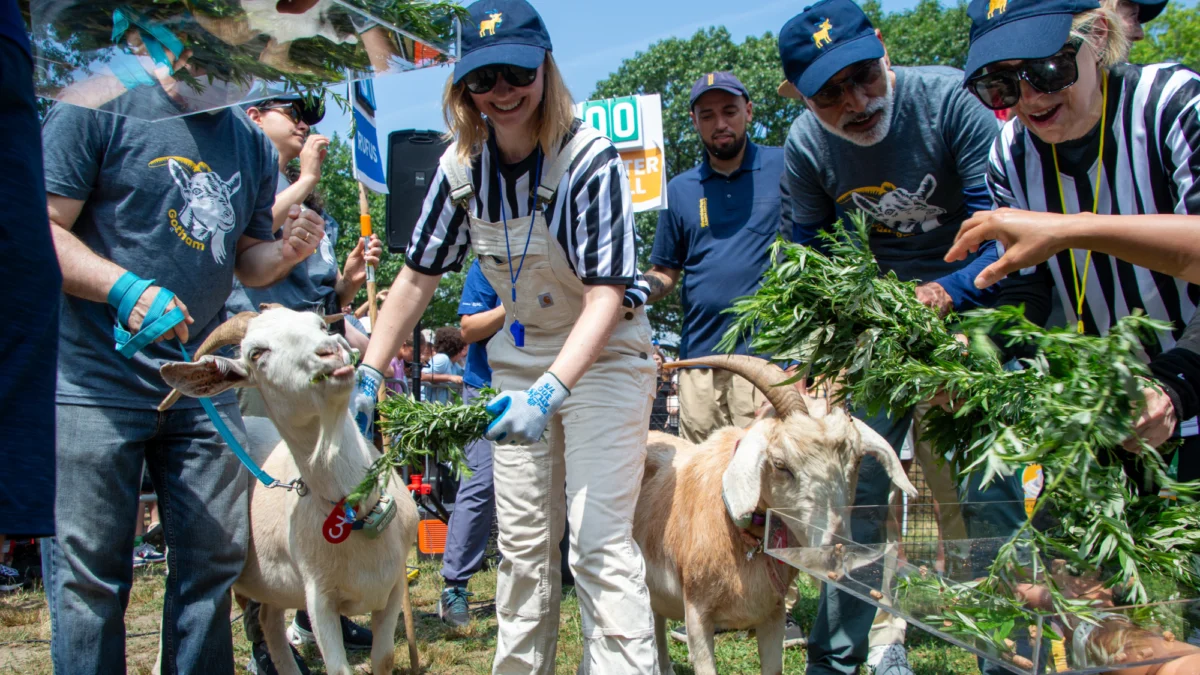
July in the United States is a time marked by patriotic fervor and, for the second consecutive year, a unique display of animal athleticism and ecological initiative. The world’s only professional eating goat competition, the Great Goat Graze-Off, once again captivated audiences as the nation celebrated its birthday with traditions both historical and hilariously new. This year’s event, held in New York City’s Riverside Park, saw reigning champion Mallomar valiantly defend his title against formidable challengers Romeo and Big Buddy, in a three-minute sprint to consume invasive weeds. The spectacle, hosted by the Riverside Park Conservancy and echoing the energy of iconic eating contests, underscores a growing trend of leveraging nature’s own solutions for urban environmental challenges.
The stakes in the Great Goat Graze-Off, while seemingly lighthearted, are rooted in a serious effort to manage the persistent problem of invasive plant species in urban green spaces. These aggressive plants, often outcompeting native flora and disrupting ecological balance, pose a significant challenge for park management. Traditional methods of removal can be labor-intensive, costly, and may involve the use of chemical herbicides, which carry their own environmental concerns. Enter the goats, a surprisingly effective and eco-friendly solution.
This year’s competition, held in West Harlem, was a testament to the growing recognition of the vital role these ruminants play in ecological restoration. Mallomar, a seasoned competitor and a crowd favorite known for his calm demeanor, once again proved his mettle. According to the Riverside Park Conservancy, the champion goat devoured an impressive 1.5 packets of invasive weeds within the allotted three minutes. This feat not only solidified his status as the G.O.A.T. Grazer but also highlighted the remarkable efficiency of goats in tackling problematic vegetation.
The event was masterfully orchestrated by George Shea, a personality synonymous with competitive eating, who also lends his vocal talents to the renowned Nathan’s Hot Dog Eating Contest. Shea’s involvement brings a level of flair and public engagement that transforms a conservation effort into a widely anticipated event. The juxtaposition of high-octane competitive eating commentary with the gentle munching of goats creates a unique and engaging experience for attendees, drawing attention to the Conservancy’s innovative approach.
A History of Herbivorous Heroes
The Riverside Park Conservancy’s adoption of goats for weed management began as an experimental initiative, evolving into a cornerstone of their ecological restoration strategy. The program aims to address the aggressive spread of invasive species like English ivy, Japanese knotweed, and multiflora rose, which can choke out native plants, degrade soil health, and alter habitats.
The Conservancy’s approach, detailed on their website, outlines a sustainable, multi-year strategy. Goats are deployed to areas with dense infestations, particularly on challenging terrain where manual labor or heavy machinery would be difficult or environmentally damaging to employ. Their relentless grazing habit is precisely what makes them so effective. "Throughout the season, the goats continuously consume the weeds all the way down to the roots," explains the Conservancy’s literature. "This stunts the plants’ normal growth trajectory by making them start all over—only to be eaten again. After a few seasons of eating, the plants’ ability to grow will have been weakened, and perhaps eliminated altogether."
This method offers several distinct advantages. Firstly, it’s a chemical-free solution, avoiding the potential contamination of soil and water sources associated with herbicides. Secondly, it’s highly efficient in targeting specific invasive plants, allowing native species to recover and thrive. Thirdly, the goats’ waste, or manure, acts as a natural fertilizer, enriching the soil and further supporting the regeneration of the park’s ecosystem. This holistic approach transforms a problem into a self-sustaining solution.
The Great Goat Graze-Off, now in its second year, serves as a celebratory milestone for this ongoing project. It’s an opportunity to showcase the goats’ capabilities to the public, fostering a deeper appreciation for their contribution to urban biodiversity. Last year’s competition, which also saw a champion crowned, laid the groundwork for this year’s larger event, indicating a growing public interest and support for these unique environmental stewards.
The Reign of Mallomar: A Champion’s Calm Consistency
Mallomar’s victory this year is not just a personal triumph but a testament to his consistent performance and dedication to the task. While the competition is framed as a race, the underlying goal is effective weed eradication. Mallomar’s "calm, steadfast nature," as described by the Riverside Park Conservancy, is precisely what makes him an ideal candidate for this role. This tranquility ensures he remains focused on the job at hand, systematically clearing the targeted vegetation without undue stress or distraction. This trait is invaluable in a team of animals working towards a common ecological goal.
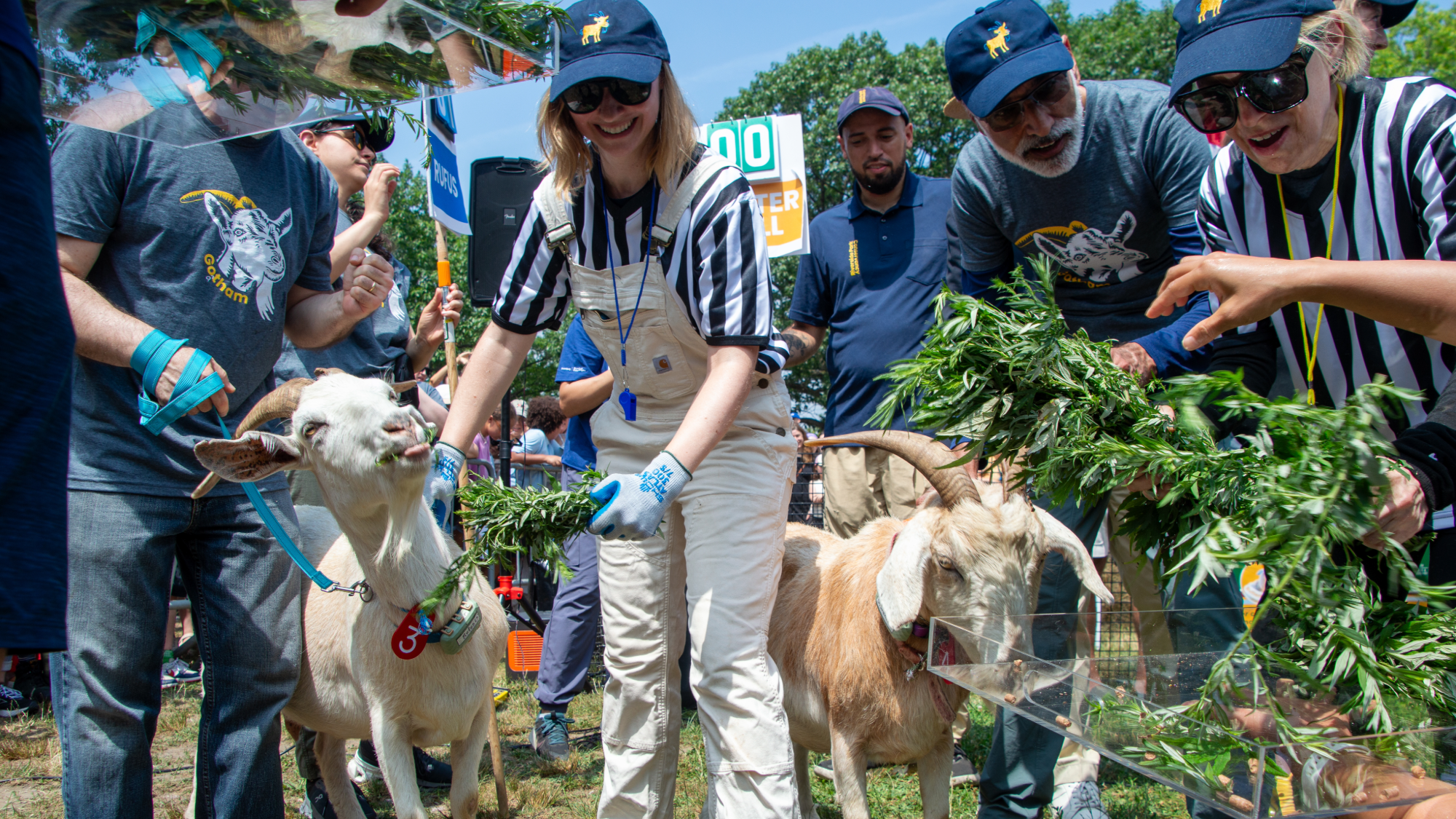
The competition itself is more than just a display of eating prowess; it’s a demonstration of the practical benefits derived from the goats’ natural behaviors. The three-minute duration is designed to simulate an intense burst of grazing, showcasing how much ground they can cover and how effectively they can reduce weed density in a short period. The "packets" of weeds are a standardized measure, allowing for a fair comparison between the competitors.
The Riverside Park Conservancy, a non-profit organization dedicated to the care and improvement of Riverside Park, has been at the forefront of implementing these innovative greening strategies. Their efforts extend beyond the grazing program to include planting native species, restoring natural habitats, and engaging the community in conservation efforts. The success of the goat program is a direct result of their strategic planning, dedicated stewardship, and ability to garner public support.
Official Endorsement and Broader Implications
The recognition of the goats’ contribution extends to the highest levels of city park management. Tricia Shimamura, NYC Parks Commissioner, expressed her strong support for the program in a statement emailed to Popular Science. "At NYC Parks, we’re always looking for innovative ways to care for our green spaces, and these goats have certainly earned their place on the team," Shimamura stated. "Whether they’re competing in the Graze-Off or hard at work clearing invasive plants, they’re making our parks healthier while giving New Yorkers a reason to smile."
This endorsement from a city official underscores the growing acceptance of nature-based solutions in urban environmental management. It signals a shift towards integrating natural processes into city planning and maintenance, recognizing that ecological health is paramount to the well-being of urban populations. The "reason to smile" Shimamura refers to is a crucial aspect; these animals not only perform a vital ecological service but also bring joy and wonder to park visitors, fostering a deeper connection between people and the natural world within their urban environment.
The implications of this approach extend far beyond Riverside Park. As cities worldwide grapple with the challenges of climate change, biodiversity loss, and the management of urban green spaces, the success of initiatives like the Great Goat Graze-Off offers a replicable model. The strategy of employing grazing animals for invasive species control is gaining traction in various urban and peri-urban settings. For instance, similar programs have been implemented in parts of California, the Pacific Northwest, and even in some European cities, demonstrating the global applicability of this sustainable practice.
The data supporting the effectiveness of goat grazing for invasive species control is compelling. Studies in ecological restoration have shown that consistent grazing by goats can significantly reduce the biomass of targeted invasive plants, sometimes by over 70-80% after several years of sustained effort. This reduction allows native plant species, which may be more palatable to goats or simply better adapted to the conditions, to re-establish themselves. Furthermore, the physical act of goats consuming plants down to the root level can weaken or even kill perennial invasive species that rely on extensive root systems for survival and reproduction.
The economic benefits are also noteworthy. While the initial setup of a grazing program may involve logistical considerations like fencing and animal care, it can often prove more cost-effective in the long run compared to repeated mechanical removal or chemical treatments, especially for large or difficult-to-access areas. The added benefit of natural fertilization further reduces the need for synthetic inputs.
Looking Ahead: A Future of Green and Grazing
The Great Goat Graze-Off is more than just an entertaining event; it’s a powerful symbol of how we can integrate innovative, nature-based solutions into our urban landscapes. It highlights the often-overlooked ecological contributions of animals and showcases the potential for sustainable practices to address pressing environmental issues.
As the Riverside Park Conservancy continues its work, the lessons learned from the goat grazing program and events like the Graze-Off will undoubtedly inform future conservation efforts. The success of Mallomar and his fellow competitors serves as a potent reminder that sometimes, the most effective solutions are the ones that work in harmony with nature, not against it. The image of goats diligently munching their way through invasive weeds is not just a charming sight; it’s a vision of a healthier, more sustainable urban future, one bite at a time. The next time one encounters a patch of stubborn invasive plants, the most "beeeeest" option, as the original article humorously suggests, might just be a herd of four-legged ecological heroes.

