
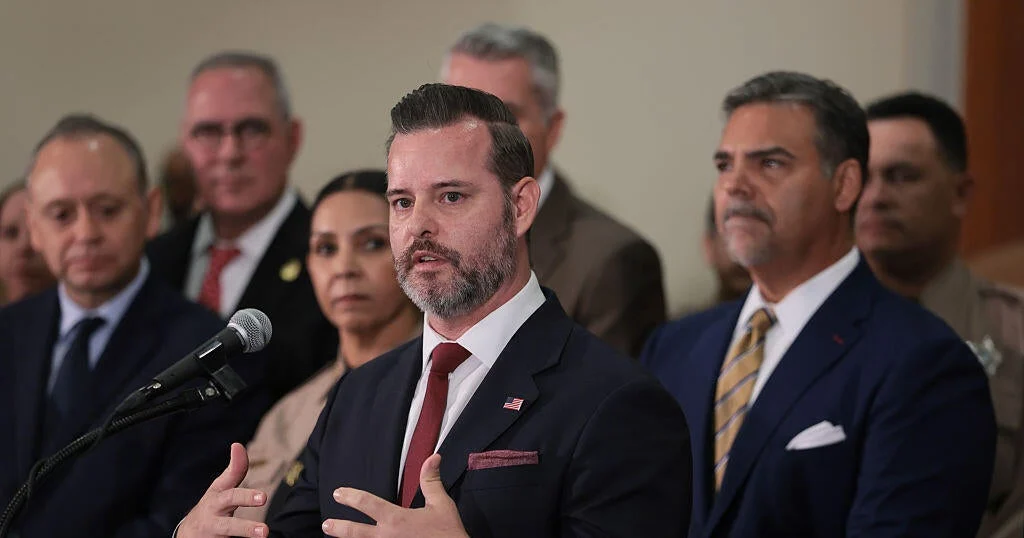
The top federal prosecutor in South Florida who was overseeing the high-profile and controversial grand conspiracy investigation into Obama- and Biden-era intelligence officials abruptly resigned on Friday, marking yet another significant departure from a Justice Department inquiry that has been increasingly plagued by internal friction, staff departures, and mounting questions regarding its evidentiary viability.
Attorney General Todd Blanche formally announced the resignation of Jason Reding Quiñones, who served as the U.S. Attorney for the Southern District of Florida. In his public remarks, Blanche commended Quiñones for his dedicated work in tackling violent crime, narcotics trafficking, and transnational criminal organizations throughout his tenure. However, the official announcement notably offered no explanation for his abrupt exit, leaving legal analysts and observers to scrutinize the timing and underlying tensions surrounding the departure.
In a brief statement posted to social media platform X, Quiñones expressed his appreciation to President Trump for the opportunity to serve, describing the post as the "privilege of a lifetime" to work alongside the dedicated professionals within the Southern District. "I leave with immense pride in what we accomplished together and profound gratitude for the opportunity to serve our great nation," Quiñones wrote, omitting specific references to the stalled investigations under his supervision.
The Fort Pierce-Based Probe and Its Core Objectives
Quiñones’ departure represents the most severe institutional blow yet to the sprawling investigation centered in Fort Pierce, Florida. The inquiry was established to examine whether former intelligence officials operating under two distinct Democratic administrations engaged in a coordinated criminal and intelligence conspiracy aimed at preventing Donald Trump from securing or maintaining the presidency.
Furthermore, the probe has separately focused on scrutinizing whether former Central Intelligence Agency (CIA) Director John Brennan intentionally provided false testimony to Congress regarding the agency’s role in formulating a controversial 2017 intelligence assessment. That assessment famously concluded that the Russian government had actively attempted to interfere in the 2016 U.S. presidential election to benefit Trump.
Despite an extensive deployment of grand jury resources, subpoenas, and investigative bandwidth, the inquiry has struggled to produce substantive indictments that establish the alleged overarching conspiracy. Legal scholars have noted that the lack of concrete charges, combined with persistent internal dissent, has cast a long shadow over the credibility and future trajectory of the Department of Justice’s special focus areas.
A Timeline of Internal Strife and High-Profile Exits
The resignation of the Southern District’s top prosecutor does not occur in a vacuum; rather, it is the culmination of months of severe internal friction, disagreements over investigative management, and a revolving door of high-level personnel.
The trouble within the prosecution team became glaringly public in September, when Joe diGenova, a veteran attorney and former U.S. Attorney for the District of Columbia in the 1980s, abruptly walked away from his role. DiGenova’s exit followed sharp disagreements with the Deputy Attorney General’s Office concerning the daily management and strategic direction of the probe.
Tensions reached a boiling point when senior Justice Department leadership dispatched two attorneys directly from the office of Acting Deputy Attorney General Trent McCotter to Florida. The deployment was ostensibly designed to assist in managing the sprawling case file, but both diGenova and Quiñones strongly resisted the outside intervention, viewing it as an encroachment on local prosecutorial authority, according to people familiar with the matter.
Following those departures, Kurt Olsen—a former White House attorney widely recognized for his aggressive post-election legal efforts to challenge the 2020 presidential election results—also resigned from the case. Concurrently, several other attorneys who had been temporarily assigned to the Fort Pierce probe on short-term details quietly returned to their home U.S. Attorney’s offices as their assignments expired.
Earlier in the year, internal skepticism over the strength of the government’s legal theories became public when the lead career prosecutor inside Quiñones’ own office, who was tasked with day-to-day oversight of the investigation, was effectively sidelined. Sources indicated that the career prosecutor had raised formal concerns regarding the sufficiency and reliability of the evidence being compiled to support the sweeping conspiracy claims.
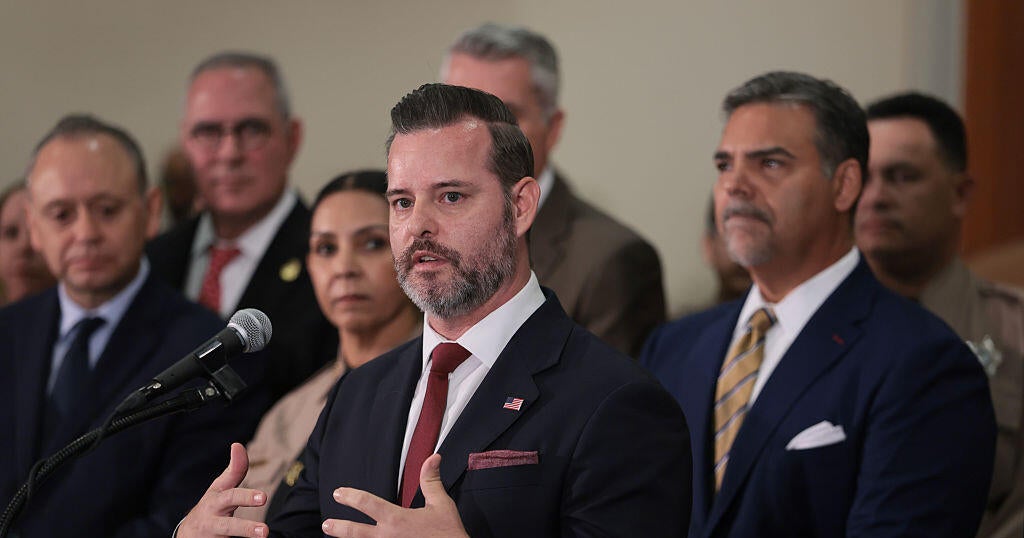
Despite these mounting departures and internal leaks, Attorney General Blanche sought to project stability in late October. Speaking to reporters, Blanche insisted that Quiñones "always has been in charge" of the investigation. He sought to downplay the significance of the steady stream of resignations, remarking casually that "people leave and stay all the time."
"We’re going to let that investigation continue as it should," Blanche stated at the time, adding firmly that there was "no frustration" within leadership regarding the slow pace of the probe.
Broader Portfolio: Countering Cuban and Venezuelan Regimes
While the grand conspiracy investigation has dominated national headlines and internal Justice Department politics, Quiñones’ tenure in South Florida was also defined by an aggressive international portfolio targeting anti-democratic regimes in the Western Hemisphere.
Quiñones, the son of Cuban refugees who fled the Castro regime, sought to carve out a distinct legacy by leveraging federal statutes to pursue communist Cuban government officials allegedly involved in crimes impacting the United States. Earlier this year, he spearheaded the establishment of a specialized, Cuba-focused task force. This initiative successfully unified law enforcement personnel from multiple federal agencies to streamline complex transnational investigations.
Under his leadership, the Southern District of Florida achieved a milestone by pursuing the criminal indictment of former Cuban leader Raúl Castro alongside five other high-ranking officials. Those charges were tied directly to the tragic 1996 downing of two civilian humanitarian planes operated by the Brothers to the Rescue group, which resulted in the deaths of four people.
Beyond Havana, Quiñones’ office maintained a heavy focus on the Venezuelan political crisis. Prosecutors in Miami spearheaded a complex, corruption-focused criminal investigation targeting former Venezuelan leader Nicolás Maduro. That inquiry gained significant momentum shortly before Alex Saab—a close financial associate of Maduro who served as Venezuela’s minister of industry and national production—was extradited to the United States and indicted on federal money-laundering conspiracy charges.
Saab subsequently entered a guilty plea, a development that legal observers believe could yield valuable insider cooperation and provide federal prosecutors with actionable evidence against Maduro, who remains detained in a New York City federal facility awaiting trial on separate drug trafficking and torture charges.
Quiñones’ departure also closely follows the high-profile resignation of Harmeet Dhillon, who stepped down as the assistant attorney general leading the Justice Department’s Civil Rights Division, further amplifying perceptions of a shifting leadership landscape at the upper echelons of the DOJ.
Implications for the Justice Department and the Special Inquiry
The sudden exit of Jason Reding Quiñones leaves the Southern District of Florida—one of the nation’s busiest and most prominent federal prosecutorial districts—without a permanent Senate-confirmed leader at a critical juncture. It also injects profound uncertainty into the future of the Fort Pierce-based grand conspiracy probe.
Without experienced leadership at the helm and facing the institutional scars left by repeated staff defections, the investigation into Obama- and Biden-era intelligence officials appears increasingly vulnerable. Legal analysts suggest that the ongoing turbulence may force Justice Department leadership to either scale back the scope of the inquiry significantly or appoint a fresh team to reassess its viability from the ground up.
As the Department of Justice navigates these turbulent waters, the repercussions of Quiñones’ resignation will likely reverberate well beyond South Florida, shaping both the internal dynamics of the federal law enforcement apparatus and the broader political landscape for months to come.

