
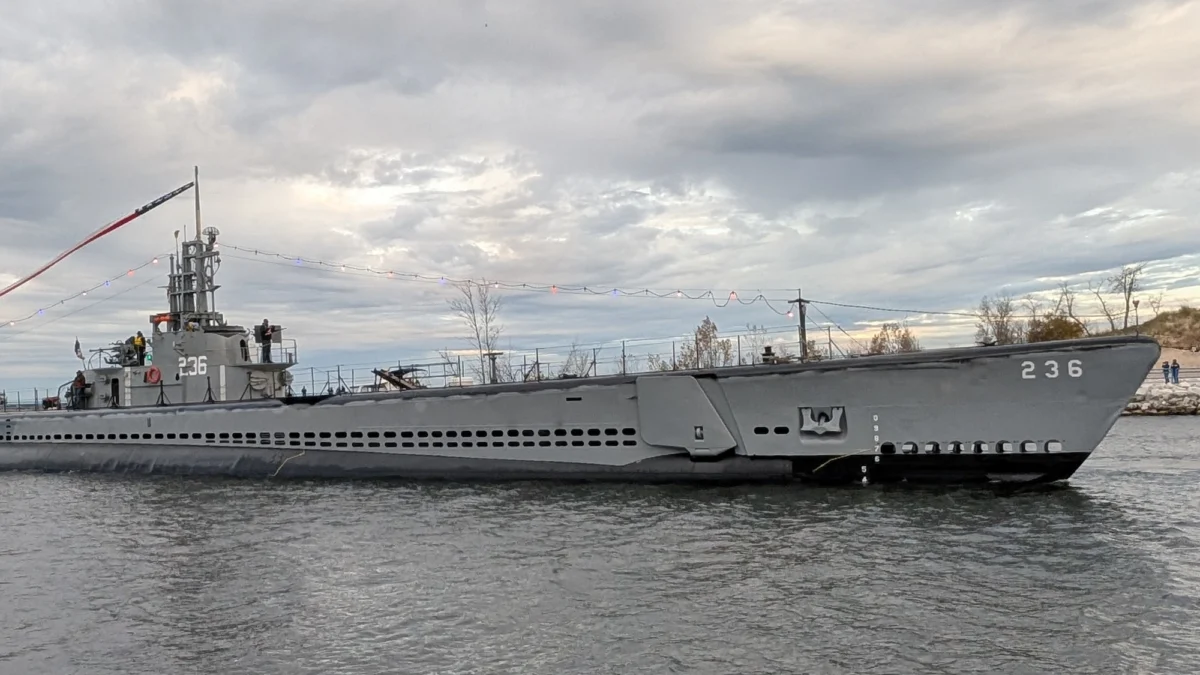
The USS Silversides, a legendary Gato-class submarine that served as a cornerstone of the United States Navy’s Pacific fleet during World War II, has returned to its permanent berth in Muskegon, Michigan. The vessel’s homecoming on October 31, 2026, concluded a complex 15-hour transit across Lake Michigan, marking the end of the most significant preservation effort the submarine has undergone in over half a century. The three-month dry dock project in Wisconsin was a critical intervention to ensure the structural integrity of the 312-foot warship, which remains a vital piece of living history for both naval enthusiasts and the general public.
A Half-Century in the Making: The Scope of Preservation
The decision to move the USS Silversides to a dry dock facility was not taken lightly. Given the vessel’s age—it was launched in 1941—the stresses of sitting in freshwater for decades required a comprehensive assessment. According to project managers and museum officials, the objective was to move beyond cosmetic maintenance and address the structural realities of a hull that has spent a lifetime in various environments.
The $3.5 million restoration project involved removing the entire 1,500-ton submarine from the water. Once the vessel was secured on land, engineers conducted a bottom-to-top inspection of the steel hull. While the initial assessments suggested the ship had aged better than many of its contemporaries, the reality of marine corrosion necessitated significant interventions. Workers performed extensive welding, installed reinforcement steel along the underside, and addressed structural fatigue points that had developed since the submarine was last dry-docked in the 1970s.
Scott Hardin, the curator of the USS Silversides Submarine Museum, characterized the process as "surreal." He noted that the restoration was not merely about keeping the boat afloat, but about preserving the authentic materials that defined the submarine’s wartime service. By reinforcing the hull, the museum has essentially extended the life of the exhibit by decades, ensuring that future generations can walk the decks of a vessel that once stood at the front lines of global conflict.
Historical Context: The Silversides at War
To understand the magnitude of the Silversides’ preservation, one must look at its operational history. Built at the Mare Island Navy Yard in Vallejo, California, the submarine was commissioned shortly before the United States formally entered World War II. Its service record is one of the most distinguished of any vessel in the U.S. submarine fleet.
The Silversides conducted 14 war patrols, a testament to the durability of the Gato-class design. During these missions, the crew utilized an array of weaponry, including 10 torpedo tubes and various deck guns, to disrupt Japanese maritime supply lines. Naval records credit the Silversides with sinking 23 enemy ships, totaling more than 90,000 long tons. This high success rate earned the submarine twelve battle stars and the Navy Unit Commendation.
The vessel’s operational life spanned the entirety of the conflict, from 1941 to 1945. Following the cessation of hostilities, the Silversides served as a training platform for Naval Reservists in Chicago, which kept the ship in a state of relative readiness compared to other decommissioned vessels. Its eventual transition to a museum ship in 1987 in Muskegon cemented its role as a permanent educational monument.
The Trigger Connection: An Unexpected Archaeological Find
One of the most remarkable aspects of the 2026 dry dock operation was the discovery of a long-lost component from another historic vessel. While performing a routine inspection of the ship’s piping and valve systems, restoration technicians uncovered a flood valve stamped with the name "Trigger."
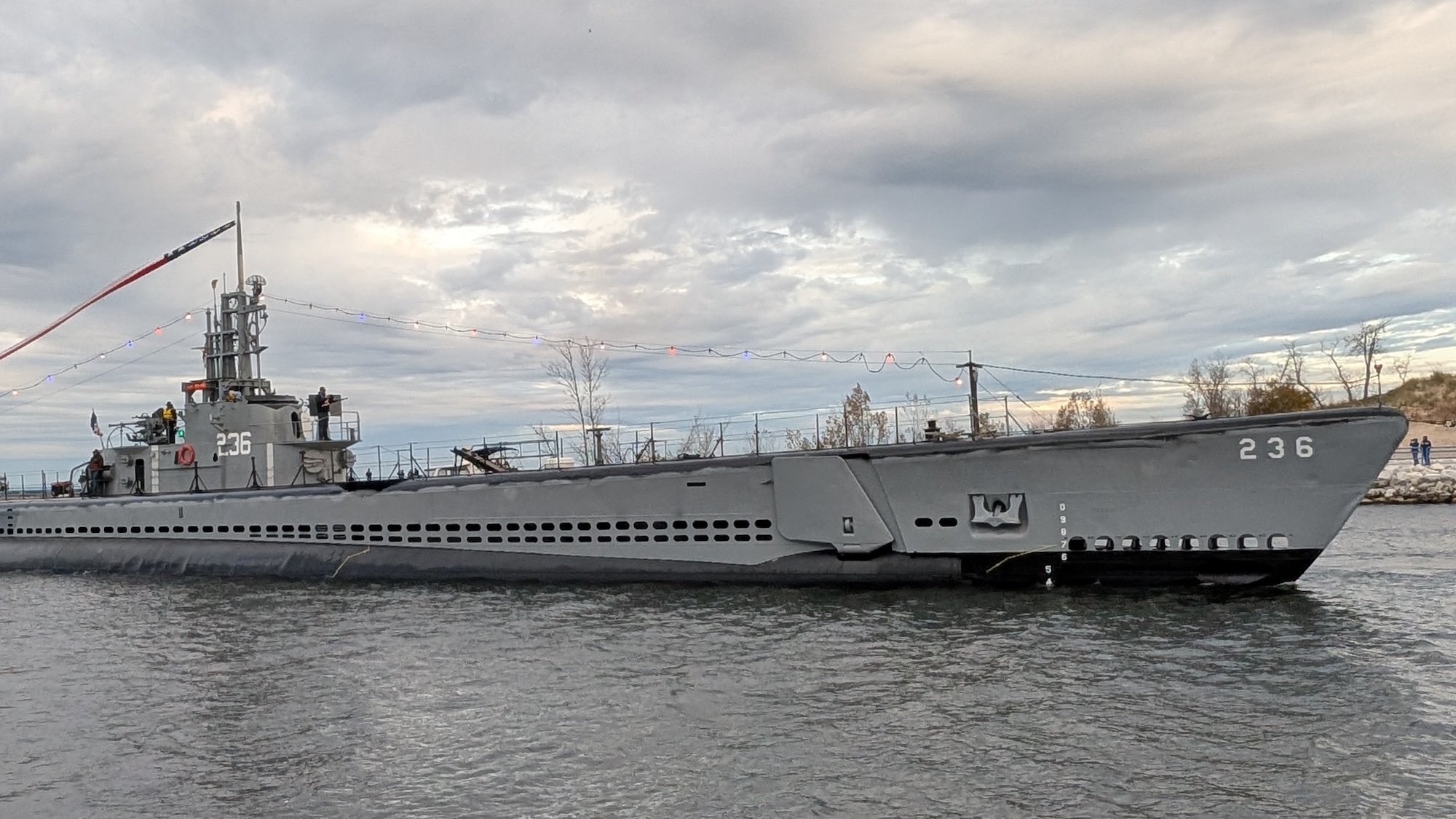
Historical research confirmed that this was a salvaged part from the USS Trigger (SS-237). The Trigger, another Gato-class submarine, was built alongside the Silversides at the Mare Island Navy Yard. The two vessels shared many of the same engineering specifications, and it was common practice during the war for components to be swapped or repurposed during maintenance cycles. The Trigger was lost in action in March 1945, making this flood valve the only surviving physical piece of that vessel.
The discovery serves as a poignant reminder of the interconnectedness of these warships. It highlights the logistics of the Pacific theater, where parts were treated as precious commodities, and emphasizes the historical value of the Silversides not just as a singular artifact, but as a repository of broader naval history.
Financial Challenges and Future Sustainability
While the ship has returned to its museum berth, the financial reality of maintaining a WWII-era submarine remains a persistent challenge. The $3.5 million repair bill is a substantial figure for a non-profit museum, and the organization is currently engaged in a fundraising campaign to cover the remaining costs.
The cost of dry docking, which includes specialized labor, maritime towing, and industrial-grade steel fabrication, is significantly higher than standard museum maintenance. For the USS Silversides Submarine Museum, the investment is seen as a necessary cost of "stewardship." Hardin and his colleagues argue that the ship is a primary source document—a piece of history that cannot be replicated.
Public response to the fundraising efforts has been positive, but the museum continues to solicit donations to ensure that the ongoing preservation work is not hampered by debt. Supporters can contribute via the museum’s official website, a move that the staff views as an investment in American naval heritage.
The Broader Impact on Maritime Preservation
The return of the Silversides serves as a case study for the wider field of maritime preservation. As World War II-era ships continue to age, the challenges faced by the Muskegon team are being mirrored in museums across the country. The transition from active service to museum exhibit is a slow process of degradation, and the Silversides project proves that proactive, large-scale intervention is the only viable path to long-term survival.
The implications for the local economy and educational landscape in Michigan are also significant. The submarine is a major tourist attraction, drawing thousands of visitors who come to learn about the technological and social history of the 1940s. By keeping the vessel in top condition, the museum maintains its ability to educate the public on the realities of submarine warfare, the lives of the crew members, and the industrial ingenuity that powered the Allied victory.
As the Silversides undergoes a final interior cleaning, the museum is preparing for its public reopening on November 7. Visitors will find a ship that is not only historically accurate but structurally secure, ready to serve as a floating classroom for the next chapter of its existence.
The story of the USS Silversides is one of resilience. From the shipyards of California to the waters of the Pacific, and finally to the shores of Lake Michigan, the vessel has survived the dangers of war and the ravages of time. Its recent restoration is a testament to the dedication of those who believe that the machines of the past remain essential to understanding the present. As the museum looks toward the future, the primary goal remains clear: to ensure that the Silversides remains a silent, but powerful, witness to history for decades to come.

