
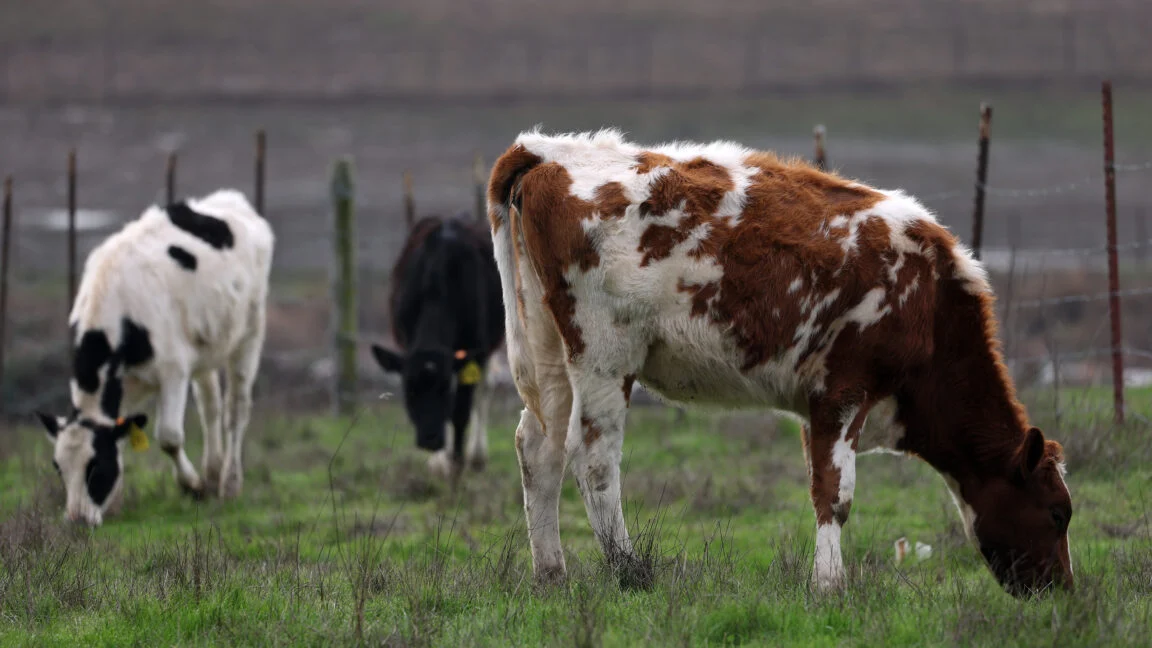
Public health officials in Washington state announced on a Sunday that a local resident had died from avian influenza following occupational exposure at an infected dairy farm, marking a grim milestone in the nation’s ongoing struggle with the H5N1 virus. The tragedy represents the third known human fatality in the United States linked to the highly pathogenic strain since the virus made an unprecedented epidemiological leap from wild, migratory birds to domestic dairy cattle. The first cases in livestock were officially documented in Texas and Kansas in March 2024, altering the risk landscape for agricultural workers across the country.
The deceased individual, a resident of Yakima County, had pre-existing underlying health conditions that local medical authorities noted likely increased their vulnerability to severe complications from the viral infection. Just two days prior to the announcement of the fatality, county officials had disclosed that the patient was critically ill and receiving inpatient care at a hospital. Out of respect for the family’s privacy during a time of grief, the Yakima Health District and state health authorities announced that they would not be releasing additional identifying details, including the patient’s age, gender, or specific occupation, beyond confirming the exposure vector.
Dave Atteberry, the health officer for the Yakima Health District, expressed condolences in a formal statement released to the public. "Our hearts go out to the individual’s family and loved ones during this difficult time," Atteberry stated. "Avian influenza can cause severe illness, particularly among people who have underlying health conditions. While this is a serious and heartbreaking outcome, the risk to the general public remains low." Despite the somber news, public health agencies continue to emphasize that the broader threat to individuals without direct occupational contact with infected animals remains minimal, though occupational safety protocols are under intense scrutiny.
A Timeline of the H5N1 Spillover Event
The emergence of highly pathogenic avian influenza (HPAI) A(H5N1) in domestic dairy cows represents a profound shift in the behavior of a pathogen that historically circulated primarily among wild aquatic birds and poultry flocks. For decades, human infections resulting from direct contact with infected birds were rare but frequently severe, often characterized by a high case-fatality rate. However, the virus’s adaptation to mammalian species—first signaled by outbreaks in fur-farm minks and marine mammals—reached a critical juncture in early 2024 when agricultural researchers identified the virus in dairy herds.
In March 2024, the United States Department of Agriculture (USDA) confirmed that dairy cattle in Texas and Kansas had tested positive for HPAI. The detection sent shockwaves through the agricultural and public health sectors, as cattle had not previously been considered a major reservoir or susceptible host for this specific influenza strain. Genetic sequencing later indicated that a single introduction event likely occurred in late 2023 or early 2024, followed by interstate transport of cattle that accelerated the geographic spread of the virus.
As the months progressed, the USDA and the Centers for Disease Control and Prevention (CDC) tracked infections across multiple states. By October 8, the virus had reached Washington state, where agricultural authorities confirmed that dairy herds in Yakima County had tested positive for HPAI. This localized outbreak created immediate occupational health risks for farmworkers handling milking equipment, treating sick animals, or performing general husbandry tasks in close proximity to infected livestock.
Three Cases Identified in Yakima County
Since the initial confirmation of HPAI in Washington dairy cattle on October 8, health authorities have identified three human cases of the virus within Yakima County alone. This cluster highlights the specific vulnerabilities faced by agricultural workers in regions with active livestock infections.
Alongside the announcement of the Yakima County resident’s death, health officials disclosed the confirmation of a third human case in the state. Much like the first identified case in Washington, this third patient had documented exposure to an infected dairy herd within the county. Fortunately, neither the first nor the third patient experienced severe clinical manifestations of the disease, nor did they require hospitalization. Both individuals received prompt medical evaluation, testing, and supportive outpatient care, underscoring the spectrum of clinical outcomes associated with H5N1 infections, ranging from mild conjunctivitis and upper respiratory symptoms to critical systemic illness.
The identification of these cases through aggressive local surveillance demonstrates that state and local health departments are actively monitoring agricultural settings. Public health nurses and epidemiologists have been conducting symptom checks and offering diagnostic testing to farmworkers who report potential exposures, aiming to catch infections early and prevent further transmission.
Broader Public Health Implications and Occupational Safety
The fatality in Washington state serves as a stark reminder of the occupational hazards associated with the ongoing H5N1 epizootic among dairy cattle and poultry. While virologists and epidemiologists maintain that the virus does not currently possess the genetic mutations required for efficient and sustained human-to-human transmission, the sheer volume of animal infections creates numerous opportunities for zoonotic spillover.
Public health agencies, including the CDC, continue to urge enhanced biosecurity measures and the rigorous use of personal protective equipment (PPE) for anyone working on farms with confirmed or suspected HPAI cases. Recommended protective gear typically includes N95 respirators, eye protection, gloves, and protective outerwear to minimize mucosal exposure to respiratory droplets, raw milk, and other potentially infectious bodily fluids from cattle.
However, implementation of these safety guidelines across the agricultural sector presents persistent logistical and socioeconomic challenges. Factors such as language barriers, immigration status, access to healthcare, and the physical discomfort of wearing heavy PPE in warm milking parlors can hinder compliance among farmworkers, many of whom are vulnerable populations. Public health advocates argue that greater institutional support, financial compensation for sick leave, and freely accessible testing and vaccination (as candidate vaccines are continually evaluated) are vital to protecting the agricultural workforce.
Economic and Agricultural Consequences
Beyond the human health toll, the spread of H5N1 among dairy cattle carries substantial economic implications for the agricultural industry. Milk production can drop significantly in infected cows, and interstate movement restrictions implemented by the USDA to curb the spread of the virus have impacted farm operations. Although pasteurization successfully inactivates the influenza virus in commercial dairy products—rendering the retail milk supply safe for consumption—the stigma surrounding the outbreak has occasionally affected consumer confidence and export markets.
Veterinary researchers and agricultural economists are collaborating to develop effective herd management strategies, improved diagnostic tools, and potential vaccines for livestock. Controlling the virus at its animal source is widely viewed by the scientific community as the most effective strategy for mitigating the ultimate public health threat posed by H5N1. By reducing the overall viral load and prevalence in livestock populations, the statistical probability of further zoonotic transmission events—and subsequent evolutionary steps toward human adaptation—decreases commensurately.
Looking Forward: Vigilance and Preparedness
Federal, state, and local health authorities are maintaining a posture of heightened vigilance in response to the Washington state fatality and the cluster of cases in Yakima County. The CDC continues to monitor the genetic evolution of circulating H5N1 strains through ongoing genomic surveillance, watching for any signature mutations that might suggest increased transmissibility among mammals.
Medical professionals across the country have been advised to remain alert for patients presenting with respiratory illness or conjunctivitis who report a history of exposure to livestock or poultry. Early administration of antiviral medications, such as oseltamivir, is recommended for individuals with suspected or confirmed H5N1 infection to reduce the severity and duration of illness, particularly for patients with underlying health vulnerabilities.
As the agricultural sector and public health infrastructure adapt to the reality of endemic HPAI in domestic livestock, the tragic loss of life in Washington underscores the human cost of the outbreak. Continued interagency cooperation, transparent communication, and prioritized protection for frontline agricultural workers remain essential components of the national defense against avian influenza.

