
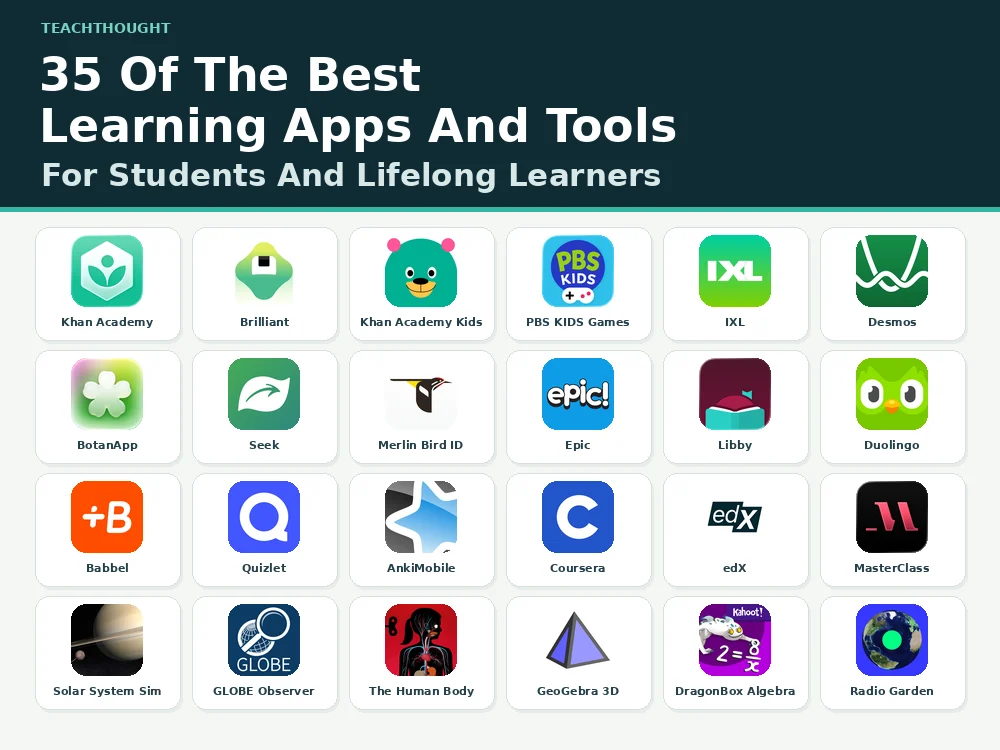
The digital education landscape has undergone a profound transformation, evolving from rigid, desktop-bound software into a dynamic ecosystem of mobile applications, browser-based simulations, and interactive learning environments. Educators, students, and lifelong learners now have access to hundreds of thousands of digital tools designed to facilitate everything from fundamental early childhood literacy to advanced collegiate programming and citizen science. According to recent educational technology market analyses, the global demand for e-learning applications has surged exponentially over the past five years, driven by a permanent shift toward hybrid learning models, remote education, and personalized skill development.
Selecting the right digital learning tool requires navigating a vast market where availability, pricing structures, and pedagogical approaches vary significantly. Rather than relying on a one-size-fits-all model, contemporary educational strategists emphasize aligning software selection with specific cognitive goals, learner demographics, and the type of active feedback provided. A comprehensive evaluation of the current edtech sector reveals that top-tier learning applications can be broadly categorized into core academic instruction, interactive problem-solving, science and nature exploration, literacy development, language acquisition, study optimization, creative production, and global citizen science initiatives.
Comprehensive Categorization of Leading Educational Technologies
To understand the scope of available digital learning platforms, experts divide them into functional domains that serve distinct educational objectives.
Core Academic Instruction and Adaptive Practice
Foundational learning platforms remain the backbone of both formal K-12 classrooms and independent study regimens. Platforms such as Khan Academy provide free, comprehensive lessons and targeted practice across mathematics, the humanities, and the sciences, functioning essentially as a universal digital tutor. Similarly, IXL offers data-driven, targeted practice modules spanning mathematics, language arts, science, social studies, and multiple foreign languages, allowing educators to track student proficiency through granular progress reports. For younger students, specialized environments like Khan Academy Kids and PBS KIDS Games integrate curriculum-aligned concepts into engaging, narrative-driven gameplay, fostering early literacy and numeracy without sacrificing user engagement. For middle school demographics, BrainPOP bridges complex subjects using short, animated cinematic explanations reinforced by interactive quizzes and cross-curricular activities.
Interactive Problem-Solving and STEM Innovation
Moving beyond rote memorization, modern STEM applications emphasize inquiry-based learning and spatial reasoning. Brilliant redefines mathematics, coding, and data science by placing learners directly into interactive problem-solving scenarios rather than sequential video lectures. In the realm of visualization, the Desmos Graphing Calculator and GeoGebra 3D Calculator transform abstract mathematical equations into manipulable visual relationships, allowing students to experiment with geometry, calculus, and spatial modeling in real time. Physics and chemistry education have similarly been revolutionized by PhET Interactive Simulations, developed by the University of Colorado Boulder, which offers rigorous, research-backed scientific models that users can manipulate independently. For younger engineers and computer scientists, Scratch provides a block-based programming environment that empowers children and novices to construct interactive stories, games, and animations, laying the foundational logic required for advanced software development.
Environmental Science, Biology, and Citizen Science
Digital applications have increasingly blurred the line between passive consumption and active ecological research. Plant and animal identification tools such as Botan App, Seek by iNaturalist, and the Cornell Lab of Ornithology’s Merlin Bird ID utilize advanced image recognition, audio processing, and crowdsourced databases to turn smartphones into field guides. These applications not only satisfy immediate curiosity regarding local flora and fauna but also feed critical data into global biodiversity repositories. Expanding outward to macro-ecosystems, NASA’s Eyes and the Solar System Sim allow users to navigate deep space, track active interplanetary spacecraft, and visualize orbital mechanics in three dimensions. Furthermore, platforms like the GLOBE Observer and Zooniverse actively engage the public in institutional scientific research, inviting everyday citizens to classify astronomical data, transcribe historical weather records, and monitor environmental conditions alongside professional researchers.
Literacy, Language Acquisition, and Cognitive Retention
Language learning and reading comprehension form another cornerstone of the digital application market. Digital libraries such as Epic provide children with vast catalogs of curated ebooks, read-aloud options, and audiobooks, while public library integration tools like Libby allow cardholders to seamlessly borrow digital literature and periodicals directly to their personal devices. For language acquisition, Duolingo and Babbel employ distinct methodologies—Duolingo focusing on gamified, bite-sized daily habit formation and vocabulary repetition, and Babbel prioritizing structured conversational modules and practical grammar. To retain accumulated knowledge, study systems like Quizlet and Anki utilize digital flashcards backed by spaced repetition algorithms. These algorithms dynamically schedule review sessions based on cognitive science principles, testing users precisely when they are most likely to forget a given piece of information, thereby maximizing long-term memory consolidation.
Creative Production and Global Awareness
Education is increasingly intertwined with creative expression and global literacy. Book Creator enables students and educators to author multimedia-rich digital publications combining text, images, audio, and video, shifting the learner’s role from consumer to creator. In the social sciences, iCivics utilizes interactive games and simulations to demystify government structures, election processes, and civic responsibilities for a digital-native generation. To foster cultural and auditory awareness, Radio Garden allows users to navigate an interactive 3D globe to tune into live, uncurated radio broadcasts from thousands of cities worldwide, while Explore.org provides real-time wildlife observation feeds that connect urban and remote learners directly to natural habitats across the globe.
Chronological Evolution of Edtech Platforms
The current maturity of educational applications is the result of decades of technological iteration, policy shifts, and institutional adoption.
- Late 1990s to Early 2000s: The advent of consumer internet and basic CD-ROM software introduced foundational digital learning tools, primarily focused on basic drill-and-practice math and typing games.
- 2006 to 2010: The launch of platforms like Khan Academy and the early expansion of open educational resources (OER) democratized access to high-level academic instruction, moving educational content beyond traditional brick-and-mortar classrooms.
- 2010 to 2015: The proliferation of smartphones and tablet devices catalyzed the mobile app economy. Developers introduced touch-native applications like Duolingo, Quizlet, and early versions of interactive STEM simulators, shifting the paradigm toward micro-learning and on-the-go practice.
- 2016 to 2019: Cloud integration, advanced data analytics, and gamification mechanics matured. Platforms began offering adaptive learning paths that adjusted difficulty levels in real time based on user performance data.
- 2020 to Present: Accelerated by global shifts toward remote and hybrid education, digital learning tools transitioned from supplementary classroom accessories to essential infrastructure. Modern applications increasingly incorporate AI-driven personalization, cross-platform synchronization, and immersive AR/VR spatial learning environments.
Economic Implications and Institutional Integration
The rapid expansion of educational applications has triggered significant economic adjustments within both public and private sectors. School districts globally allocate substantial portions of their technology budgets toward software licensing, enterprise subscriptions, and device deployment. This financial shift has fostered a competitive market where developers must balance freemium pricing models—offering core features at no cost while monetizing advanced teacher dashboards, ad-free environments, or institutional analytics.
However, this commercialization introduces critical policy challenges. Educational researchers and data privacy advocates frequently raise concerns regarding student data collection, COPPA (Children’s Online Privacy Protection Act) compliance, and digital equity. Schools and parents must carefully evaluate whether free applications monetize user data or restrict essential features behind paywalls. Furthermore, educational economists note a persistent "digital divide," where students in underfunded districts or rural areas lacking robust broadband infrastructure cannot fully leverage bandwidth-heavy tools like real-time interactive simulations or high-definition video libraries.
Future Outlook and Strategic Selection
As artificial intelligence and machine learning continue to permeate the software sector, the next generation of learning apps is expected to feature hyper-personalized conversational tutors, automated diagnostic assessments, and deeply immersive augmented reality environments. Industry analysts project sustained growth in the global edtech market, driven by corporate upskilling demands as well as K-12 institutional modernization.
For educators, parents, and self-directed learners, maximizing the utility of these tools requires a disciplined evaluation framework. The most effective digital learning tool is rarely the most complex or expensive one; rather, it is the application that precisely matches the cognitive developmental stage of the learner, provides immediate and constructive feedback, and aligns with clear educational objectives. Whether employing a quick interactive physics simulation for a single classroom lesson, utilizing a community-driven bird identification app during an outdoor excursion, or committing to a multi-month language acquisition course, successful digital learning relies on intentional selection, active engagement, and regular assessment of outcomes.

