
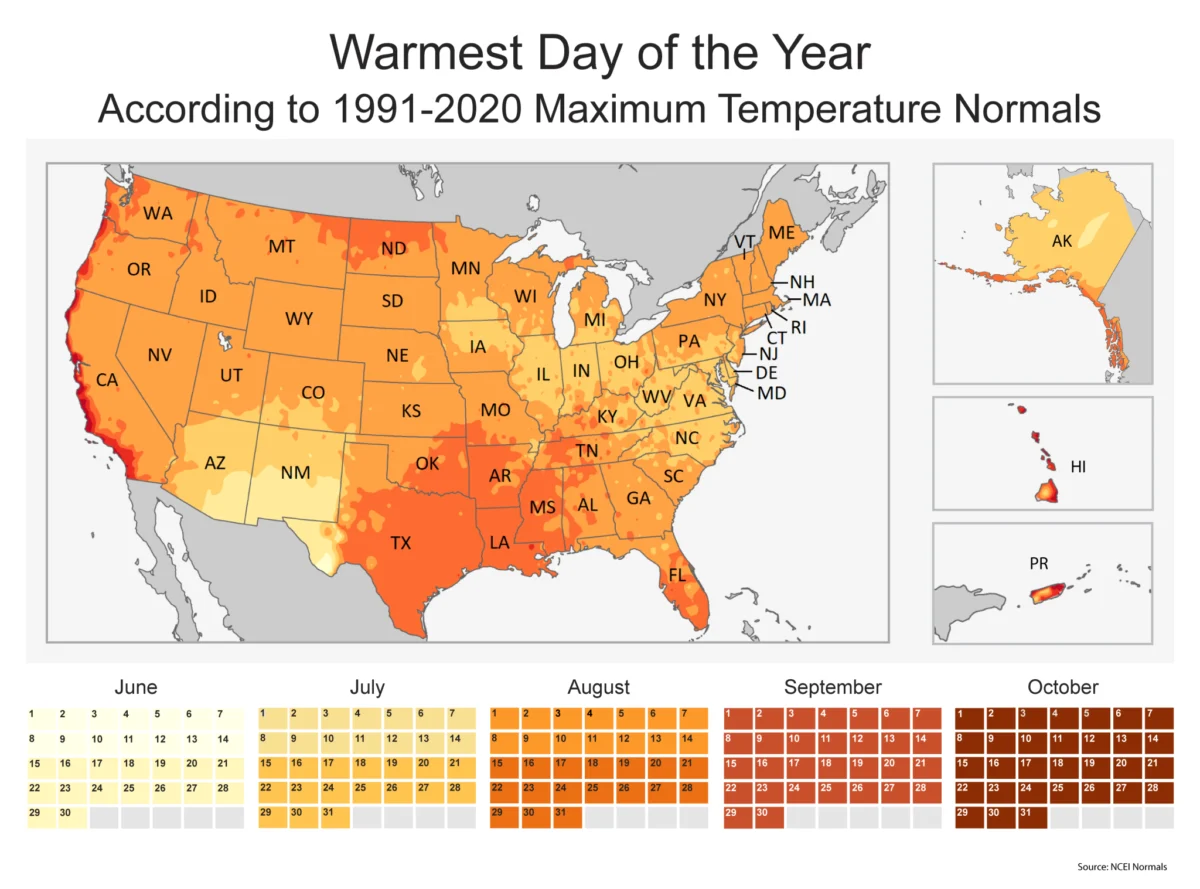
The lingering question of when the peak of summer heat will arrive across the United States is a perennial concern, especially in the face of increasingly extreme weather events attributed to climate change. While predicting the precise temperature for any given week remains a challenge, historical meteorological data offers valuable insights into the typical timing of the nation’s most sweltering days. A comprehensive analysis of nearly 30 years of data, conducted by The Old Farmer’s Almanac, reveals that while July is the dominant month for peak heat across much of the country, significant regional variations exist, extending the period of intense heat into early autumn for some areas. This data provides a crucial baseline for understanding seasonal heat patterns, even as climate change introduces greater unpredictability.
Understanding the National Heat Cycle
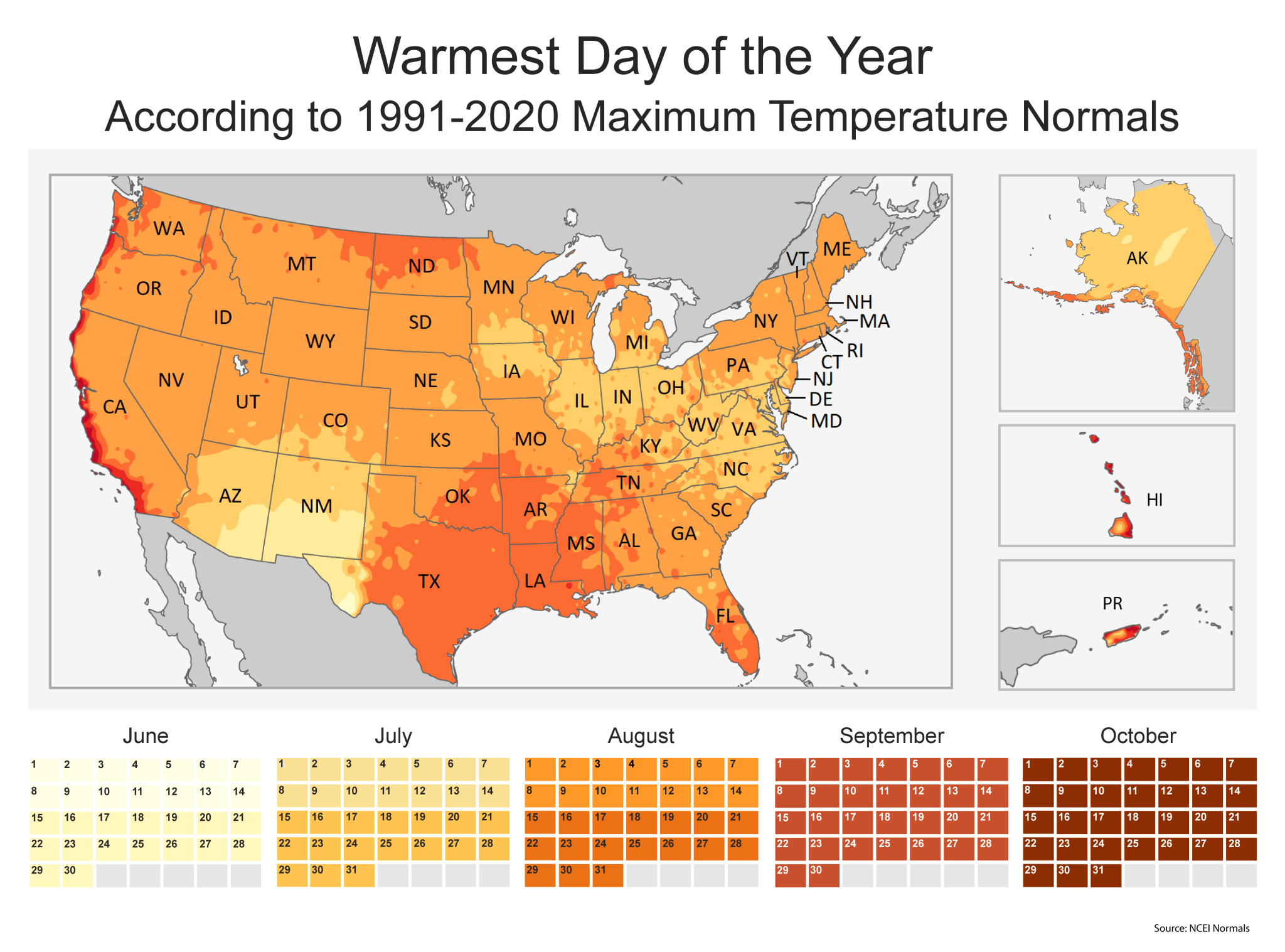
For a majority of the United States, the period between mid-July and mid-August generally represents the zenith of summer temperatures. This broad trend encompasses a vast swathe of the nation, from the Rocky Mountains eastward to the Atlantic coast. During these weeks, atmospheric conditions often align to create prolonged periods of high temperatures and humidity, leading to the most challenging heat for millions of residents. The underlying mechanisms driving these seasonal peaks involve the sun’s position in the sky, the amount of solar radiation reaching the surface, and the duration of daylight hours. As the Earth orbits the sun, the Northern Hemisphere receives its most direct sunlight during the summer months, leading to a gradual increase in land surface temperatures.
However, the influence of geography, proximity to large bodies of water, and prevailing wind patterns create distinct microclimates and regional heat cycles. This complexity means that a single "hottest day" for the entire nation is an oversimplification. Instead, a mosaic of peak heat periods emerges when examining the country from coast to coast and border to border.
Regional Variations in Peak Heat
The Old Farmer’s Almanac study, drawing on nearly three decades of National Oceanic and Atmospheric Administration (NOAA) data, highlights these important distinctions. While the continental U.S. generally experiences its hottest weather in July, specific regions deviate from this norm.
The Midwest and Northeast: Many areas within these regions align with the national trend, experiencing their peak temperatures in mid-to-late July. This period often coincides with the lingering effects of prolonged solar exposure and the buildup of heat in the atmosphere and landmass.
The Western United States: States in the Mountain West and Pacific Northwest often experience their hottest days slightly later, typically in early August. This delay can be attributed to a variety of factors, including the thermal inertia of large landmasses and the influence of Pacific weather systems.
The Southern Plains and Gulf Coast: A significant cluster of states, including Texas, Louisiana, Mississippi, Arkansas, and Oklahoma, face a later peak in their heat. For these regions, the most intense heat often extends well into August, with some areas potentially experiencing their hottest days towards the end of the month. This prolonged heat is exacerbated by high humidity, which can make temperatures feel even more oppressive and increase the risk of heat-related illnesses. The geographical location of these states, further south and often with less moderating influence from cooler ocean currents, contributes to this extended period of extreme temperatures.
Exceptions to the Rule: Coastal and Higher Latitude Influences
The influence of oceanic currents and proximity to large bodies of water plays a critical role in moderating or extending heatwaves. For the West Coast states, including California, Oregon, and Washington, the Pacific Ocean acts as a significant moderating force. While inland areas may experience peak heat earlier, the cooler Pacific air that rolls in can delay the hottest days for coastal communities. This phenomenon, often accompanied by the formation of marine layer fog, means that some parts of the West Coast might not see their hottest temperatures until September, or even October.
Similarly, regions further north, such as Alaska, experience a different heat profile. While some parts of Alaska may see warmer temperatures in July and August, the overall intensity and duration of heatwaves are significantly less compared to the contiguous United States. Cooler ocean temperatures and a shorter period of intense solar radiation contribute to this.
The tropical and subtropical regions of Hawaii and Puerto Rico also exhibit unique heat patterns. Due to their location and the consistent influence of oceanic air masses, their hottest periods may also extend into the early autumn months, often aligning with the continued warming of ocean waters.
The Impact of Climate Change on Heat Patterns
The findings of the Old Farmer’s Almanac study, while based on historical data, are being observed against a backdrop of accelerating climate change. Global warming is leading to an increase in average temperatures worldwide, and this trend is manifesting in more frequent, intense, and prolonged heatwaves across the United States. Scientists at NOAA and other meteorological organizations have observed a clear upward trend in extreme heat events over the past several decades.
Supporting Data and Trends:
- Increased Frequency of Heatwaves: Data from NOAA indicates that the number of days with temperatures above 95°F (35°C) has been increasing in many U.S. cities. For example, Phoenix, Arizona, has seen a significant rise in the number of days exceeding this threshold in recent decades.
- Intensification of Heat Events: Not only are heatwaves becoming more frequent, but they are also becoming hotter and lasting longer. This is a direct consequence of rising global average temperatures, which provide a higher baseline for extreme heat events.
- Shifting Seasonal Norms: The traditional understanding of summer heat is being challenged. In some regions, "summer" heat is beginning to extend further into the spring and autumn months, blurring the lines between seasons and increasing the overall annual heat burden.
- The "Global Boiling" Phenomenon: The term "global boiling," recently used by the UN Secretary-General António Guterres, reflects the observed intensification of heat. July 2023 was the hottest month ever recorded globally, highlighting the widespread and severe nature of current heat trends. This global phenomenon directly influences regional heat patterns within the U.S., contributing to the record-breaking temperatures experienced in recent summers.
Implications of Shifting Heat Patterns:
The implications of these shifts are far-reaching:
- Public Health Risks: Prolonged and intense heatwaves pose significant risks to public health, leading to increased instances of heatstroke, heat exhaustion, and exacerbation of chronic health conditions. Vulnerable populations, including the elderly, young children, and those with pre-existing medical conditions, are particularly at risk.
- Infrastructure Strain: Extreme heat can strain energy grids due to increased demand for air conditioning. It can also damage infrastructure such as roads, bridges, and railways.
- Agricultural Impacts: Agriculture is highly susceptible to extreme heat. Crop yields can be significantly reduced, and livestock can suffer from heat stress, leading to economic losses for farmers and potential disruptions to food supplies.
- Water Scarcity: Higher temperatures increase evaporation rates, exacerbating drought conditions in many regions and placing further strain on water resources.
- Economic Consequences: Heatwaves can lead to reduced labor productivity, increased healthcare costs, and damage to tourism and other outdoor-dependent industries.
Official Responses and Public Health Guidance
In response to the growing threat of extreme heat, government agencies and public health organizations are intensifying efforts to raise awareness and provide guidance.
NOAA’s National Integrated Heat Health Information System (NIHHIS): This system works to improve the nation’s preparedness for heat by providing timely and actionable information to public health officials and the public. It includes tools for forecasting heat-related risks and developing heat action plans.
Centers for Disease Control and Prevention (CDC): The CDC offers comprehensive guidance on preventing heat-related illnesses, including recommendations for staying cool, recognizing the signs of heatstroke and heat exhaustion, and taking precautions during heatwaves. Their advice typically includes:
- Staying Hydrated: Drinking plenty of fluids, especially water, even if you don’t feel thirsty.
- Seeking Cool Environments: Spending time in air-conditioned spaces, such as public libraries or cooling centers, when temperatures are high.
- Limiting Outdoor Activity: Avoiding strenuous activities during the hottest parts of the day.
- Checking on Vulnerable Individuals: Reaching out to neighbors, family members, and friends who may be at higher risk.
- Using Sun Protection: Wearing lightweight, light-colored clothing, a hat, and sunglasses.
Local Government Initiatives: Many cities and counties have established official cooling centers during heat advisories and are implementing public awareness campaigns to educate residents about the dangers of extreme heat.
Looking Ahead: Adapting to a Hotter Future
The data compiled by The Old Farmer’s Almanac provides a valuable snapshot of historical heat patterns. However, the increasing influence of climate change necessitates a forward-looking approach. Understanding these regional variations is crucial for targeted public health interventions, infrastructure planning, and resource management. As temperatures continue to rise, the periods of peak heat may become more intense, extend further into the shoulder seasons, and occur with greater unpredictability. Continuous monitoring of meteorological data, coupled with proactive adaptation strategies, will be essential for communities across the United States to navigate the challenges of an increasingly hotter world. The bottom line remains: stay hydrated, stay cool, and stay informed about the evolving heat landscape in your region.

