
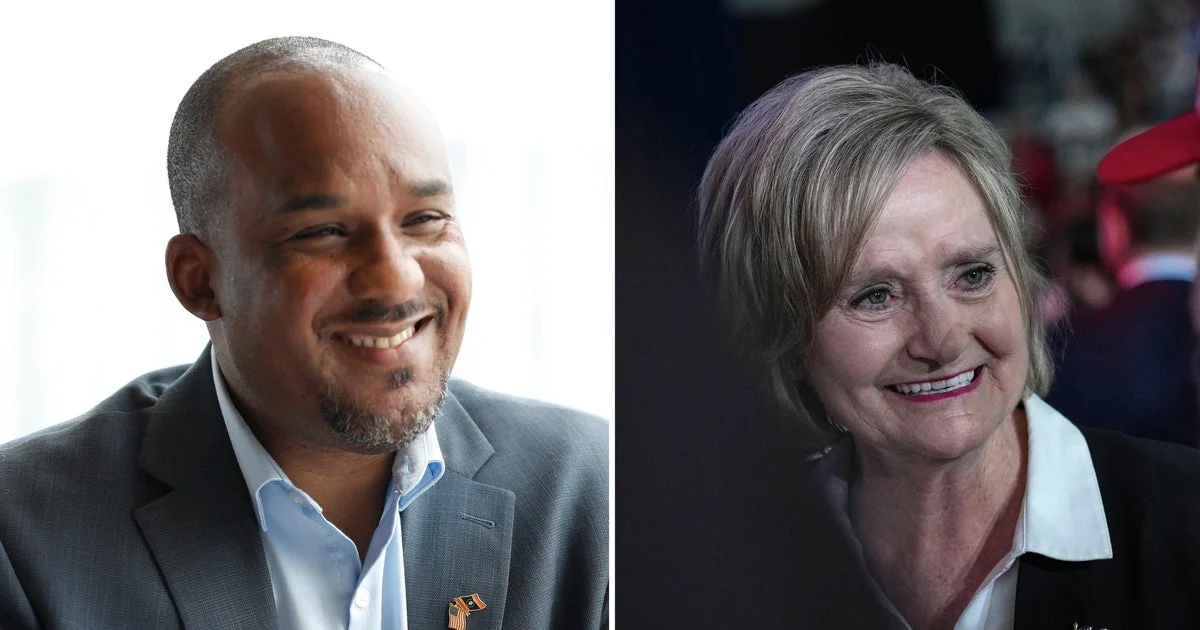
The 2026 midterm elections have produced a political cliffhanger in the heart of the American South, as the Senate race in Mississippi between incumbent Republican Senator Cindy Hyde-Smith and Democratic challenger Scott Colom remains too close to call. Days after polls closed, the political landscape of this reliably "deep-red" state is experiencing a moment of profound uncertainty, with the outcome poised to influence the final margin of the new Democratic Senate majority.
As of Friday afternoon, November 6, 2026, the contest has shifted from a dead heat to a narrow lead for Colom, who currently holds an advantage of approximately 2,500 votes. With nearly 96% of precincts reporting, the margin remains within the range where outstanding mail-in and affidavit ballots could determine the victor. This performance by Colom represents one of the most unexpected developments of the 2026 cycle, particularly given that Mississippi has not sent a Democrat to the U.S. Senate since 1982 and the state overwhelmingly supported the Republican presidential ticket in 2024.
A Timeline of the Count
The race began as a contest expected to favor Hyde-Smith, 67, who has occupied the seat since her appointment and subsequent special election victory in 2018. However, election night on November 3 told a different story. By the early hours of Wednesday morning, the candidates were separated by mere dozens of votes, triggering intense scrutiny from national political observers.
- Election Night (Nov 3): Initial returns showed a razor-thin margin, with both candidates holding leads at different intervals as votes were tallied from rural and urban strongholds.
- Wednesday (Nov 4): Colom addressed supporters, claiming momentum in counties previously considered beyond the reach of the Democratic Party.
- Thursday (Nov 5): The Secretary of State’s office reported that processing of affidavit and mail-in ballots was ongoing. The Republican Party issued a formal request to preserve all affidavit ballots, signaling the potential for a protracted legal battle.
- Friday (Nov 6): Colom’s lead grew to over 2,500 votes. Secretary of State Michael Watson confirmed that roughly 3,300 mail-in ballots remained to be processed, in addition to an unspecified number of affidavit (provisional) ballots.
The Mechanics of the Mississippi Vote
Mississippi’s election laws provide a strict framework for the finalization of results. Under current state statutes, there is no provision for a mandatory recount, meaning the result will be determined by the final plurality once all legally cast votes are tallied.
The state allows for mail-in ballots to be counted if they were postmarked by Election Day and received within five business days. Furthermore, affidavit ballots—which are used when a voter’s eligibility is in question—must be adjudicated by local election boards within a 10-day window. This means the final certification of the results is not expected until November 13.
The Democratic Senatorial Campaign Committee (DSCC) has signaled the gravity of the situation by deploying a legal team to Mississippi to monitor the intake and verification process. Concurrently, the National Republican Senatorial Committee (NRSC) has taken proactive steps to ensure that all procedural safeguards are followed, specifically requesting that all affidavit ballots be sequestered and preserved to prevent any potential irregularities.
Historical Context and Candidate Profiles
The friction between Scott Colom and Cindy Hyde-Smith is not new. Their political paths crossed significantly in 2023 during the federal judicial nomination process. President Joe Biden had nominated Colom, a district attorney and seventh-generation Mississippian, to a lifetime appointment on the U.S. District Court for the Northern District of Mississippi.
The nomination stalled due to the Senate’s "blue slip" tradition, which allows home-state senators to effectively veto judicial nominees. Hyde-Smith declined to return a positive blue slip, citing concerns regarding Colom’s judicial philosophy and his public stance on sensitive social issues, including transgender rights. The blockade was successful, and the nomination effectively died. Colom has maintained throughout his Senate campaign that his motivation is driven by policy issues—specifically the cost of living and healthcare—rather than personal grievance, telling reporters he has moved past the judicial confirmation conflict.
Broader Political Implications
The competitive nature of this race is symptomatic of a larger shift in the 2026 midterm cycle. Democrats have managed to secure a majority in the Senate by winning in several states that previously favored Republican candidates by double digits in the 2024 presidential election. The addition of a potential seat in Mississippi would provide a significant cushion for the party’s narrow majority.
If Colom succeeds, it would represent a historic realignment in Mississippi politics. Political analysts note that his campaign strategy—focusing on local economic pressures rather than purely nationalized cultural narratives—appears to have resonated with a broader coalition of voters than typically expected in a state where the GOP has held a firm grip on federal offices for decades.
Conversely, for the Republican Party, the loss of this seat would be a profound blow to the party’s national standing. Hyde-Smith remains confident, with her campaign emphasizing that a large portion of the remaining outstanding ballots reside in rural, traditionally Republican-leaning counties. Her camp expressed a firm belief that the final count will eventually tilt back in her favor once these votes are tabulated.
Looking Ahead
As of Friday, the Mississippi race and the contest in Alaska between Senator Dan Sullivan and Democrat Mary Peltola remain the final two unresolved Senate seats. The total count from these states will define the final strength of the Democratic majority in the Senate as the new Congress prepares to convene.
For now, the focus remains on the 82 county offices tasked with the certification process. With legal observers from both parties positioned across the state, the coming week is expected to be one of intense scrutiny. The Mississippi electorate, having participated in one of the most surprising contests of the decade, must now wait for the final administrative steps to reach their conclusion.
The rhetoric from both camps remains defiant. While Colom continues to express optimism about the "new direction" he believes voters have chosen, Republican leadership, including State Party Chair Mike Hurst, insists that the race is "far from being over." With thousands of ballots yet to be processed, the ultimate outcome in the Magnolia State remains the final piece of the 2026 Senate puzzle, hanging in the balance as the 10-day window for certification ticks toward its conclusion on November 13.

