
Capitol Hill is currently experiencing a profound political realignment following the results of the recent midterm elections, setting the stage for high-stakes leadership battles, internal party soul-searching, and contentious legislative showdowns. Both chambers of Congress are wrestling with the fallout of a bruising electoral cycle that saw significant shifts in voter sentiment, prompting both Republicans and Democrats to reevaluate their internal
dynamics, legislative strategies, and long-term goals. While Senate Republicans moved swiftly to cement their leadership structure by reelecting John Thune, House Republicans chose a different path, elevating hard-line conservative and close presidential ally Jim Jordan to the position of House Minority Leader following a competitive contest against current Majority Leader Steve Scalise. Meanwhile, Senate Democrats faced unexpected internal friction as prominent progressives challenged Chuck Schumer’s bid to retain his leadership role, reflecting a broader hunger for change across the political spectrum. As lawmakers grapple with these internal divisions, the legislative branch is also confronting immediate governance challenges, including a high-profile impeachment push against Defense Secretary Pete Hegseth that has sharply divided the Republican caucus and drawn fierce rebukes from the administration.
The unfolding drama on Capitol Hill highlights the intense pressures facing both political parties as they prepare for the 120th Congress. The recent midterm elections delivered a stinging rebuke to the legislative status quo, resulting in significant seat losses for House Republicans and sparking fierce debates over party messaging, accountability, and the influence of legislative rules. In the Senate, although leadership elections ultimately proceeded largely as planned, the path to those votes was marked by intense behind-the-scenes negotiations and vocal dissent from lawmakers demanding a fundamental reexamination of the party’s strategic direction. These developments underscore a growing tension between traditional party leadership structures and a restless rank-and-file membership eager for a more assertive, transparent, and accountable approach to governance.
House GOP Leadership Realignment and the Rise of Jim Jordan
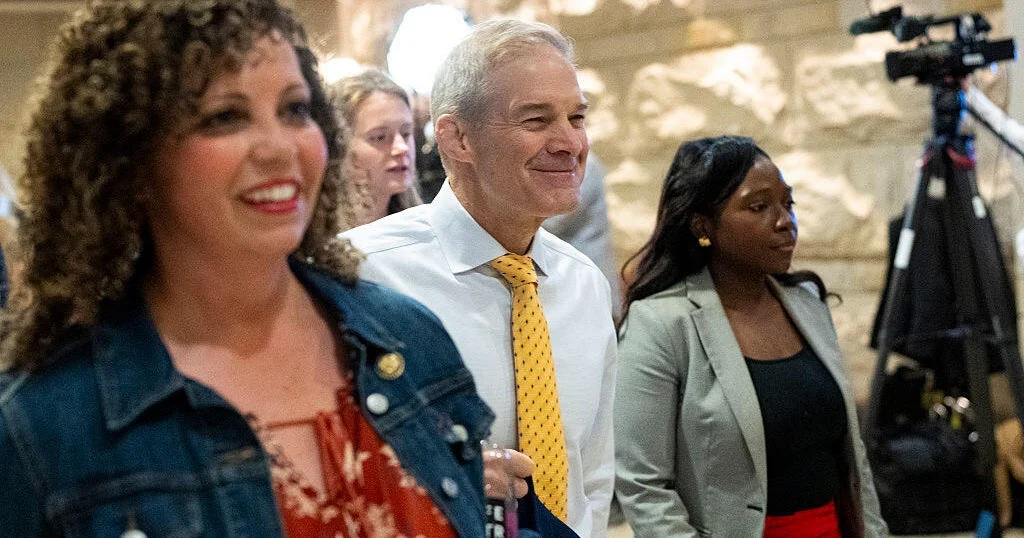
The House Republican conference faced the most dramatic leadership transition of any party in either chamber, driven in large part by the decision of House Speaker Mike Johnson to step aside from leading the conference in the minority. Johnson’s departure opened the door for a high-stakes contest between current Majority Leader Steve Scalise and Judiciary Committee Chairman Jim Jordan. Following a morning of closed-door candidate forums and intense family discussions, House Republicans elected Jordan as their new Minority Leader by a tally of 106 to 73, according to sources familiar with the vote count.
Jordan’s ascension marks a significant strategic pivot for House Republicans. As a hard-line conservative and a close ally of President Trump, Jordan is expected to steer the minority caucus in a decidedly combative direction, focusing heavily on aggressive oversight, messaging alignment with the executive branch, and active resistance to the Democratic agenda. Reflecting on the realities of minority status, Speaker Johnson praised Jordan as an extraordinary leader and a longtime mentor, noting that "it is easier to keep a group together when you’re in the minority."
In addition to the top leadership post, House Republicans filled other key positions within their caucus. Representative Tom Emmer of Minnesota successfully defended his position as House GOP Whip, defeating a challenge from Representative August Pfluger of Texas. Emmer, who serves as Jordan’s chief deputy, will play a critical role in managing floor strategy and maintaining party discipline. Meanwhile, outgoing Speaker Mike Johnson addressed questions regarding his future, confirming to reporters that he will take the oath of office in January and focus on helping his team succeed in the upcoming Congress, while declining to commit to serving out a full two-year term.
The leadership elections came on the heels of candid reflections from various lawmakers regarding the party’s electoral setbacks. Representative Tim Burchett of Tennessee openly told reporters that the Republican Party needed to admit its past mistakes, pointing to failures in addressing the cost of living, failing to enact sufficient stock trading restrictions, and allowing oil companies to record massive profits. Similarly, Representative Nathaniel Moran of Texas characterized the morning candidate forum as a necessary family discussion, emphasizing that while both Scalise and Jordan appeal effectively to the conservative base, the party must find a way to resonate with swing voters and suburban districts if it hopes to reclaim the majority in two years.
Senate Republicans Confront Dissent and Reelect Thune
Across the Capitol, Senate Republicans experienced their own internal turbulence before ultimately moving forward with leadership elections. A faction of conservative senators, led by Senator Ron Johnson of Wisconsin, pushed aggressively to delay the leadership votes, arguing that the party’s severe losses in the midterm elections demanded a period of deep introspection and strategic reassessment. Senator Johnson contended that continuing with "business as usual" after such a stunning defeat was unacceptable and insisted that leadership needed to outline a clear, revised strategy moving forward.
Despite the push for a delay, which prompted a two-hour closed-door conference meeting and subsequent afternoon debates, the effort fell short. Senate Republicans ultimately accepted a motion to proceed to leadership elections, electing Senator John Thune of South Dakota to another term as leader by acclamation. Thune, who faced no active challengers for the position, emphasized the importance of settling leadership questions promptly to ensure a unified path forward, while acknowledging the validity of his colleagues’ concerns and maintaining an open dialogue throughout the proceedings.
Alongside Thune, Senate Republicans reelected Senator John Barrasso as whip, Senator Tom Cotton as conference chair, and Senator Shelley Moore Capito as policy chair. However, the underlying frustrations within the conference were palpable. Senator Josh Hawley of Missouri voiced sharp criticism of existing leadership strategies, describing the midterm losses as the worst set of setbacks since the Watergate era and expressing dissatisfaction with the lack of direct outreach from leadership prior to the vote. While some lawmakers, such as Senator Mike Rounds of South Dakota, maintained that the conference was ready to vote and move forward, the internal debate exposed lingering fissures that leadership will need to navigate carefully in the incoming Congress.
Senate Democrats and Emerging Challenges to Chuck Schumer
While Republican conferences grappled with post-election reevaluations, Senate Democrats faced their own internal challenges regarding future leadership. Senate Minority Leader Chuck Schumer, who has served as the top Senate Democrat for nearly a decade, told reporters during a Capitol press conference that he remains confident he will be elected majority leader when Democrats assume control of the chamber.
However, Schumer’s path to confirmation faced a notable hurdle when independent Senator Bernie Sanders of Vermont announced at a Capitol press conference that he would not support Schumer for reelected Democratic leader. While Sanders praised Schumer’s tireless work ethic and their decades-long professional relationship, he asserted that "the time is now for change," becoming the most prominent progressive lawmaker to formally oppose Schumer’s candidacy. Sanders was joined by Senator Elissa Slotkin of Michigan, who echoed sentiments centered on the pursuit of institutional change rather than personal ambition. With Democratic leadership votes scheduled for next month, the open dissent highlights a growing generational and ideological push within the Democratic caucus for new leadership voices.
The Hegseth Impeachment Push and Congressional Showdowns
Simultaneously, the House of Representatives became the epicenter of a fierce intra-party battle regarding an impeachment resolution introduced by Republican Representative Thomas Massie against Defense Secretary Pete Hegseth. The resolution outlines eight distinct articles of impeachment, focusing heavily on controversial episodes from President Trump’s second term, including the handling of military engagements with Iran, boat strikes in the Caribbean, an attack on an Iranian school, and the capture of former Venezuelan President Nicolás Maduro.
Defense Secretary Hegseth forcefully denounced the impeachment effort, dismissing it in a defiant public statement as a "farce," a "political spectacle," and a "personal manifesto driven by ego and resentment" orchestrated by a disgruntled lawmaker. House Speaker Mike Johnson similarly condemned the resolution as a political stunt, assuring reporters that Republican leadership possessed the necessary votes to sideline the measure and defeat the impeachment push "one way or the other" through procedural motions.
The impeachment effort exposed deep ideological divisions within the House Republican conference. While hard-line conservatives pushed for accountability and separate floor votes on each of the eight impeachment articles—as requested by Massie on social media—moderates and retiring members expressed distinct reservations. Retiring Representative Don Bacon of Nebraska publicly announced his opposition to the impeachment resolution, arguing that while the legislative branch must serve as a meaningful check and balance on the executive branch, the proposed articles were misguided. Bacon also criticized leadership for acting as a rubber stamp for the administration, pointing specifically to tariff policies as a primary driver of the party’s recent electoral difficulties. Meanwhile, House Democratic leaders adopted a hands-off approach, with Democratic Caucus Chair Pete Aguilar announcing that leadership would not whip votes on the resolution, allowing individual members to make their own determinations based on the merits of the articles.
Broader Implications for the 120th Congress
As the dust settles on this intense cycle of leadership elections, committee realignments, and procedural battles, the broader implications for the 120th Congress are beginning to take shape. The dramatic shifts in both the House and Senate underscore a legislature deeply sensitive to the shifting priorities of the American electorate. For House Republicans, the elevation of Jim Jordan signals a transition toward a more aggressive oversight and messaging apparatus, designed to energize the conservative base while attempting to rebuild support in critical swing districts. For Senate Republicans, the retention of experienced leadership under John Thune provides institutional continuity, even as vocal elements within the caucus demand greater strategic accountability.
At the same time, the ongoing debates over legislative rules, executive branch oversight, and high-stakes policy disputes like the Hegseth impeachment resolution demonstrate that the road ahead will be fraught with tension. Both parties must balance the immediate demands of governance and transition logistics with the long-term imperative of addressing voter dissatisfaction regarding economic pressures, cost-of-living concerns, and national security strategies. As lawmakers return to their respective districts before the formal convening of the new Congress, the decisions made during these early leadership battles will undoubtedly define the legislative landscape for years to come.

