
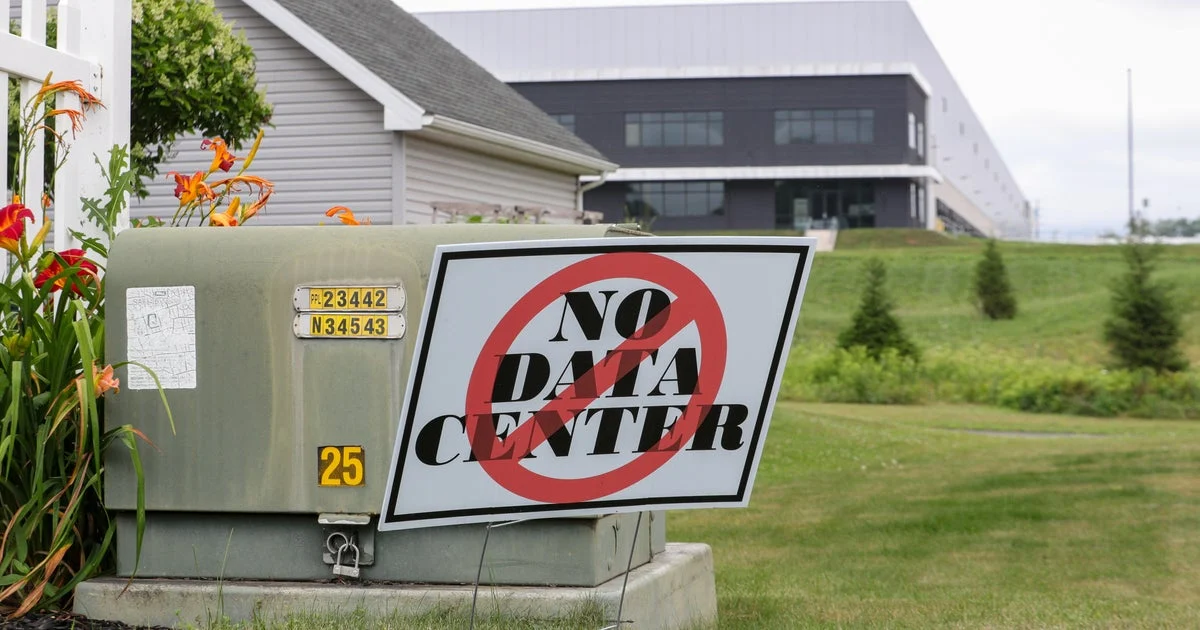
The landscape of America’s artificial intelligence infrastructure is facing a sudden political headwind following sweeping Democratic victories in the midterm elections, which Wall Street analysts warn could significantly slow the rapid construction of data centers across the United States. As local communities grapple with surging energy demands, grid reliability issues, and environmental strains, the political alignment between public resistance and newly elected leadership is setting the stage for a nationwide reassessment of the tech boom.
According to data compiled by political research firm Redbud Consulting, voters approved 37 separate ballot measures restricting data center development, compared to just one measure favoring them. This wave of grassroots pushback has translated directly into legislative power, elevating candidates who campaigned aggressively on stricter regulations, zoning constraints, and temporary moratoriums for the massive server farms required to train and run generative AI models.
The implications extend to the core financial markets driving the modern technology sector. With tech giants investing hundreds of billions of dollars into AI infrastructure, the intersection of local politics, state-level governance, and macroeconomic adjustments is threatening to cool an industry that has served as a primary engine of recent U.S. economic growth.
The Chronology of the Backlash: From Local Resistance to State Houses
The friction between local communities and the tech industry did not materialize overnight. For the past several years, the race to build data centers has transformed rural and suburban landscapes across the United States. These massive facilities—housing thousands of specialized computer chips—require immense amounts of electricity and millions of gallons of water for cooling purposes.
By mid-2026, public sentiment had turned decisively against the unbridled expansion. A CBS News opinion poll conducted earlier in the summer revealed that Americans opposed the construction of new data centers in their local areas by a margin of more than two to one. Residents near proposed sites voiced growing concerns about skyrocketing utility bills, grid brownouts, noise pollution, and the conversion of agricultural land into industrial tech hubs.
This grassroots opposition steadily moved from local town halls to ballot initiatives. By the time voters went to the polls on Tuesday, November 4, 2026, opposition to unmonitored tech expansion had become a defining ballot issue. The subsequent midterm outcomes cemented this sentiment, placing progressive and moderate Democrats into critical gubernatorial and legislative seats in states that anchor the national technology infrastructure.
Regional Flashpoints: Texas and Georgia in the Crosshairs
The impact of the election is felt most acutely in states that serve as the foundation of the American data center ecosystem. Texas, in particular, represents a massive share of the projected growth. According to market analysts, Texas accounts for roughly 25% to 30% of all data center capacity scheduled to come online nationwide by the year 2030.
The Texas gubernatorial race became a crucial battleground. Democrat Gina Hinojosa secured a victory over incumbent Republican Governor Greg Abbott, driven in part by a platform that featured a proposed temporary ban on new data center construction. Analysts note that Governor Abbott had already instituted a suspension on certain data center approvals, meaning Hinojosa can effortlessly extend or codify the moratorium without needing to pass new, contentious legislation from scratch.
Gordon Johnson, CEO and founder of investment advisory firm GLJ Research, noted that Hinojosa’s victory could stall the addition of an estimated 13 gigawatts of data center power in the state. "Texas already has a moratorium—Abbott built it. All the new governor has to do is keep it in place," Johnson explained. "She doesn’t need a new law to keep data center permits frozen."
A similar dynamic is unfolding in Georgia, which ranks as the third-largest data center market in the United States. Keisha Lance Bottoms won the Georgia gubernatorial race after campaigning heavily on a platform of pausing new data center development and scrutinizing the lucrative state tax incentives that historically lured tech corporations to the region.
In a post-election interview, Bottoms confirmed her intention to act decisively. She stated that she would immediately sign an executive order to pause new construction while administration officials review existing tax agreements and determine long-term regulatory frameworks. Given that many local Georgia municipalities had already enacted preliminary freezes, Bottoms indicated she expects minimal legislative pushback across the state.
Wall Street Reactions and Economic Implications
Financial markets have quickly digested the shifting political realities. Stephen Dover, chief market strategist at Franklin Templeton, predicted that the election outcomes would result in a noticeable slowdown in physical construction, accompanied by heightened regulatory compliance and increased development costs for tech companies.
Dan Ives, a prominent technology analyst at Yorkville Ives & Co., echoed these sentiments in a report to investors. When asked if the midterms would decelerate the planned deployment of 800 to 1,000 data centers across the country, Ives offered a definitive assessment: "The answer in our view is a clear YES." Ives underscored that Texas remains the cornerstone of the national AI buildout, making any political shift in Austin a matter of intense national economic significance.
Despite the immediate friction for tech developers, broader economic assessments suggest that the slowdown may not necessarily destabilize the wider economy. Economists from Oxford Economics pointed out in a recent report that while restrictive zoning and moratoriums will undoubtedly stretch project timelines out over a longer horizon, a moderated pace of construction could serve as a healthy correction for a sector showing signs of overextension.
"It’s possible to argue that the AI trade and data center buildout was getting overheated, and this could dampen some of the excessive investment that might not have a good return on capital, which investors have questioned anyway," Dover stated. "So unbridled expansion will be tempered a bit, but probably not a lot."
Analysts emphasize that capital spending on artificial intelligence software, semiconductor manufacturing, and cloud computing architecture will likely continue unabated. Corporations are expected to redirect funds toward efficiency gains, software optimization, and alternative energy solutions rather than halting their AI strategies entirely. However, the days of rapid, frictionless land acquisition and rubber-stamped permits appear to be drawing to a close.
Looking Forward: The Future of AI Infrastructure
As newly elected governors take office and local zoning boards enforce stricter environmental and energy reviews, the data center industry is entering a transitional phase. Developers will increasingly be forced to invest in private power generation—such as co-located nuclear, solar, or geothermal plants—rather than relying solely on municipal power grids that are already straining under peak loads.
The 2026 midterm results have effectively signaled that public sentiment demands a more sustainable, accountable approach to the digital revolution. While the technological race for artificial intelligence supremacy will press forward, it must now navigate a complex matrix of voter expectations, state-level moratoriums, and rigorous regulatory oversight that will permanently reshape the physical footprint of the American tech economy.

