

In the relentless march of scientific progress, countless groundbreaking discoveries risk being overlooked amidst the daily deluge of information. To combat this phenomenon, researchers and science journalists frequently revisit exceptional studies that nearly slipped beneath the public radar. Recent months have yielded a remarkable collection of overlooked breakthroughs, spanning the biological mechanisms of canine aging, the extreme isolation of subatomic antimatter, revolutionary advancements in stealth biomedical technology, and forensic insights into historical artifacts and fine art. By taking a closer look at these diverse fields, scientists are rewriting our understanding of genetics, cosmology, materials science, and cultural history.
The Epigenetic Clock: Why Large Dogs Age Faster Than Small Breeds
One of the most persistent curiosities in evolutionary biology and veterinary science is the inverse relationship between size and lifespan in domestic dogs. Across most mammalian species, larger animals generally outlive smaller ones; mice typically survive for a mere two years, whereas bowhead whales can endure for centuries. Canines, however, completely defy this biological rule. Giant breeds like Great Danes and Mastiffs often face senescence and mortality by age six or seven, while smaller companion dogs such as Chihuahuas and Toy Poodles frequently thrive well into their teens.
To uncover the physiological roots of this anomaly, a team of researchers at Arizona State University utilized an unprecedented dataset to examine the mammalian genome. Published in the journal Science, the study analyzed genomic data from 864 dogs gathered through the ongoing, comprehensive Dog Aging Project. The researchers mapped patterns of DNA methylation across the entire canine genome. Unlike immutable genetic sequences, the epigenome undergoes chemical modifications over time in response to environmental stressors, making methylation patterns a reliable biochemical clock for measuring biological aging.

The analysis revealed that canine aging is fundamentally tied to a breakdown in epigenetic regulation, particularly within genomic regions populated by "jumping genes," or transposable elements. These mobile genetic sequences can copy and paste themselves across chromosomes, frequently causing mutations, genomic instability, and severe age-related pathologies such as cancer. The researchers identified a specific subclass of jumping genes known as LINE1 elements as the primary culprits behind accelerated aging in larger dogs.
According to the study’s findings, giant dog breeds experience a loss of roughly 35 percent more LINE1 methylation each year compared to their smaller counterparts. As these regulatory markers fade with age, the unchecked activity of jumping genes damages cellular DNA at an accelerated rate. Co-author Blaise Mariner noted that this discovery provides one of the clearest molecular signatures yet aligned with the canine size-lifespan trade-off, strongly implying that diminished genetic control over transposable elements drives rapid aging in larger dogs.
Capturing the Elusive: Trapping a Single Antimatter Particle for Months
Venturing from the macroscopic world of veterinary genetics to the subatomic realm of fundamental physics, researchers at Northwestern University have achieved a monumental milestone in cosmological research. One of the greatest lingering mysteries in modern physics is the matter-antimatter asymmetry of the universe. According to standard cosmological models, the Big Bang should have produced equal amounts of matter and antimatter. When matter and antimatter particles interact, they undergo total mutual annihilation, converting entirely into raw energy. The fact that our universe is overwhelmingly composed of matter implies that a subtle, unexplained imbalance favored matter during the dawn of time.
Studying antimatter is notoriously difficult because it reacts violently with normal matter. To analyze these elusive particles, physicists must employ sophisticated electromagnetic containment fields known as particle traps. Led by physicist Gerald Gabrielse, the Northwestern research team succeeded in capturing and isolating a single positron—the antimatter counterpart of the electron—for months at a time, a breakthrough detailed in Physical Review Letters.
Building upon previous methodologies where the team trapped individual electrons to construct a high-precision quantum cyclotron, the researchers faced unique challenges in handling positrons. The team harvested positrons originating from sodium-22 radioactive nuclei, systematically decelerating them before guiding them into an ultra-high-vacuum containment apparatus governed by precise electric and magnetic fields. Once securely trapped, the positron was cryogenically cooled to 300 millikelvins—just fractions of a degree above absolute zero—forcing the particle into its lowest quantum ground state.
By maintaining this ultra-cold state for months, the researchers successfully manipulated and detected the positron’s individual quantum energy states using tuned microwaves. This technological feat represents a critical precursor to measuring the positron’s magnetic moment with unprecedented precision. The Standard Model of particle physics dictates that positrons and electrons must possess identical magnetic properties, save for their opposite electrical charges. If future precision measurements reveal any deviation between the two, Gabrielse emphasizes that it would constitute the most profound discovery in physics in over a century.
PhotoTat: The Evolution of Invisible, UV-Reactive Biomedical and Cosmetic Tattoos
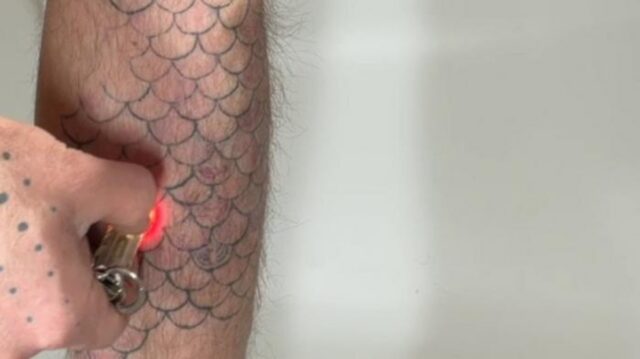
Body modification has been practiced for millennia, yet social stigmas and professional dress codes continue to create hurdles for individuals sporting visible tattoos. Addressing this cultural and technological challenge, a multidisciplinary research team has developed an innovative category of invisible, multi-colored tattoo inks that remain entirely imperceptible to the naked eye under normal conditions, revealing themselves only when illuminated by ultraviolet (UV) light.
Described in the journal Matter & Light, the technology—dubbed "PhotoTat"—was co-authored by researchers including Carson Bruns of the University of Colorado, Boulder. The development builds upon a decade of rapid progress in epidermal electronics and functional wearable biosensors. Over recent years, engineers have pioneered ultra-thin, flexible polymer e-tattoos that adhere to the skin without adhesives, enabling continuous monitoring of vital signs, body temperature, and even brain waves via scalp-printed conductive inks designed to bypass hair.

PhotoTat approaches skin modification from a different material angle, utilizing photo-responsive dyes encapsulated within microscopic spheres of polymethyl methacrylate (PMMA)—a biocompatible polymer frequently utilized in medical dermal fillers. By blending primary-colored dyes within these micro-spheres, researchers generated full-color imagery that stays completely transparent until exposed to UV wavelengths. Upon UV exposure, the tattoos shift into vibrant shades of blue, magenta, or yellow, gradually fading back into invisibility after a few hours, or disappearing even faster under intense LED illumination.
While currently in the proof-of-concept phase, the innovation holds immense practical promise beyond aesthetic self-expression. Medical professionals note that PhotoTat could revolutionize radiation therapy protocols for cancer patients. Radiation oncology requires precise, permanent skin markers to guide external treatment beams accurately. Traditional permanent tattoos often cause lasting cosmetic distress for recovering patients; PhotoTat inks would offer functional guidance markers that remain totally invisible outside the clinical treatment room.
Historical Identification: Unearthing the Identity of a Westminster Abbey Skeleton
Shifting from contemporary technology to medieval history, recent archaeological analysis has finally resolved a long-standing identity puzzle resting within the hallowed grounds of Westminster Abbey. More than 150 years ago, nineteenth-century excavators unearthed a medieval human skeleton housed inside an ancient Roman stone sarcophagus. The exterior of the stone coffin bore a clear Latin inscription identifying it as the final resting place of Valerius Amandinus, a wealthy Romano-British notable who lived between 300 and 400 CE. However, the lid of the sarcophagus featured a distinct Latin cross sculpted in the architectural style of the 10th or 11th-century late Saxon period, suggesting a chronological discrepancy between the container and its contents.
To determine whether the skeletal remains genuinely belonged to the fourth-century Roman-era elite or an individual interred centuries later, a comprehensive forensic re-evaluation was launched. The findings, published in the Journal of the British Archaeological Association, confirmed that the bones belong to a high-ranking medieval monastic official rather than Valerius Amandinus.

Osteological analysis indicated that the skeleton belonged to a male individual aged between 35 and 49 years old, standing approximately five feet, nine inches tall. Given the elite privilege of burial within a stone sarcophagus inside the Abbey precincts, researchers deduced the remains likely belonged to a prominent ecclesiastical leader. The most historically probable candidate is Aelfwig, a Benedictine monk who served as Abbot of Westminster and died around 1020 CE, though historians cannot entirely rule out his immediate successor, Abbot Wulboth, who passed away in 1049 CE. Evidence suggests the body was originally placed within an organic timber coffin that completely degraded over the ensuing seven centuries inside the stone vault.
Forensic Art History: Re-Evaluating the Death and Medical Portraiture of Simonetta Vespucci
Art history and clinical medicine frequently intersect when researchers apply modern diagnostic criteria to historical masterworks. Earlier this year, a medical research team led by Paolo Pozzilli of Queen Mary University of London proposed a radical reassessment of the untimely death of Simonetta Vespucci, widely celebrated as Sandro Botticelli’s favorite muse and the purported model for his iconic Renaissance masterpiece, The Birth of Venus.
While conventional historical consensus long attributed Simonetta’s death in her early twenties to pulmonary tuberculosis, Pozzilli’s team advanced an alternative hypothesis: that she suffered from a growing pituitary gland tumor (adenoma) that progressively secreted excess prolactin and growth hormone. Historical correspondence between Simonetta’s father-in-law, Piero Vespucci, and Lorenzo de Medici describes how the young noblewoman suffered a sudden, catastrophic collapse during a public ball, exhibiting acute symptoms including severe headaches, high fever, vomiting, and visual hallucinations—clinical markers consistent with rapid pituitary apoplexy.
Expanding upon this medical profile in a follow-up paper published in Medical Humanities, Pozzilli and his co-authors presented additional diagnostic evidence derived directly from Botticelli’s surviving portraiture. The researchers argued that a pituitary tumor would physically manifest as cranial nerve pressure, potentially explaining the distinct eye misalignment and pronounced swelling around the left eye observed in The Birth of Venus and other contemporary portraits. The presence of a subtle squint and localized fluid accumulation in the pictorial record further supports the team’s neurological hypothesis, bridging the gap between Renaissance portraiture and modern clinical endocrinology.
Celestial Sleuthing: Pinpointing the Exact Date of Van Gogh’s The Starry Night
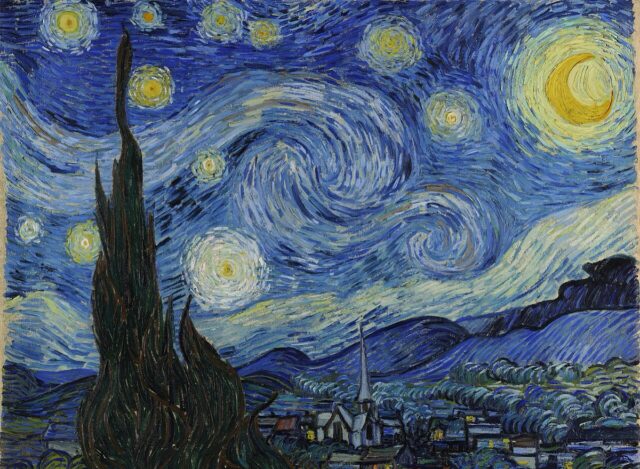
Concluding this comprehensive survey of overlooked scientific marvels, a team of South Korean astronomers has successfully applied forensic astronomy to date Vincent van Gogh’s 1889 post-Impressionist masterpiece, The Starry Night, down to a remarkably specific moment in time. Painted during van Gogh’s voluntary confinement at the Saint-Paul-de-Mausole asylum in Saint-Rémy-de-Provence, the canvas has long captivated both art enthusiasts and theoretical physicists. Previous studies have analyzed the swirling vortex patterns in the indigo sky, arguing that the canvas constitutes a brilliant intuitive depiction of fluid dynamics and complex atmospheric turbulence at micro and macro scales.
Building upon earlier astronomical inquiries that associated the painting’s celestial layout with the night sky of June 1889, a research team led by Elijah Jeong-hyun Kim utilized advanced computer simulations, historical weather archives, precise stellar positioning data, and van Gogh’s personal correspondence to refine the timeline. Their findings, published in Scientific Reports, adjust the painting’s chronological inspiration to the predawn hours of July 22, 1889.
Kim noted that while previous researchers linked the prominent star cluster in the painting to the constellation Aries, a meticulous re-examination of the light patterns and stellar configurations reveals a closer alignment with the Hyades star cluster within the constellation Taurus, perfectly matching the mid-summer dawn perspective. Although van Gogh frequently emphasized that his artistic vision involved emotional exaggeration and subjective interpretation, the researchers maintain that artistic amplification inherently requires a concrete, real-world object to build upon.
This methodology places Kim’s team in esteemed company alongside legendary "celestial sleuths" such as Donald Olson, whose historical astronomy work has successfully resolved the exact timing of Johannes Vermeer’s View of Delft, identified the volcanic atmospheric aftermath responsible for Edvard Munch’s blood-red sky in The Scream, and chronologically anchored historical moments ranging from Julius Caesar’s landing in Britain to Alfred Eisenstaedt’s iconic V-J Day photograph in Times Square. Together, these diverse studies demonstrate how rigorous scientific inquiry continues to illuminate the hidden dimensions of our natural world, our history, and our culture.

