
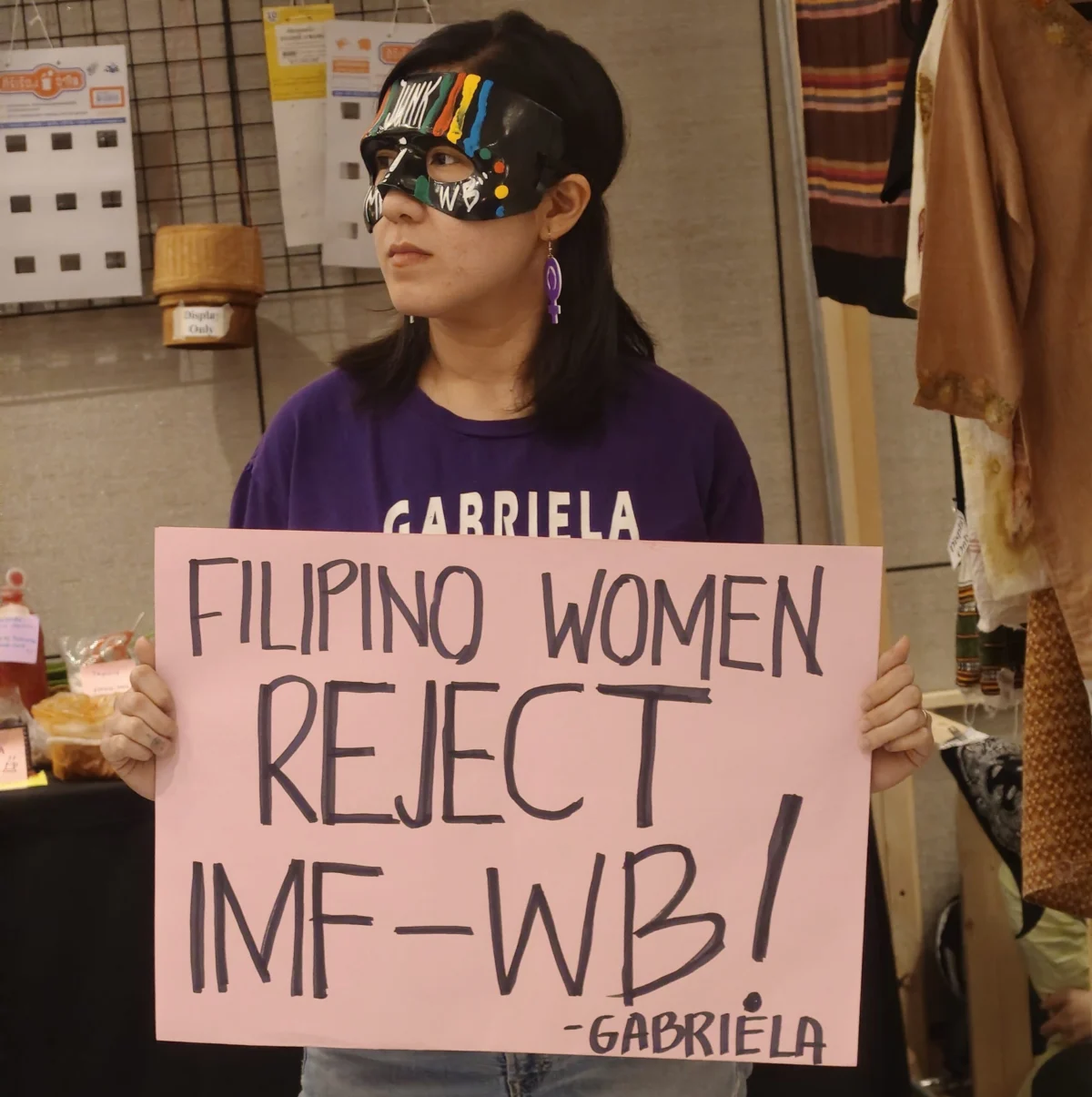
Sompong Viengchan is now in her mid-70s, a veteran of a struggle that has outlasted 16 prime ministers and 26 separate cabinet reshuffles in Thailand. Her life’s work has been centered on a single, stubborn demand: justice for the destruction caused by the Pak Mun Dam. For over three decades, Sompong and her neighbors along the Mun and Mekong rivers have navigated the complexities of international finance, government bureaucracy, and the slow erosion of their ancestral way of life. They are not merely activists; they are the frontline witnesses to the long-term human cost of large-scale infrastructure projects, and their persistence has become a beacon for similar movements across the Asian continent.
This October, at the “Our Voices Count!” people’s tribunal in Bangkok, Sompong stood before a delegation of 400 women land defenders from more than 30 nations. Her testimony served as a chilling reminder of the disconnect between the “prosperity” promised by international financial institutions and the reality faced by the communities they displace. Since the project’s inception in 1990, the 136-megawatt Pak Mun Dam, co-funded by the World Bank Group, has served as a cautionary tale of environmental and social degradation.
A Legacy of Displacement and Ecological Collapse
The narrative of the Pak Mun Dam is a study in the unintended—or perhaps overlooked—consequences of hydroelectric development. For the downstream villagers, the river was not just a geographic feature; it was their primary economic engine. "Living in the village downstream with no agricultural land, we rely primarily on fishing," Sompong explained to the tribunal. "Blasting rock for dam construction wiped out local fish. We faced financial ruin—investments vanished and were replaced by debt; livelihoods became impossible to sustain."

The destruction of the local fishery was not merely anecdotal. In 2000, the World Commission on Dams—a body co-established by the World Bank and the International Union for Conservation of Nature (IUCN)—conducted an exhaustive study on the project. Their findings were devastating: the dam had stripped approximately 1,700 households of their land, their homes, or both. Furthermore, fish populations in the reservoir and directly upstream saw a catastrophic decline of 60% to 80%.
The ecological impact rippled into the social fabric of the region. As the river’s bounty vanished, the local economy collapsed, forcing families to migrate to urban centers in search of manual labor. This cycle of displacement effectively dissolved the community’s social cohesion. Sompong’s description of the project remains poignant: "Building a dam is the same as burying a person alive. It doesn’t kill you right away, but it ruins your life. We used to catch and sell fish, but now we are compelled to buy fish to eat."
The 36-Year Struggle: A Chronology of Resistance
The timeline of the Pak Mun movement is a testament to the resilience of local organizing.
- 1990: Construction begins on the Pak Mun Dam, backed by the World Bank, sparking the first major protests.
- 1994: The dam begins operations, leading to immediate reports of reduced fish catches and economic hardship.
- 2000: The World Commission on Dams issues its report, formally acknowledging the significant loss of livelihoods and habitat.
- 2002–2003: Following sustained pressure, the government initiates a period of trial gate-opening to study migratory fish patterns.
- 2026: After 36 years of marches, encampments, and lobbying, authorities are forced to re-evaluate the project’s efficiency.
The irony of the Pak Mun project lies in its output. Data from the Electricity Generating Authority of Thailand (EGAT) now indicates that the dam’s average annual power generation is roughly equivalent to a fully optimized 32 MW facility. This represents a massive efficiency gap compared to the original 136 MW design capacity, fueling the argument that the environmental and social destruction was not justified by the energy gains. The persistence of these women has forced periodic gate openings, allowing migratory fish to return, yet the fundamental damage to the river’s ecosystem remains a point of contention.

Regional Trends: A Pattern of Marginalization
The challenges faced by the women of the Mun River are not isolated. During the Bangkok tribunal, attendees shared strikingly similar accounts from across Asia, revealing a systemic trend in how development projects are managed by state actors and international lenders.
In Nepal, the Dudh Koshi Storage Hydroelectric Project, a 670 MW initiative supported by the World Bank and the Asian Development Bank, has created a state of suspended animation for local residents. Manju, a farmer from the indigenous Rai community, described how government-imposed land-use restrictions—dating back to 2023—have frozen the daily lives of villagers. "We cannot buy or sell our lands under the freeze order," she stated. "A freeze blocked us from financing our children’s education." The psychological toll of living in a "project footprint," waiting for construction that has yet to break ground, has left the community in a state of precarious uncertainty regarding their ancestral heritage.
In Indonesia, the legacy of the Kedung Ombo Dam—funded by a $156 million World Bank loan in 1985—continues to haunt residents. Risma Umar, an activist with Aksi for Gender, Social and Ecological Justice, notes that the trauma of the 1989 reservoir filling is intergenerational. Many who resisted were labeled as communist sympathizers, a political stigma that led to military intimidation and mass flight. The trauma is physical and deeply ingrained; Risma recounted stories of women who, decades later, still hide under their beds or flee into the mountains at the sight of anyone in a uniform.
Documentation as Resistance
For many of these women, the act of documenting their struggle has become a form of survival. Yokbeth Felle, an activist from West Papua, highlighted how the region—rich in gold and copper—remains one of the most disadvantaged in Indonesia in terms of health and education. "Within a system that marginalizes us in our own land, documentation is both a tool of resistance and a means of survival," Felle said. By using digital media and community-led archives, activists like Felle are attempting to break the information blockade that often accompanies large-scale industrial projects in remote areas.

This theme of documentation and legal accountability is also central to the work of Cathy Estavillo, secretary general of the Philippines’ Amihan National Federation of Peasant Women. She has been leading the fight against the SPLIT program, a World Bank-funded effort to convert collective agrarian reform lands into individual titles. Estavillo argues that this "individualization" is a mechanism that strips farmers of their collective bargaining power, making them susceptible to predatory investors. In 2021, the organization’s bank accounts were frozen by authorities under allegations of supporting communist rebels—a move that effectively paralyzed their support services for women farmers.
The risk for these defenders is profound. According to data from Global Witness, the Philippines remains the deadliest country in Asia for environmental and land defenders, with 12 documented killings in 2025 alone. In five of these cases, military involvement has been suspected, highlighting the dangerous intersection of state security and industrial development.
Implications and Institutional Accountability
The "Our Voices Count!" tribunal is more than a platform for storytelling; it is a direct challenge to the accountability mechanisms of institutions like the World Bank and the IMF. Critics of these institutions argue that the internal safeguard policies meant to protect vulnerable populations are often toothless in practice.
The economic implications of these projects are also increasingly under scrutiny. When a project like Pak Mun fails to deliver its promised capacity while simultaneously destroying a local economy, the net benefit to the host nation is negative. Yet, the debt incurred by these projects often remains on the national ledger, effectively transferring the cost of failure from the lenders to the taxpayers and the marginalized communities who lost their livelihoods.

As the global transition to "green energy" accelerates, the demand for large-scale hydroelectric, mining, and infrastructure projects is expected to increase. The experiences of Sompong, Manju, Risma, and Cathy provide a critical framework for evaluating these future projects. The core lesson is that social and environmental impacts cannot be treated as "externalities" to be managed through compensation alone. They are, in fact, the primary measure of a project’s success or failure.
Conclusion: The Unfinished Work
While the gates of the Pak Mun Dam are currently being managed to allow for some ecological restoration, the social fabric of the surrounding villages remains fractured. Families are scattered, and the intergenerational knowledge of fishing and river stewardship has been significantly diminished.
The women who gathered in Bangkok are part of a growing, interconnected movement that rejects the narrative that development must come at the expense of human rights. Their fight is no longer just about a single dam in Thailand or a land title program in the Philippines; it is a broader demand for a development model that prioritizes local autonomy, transparency, and the long-term sustainability of the ecosystems upon which the most vulnerable depend.
As Sompong Viengchan prepares to continue her advocacy in her mid-70s, the message to global financial institutions is clear: the era of silent displacement is over. These women are not merely fighting against the physical barriers of concrete and steel; they are challenging the systems of power that allowed those barriers to be built without their consent. Whether the international community will heed these voices remains the defining question of the next decade of development policy.

