
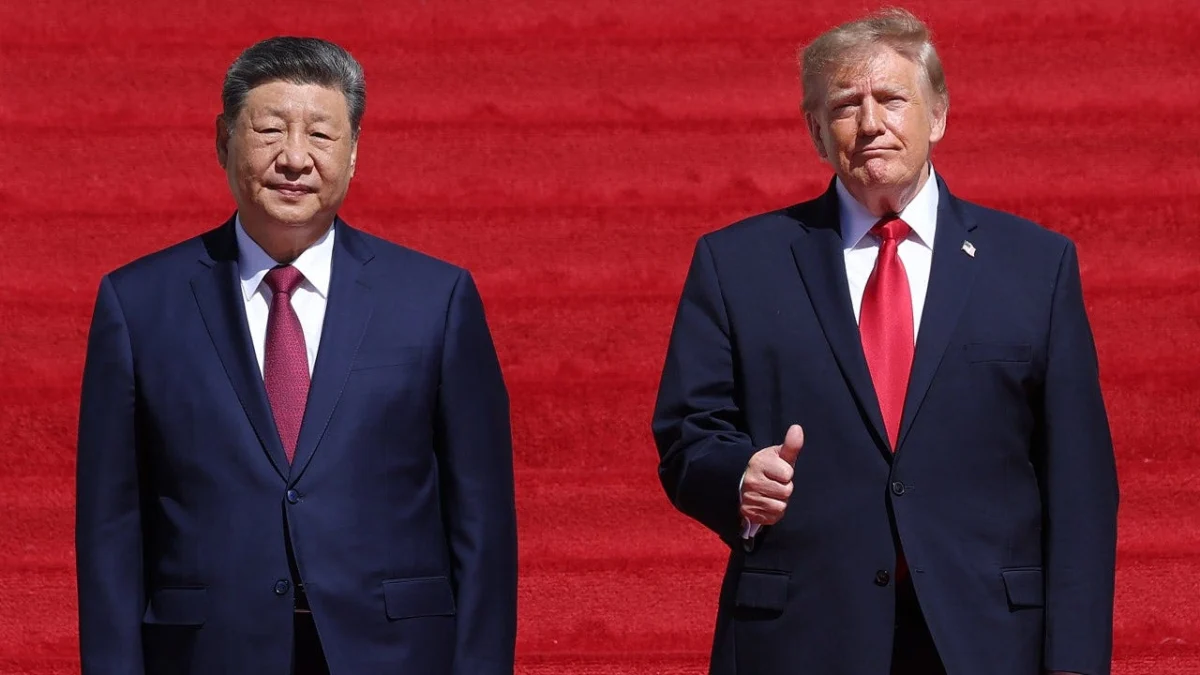
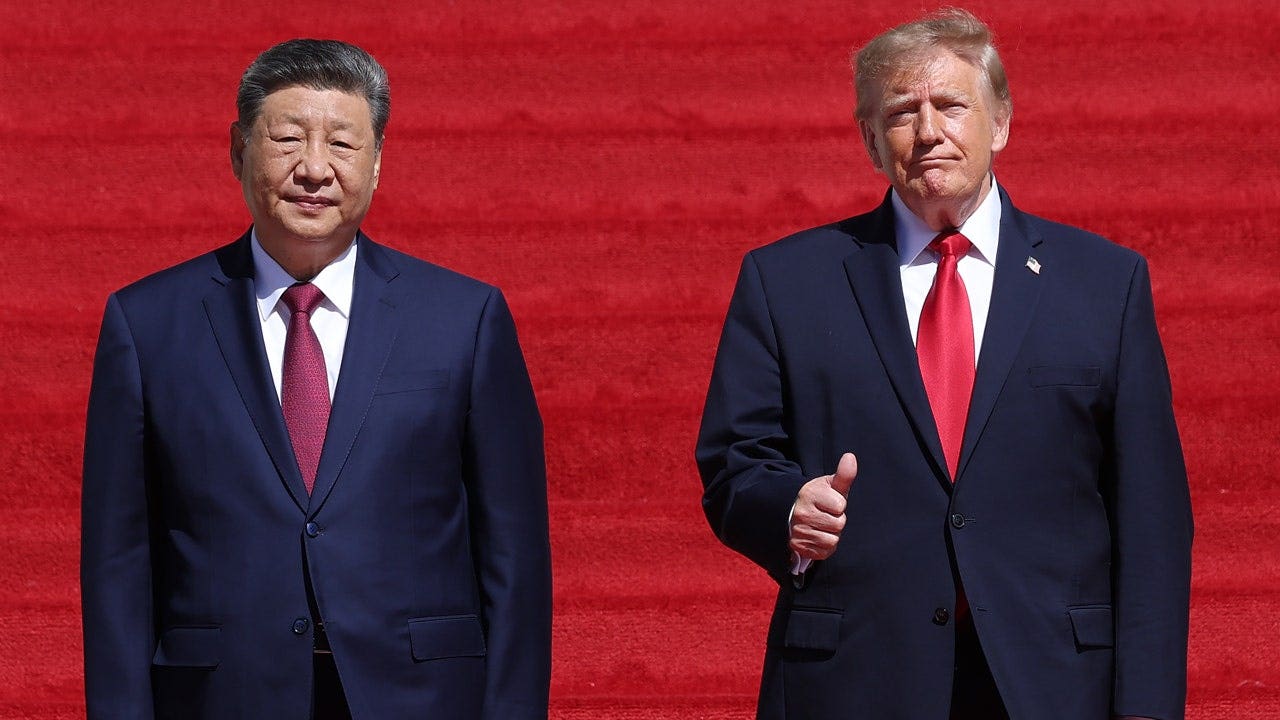
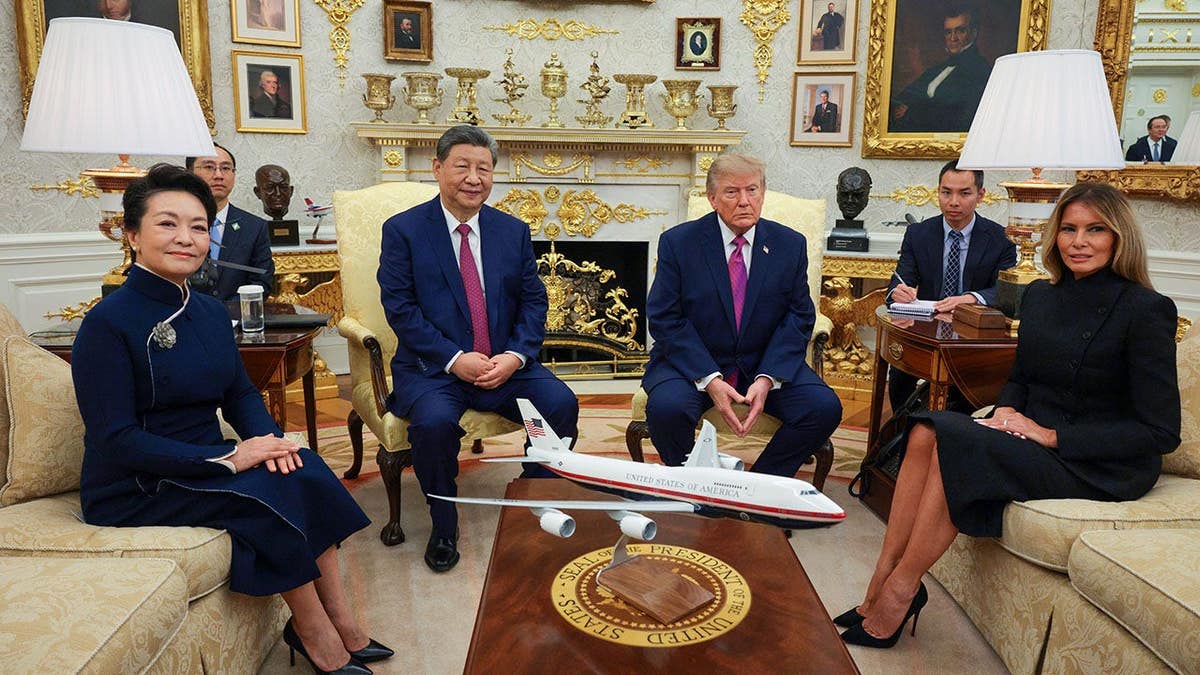
President Donald Trump hosted Chinese President Xi Jinping in Washington this week for a high-stakes three-day state visit, an encounter defined as much by the shifting sands of global security as by the formal pageantry of the White House. The summit, which included a series of private discussions, a tour of the National Archives, and an exclusive state dinner, unfolded against the immediate backdrop of a landmark security agreement between the United States and Greenland. This pact, signed on September 22, represents a decisive pivot in Arctic policy, effectively barring non-NATO states—most notably China—from establishing a military footprint in the strategically vital territory.
The visit, which concluded on September 25, served as a platform for the two leaders to navigate the complex interplay between economic cooperation and mounting international competition. While the White House has remained tight-lipped regarding specific, tangible agreements reached behind closed doors, senior officials confirmed that the talks covered an expansive agenda, including international trade, the regulation of "Super Intelligence," and the coordination of mutual economic priorities.
A Strategic Pivot in the Arctic
The timing of the Greenland security agreement, finalized just days before President Xi’s arrival, underscores the administration’s focus on long-term territorial and resource security. For years, Beijing has attempted to increase its influence in the Arctic, formally styling itself as a "near-Arctic state" and proposing a "Polar Silk Road." This initiative aimed to link China to the region through expanded research, infrastructure projects, and the development of natural resources, including Greenland’s vast deposits of rare earth minerals and critical metals.
The newly signed agreement fundamentally alters this dynamic. By securing permanent U.S. military rights and providing the U.S. and its NATO allies the "first right of refusal" on key mining and infrastructure ventures, the treaty acts as a firewall against Chinese expansionism. Foreign policy experts suggest this is a historic victory for American national security. Christine Balling, a senior fellow at The Institute of World Politics, characterized the deal as being on par with the 1867 purchase of Alaska. "It means the United States has the ability to screen out any other country that expresses interest in establishing a military presence or sensitive investments," she noted.
This development effectively nullifies previous concerns regarding Chinese efforts to gain control over dormant U.S. naval facilities and civilian airport projects in the region, which U.S. intelligence had long identified as dual-use infrastructure with potential military applications.
The Washington Summit: Pageantry and Policy
President Xi’s three-day visit followed a more muted, though highly symbolic, reception compared to President Trump’s visit to Beijing earlier this past May. During the May summit, initial reports of "fantastic trade deals" were met with skepticism by some, as the administration waited until days after the event to release the full economic package. This week, the White House opted for a display of American technological dominance to frame the conversation.
The state dinner, held on Thursday, became a focal point of the visit. The guest list was carefully curated to include the most influential figures in the global artificial intelligence sector. Titans of industry, including Nvidia’s Jensen Huang, Meta’s Mark Zuckerberg, Apple’s Tim Cook, OpenAI’s Sam Altman, Tesla and SpaceX’s Elon Musk, and leaders from Microsoft and Google, were all in attendance. Analysts view this guest list as a calculated message to the Chinese delegation: despite China’s aggressive investment in AI, the United States remains the global center of innovation and private-sector technological power.
Economic and Diplomatic Implications
The economic narrative between the two powers remains fraught with tension. While both nations share an interest in maintaining global supply chain stability, the dependency of the United States on China for the processing of rare earth minerals—vital for defense and green energy technologies—has been a point of vulnerability. The Greenland pact is specifically designed to diversify these supply chains, granting the U.S. and its allies control over raw materials that were previously subject to market volatility and Chinese market dominance.
"The bottom line is that the most important images were those of the AI executives invited to the state dinner," Balling remarked. "It signals that the administration is prioritizing the future of artificial intelligence as the primary theater of competition."
The broader implications of this summit extend beyond trade and territory. The Biden-era approach to "strategic stability" has been replaced by a more assertive framework under the current administration, which emphasizes concrete legal instruments like the Greenland treaty over purely diplomatic declarations. This approach seeks to define clear "red lines" for the Chinese government while continuing to hold space for high-level bilateral dialogue.
Chronology of Recent U.S.-China Engagement
The current state of affairs is the culmination of a multi-month period of high-intensity diplomatic maneuvering:
- May 2026: President Trump visits Beijing. The trip results in high-level promises of trade cooperation, though critics point to the lack of immediate, binding legal frameworks.
- Summer 2026: The Trump administration ramps up pressure regarding the Arctic. Negotiations for the Greenland security pact intensify, with the U.S. emphasizing the need for regional stability.
- September 22, 2026: The United States and Greenland formally sign a security and cooperation agreement, effectively restricting non-NATO military and sensitive commercial access.
- September 23, 2026: President Xi Jinping arrives at Joint Base Andrews, initiating a three-day state visit.
- September 24, 2026: The White House hosts a state dinner attended by the leaders and a delegation of the world’s most prominent technology executives.
- September 25, 2026: The visit concludes with tours of the National Archives, focusing on the historical continuity of the U.S.-China relationship.
Analysis of Future Challenges
While the summit provided a moment of calm, significant hurdles remain. The intersection of domestic Republican concerns regarding anti-communism and the administration’s desire to maintain a functional working relationship with Beijing creates a precarious political balance. Critics argue that the "red carpet" treatment of a major geopolitical adversary is at odds with the party’s ideological stance, while supporters maintain that the administration’s focus on hard-power agreements—such as the Greenland deal—demonstrates a pragmatic approach that prioritizes national security over mere optics.
The long-term impact of the summit will likely be measured by the success of the Greenland pact in drawing capital away from Chinese-led infrastructure projects. If the U.S. and its NATO partners can successfully operationalize the mineral extraction and technological development promised in the treaty, it would represent a permanent shift in the global balance of power.
However, the lack of a public "big ticket" trade deal from this visit suggests that both sides are operating under a "business-first" philosophy. The administration appears content to let the security and regulatory frameworks, such as the Greenland agreement and the ongoing discussions on AI regulation, serve as the primary pillars of the bilateral relationship for the remainder of the year.
As the dust settles on the Washington visit, the international community is left with a clear picture of the current U.S. strategy: to engage with China through a lens of firm containment in critical strategic sectors—the Arctic, artificial intelligence, and mineral supply chains—while keeping the door open for high-level diplomatic communication. Whether this dual-track approach will foster a new era of stability or deepen the divide between the two superpowers remains the defining question of current international relations. For now, the administration has signaled that its primary goal is not the total exclusion of China from the global market, but the secure maintenance of the strategic advantages that underpin American hegemony in the 21st century.

