

WASHINGTON — In a legislative showdown that exposed deep constitutional fractures within the nation’s capital, the U.S. House of Representatives voted late Tuesday to kill a sweeping, 34-page impeachment resolution targeting Defense Secretary Pete Hegseth. Introduced by Republican Representative Thomas Massie of Kentucky, the unprecedented package laid out eight distinct articles of impeachment, accusing the Pentagon chief of high crimes and misdemeanors, constitutional overreach, and war crimes. The resolution was swiftly derailed when the lower chamber voted to refer it to a congressional committee—effectively terminating the measure after zero rank-and-file Republicans crossed party lines to join Massie and the House Democratic caucus.
The failed resolution encapsulates months of mounting tensions between Capitol Hill and the executive branch regarding the limits of presidential war powers, the oversight of military operations, and the human cost of modern warfare. Hegseth, dismissing the high-stakes legislative maneuver during a fiery press conference at the Pentagon on Tuesday morning, characterized the impeachment push as nothing more than a "political spectacle" designed to obstruct the administration’s security agenda.
Despite its swift parliamentary death, Massie’s resolution marks a historic milestone in legislative-executive relations, spotlighting controversial military engagements spanning President Trump’s second term. From the authorization of unauthorized hostilities in the Middle East to controversial maritime interdictions in the Caribbean and a high-profile clandestine raid in South America, the charges presented a wide-ranging indictment of modern defense policy.

Anatomy of the Impeachment Resolution: The Eight Articles
The comprehensive document submitted by Representative Massie divides its accusations into eight detailed counts, each focusing on specific theaters of operation, institutional erosion at the Department of Defense, and alleged retaliatory actions against lawmakers.
Article I: Initiating Hostilities Without Congressional Authorization
The primary article targets the legal foundation of the U.S. war with Iran. According to the resolution, Secretary Hegseth directed the U.S. Armed Forces into active hostilities against the Islamic Republic of Iran without a formal declaration of war or any explicit authorization from Congress. Massie argues that this deployment violated the strict parameters of the War Powers Resolution of 1973, which limits the executive branch’s capacity to deploy military force abroad absent legislative approval. The article asserts that Hegseth knowingly executed and implemented illegal orders, mobilizing Department of Defense personnel and resources against a sovereign nation.
Article II: Defying Bipartisan Congressional Mandates to End Conflict
The second article addresses executive non-compliance with a historic legislative rebuke. In June, both the House and Senate passed a joint resolution directing the administration to withdraw U.S. forces from hostilities against Iran, marking the first time in history that both chambers successfully utilized this specific statutory mechanism under the War Powers Resolution. Despite this binding directive, the resolution alleges that Hegseth continued directing military operations against Iran on June 26, 2026, and maintained offensive postures thereafter without lawful justification. The administration countered at the time by claiming that active hostilities had formally ceased, rendering the congressional directive inapplicable.

Article III: Exceeding Statutory Timelines Under the War Powers Resolution
Article III focuses on the strict statutory timelines mandated by the 1973 War Powers Resolution, which dictates that the executive branch must terminate the use of unauthorized military force within 60 days, followed by a 30-day window for safe troop extraction. President Trump initially notified Congress of the hostilities on March 2, placing the expiration of the 60-day window on May 1. Although the administration submitted a letter to Capitol Hill on May 1 declaring that hostilities had terminated—and Hegseth subsequently testified to senators that a ceasefire had effectively paused the clock—the impeachment text accuses the Pentagon chief of continuing military operations past the absolute maximum statutory deadline of June 1, prosecuting a war detached from congressional consent.
Article IV: Dismantling Civilian Casualty Safeguards and the Iran School Strike
Perhaps the most visceral charge is contained in Article IV, which connects Hegseth’s administrative decisions to devastating human consequences. The resolution accuses the Defense Secretary of systematically dismantling Pentagon infrastructure, staff positions, and oversight processes mandated by law to mitigate civilian casualties. The article highlights Hegseth’s public criticisms of the military’s "rules of engagement," his firing of top military lawyers, and administrative staff reductions.
These actions, Massie alleges, directly contributed to a catastrophic Tomahawk missile strike on an Iranian elementary school during the initial wave of February attacks. According to reports from Iranian media cited in the resolution, the strike killed roughly 170 civilians, the vast majority of whom were children. The U.S. government has not directly accepted responsibility for the incident. The resolution explicitly rejects framing the tragedy as an isolated targeting error or an inevitable consequence of the "fog of war," instead branding it as foreseeable collateral damage resulting from a willful degradation of military safeguards.
Article V: Extrajudicial Maritime Strikes in the Caribbean and Pacific
Moving from the Middle East to the Western Hemisphere, Article V targets the Pentagon’s ongoing naval campaign against alleged drug-smuggling vessels in the Caribbean Sea and eastern Pacific Ocean. The resolution notes that these operations have resulted in the deaths of at least 243 individuals since September 2025. Massie accuses Hegseth of employing lethal military force against criminal suspects without judicial process, congressional authorization, or a lawful designation of the targets as legitimate military combatants.
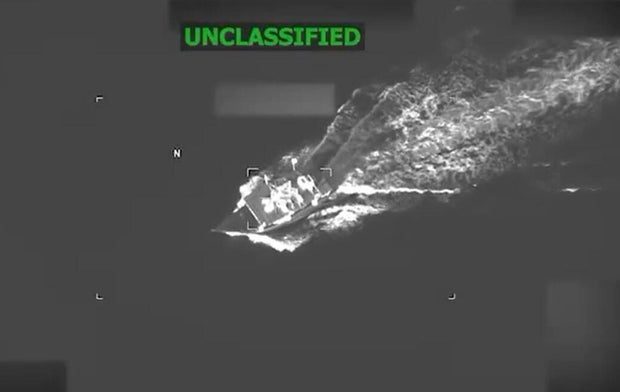
The article underscores the specific operation on September 2, 2025, during which a targeted boat was struck a second time approximately 45 minutes after the initial blast, killing two survivors who were clinging to the wreckage. Critics argue that such tactics violate international norms and expose U.S. service members to retaliatory mistreatment by adversaries.
Article VI: Retaliation Against Protected Congressional Speech
Article VI shifts focus from foreign battlefields to domestic political friction, accusing Hegseth of retaliating against a member of Congress for exercising constitutionally protected free speech. In November 2025, Democratic Senator Mark Kelly of Arizona—a retired Navy captain—appeared in a public informational video alongside other lawmakers reminding military and intelligence personnel of their legal duty to refuse unlawful orders. In response, Hegseth issued a formal letter of censure and threatened to retroactively reduce Kelly’s military rank, a move that would have significantly diminished his retirement pension and benefits. A federal judge subsequently blocked the Pentagon’s punitive administrative actions. Massie’s resolution contends that this attempt to penalize Kelly weaponized the Department of Defense to chill core legislative functions and endangered the First Amendment rights of millions of American veterans.
Article VII: The Clandestine Capture of Nicolás Maduro in Venezuela
Article VII scrutinizes the high-risk, covert military operation executed in Caracas in January 2026 that resulted in the capture of Venezuelan leader Nicolás Maduro and his wife. The resolution characterizes the raid—which involved over 200 special operations personnel, 150 aircraft and drones, and resulted in at least 83 deaths—as an unconstitutional act of war disguised as narcotics law enforcement. Citing public remarks made by President Trump following the raid regarding future administration of the country and potential access for U.S. oil companies, the article argues that the operation was primarily intended to secure control over Venezuelan petroleum reserves rather than achieve legitimate security objectives.
Article VIII: Unchecked Campaign and Civilian Toll in Yemen
The final article revisits the spring of 2025, detailing a campaign of more than 1,100 U.S. strikes against Houthi targets in Yemen between March and May. Reasserting the core complaint of unauthorized executive warmaking, the article highlights the severe civilian toll, noting that civilian deaths during this eight-week period nearly matched the total civilian casualties caused by U.S. military operations in Yemen over the preceding 23 years. The resolution references previously leaked Signal group chat messages published by The Atlantic, arguing that internal communications among top administration officials demonstrated a clear awareness that Houthi forces did not present an imminent threat requiring immediate, unilateral military intervention.

The Political Fallout and Broader Constitutional Implications
The introduction and rapid dismissal of the impeachment resolution underscore the profound ideological divisions within the Republican Party and Congress at large. For libertarian-leaning conservatives like Representative Massie, the expansive exercise of executive military authority represents a direct threat to the constitutional separation of powers, which explicitly vests the power to declare war in the legislative branch. By challenging the administration on issues ranging from war powers compliance to the rules of engagement, Massie sought to reassert congressional dominance over national security policy.
Conversely, the overwhelming Republican majority’s decision to shelve the resolution reflects continued party loyalty to the administration’s aggressive foreign policy and counter-narcotics strategies. Supporters of Secretary Hegseth argue that modern security threats require agile, decisive responses that cannot be bogged down by legislative bottlenecks or overly restrictive bureaucratic oversight. They maintain that operations against non-state actors, transnational cartels, and hostile regional powers fall squarely within the constitutional purview of the Commander-in-Chief and his cabinet appointees.
Legal scholars and political analysts note that while the impeachment effort failed to advance past the initial referral stage, it has permanently etched a contentious debate into the congressional record. The questions raised by the eight articles—concerning the boundaries of the 1973 War Powers Resolution, the legal protections afforded to lawmakers engaging in oversight, and the ethical constraints governing modern military engagements—will undoubtedly continue to influence judicial challenges and legislative battles in the months and years ahead. As the dust settles on Capitol Hill, the fundamental tension between executive speed and legislative authorization remains one of the defining constitutional challenges of the contemporary political era.

