
As the United States stands on the precipice of the 2026 midterm elections, the final hours of campaigning are defined by frantic cross-country dashes, multi-million-dollar fundraising surges, last-minute party infighting, and intense legal maneuvers in federal courts. With control of both chambers of Congress hanging in a delicate balance, national figures, local candidates, and federal officials are making their closing arguments to an electorate deeply divided over the economy, immigration, foreign policy, and the overarching agenda of President Donald Trump’s second term.
From the rugged terrain of northern Maine to the border towns of South Texas, and from high-stakes legal battles in Washington, D.C., and Alaska down to chaotic primary fallout in Michigan, the final stretch of the 2026 campaign cycle encapsulates the fierce polarization of contemporary American politics.
High-Stakes Senate Showdowns and Regional Battlegrounds
Control of the United States Senate remains a razor-thin proposition, with Republicans currently holding a 53-47 majority. However, a map featuring fiercely contested seats across the nation leaves the upper chamber entirely up for grabs.
In Maine, Democratic Senate challenger Troy Jackson projected confidence during a campaign stop in the Portland area, telling reporters he feels good about his home turf in Northern Maine. Drawing on a political career spanning two decades of winning legislative races in Aroostook County—a heavily Republican-leaning region where incumbent GOP Senator Susan Collins also hails from—Jackson emphasized his local roots.
"People up there know that I’ve been fighting for them for a long time, and I’m an Aroostook County guy," Jackson remarked.
Meanwhile, Senator Collins is seeking her sixth term, leveraging her historic ability to outperform national Republican trends by pointing to her record of securing federal funding and occasionally breaking with the Trump administration. Yet, the race has drawn intense voter polarization; while Collins supporters praise her legislative efficacy, critics argue she has not done enough to counter the executive branch.
In the Midwest, Iowa’s competitive Senate contest has forced candidates into hyper-local ground games. Democratic nominee Josh Turek, who won his initial state House race in 2022 by a razor-thin margin of just six votes, urged supporters in Onawa to make "six touch points" each in the final stretch. Addressing voter anxiety over the economic impacts of tariffs and ongoing foreign conflicts—such as the war in Iran—Turek is locked in a tight battle with Republican Representative Ashley Hinson. Hinson has similarly focused her closing message on the cost of living, attempting to thread a needle by calling for an immediate and successful end to the Iran conflict while maintaining distance from President Trump when necessary.
Meanwhile, Michigan continues to host one of the most volatile and closely watched Senate races in the country, pitting Democrat Abdul El-Sayed against Republican Mike Rogers. The race was upended over the weekend when Democratic Representative Haley Stevens publicly endorsed Rogers, sending shockwaves through the national party. Leading Democrats, including Senate Minority Leader Chuck Schumer and House Speaker Emerita Nancy Pelosi, forcefully condemned the move.
Despite the high-profile backlash—and a wave of intense media scrutiny that included a bruising interview on CNN—Stevens defended her endorsement, citing deep concerns over the tone of political discourse and specific controversies tied to the Democratic campaign. El-Sayed, brushing off the political fallout, reported a historic fundraising haul of over $2.4 million in a single day following the endorsement, emphasizing that his campaign remains focused on the day-to-day economic struggles of ordinary Michiganders. Both candidates recently made their closing pitches in extensive "60 Minutes" interviews, underscoring the national significance of the Michigan seat.
Texas Transformations and Border Realities
In Texas, the political landscape is flashing warning signs for the Republican establishment. During an event for Senate candidate Ken Paxton in Conroe, Texas, Senator Ted Cruz delivered a stark warning to conservative supporters: "If the election were over today, the Democrats could well win every single statewide position in Texas."
Paxton is facing a formidable and competitive challenge from Democratic nominee James Talarico. Cruz acknowledged deep-seated party divisions following Paxton’s bitter primary victory over incumbent Senator John Cornyn earlier in the year, urging conservatives to channel their grievances into future party-building rather than sitting out the election. Paxton reinforced the stakes, warning that a Democratic victory would place figures like Senate Democratic leader Chuck Schumer in charge of the upper chamber. Notably, the Paxton campaign abruptly canceled a planned election-eve rally at the Alamo in San Antonio due to logistical scheduling conflicts with events in Conroe and Allen.
Further south in the Lone Star State, the House race in Texas’s 15th Congressional District—a working-class, predominantly Latino region spanning the border city of McAllen—has emerged as a major bellwether for immigration politics. The district serves as a critical test of whether Hispanic voters who shifted toward Republicans in previous cycles will swing back toward Democrats. Interestingly, both candidates have expressed wariness over aggressive immigration enforcement. Democratic candidate Bobby Pulido criticized the "chaos in the streets" resulting from aggressive Immigration and Customs Enforcement (ICE) operations, while incumbent Republican Representative Monica De La Cruz revealed she has warned the White House that current operations are harming the local economy and should target cartels rather than hardworking families.
Federal Intervention and Legal Pre-Election Battles
As voters head to the polls, the judiciary has become an active arena in the electoral process. The Trump administration has engaged in a flurry of legal actions across multiple states in an effort to alter voting procedures and contest certified outcomes.
Most notably, the Justice Department petitioned the United States Supreme Court for emergency relief after a federal appeals court declined to force California election officials to segregate mail ballots cast by more than 20,000 individuals listed as suspected noncitizens. Solicitor General D. John Sauer argued that segregation of the challenged ballots is the only way to prevent voter dilution before ballots are inextricably commingled, noting that more than 6 million mail ballots have already been returned statewide.
In Alaska, a federal judge swiftly dismissed a Trump administration lawsuit aimed at blocking the certification of the state’s Senate election results should Republican incumbent Senator Dan Sullivan lose. U.S. District Judge Sharon L. Gleason ruled that the Justice Department lacked proper legal standing to bring the suit, which alleged that the presence of another local candidate sharing the name Daniel J. Sullivan was a deliberate attempt to confuse voters and aid Democratic challenger Mary Peltola. The Justice Department has filed a notice of appeal.
Presidential Closing Arguments and the National Narrative
President Trump has maintained an unprecedented campaign schedule for a sitting president in a midterm cycle, conducting high-profile rallies across Kansas and Iowa over the weekend to bolster tight Republican Senate races. In interviews with conservative media outlets, Trump remarked that he has never worked a midterm election cycle as intensively, emphasizing the existential importance of preserving his legislative and economic agenda.
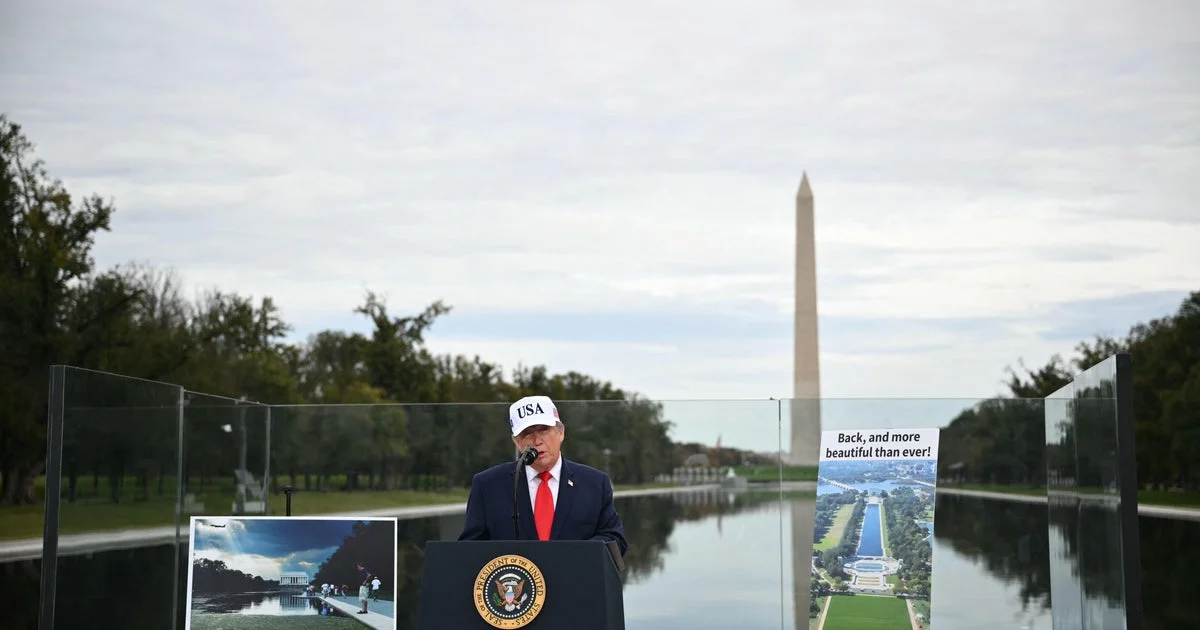
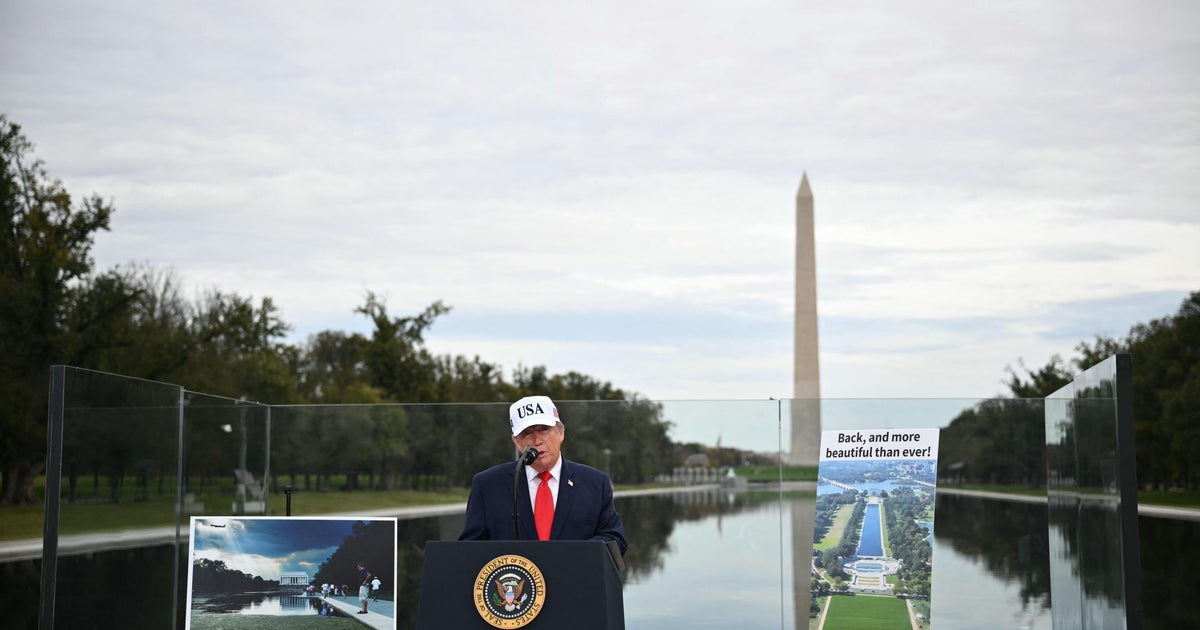
In Washington, D.C., President Trump delivered his final election-eve remarks before a crowd gathered in front of the newly renovated Lincoln Memorial Reflecting Pool. Utilizing the backdrop of his administration’s federal beautification projects, Trump touted the completion of the pool’s extensive resurfacing—which features a custom "American flag blue" coating designed to maximize reflection—while framing the broader midterm election as a definitive choice between his "America First" economic boom and what he characterized as the radical policies of the Democratic opposition. Trump warned that a shift in congressional control would force him to rely heavily on his veto pen, though he expressed openness to future bipartisan deal-making.
House Control and Path Forward
Beyond the Senate, the battle for the House of Representatives remains fiercely contested. CBS News has identified 47 critical House districts—20 currently held by Democrats and 27 by Republicans—that will likely determine the majority in a chamber where Republicans currently hold a razor-thin advantage of 218 seats (plus one caucusing independent) to the Democrats’ 214, alongside two vacancies.
Polling and analytical models, including the CBS News Battleground Tracker, indicate a narrow path for Democrats to reclaim the speaker’s chair, though the range of outcomes leaves a path for Republicans to retain their fragile majority.
As the rhetoric quiets and polling locations prepare to open across the nation, millions of Americans are finalizing choices that will dictate the legislative trajectory of the federal government for the remainder of the presidential term. The results from the battleground states and districts will ultimately resolve whether the current congressional majority can withstand the historical headwinds typically faced by a sitting president’s party in a midterm election.

