
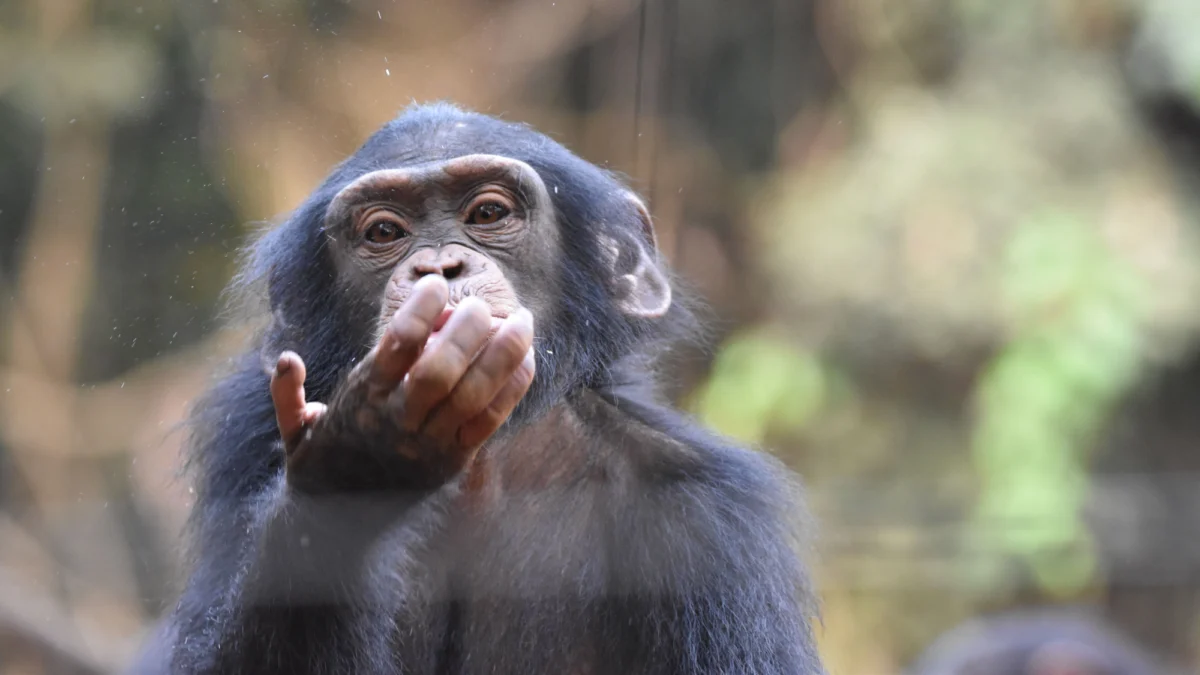
The long-held scientific assumption that primate vocalizations are purely instinctual and genetically hardwired is facing a significant paradigm shift. A landmark study published today in the Proceedings of the National Academy of Sciences (PNAS) reveals that chimpanzees (Pan troglodytes) exhibit a level of social learning in their vocal behavior that was previously thought to be a uniquely human trait. By analyzing the "raspberry" call—a distinct, unvoiced sound created by vibrating the lips—researchers have uncovered evidence that these primates do not simply inherit their communicative repertoire; rather, they acquire and refine their usage through communal imitation and the presence of social role models.
The Mechanism of the Raspberry Call
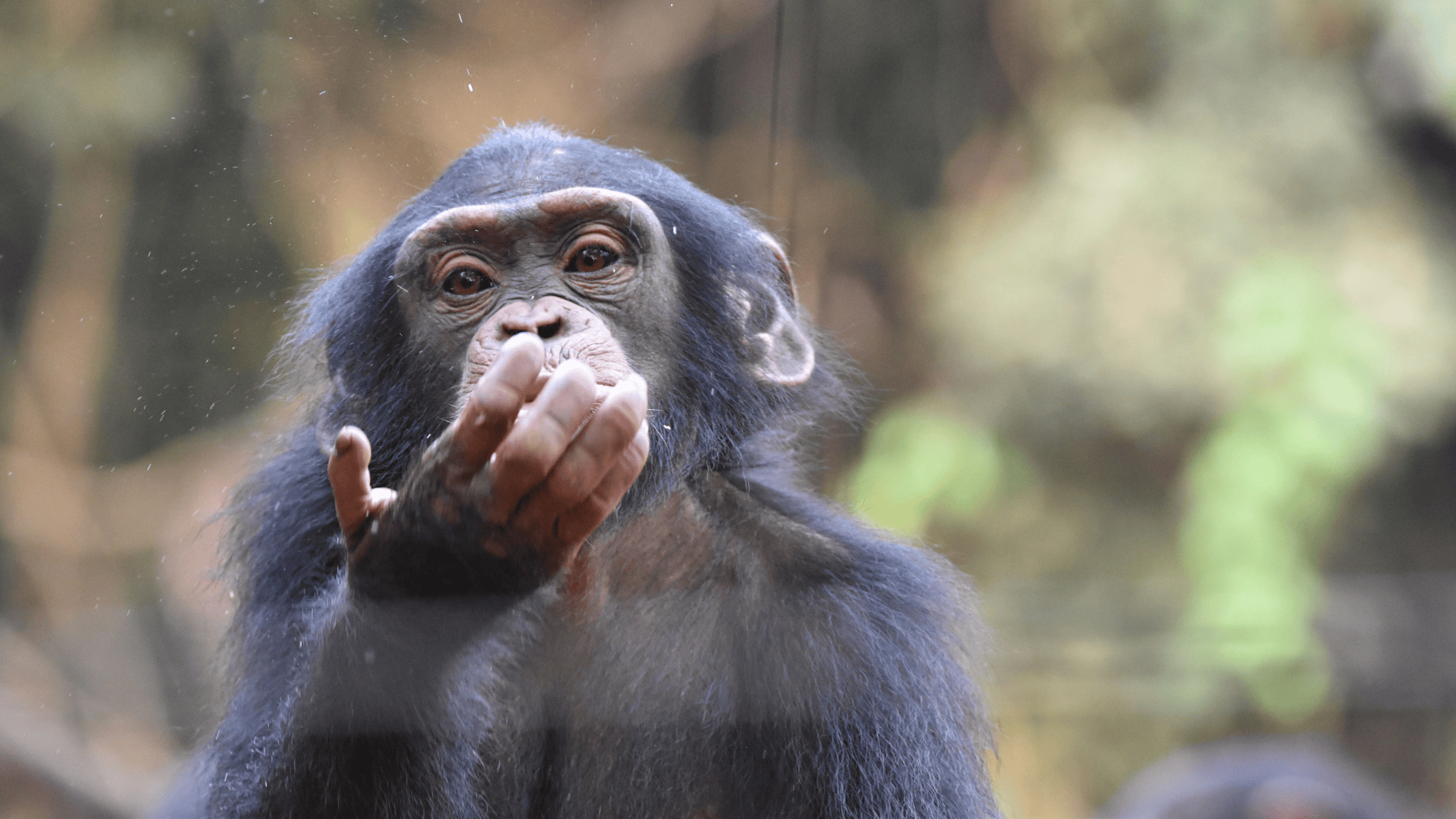
The raspberry sound, characterized by a vibration of the lips, serves as a primary case study for this research. Unlike typical alarm calls or aggressive grunts that appear to be triggered by immediate environmental stimuli, the raspberry call is remarkably flexible. For years, primatologists observed these sounds in various chimpanzee populations but often categorized them as fixed, reflexive signals.
However, the research team, led by cognitive scientist Antoine Valet of the Institute of Cognitive Sciences (CNRS) and behavioral ecologist Catherine Crockford, approached the data with a hypothesis rooted in cultural transmission. They studied 91 individual chimpanzees ranging from newborns to 55-year-old adults, drawing data from two distinct environments: the wild populations of Taï National Park in the Ivory Coast and a cohort of orphaned, peer-raised chimpanzees at the Tacugama Chimpanzee Sanctuary in Sierra Leone.
The contrast between these two groups was stark. In the wild, established chimpanzee communities utilized the raspberry call almost exclusively within the context of grooming. This standardized usage implies that the call has evolved into a social "convention" within these groups. In contrast, the younger, peer-raised chimpanzees at the sanctuary exhibited a chaotic, widespread application of the call across various, unrelated social scenarios. This lack of consistency among the orphans, who lacked older adult role models, suggests that the "grooming-only" convention found in the wild is not a result of evolutionary biology, but a product of cultural learning.
Chronology of Social Learning
The study effectively maps the lifecycle of this vocal convention. When the researchers introduced an older, more experienced chimpanzee to the sanctuary group, the young chimps’ behavior began to shift. Over time, the juvenile vocal patterns moved away from their diverse, unrefined usage and began to mirror the more consistent, socialized patterns of the adult.
This observation supports a timeline of social development:
- Initial Acquisition: Infants or juveniles observe the sound being made by adults during specific social interactions, such as grooming.
- Experimentation: In the absence of parental guidance—as seen in the sanctuary’s orphan group—juveniles may use the sound experimentally in various contexts without a clear social function.
- Stabilization: Through repeated exposure to a "correct" social context provided by older members, the population converges on a shared usage, effectively creating a linguistic or semiotic convention.
Implications for the Evolution of Language
The findings have profound implications for the field of evolutionary linguistics. Historically, the "continuity gap" between the vocalizations of non-human primates and human language was considered vast. It was theorized that while humans learn language through cultural immersion, chimpanzees were bound by their genetic makeup, which determined exactly what sounds they could make and when they would make them.
"In everyday communication, we use the words that we do only because our peers do too," explains Richard Moore, a philosopher of mind and language at the University of Warwick and a co-author of the study. "It’s communal practice that fixes their meaning, rather than features of the words themselves. The discovery that this is true not just for natural languages but also some chimpanzee calls means there’s more continuity between chimpanzees’ vocal learning and our own than we previously suspected."
This suggests that the foundational elements of human communication—the ability to assign social meaning to a sound through consensus—may have existed in our last common ancestor with chimpanzees. This does not mean that chimpanzees possess a language in the human sense, but it does suggest that they possess the cognitive machinery for "socially mediated" vocal behavior.

Theoretical Framework and Future Research
Why would such a specific sound as the raspberry call become associated with grooming? Catherine Crockford proposes a functional theory: the movement of the lips required to create the raspberry sound is physically similar to the lip movements chimpanzees perform while extracting parasites from the fur of their peers during grooming. It is possible that the sound evolved as a rhythmic, auditory reinforcement of a physical task, which served to prolong grooming sessions—a vital activity for maintaining social bonds in chimpanzee societies.
Whether the convention arose independently in different communities as an efficient byproduct of grooming, or was spread through social learning, the result remains the same: the call is a learned cultural convention. Future research will need to determine whether other vocalizations within the chimpanzee repertoire—such as specific pant-hoots or food grunts—are also subject to this form of social calibration.
The Role of Environmental Context
The study also highlights the importance of preserving wild, stable communities of chimpanzees. Because these vocal conventions are passed down through generations, the loss of older, experienced adults in a community could lead to the loss of these learned signals. If a generation of chimpanzees grows up without proper role models, the "language" of their community may undergo a drift, losing the nuanced conventions that facilitate social harmony.
This research underscores that primate behavior is far more malleable than once thought. The discovery that chimpanzees learn both the sound and the social context of their communication suggests that we are looking at a species with a complex, culture-driven social life. As we continue to document these behaviors, the barrier between "human language" and "primate communication" continues to blur, revealing a rich, shared evolutionary heritage defined by the power of the community to shape the way its members express themselves.
In conclusion, the PNAS study serves as a critical reminder that even in the natural world, the way we communicate is rarely a solitary endeavor. From the grooming circles of the Ivory Coast to the peer-raised orphans of Sierra Leone, chimpanzees are proving that their vocal repertoire is a living, breathing tradition, passed from one generation to the next, just as it is in the most complex human societies. The "monkey see, monkey do" adage, once dismissed as a simple observation of mimicry, may actually be the key to understanding the origins of symbolic communication itself.

