
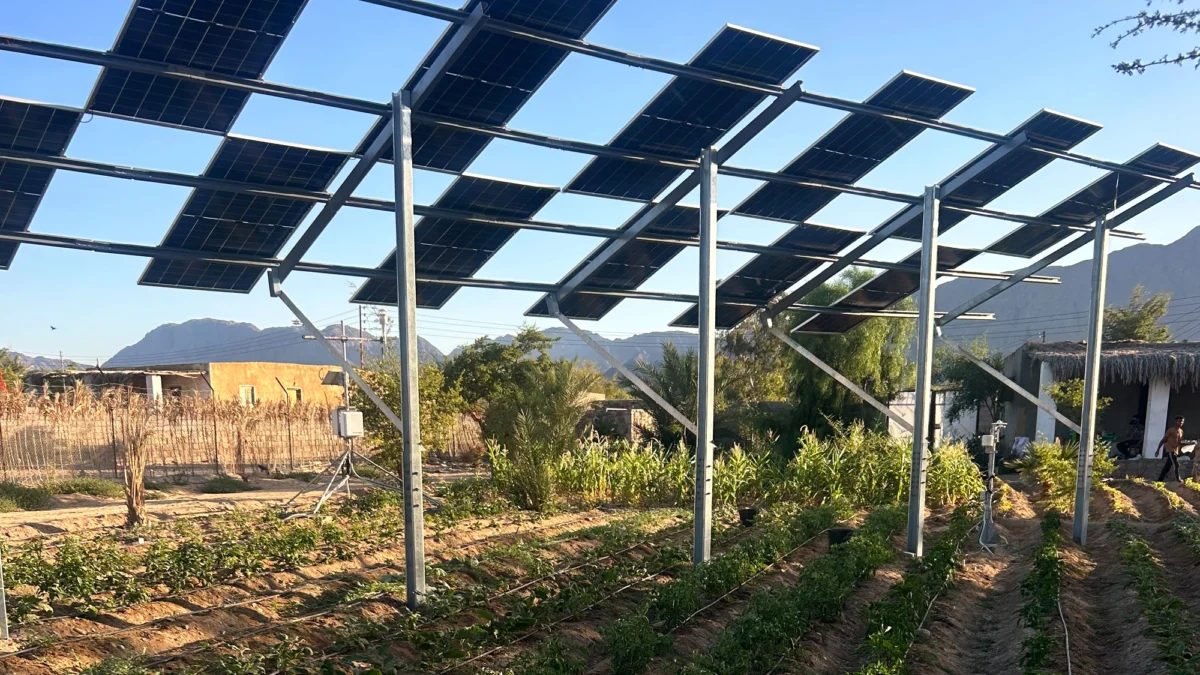
It is the height of the harvest season in southeastern Massachusetts, a time when the region’s iconic, low-lying bogs transform into vibrant, ruby-red landscapes. While the harvest remains a quintessential New England tradition, the scenery at two specific sites in Kingston and Plymouth has undergone a modern metamorphosis. Amidst the flooded patches where mechanical beaters stir the water, rows of sleek, photovoltaic panels now rise above the vines. These locations represent the first successful instances in the United States—and potentially the world—of integrating large-scale solar energy production directly into active cranberry cultivation, a practice known as agrivoltaics.
This dual-use approach is not merely an aesthetic shift; it is a calculated response to the competing pressures of climate change mitigation, land-use conflict, and the economic survival of the American family farm. As Massachusetts marches toward its ambitious goal of achieving net-zero carbon emissions by 2050, the state has become a laboratory for testing how energy infrastructure can coexist with, rather than displace, agricultural production.
The Evolution of Massachusetts Solar Policy
The Commonwealth of Massachusetts has long been a bellwether for renewable energy policy. Since the inception of its solar incentive programs in 2001, the state has continuously refined its regulatory framework to balance the rapid expansion of clean energy with the preservation of its limited open space.
The primary hurdle for solar developers in Massachusetts is geography. Densely populated and heavily forested, the state offers limited "low-hanging fruit" for large-scale solar arrays. While rooftops and parking lots are ideal for small-scale installations, they are insufficient to meet the state’s massive renewable energy targets. Conversely, developing on previously untouched land often triggers fierce opposition from environmentalists and local residents concerned about habitat loss and the erosion of community character.
This tension led the state to incentivize agrivoltaics through targeted financial mechanisms. In 2018, Massachusetts broke new ground by becoming the first state to offer a specific financial premium for dual-use solar projects. Under the current incentive structure, while standard solar arrays between 1 MW and 5 MW receive a base rate of roughly 23.17 cents per kilowatt-hour, certified agrivoltaic projects are eligible for an additional 9 cents per kilowatt-hour. This 39 percent incentive premium is designed to offset the higher capital expenditures required to build structures that accommodate agricultural machinery and specific crop requirements.
Engineering the Bog: A Technical Puzzle
The integration of solar arrays with cranberry bogs was far from straightforward. Traditional solar racking systems are designed for dry, stable, upland soil, with pile foundations typically driven 8 to 10 feet into the ground. A cranberry bog, by contrast, is a delicate, semi-aquatic ecosystem.
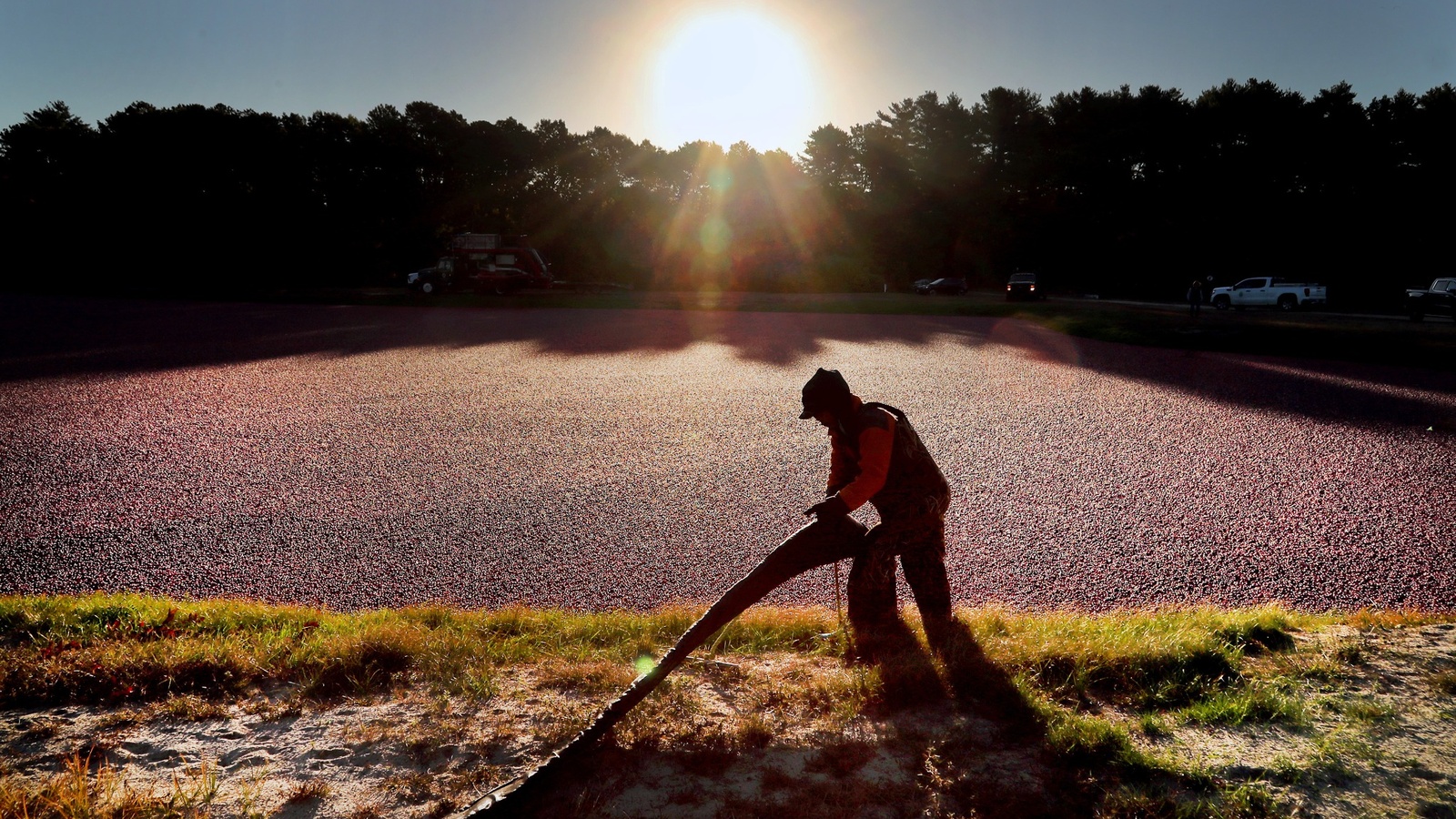
Prateek Tare, co-founder of Distributed Energy Infrastructure, the firm responsible for the 4.4-megawatt array in Kingston and the 1-MW array in Plymouth, describes the process as a unique engineering challenge. "You are effectively building on a sponge," Tare noted. To find the structural integrity required to support massive steel arrays and withstand the high winds of the Massachusetts coast, engineers had to experiment with specialized equipment capable of sinking piles significantly deeper than standard industry norms.
Furthermore, the design had to account for the unique harvest cycle of the cranberry. Because the bogs are periodically flooded, electrical wiring could not be buried in the conventional manner; it had to be routed overhead to ensure safety and longevity. The panels themselves were mounted 10 feet off the ground on single-axis trackers, allowing them to follow the sun’s arc throughout the day. This height provides the necessary clearance for specialized harvesting equipment to maneuver through the bog without striking the infrastructure, while the tilting mechanism optimizes electricity yield despite the shading inherent in the dual-use design.
Economic Viability and Farm Preservation
For many cranberry growers, these installations serve as a financial lifeline. Massachusetts is the second-largest producer of cranberries in the United States, trailing only Wisconsin. However, the industry faces persistent market volatility and rising operating costs.
Unlike cornfields or cattle pastures, which are often sold for residential or commercial development when a farm fails, cranberry bogs are classified as protected wetlands. This legal status prevents traditional real estate conversion, leaving retiring farmers with limited options for liquidating their land assets. By leasing a portion of their property to solar developers, or selling the land to firms like Greenbacker Renewables with an agreement to maintain agricultural production, farmers can secure a reliable, long-term revenue stream.
Iain Ward, a veteran cranberry farmer and consultant who manages the operations beneath the Kingston and Plymouth arrays, characterizes the initiative as a "farm viability opportunity." By keeping the land in active agricultural use while harvesting the sun, the owners can preserve the heritage of the bog while contributing to the regional power grid. The electricity generated is sold through community solar programs, allowing local residents—even those without the roof space for their own panels—to benefit from cheaper, renewable power.
A Chronology of Challenges and Progress
The path to success has not been without setbacks. Five years ago, a project in the town of Carver was poised to be the national leader in cranberry agrivoltaics. The infrastructure was installed, and the crops were planted, but the developer faced bankruptcy before the project could be commissioned.
For years, the Carver bogs stood as a silent testament to the risks of early-stage innovation. However, the narrative is shifting. The current owner of the Carver site has signaled an intent to complete the installations, suggesting that the project will be brought online in the near future. Industry observers view this not as a failure, but as a critical learning phase. Each project, whether fully operational or temporarily stalled, has provided developers with a roadmap of what works—and what does not—in a bog environment.
Broader Implications for the Agricultural Sector
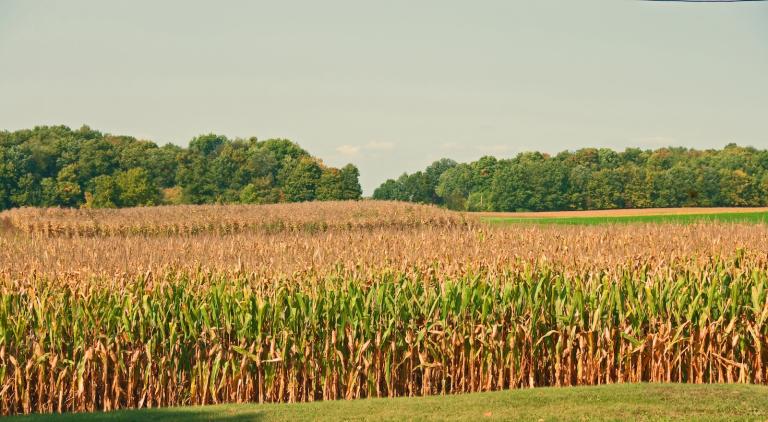
The success of the Kingston and Plymouth models has created a ripple effect. Distributed Energy Infrastructure is now applying the lessons learned in the bogs to other agricultural sectors, including apple orchards, cattle pastures, and Christmas tree farms.
The broader implications for U.S. agriculture are significant. As the nation faces increasing pressure to decarbonize, the "food versus fuel" debate has often been framed as a zero-sum game. Agrivoltaics challenges this dichotomy, suggesting that the land can be both a source of sustenance and a source of power.
From an economic perspective, the agrivoltaic model offers a hedge against the unpredictability of agricultural commodity markets. By diversifying income streams, farmers can maintain the resilience of their operations during poor harvest years or market downturns. Moreover, the shade provided by panels can actually benefit certain crops in hotter climates, potentially reducing water consumption through decreased evaporation—though in the case of cranberries, the primary objective remains the harmony between harvesting and generation.
Future Outlook
The momentum behind agrivoltaics in Massachusetts is accelerating, driven by both climate policy and the necessity of agricultural preservation. While the transition remains slow due to the inherent complexity of site-specific engineering and regulatory compliance, the "proof of concept" phase is effectively over.
As developers and farmers continue to collaborate, the focus is shifting toward standardization. Reducing the capital cost of these specialized arrays will be the next major hurdle. However, with the backing of state incentives and a growing track record of success, the vision of a landscape where solar panels and berry vines share the same soil is becoming increasingly mainstream.
"When you change a paradigm, it takes a little time," says Ward. "But the lessons we’ve learned over the last two years are significant. We are no longer asking if it can be done; we are now figuring out how to do it better, faster, and more efficiently."
As the harvesting equipment completes its final passes through the Kingston and Plymouth bogs this season, it does so under the watchful eyes of the solar industry. The ruby-red berries in the tanks are more than just a harvest; they are a sign of a shifting agricultural economy—one that is as much about capturing the sun as it is about tilling the earth. Whether this model can be scaled across the diverse agricultural landscapes of the rest of the United States remains to be seen, but for Massachusetts, the path forward is clear: a future where clean energy and farming grow side-by-side.

